Week 33 / 2026 | 10 – 16 August | SFI currently 97, NOAA forecast 105–115 | SSN ~62 | A 4–8 | Kp mostly 2, Monday up to 4 | Source: NOAA SWPC / hamqsl.com
Summary
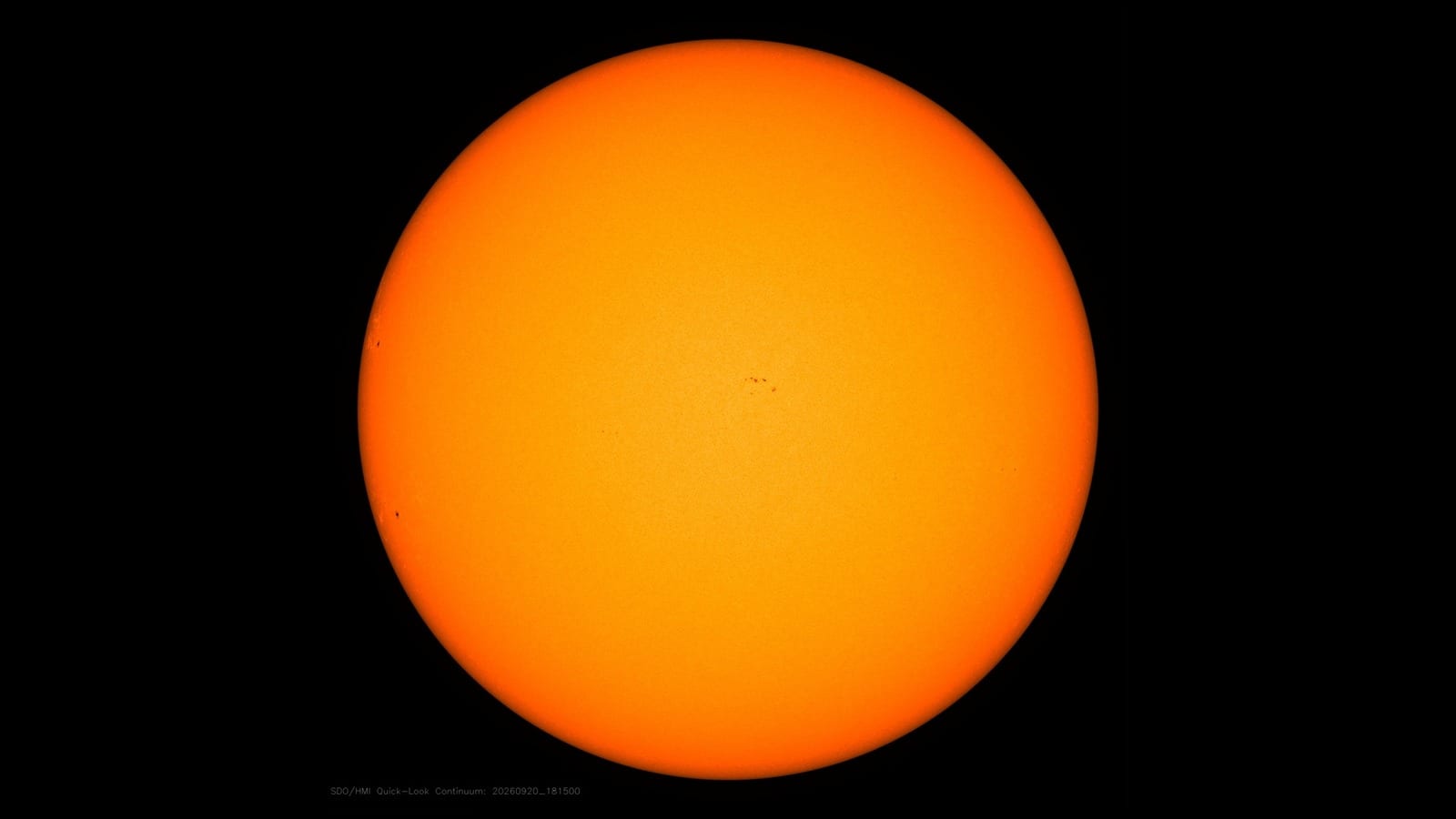
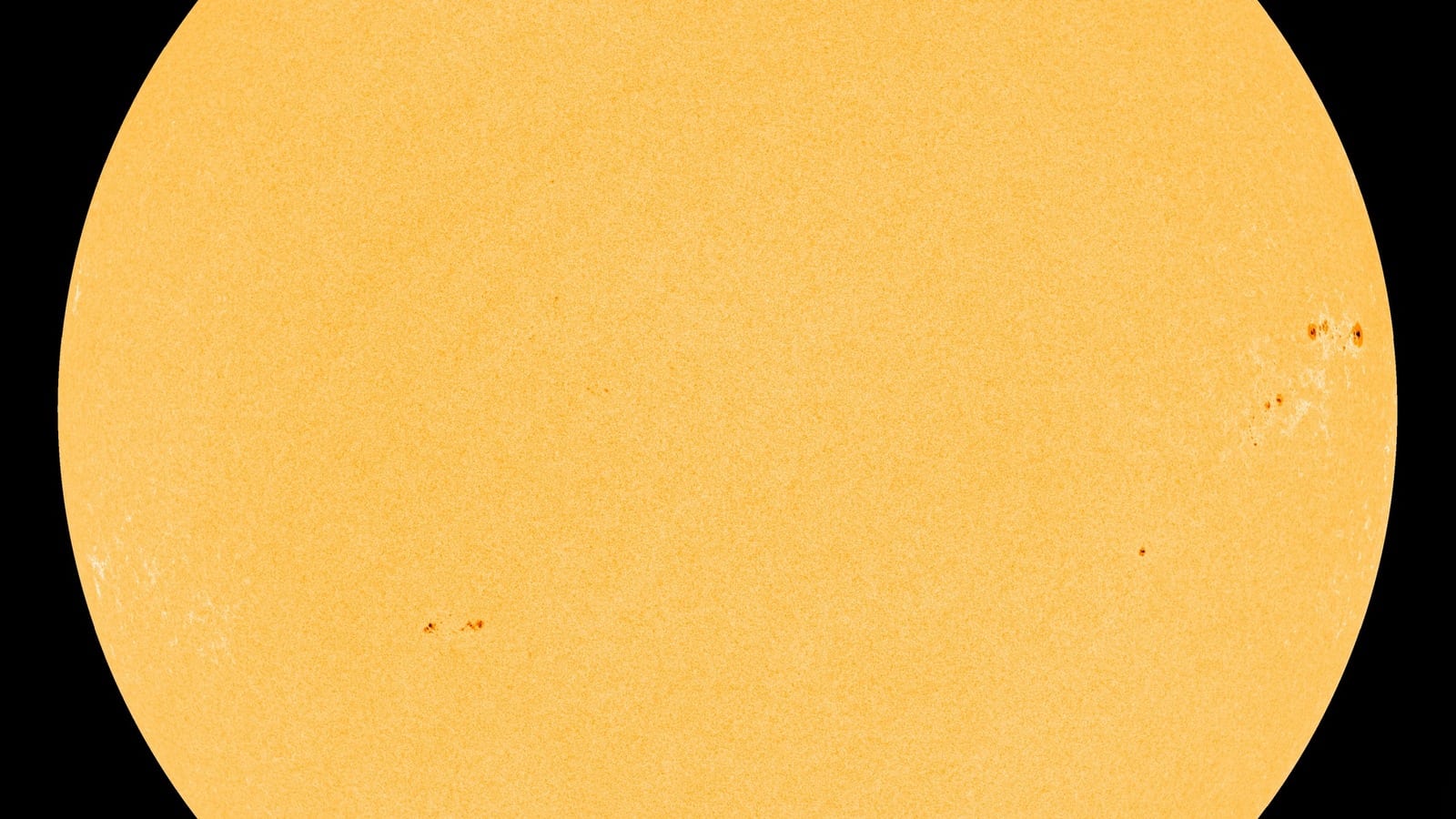
The collapse came fast — and we missed it. A week ago the solar flux stood at 140 and we wrote that it was holding. In fact it fell straight through: 126 on Monday, 118 on Tuesday, 108 on Wednesday, 101 on Thursday, and 97 since Friday. The sunspot number dropped from 130 to 62, the X-ray background sits at a meagre B2.4. The reason is mundane: the large spot group that carried the July flux has rotated over the west limb and no longer faces us.
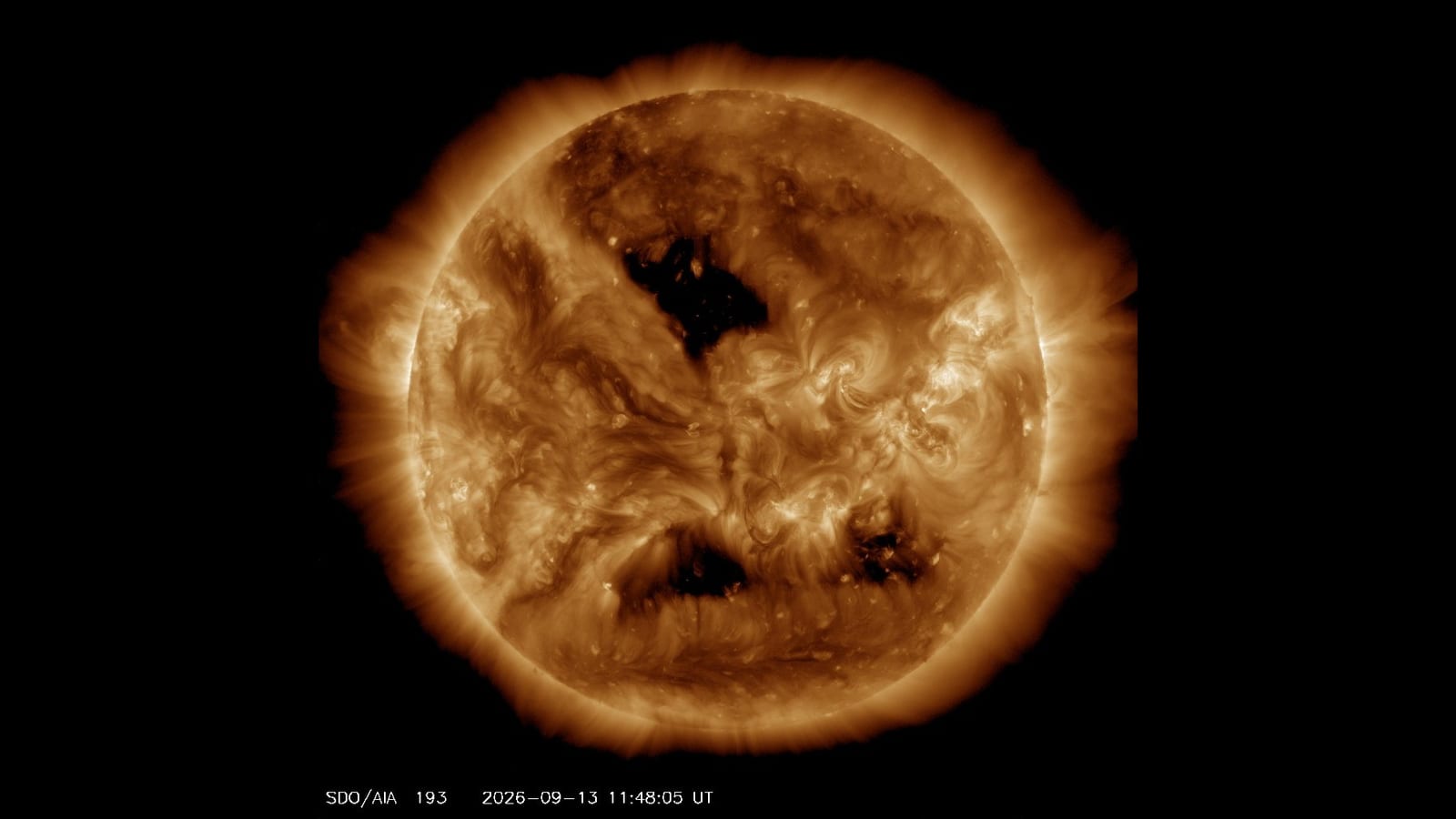
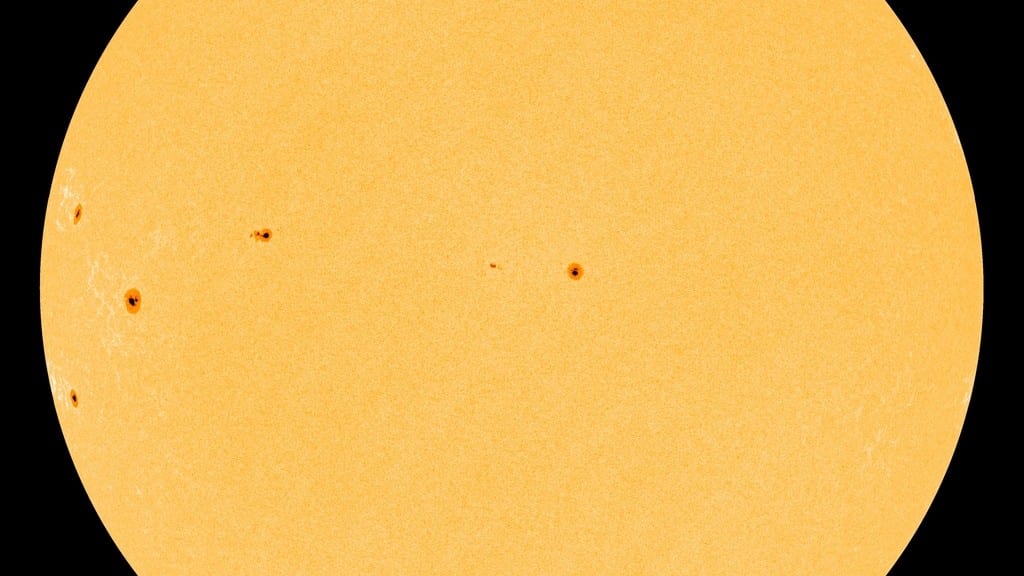
For week 33 the NOAA 27-day outlook sees 105 to 115. This time that is more likely too optimistic than too pessimistic — the number was computed on 3 August, when the flux still stood at 126. There is little happening on the Earth-facing side: four quiet, stable regions plus the newly emerged Region 4504 (S18E38), which as an Axx/alpha is far too small to make flux. According to SWPC, Solar Orbiter PHI imagery shows no significant regions returning from the far side. We therefore expect a realistic corridor of 95 to 110, with a slight upward tendency towards the weekend.
Geomagnetically the weekend was livelier than announced: a glancing CME from 4 August pushed the total field to 18 nT on Saturday morning, and on Saturday afternoon and evening the planetary Kp reached 5.3 and 5.7 respectively — a brief G1 storm, where Saturday midday's 3-day forecast had put the maximum at 4.33. SWPC expects another glancing CME passage on Sunday evening, then quiet to unsettled conditions from Monday. We therefore deliberately set Monday higher (Kp 3–4) than NOAA: after two disturbances back to back the ionosphere needs a recovery day. From Tuesday the field calms down, with a small mid-week bump (A 8) still possible.
And then there is the calendar, which this week offers more than the Sun does: the Perseids reach their maximum on the night of Wednesday to Thursday — and new moon falls on 12 August at 17:38 UTC, almost exactly on top of it. Anyone who wants action on 6 m or 2 m this week works meteor scatter, not F2.
Band forecast
With a flux around 100 the air is out of the upper bands. 20 m carries the week, 30 and 40 m are the reliable workhorses, and anything above 17 m becomes a midday exercise. The Sporadic-E season is over — hamqsl reports every E-skip window as closed.
| Band | Day | Night | Comment |
|---|---|---|---|
| 160m | Poor | Fair | Nights are getting longer, but thunderstorm QRN (S2–S3) eats the gain |
| 80m | Poor | Fair | Usable within Europe after dark, DX only with a receive antenna |
| 40m | Fair | Good | The most honest band of the week — EU/DX from dusk, NA late at night |
| 30m | Good | Good | All-rounder, especially valuable at low flux — FT8/CW around the clock |
| 20m | Good to very good | Fair | Main band of the week, worldwide DX in daylight |
| 17m | Fair to good | Poor | At SFI 100 only reliably open in the afternoon |
| 15m | Fair | Poor | Short midday openings towards S/SE, often FT8 only |
| 12m | Poor to fair | Poor | Only on good days and only around midday |
| 10m | Poor | Poor | Neither Es nor enough F2 — the band is essentially dead this week |
| 6m | Poor (F2/Es) | Good (meteor scatter) | The Magic Band lives on meteors alone — maximum night 12/13 August |
Geomagnetic forecast
After Saturday's G1 and another glancing CME passage on Sunday evening we expect a subdued start to the week and a quiet field from Tuesday. Where the 27-day table and our own assessment diverge (Monday), we weight the fresh solar wind data higher.
| Day | Kp expected | SFI forecast | Assessment |
|---|---|---|---|
| Mon, 10 Aug | 3–4 | ~97 | Recovery after the weekend storm — upper bands damped, aurora chance in the north |
| Tue, 11 Aug | 2–3 | ~100 | Field settles, 20/30 m carry cleanly again |
| Wed, 12 Aug | 2–3 | ~100 | Quiet to slightly unsettled (27-day sees A 8) — Perseid maximum night |
| Thu, 13 Aug | 2 | ~105 | Quiet, meteor rates still high in the morning |
| Fri, 14 Aug | 2 | ~105 | Quiet — flux ticks up very slightly |
| Sat, 15 Aug | 2 | ~105–110 | Quiet — best HF weekend of the week |
| Sun, 16 Aug | 2 | ~110 | Quiet, 20 m open into the evening |
Perseids 2026: the real story of the week
The Perseid meteor shower peaks on the night of Wednesday 12 to Thursday 13 August. New moon on 12 August at 17:38 UTC coincides almost exactly — visually that means perfectly dark nights, and on the radio side it means above all this: for a whole week there will be enough ionised trails at 85 to 120 km altitude to work VHF DX while shortwave is struggling.
- Best time: roughly 02:00 to 08:00 local, when the radiant is high and the Earth runs into the stream. Not only on maximum night — the Perseids deliver usable rates from about 10 to 15 August.
- Frequencies: 6 m MSK144 on 50.260 MHz, 2 m MSK144 on 144.360 MHz (WSJT-X defaults; regional variations are common — listen on the band first).
- Technique: 15-second periods, short messages, patience. How MSK144 works and what your station really needs is in the WSJT-X article, the operating practice in the meteor scatter article.
- Realistic range: 800 to 2000 km — from Carinthia that means right across Europe. For new grid squares on 6 m and 2 m this is the best week of the summer.
Recommendations for the coming week
- Shortwave: lower your expectations and your band choice. At SFI 97, 20 m is the main band and 30/40 m are where the work actually happens. Anyone waiting for 10 m will wait in vain this week.
- VHF: use the week. Perseids plus new moon plus a quiet field from Tuesday — that combination comes once a year. Maximum night 12/13 August, between 02:00 and 08:00 in the morning.
- Monday is not a DX day. After Saturday's G1 and the follow-up on Sunday evening the upper bands sag. Plan B: 30/40 m, or watch for aurora at high latitudes.
- The low bands are coming back. The nights are getting noticeably longer, 40 m opens reliably from dusk, 80 m is usable within Europe. QRN stays high — this is when a separate receive antenna pays off, and the gray line is worth its weight in gold again.
- Weekend 15/16 August: International Lighthouse and Lightship Weekend (ILLW) — plenty of special stations on 40 and 20 m, ideal at this flux level. The SARTG WW RTTY Contest runs in parallel; if you have never tried RTTY, a summer contest with a quiet field is the best way in.
- Check before you switch on: with flux this low, the day's form decides everything. A glance at the RBN shows in thirty seconds which band is actually open.
Review of week 32
A mixed record. On the geomagnetic side we got it right: the CME of 30 July did arrive, just a few hours later than NOAA had scheduled — on Sunday afternoon, 2 August, Kp jumped to 5.7. The unsettled Monday we announced did happen (Kp 4.3), the disturbance carried on into Tuesday (Kp 4.0), and from Wednesday the field was as quiet as predicted: from 5 to 7 August Kp never exceeded 2.
On the flux we were wrong, and clearly so. We quoted a corridor of 125 to 145 and wrote that NOAA's forecast of 120–130 was once again too pessimistic. In fact the flux fell below both numbers — to 97. The mistake is instructive: for two weeks we were right to weight the current measurement above the long-range forecast, and we wrongly turned that into an automatic rule. A high flux is not a state, however, but the effect of specific spot groups — once the carrying region rotates over the west limb, the value collapses within days no matter how stable it looked before.
The practical consequence for the declining cycle 25: do not just look at the SFI, look at where the spots are. A group near the west limb is a notice of decay. How to turn that into a solid prediction for your own station is covered in the VOACAP article.
vy 73 and gud DX — your DX weather desk
Transparency Notice
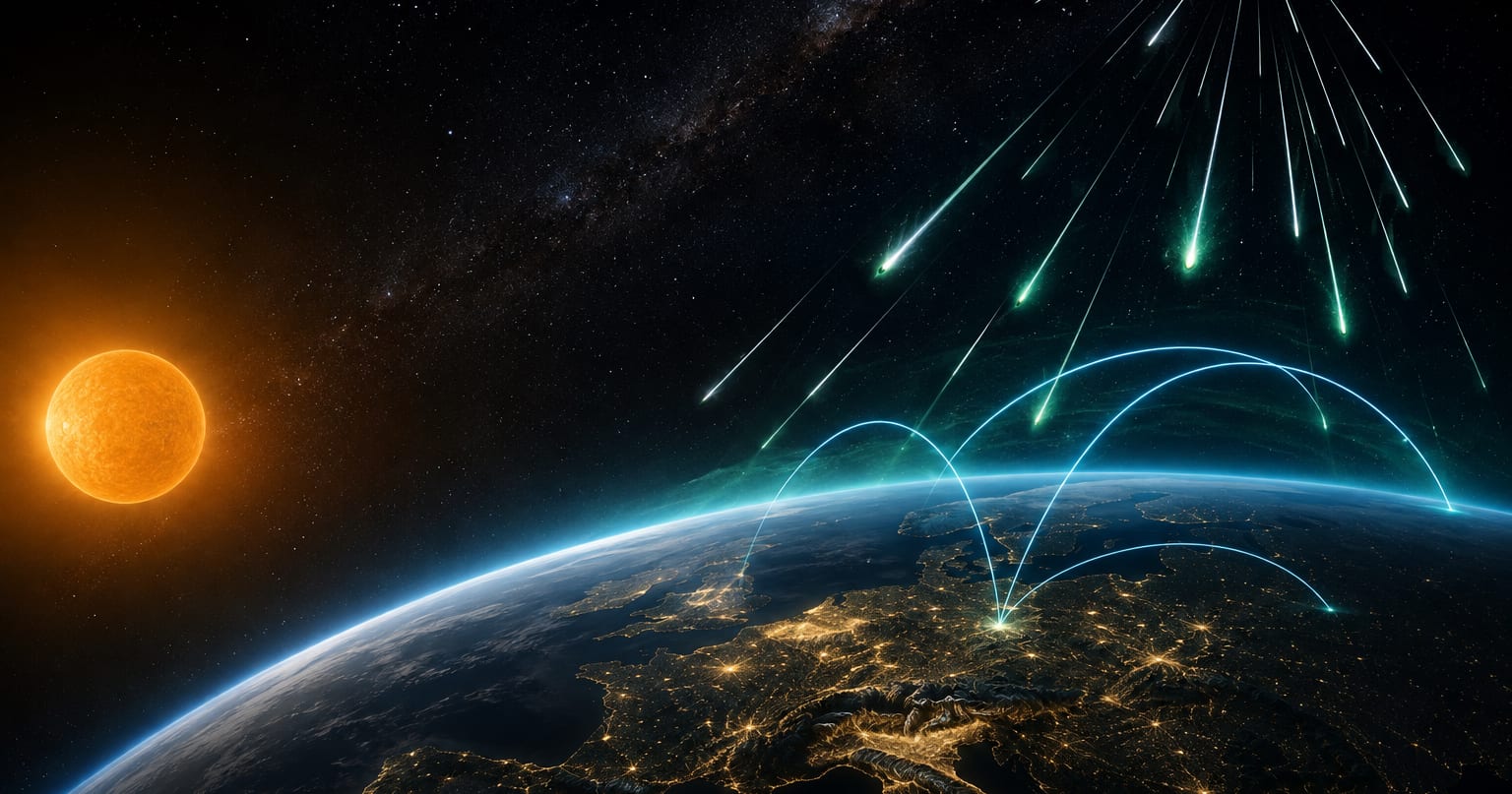
This outlook was researched and written with the support of AI (Claude, Anthropic) on the basis of public space weather data (NOAA SWPC 27-day outlook, 3-day forecast, forecast discussion, hamqsl.com). The title image is AI-generated. Forecasts are inherently uncertain — actual conditions may differ. Questions or corrections? Write to us at [email protected].