Week 37 / 2026 | 7 to 13 September | SFI currently 111 and rising | NOAA 27-day 95 to 110 | SSN 70, spot area 380 millionths | A 5, Kp up to 4.67 expected | S1 proton event on 5 September | Source: NOAA SWPC
Summary
This week the NOAA table and the observations openly disagree, and we are siding with the observations. The 27-day outlook shows 95 to 100 for 7 to 11 September and was compiled on 31 August. Since then the flux has not fallen but risen: 101 on 1 September, then 102, 108, 110 and 111 on 5 September. Over the same period the spot area nearly tripled, from 130 to 380 millionths.
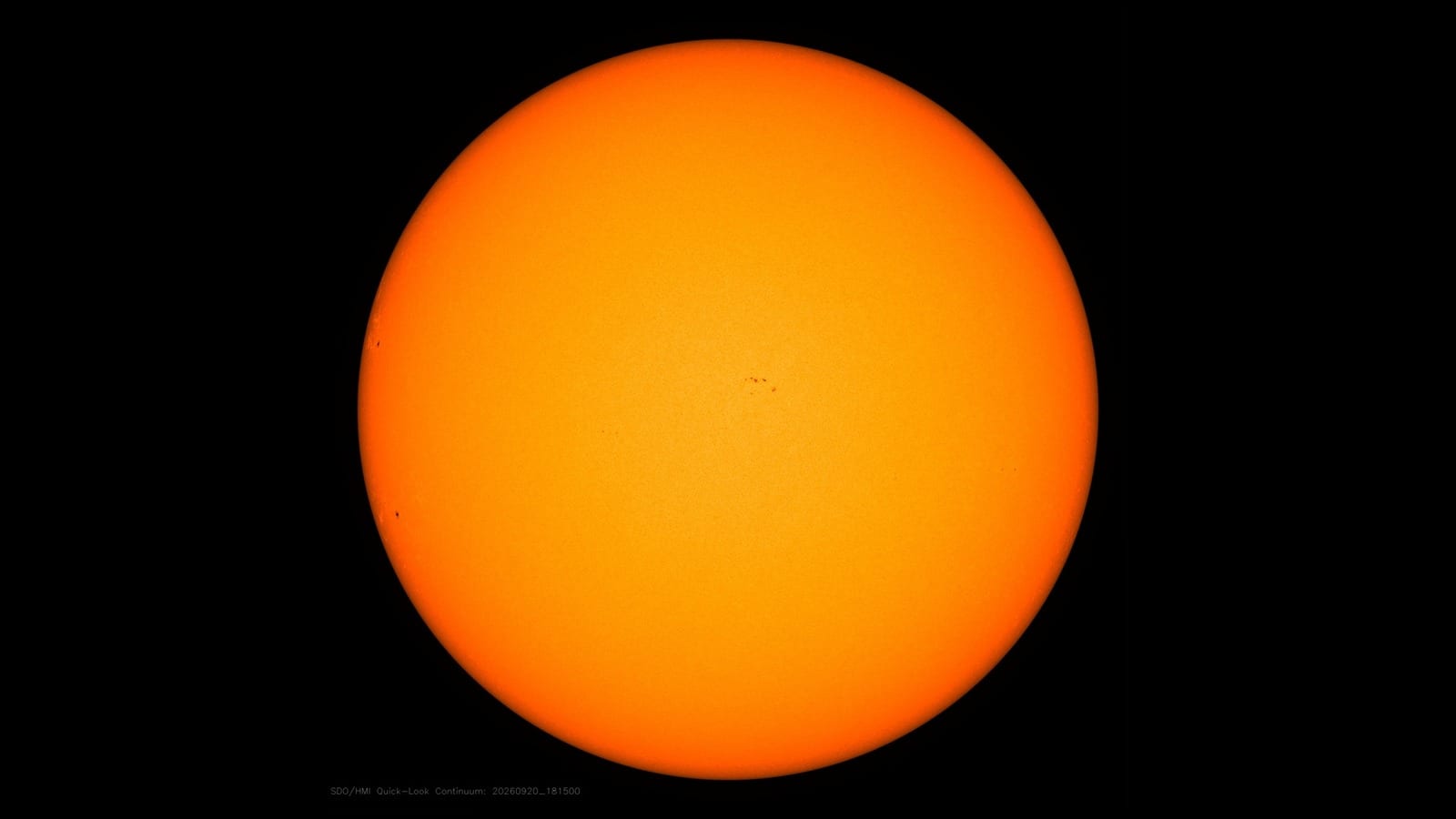
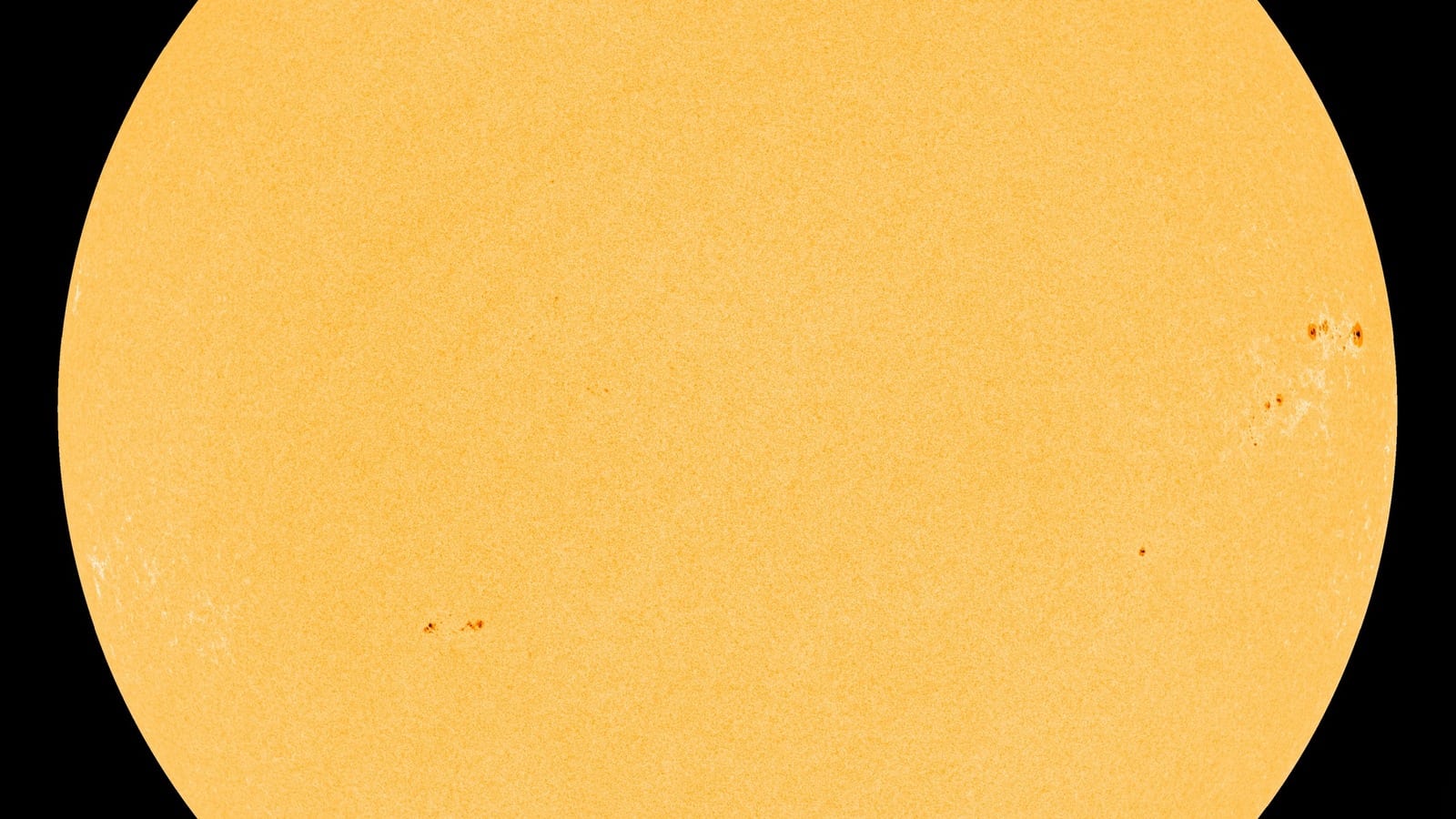
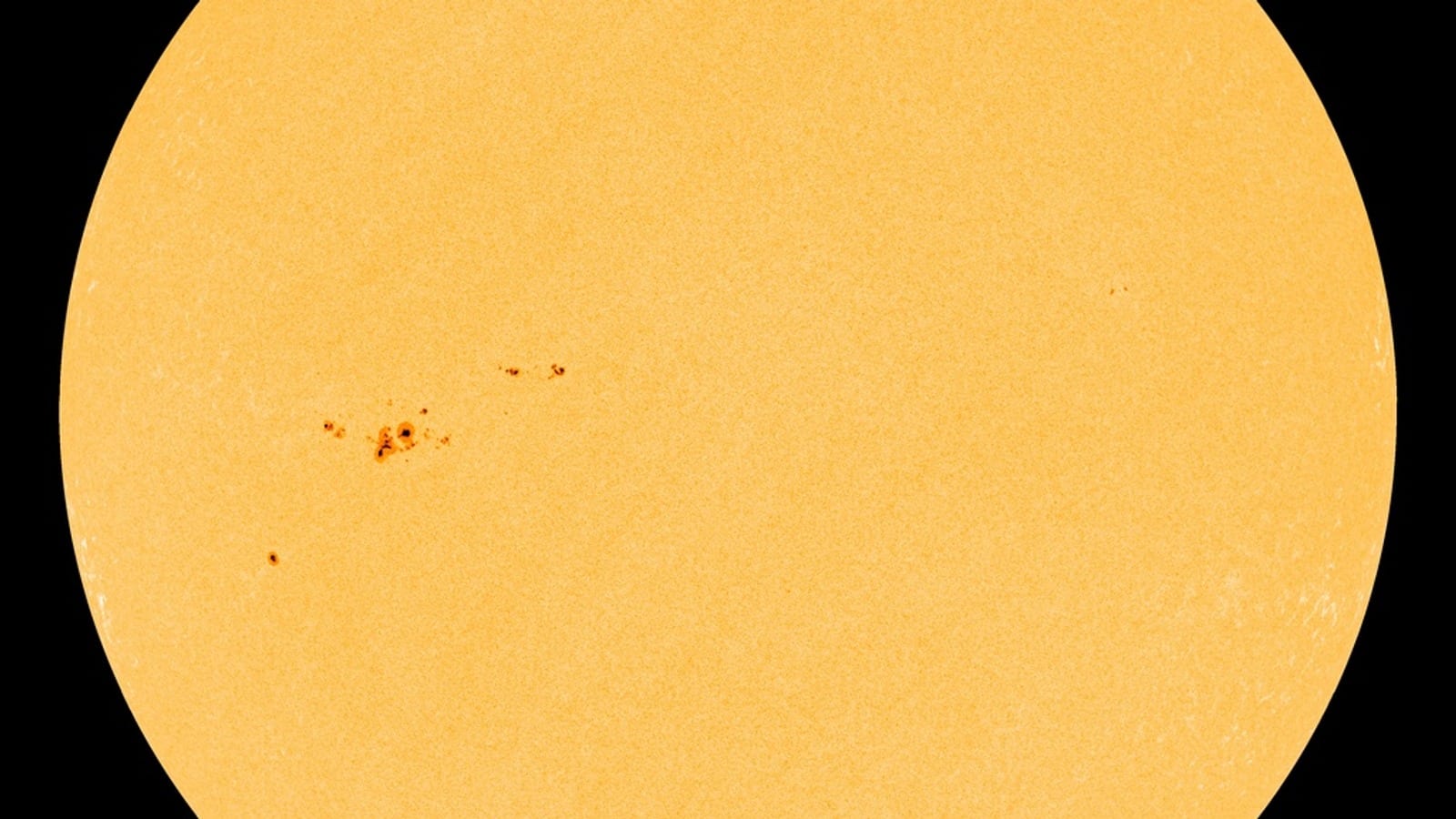
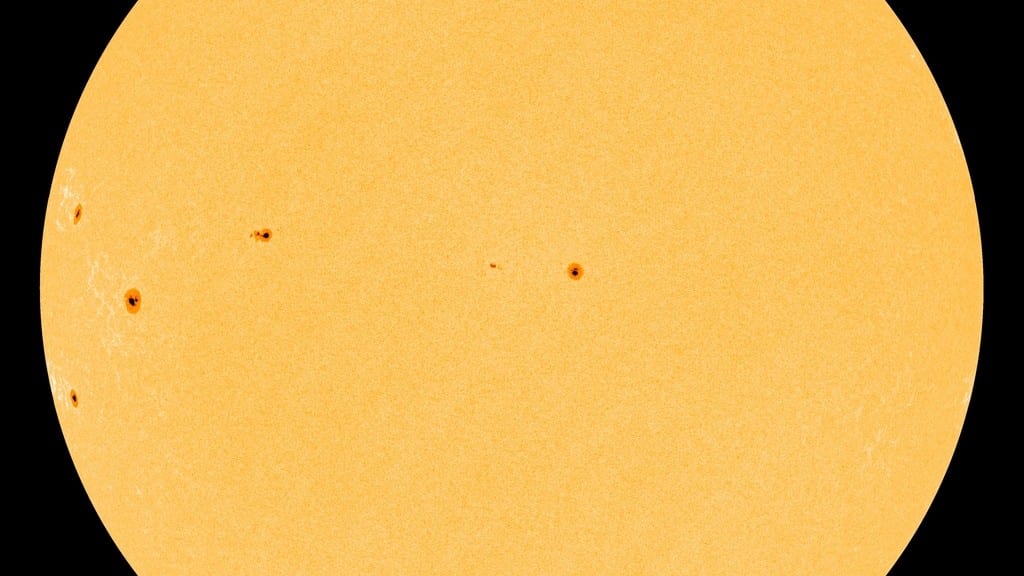
The reason is in the lead image, and this time it is on the left. Last week we described how the load-bearing groups rotated off the west limb while only thin material followed from the east. That has turned around. Eleven numbered regions are on the disc, and the interesting ones sit east of centre: 4527 at N04E46 with 180 millionths is the largest, 4524 at N13E26 the most active, and two fresh ones have come over the east limb, 4528 (S10E64) and 4529 (N13E63). Everything on the left is rotating towards us over the coming days.
Our corridor for the week therefore sits clearly above the table: 105 to 120 at the start, 110 to 125 from Wednesday. We expect NOAA to revise upwards in the next issue.
The second story of the week is geomagnetic. On 5 September there were several eruptions: a filament south-east of disc centre, a CME with the C6.4 from 4524, one with the M1.0 from the plage area of former region 4520, and another with the C8.5. Modelling suggests a combined arrival early on 8 September. SWPC expects Kp up to 4.67 and isolated G1 periods. The M1.0 ejection itself is modelled to pass ahead of Earth's orbit, so it is not the problem.
On top of that came a proton event on 5 September: the greater than 10 MeV flux crossed the event threshold at 16:15 UTC and peaked at 17.8 pfu, while the greater than 100 MeV component briefly reached 1.16 pfu. That is a small S1, but it explains why polar paths were sluggish over the weekend. SWPC considers it possible that the threshold is exceeded again on 8 September if the CMEs arrive as forecast.
Band forecast
- 10 and 12 metres: the most interesting bands of the week with a rising flux. At 115 to 125, ten metres opens reliably to the south around midday, while transatlantic stays a matter of luck. The equinox season helps, but it does not replace a flux of 150.
- 15 and 17 metres: the workhorses. Openings start earlier in the morning and last later into the evening than in August, which is the autumn effect. At this flux level 17 metres is often the more honest band than 15.
- 20 metres: usable around the clock, with the usual dip in the early morning hours. Expect attenuation on northern paths on Tuesday and Wednesday after the CME arrives.
- 30 and 40 metres: the nights are getting longer and it shows. Forty metres carries noticeably further in the evening than three weeks ago, and thirty is the calm alternative when the field gets rough.
- 80 and 160 metres: season opening. The noise floor is dropping and the thunderstorms are thinning out. If you have plans on the low bands, start the antenna work now, not in November.
Geomagnetic forecast
The week falls into three parts.
Monday, 7 September: still quiet to slightly unsettled, Kp 2 to 4 through the day, rising towards the evening. If you are planning something, plan it here.
Tuesday, 8 September: the day of the impact. SWPC expects Kp 4 to 4.67 for much of the day, so G1. That does not mean disaster, it means damped northern paths, a raised noise floor on the low bands and, for optimists, an aurora chance in the night to Wednesday. If you want to try something on 2 metres, the basics are in aurora propagation on 2 m.
Wednesday to Friday: settling down, A around 5, Kp 2. The 27-day table shows quiet conditions here and this time we believe it, because no recurrent coronal hole is due in that window.
Saturday and Sunday, 12 and 13 September: the table picks up again, A 8 and A 15, Kp 3. That smells like a fast solar wind stream for the weekend. Following what we resolved last week, we are setting this slightly higher rather than lower. Twice in August we inferred a quiet weekend from a quiet three-day forecast, and twice we were wrong.
What a proton event means in practice
The term sounds more dramatic than it feels on the air. Energetic protons enter along the field lines over the polar caps and raise absorption in the lower ionosphere there. What suffers is therefore not every band equally but paths across high latitudes: North America via Greenland, Japan over the pole, Scandinavian DX. Working south, you often notice nothing at all.
For this week that means: if the north closes on Tuesday while 15 metres still works into Africa, your station is fine and the ionosphere is to blame. Moving south or lower in frequency beats fiddling with the antenna.
Recommendations for the week
- Monday is the planning day. Quiet, rising flux, no CME yet. If you have a sked list, work it on Monday rather than Tuesday.
- Listen on VHF on Tuesday evening. G1 with rising Kp is exactly the window in which aurora becomes possible on 2 metres. It costs nothing but time.
- Take the upper bands seriously. With a rising flux and autumn conditions, 12 metres is currently the most underrated band. A look at the RBN takes thirty seconds and replaces any guess.
- Do not rely on the 27-day table alone. This week is a textbook case: the table is a week old and describes a Sun that no longer exists in that form.
- Schedule antenna work. The low band season is starting. Build now and you will have an antenna in December instead of a project.
Looking back at week 36
We were wrong on the flux, this time on the cautious side. We set 105 to 120 at the start of the week and 90 to 105 from Thursday, based on the NOAA table showing 95 for the weekend. In reality the flux only fell to 101 on 1 September and then climbed again: 102, 108, 110, 111. The lower half of our corridor was never reached. The mistake was the familiar one with the sign reversed: we underestimated what was coming from the east limb because it looked thin on 28 August. Twelve spots across three young regions can grow in a week.
On the magnetic field we were right. We forecast calm after the G2 night, and calm is what came: the largest observed Kp in the 24 hours before we finished this issue was 1. It does not get quieter than that.
What we did not have on our list was the flare activity. We expected C-class with a residual risk of M. In fact there was one M flare each on 4 and 5 September, seven C flares in a single day and a proton event at the end. For a week we described as decaying, that was plenty of business.
vy 73 and gud DX, your DX Weather Desk
Transparency Notice
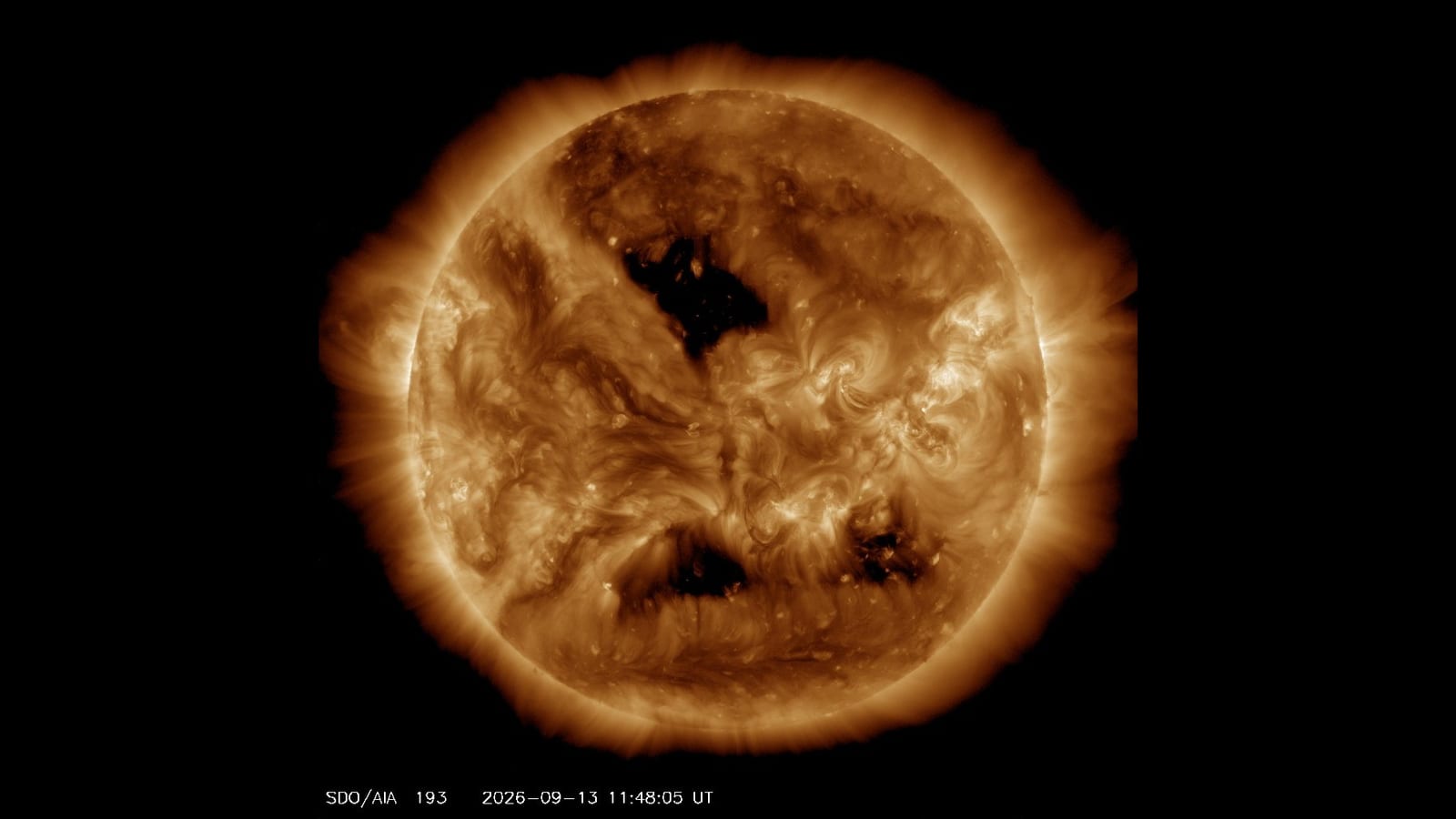
This outlook was produced with the support of AI (Claude, Anthropic) from public space weather data: the NOAA SWPC 27-day outlook (table dated 31 August, retrieved 6 September), the 3-day forecast and the forecast discussion (both 6 September, 12:30 UTC), the Solar Region Summary as of 6 September and the daily solar indices through 5 September. The lead image shows the Sun in white light, taken by the Solar Dynamics Observatory (NASA/SDO, public domain) and retrieved on 6 September; the spot groups sit clearly on the eastern half, that is on the left, and rotate towards us over the coming days. Forecasts are uncertain by nature and actual conditions may differ. Questions or corrections? Write to us at [email protected].