Week 38 / 2026 | 14 to 20 September | SFI now 109 | NOAA 27-day 105 to 115 | SSN 77, X-ray background B4.2 | A 7, Kp 2, quiet | Solar wind 404 km/s, Bz −1.4 nT | Proton flux at background | Source: NOAA SWPC, as of 13 September 12:00 UTC
Summary
This is not a flux week, it is a magnetic field week. Anyone waiting for the solar flux to jump will not get it; what you do get is three unsettled days at the start and, from Thursday onwards, quiet and predictable conditions you can plan around.
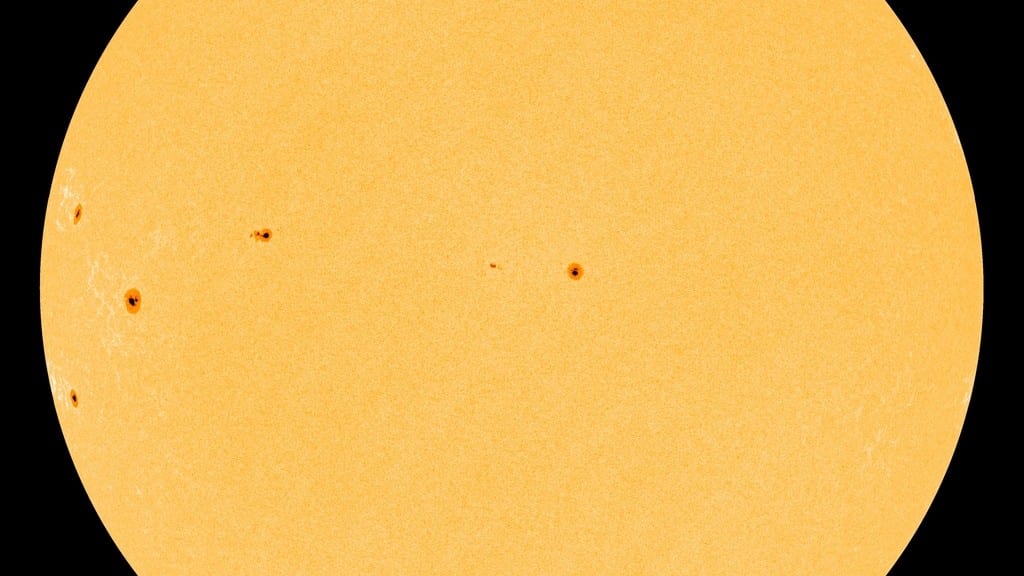
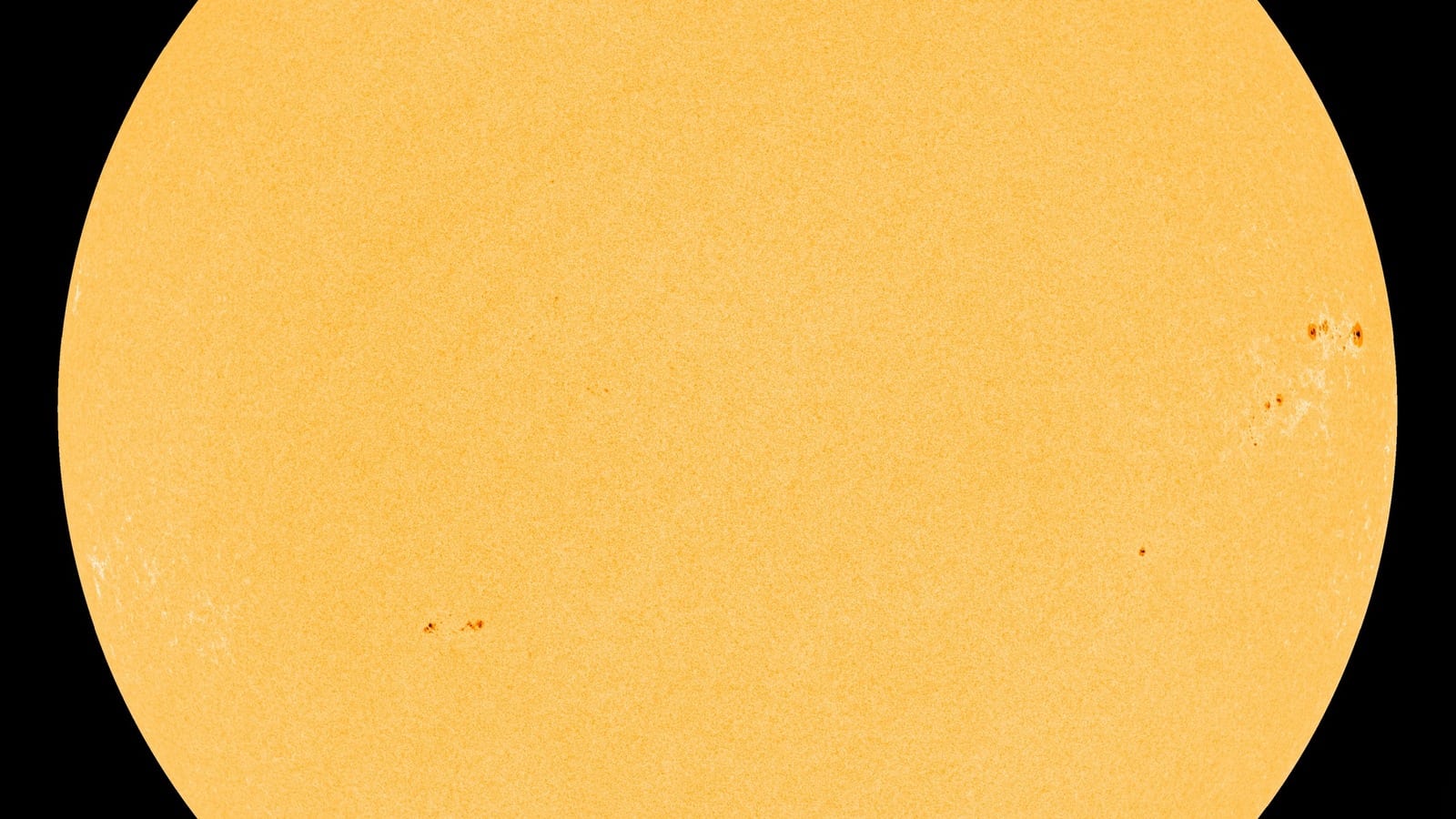
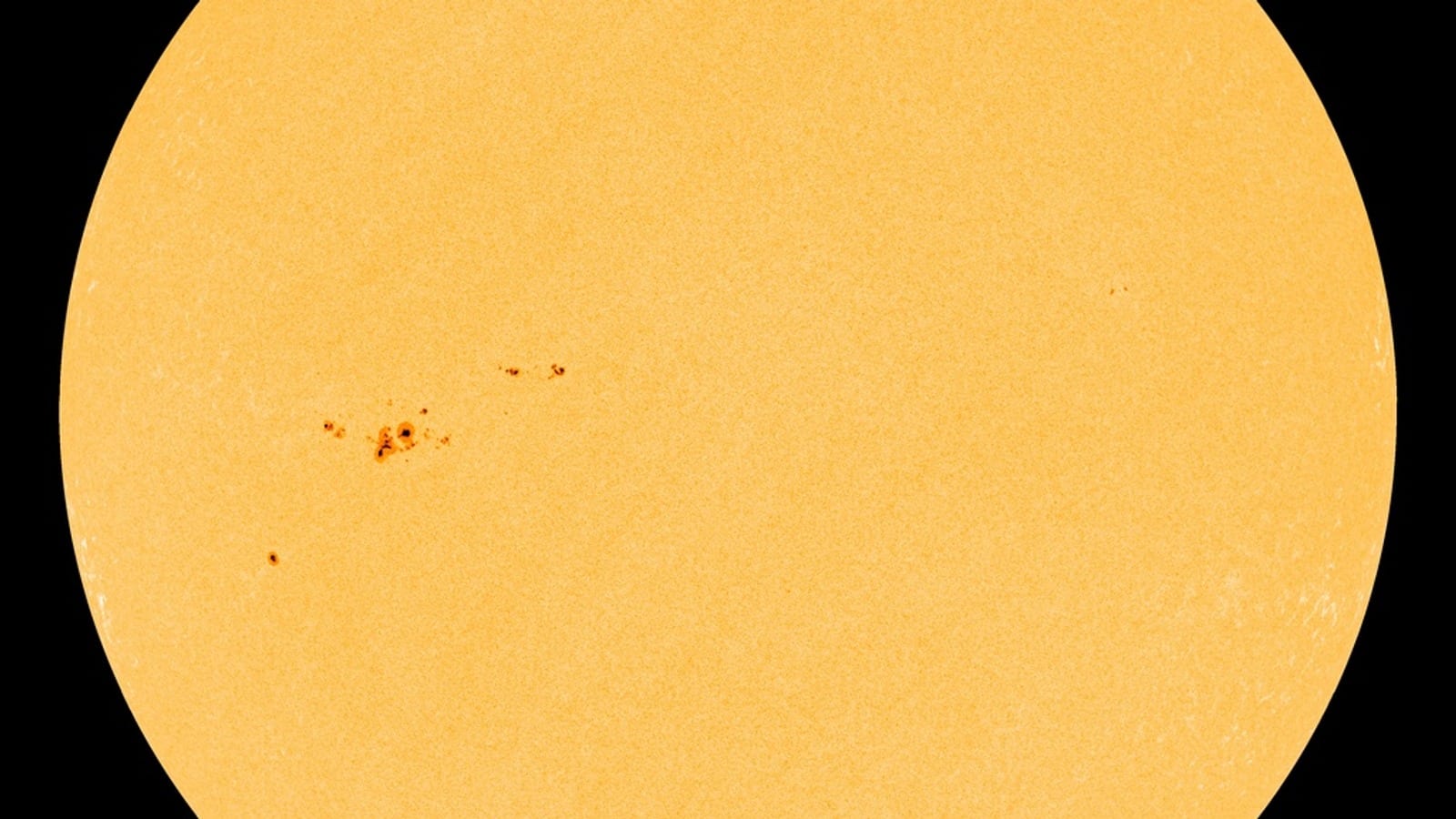
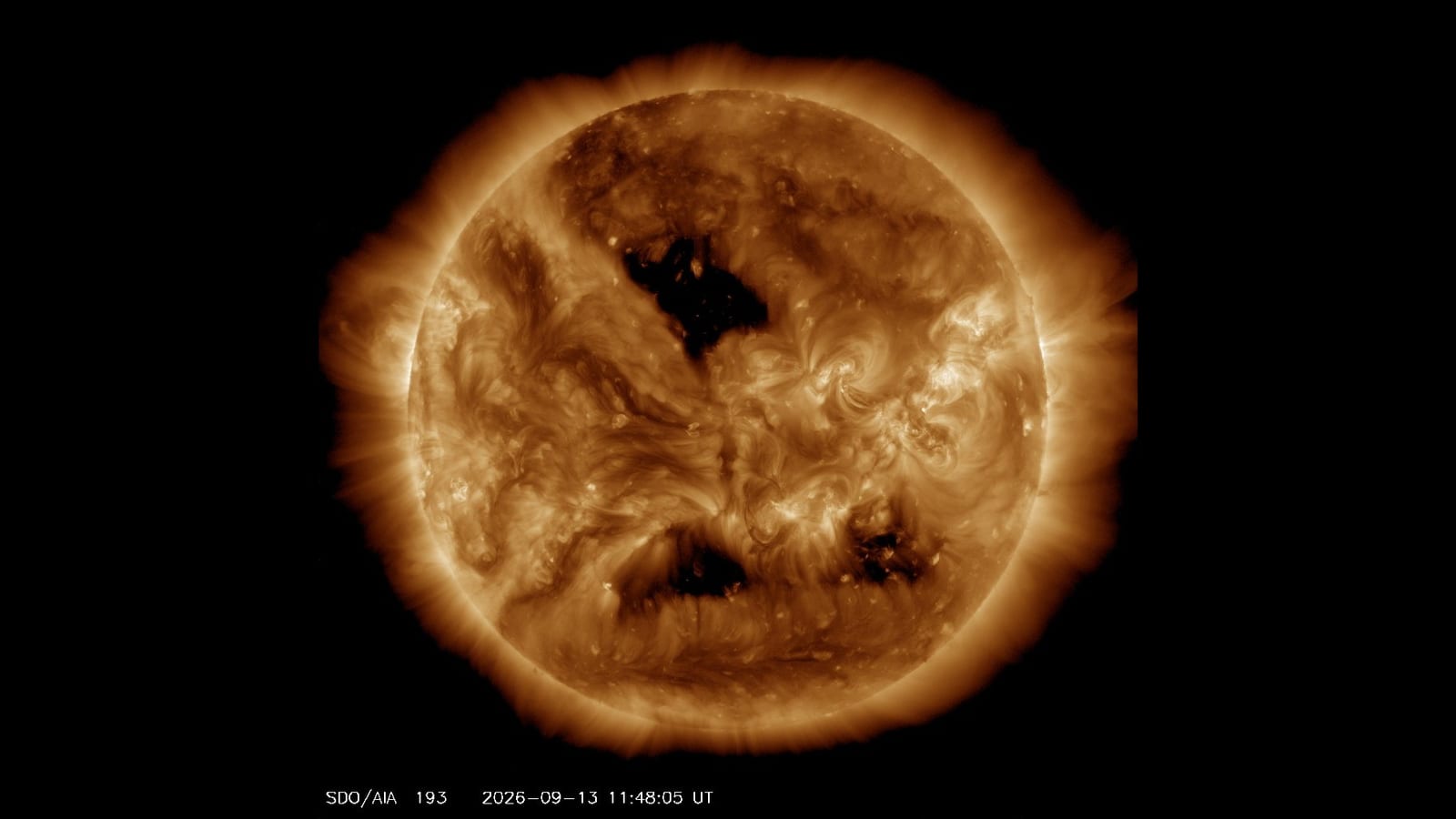
On the flux: it sits at 109, almost exactly where it sat all of last week. The reason we expect no more is in the title image. The regions that have been carrying the flux are 4521, 4524 and 4430, and they are at W93, W54 and W49. The first has already rotated over the limb, the other two follow during the week. All seven numbered regions were recently either stable or slightly decaying, and no Earth-directed CMEs were observed.
The NOAA table shows 105 for the week, then 110 from Friday and 115 by Sunday. That is a bet on recurrence: the 27-day outlook assumes the areas that were active one rotation ago will come back around the east limb. Possible, but it is statistics, not observation. Our corridor for the week: 103 to 112 from Monday to Thursday, 105 to 118 at the weekend, with the clear caveat that the upper half only happens if something genuinely new appears at the east limb. Go and look for yourself, it takes thirty seconds and beats any table.
The more interesting news is the second one. There are currently two pronounced coronal holes on the disk, clearly visible as dark areas in the title image, one north of centre and a large one at the southern edge of the equatorial zone. Their fast solar wind reaches us late on Sunday and stays effective through Tuesday. On top of that a sector boundary in the interplanetary magnetic field flips the field polarity. SWPC expects unsettled to active conditions from this, but explicitly no geomagnetic storm: the greatest expected Kp is 3.67, below the G scale.
Band forecast
10 and 12 metres: At a flux around 109 these are midday bands living off the equinox. Southbound and into the Mediterranean something opens regularly; transatlantic takes patience and the right moment around local noon. Twelve metres is currently the most underrated band of the upper group, because at this flux it is open far more often than most people assume.
15 and 17 metres: The workhorses of the week and the clear winners of the season. Both open earlier in the morning and carry later into the evening than in midsummer, with usable paths to North America in the afternoon and to Asia in the morning. On the unsettled days from Monday to Wednesday the northern paths will be damped; the southern and east-west routes remain.
20 metres: Usable around the clock with the familiar dip in the hours before sunrise. In the second half of the week, with A near 5 and a quiet field, 20 metres becomes the band with the longest contacts for the least effort.
30 and 40 metres: The nights are getting noticeably longer and you can hear it. Forty metres now carries considerably further in the evening than it did in August; 30 metres remains the quiet alternative for anyone who dislikes crowds.
80 and 160 metres: The season is starting. The noise floor drops week by week and thunderstorms become rarer. If you have plans on the low bands this year, build the antenna now rather than in November in freezing rain.
Geomagnetic forecast
The week splits cleanly into two halves.
Monday 14 September: The solar wind from the first coronal hole has arrived. SWPC expects Kp 3 to 3.67 throughout the day, the 27-day table shows A 15. Unsettled, not a storm. It costs signal on the northern paths; on southern paths little happens.
Tuesday 15 September: Much the same, Kp up to 3.67, A around 12. The sector boundary has passed, the fast stream persists.
Wednesday 16 September: Decaying, A around 10, Kp 3. From the afternoon onwards it should improve noticeably.
Thursday to Sunday, 17 to 20 September: Quiet. A around 5, Kp 2. This is the window of the week. If you have a sked list, a contest or a wanted entity, put it in those four days.
No proton event is expected, the greater than 10 MeV flux is at background, and SWPC puts the chance of S1 or greater at one percent. On flares: C class likely, an isolated M class not excluded, so the occasional short shortwave fadeout on the daylight side, nothing more.
What the equinox brings
The equinox falls on 22 September, and for radio amateurs that is not a calendar entry but a weather pattern. Two effects overlap.
The first is welcome. Around the equinox both hemispheres are illuminated equally, the ionosphere is similarly ionised along the whole path, and that is exactly what a north-south path across half the globe needs. This is why the weeks around the equinox are traditionally the best DX time on 15, 17 and 20 metres, and why the big contests sit in autumn.
The second is less welcome, at least at first glance. Geomagnetic disturbances cluster around the equinoxes, because the orientation of the Earth's field relative to the solar wind is then particularly favourable for energy transfer. In the literature this is the Russell-McPherron effect. In practice it means that in September and March disturbances are more likely for the same solar wind than in June or December.
For planning, take both together: conditions on average are as good as they get all year, but they swing harder. If you have a fixed date, check Kp the day before rather than the calendar.
Recommendations for the coming week
- The second half of the week is the good one. Thursday to Sunday, quiet field, decent flux, equinox within reach. Put everything that matters there.
- Listen on VHF on Monday and Tuesday. Kp around 3.67 is normally not enough for aurora, but the arrival of a fast stream is exactly the window in which it occasionally works anyway. It costs nothing but time.
- Watch the east limb. Whether our upper corridor happens is decided there. One look at the current SDO image is enough.
- Try 12 metres. The band is systematically underrated at a flux around 110. Thirty seconds in the Reverse Beacon Network tells you more than any forecast, including ours.
- Build the low band antenna. The best moment for 80 and 160 metres is now, while the weather cooperates and the trees are still dry.
Looking back at week 37
On flux we were too optimistic, but closer than the table. We forecast 105 to 120 at the start of the week and 110 to 125 from Wednesday, expecting NOAA to revise upwards. The measured values were 110, 110, 109, 115, 110, 109 and 109 today. The NOAA table was too low at 102 to 108, our upper bound of 125 clearly too high. The supply from the east limb did arrive, but it only balanced the departures at the west limb rather than exceeding them.
On the magnetic field we hit it squarely. For Tuesday 8 September we forecast the CME impact with Kp 4 to 4.67 and G1. Observed was a planetary A index of 29 and Kp 5.00 in the 06 to 09 UTC interval, so G1, a shade stronger than forecast. The predicted calming from Wednesday also arrived: A 12, 9, 8 and 7 on the following days.
We overestimated the weekend. Following the table we expected A 8 and A 15 for Saturday and Sunday and suspected a fast stream. It did not arrive at the weekend but only now, at the turn of the week. The explanation is above: it is the stream from the coronal holes that will shape the coming days. So we were not wrong, just two days early.
The proton event of 5 September has decayed, the flux is back at background. Polar paths have been normal since Wednesday.
vy 73 and gud DX — your DX Weather Desk
Transparency Notice
This outlook was produced with AI assistance (Claude, Anthropic) from public space weather data: the NOAA SWPC 27-day outlook (table of 7 September), the 3-day forecast and forecast discussion (both 13 September, 00:30 UTC), the daily geomagnetic indices and solar data through 12 September, and the current figures from hamqsl.com (13 September, 11:55 UTC). The title image is by NASA/SDO and is in the public domain. Content was reviewed by the oeradio.at editorial team. Corrections are welcome at [email protected].