DXpeditions activate rare entities for DX hunters worldwide. The effort behind them ranges from a long weekend on a nearby island to an icebreaker expedition with a seven-figure budget. This article explains how planning, permits, logistics, funding and operating technique fit together, and uses three attempts on the same island to show why some expeditions fail while others set records.
What is a DXpedition?
Definition: A team travels to a rare entity, typically an uninhabited island or a remote territory, and puts it on the air.
Goal: Give as many DX hunters as possible a contact, so the entity counts for DXCC or IOTA. The ARRL DXCC programme currently lists 340 valid entities. Anyone chasing all of them depends on these expeditions, because more than a dozen have no resident radio amateurs at all.
Who tops the wanted list: The Club Log Most Wanted list has been headed by North Korea (P5) for years. Behind it sit the same perennial candidates: Scarborough Reef (BS7H), Crozet (FT5/W), San Félix (CE0X), Pratas (BV9P), Kure (KH7K), Johnston (KH3), Macquarie (VK0M) and Kerguelen (FT5/X). Bouvet (3Y/B) shaped the list for decades and should drop sharply after the February 2026 activation.
Video tip: An overview of the 3Y0K Bouvet expedition, recorded shortly before the landing:
Case study Bouvet: three attempts, three outcomes
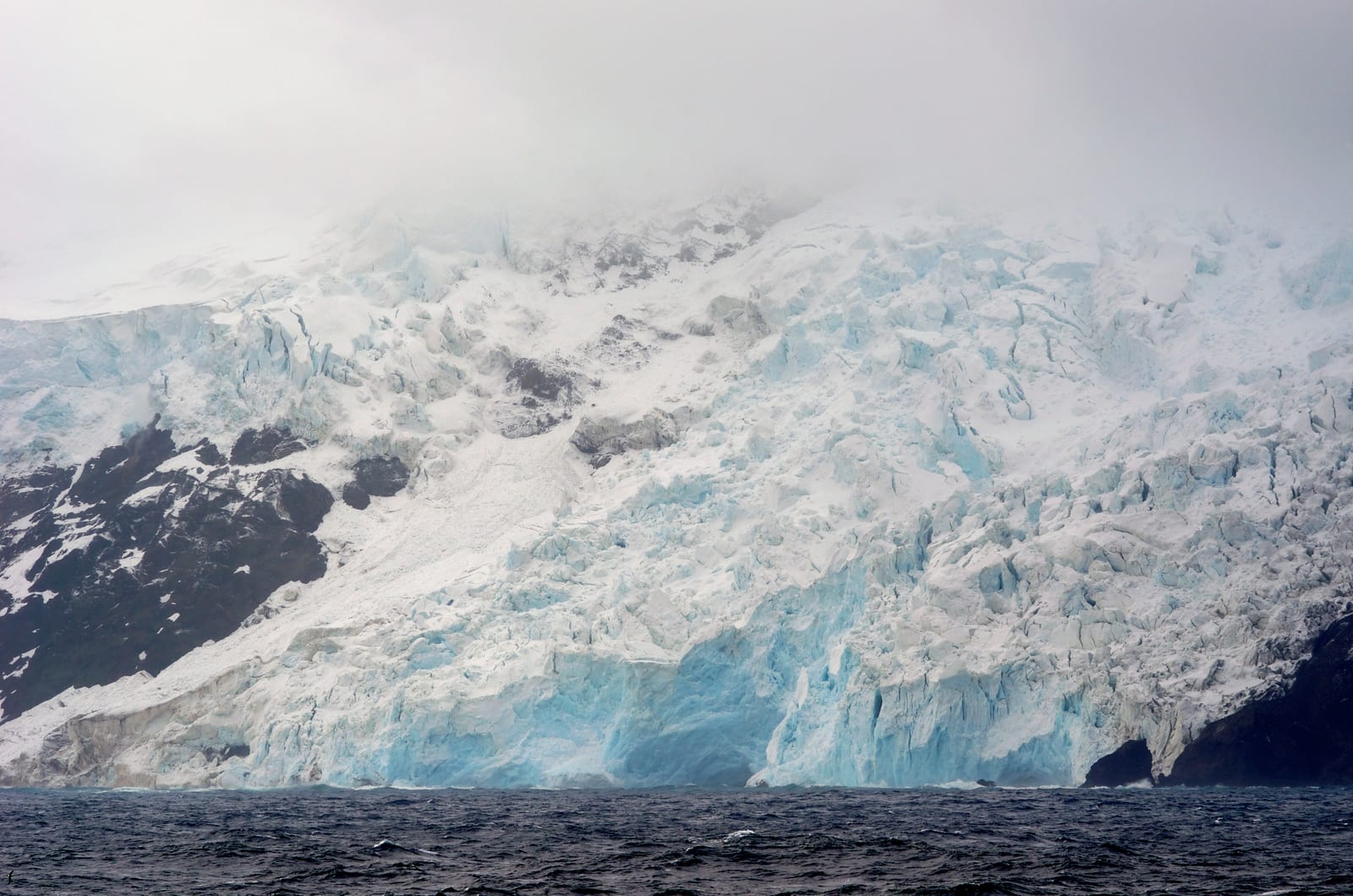
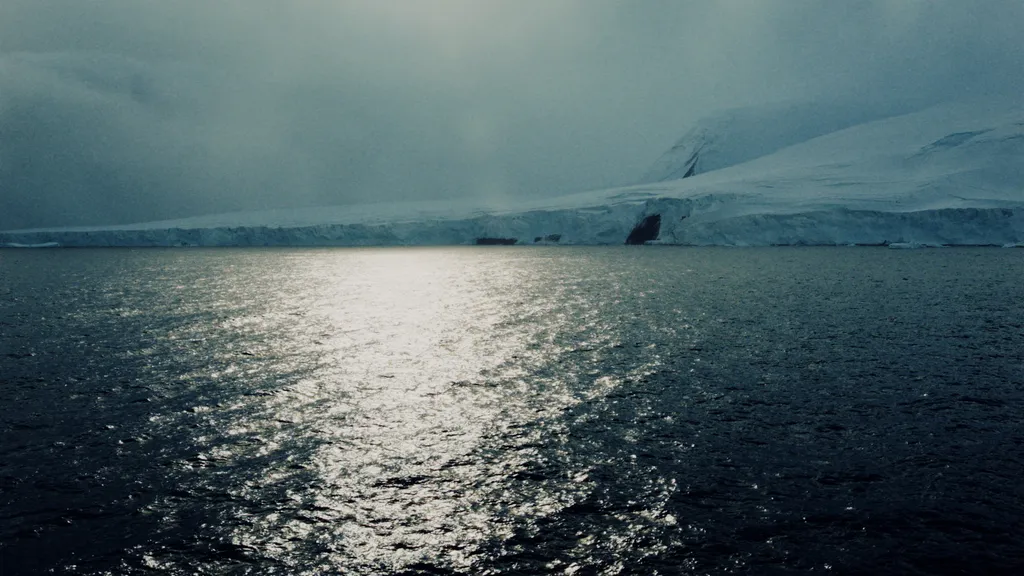
Bouvetøya lies roughly 1,500 nautical miles southwest of Cape Town, is 93 per cent glaciated and has no harbour. No other target shows as clearly that a DXpedition is 90 per cent logistics and 10 per cent radio.
3Y0Z (2018): aborted without a single QSO. The team lay off the island for three days aboard the M/V Betanzos, could not get ashore in hurricane-force winds, and when a coupling on one of the ship's engines failed, the captain declared it unsafe to continue. The expedition was called off and offered donors a refund. Final log: nothing.
3Y0J (2023): ashore, but briefly. Thirteen operators reached the island aboard the sailing yacht Marama and operated from 6 to 13 February 2023. The weather allowed only a fraction of the planned operation, and the team ended the activation early on safety grounds. The logs closed with just under 19,000 QSOs against a budget in the order of 650,000 US dollars.
3Y0K (2026): the breakthrough. An international team landed by helicopter from the Icelandic icebreaker Argus in late February 2026, built two camps at different elevations and ran up to twelve stations in parallel. On 15 March 2026 the crew left the island with more than 100,000 QSOs and around 25,000 unique callsigns in the log. Gusts around 25 m/s repeatedly destroyed tents and antennas, and the team rebuilt them every time. Total budget: about 1.7 million US dollars.
The three attempts differ less in radio technology than in how the team reached the island: sailing yacht versus icebreaker with helicopter support. For a difficult entity, the choice of transport already decides between success and abort.
Video tip: Footage from the March 2026 operation on Bouvet, including camp construction and weather:
How absurd the topic can get in community discussion was skewered by our satire section this spring: A dirty iceberg.
Planning a DXpedition
Step 1: Choose the entity
- DXCC Most Wanted: Club Log shows which entities are most urgently needed worldwide
- IOTA: The programme is capped at 1,200 island groups, and just over 1,100 have been activated. The rest is the realistic playing field for smaller teams
- Accessibility: Cost, permits, weather windows and a usable landing spot decide whether a plan becomes an expedition
Step 2: Obtain permits
- Licence: Apply for a guest licence or reciprocal recognition. Within Europe the CEPT arrangement usually applies, see operating abroad
- Callsign: A special callsign from the responsible authority, in Bouvet's case through the Norwegian administration
- Landing permit: Nature reserves, the Antarctic Treaty area and military zones each have their own procedures, often with lead times of a year or more
- Environmental conditions: Biosecurity, waste removal and minimum distances from colonies are standard for subantarctic targets and are not negotiable
Step 3: Organise the logistics
- Transport: Scheduled flight, chartered vessel, Zodiac or helicopter. On difficult targets the landing method drives everything else
- Accommodation: Hotel, research station, expedition tent or ship's cabin
- Power: Generators with spares, fuel for the full duration, battery buffer. Basics in our article on self-sufficient operation
- Communications: A satellite link for emergencies, weather data and log uploads
- Pilot stations: Several pilots across different continents collect feedback from the community and pass it to the team in one bundle
DXpedition equipment
Transceivers:
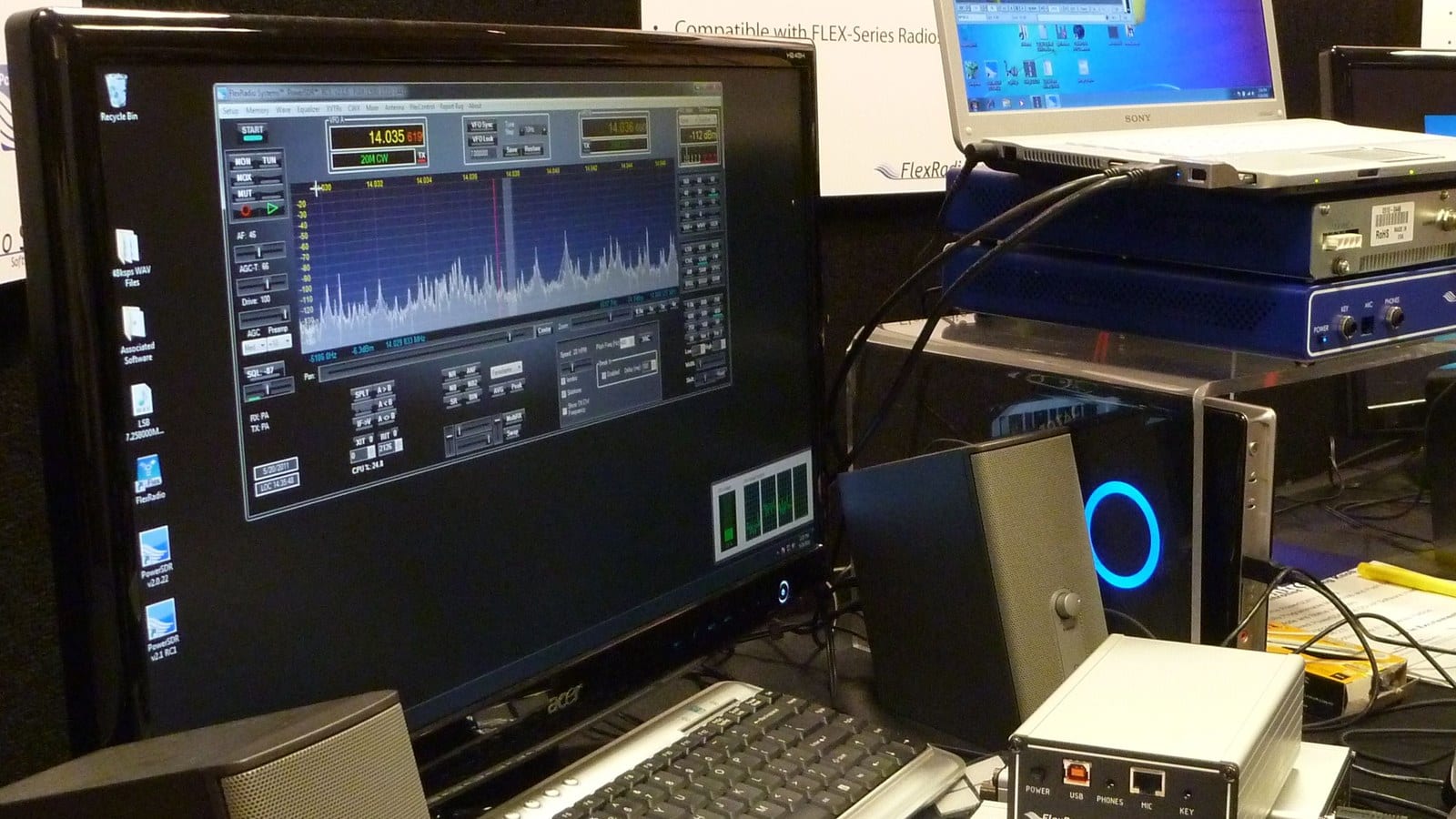
- HF: Rugged, transportable radios with good strong-signal performance. The 2026 Bouvet team used twelve Icom IC-7610 plus four IC-7300 as reserves
- Amplifier: 500 to 1,000 W so the signal gets through a crowded band
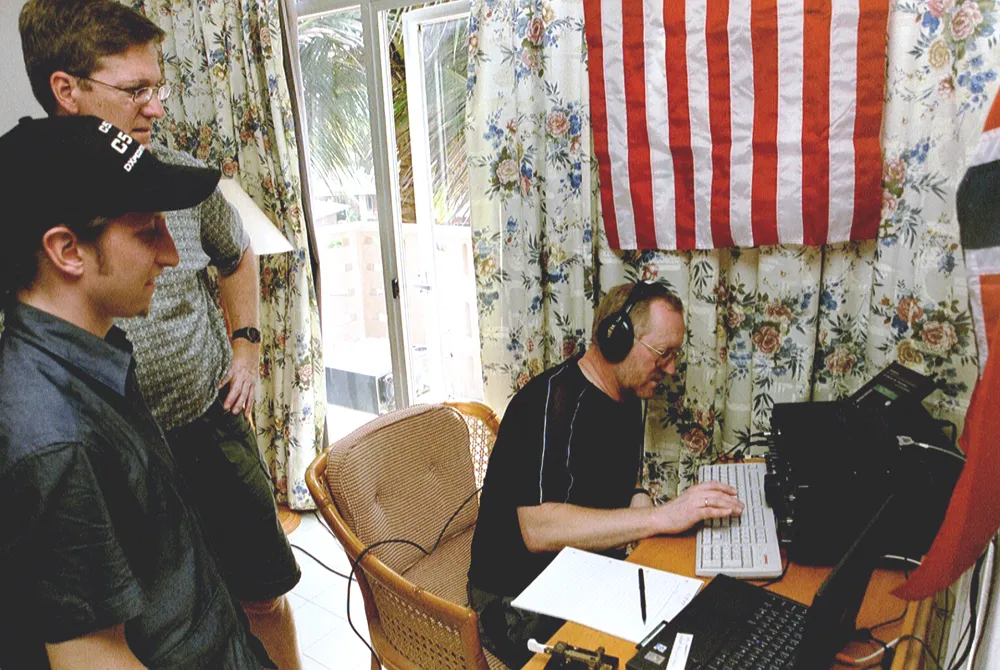
- Multiple stations: Multi-operator work multiplies the QSO rate, but demands band-pass filters and enough separation between antennas
Antennas:
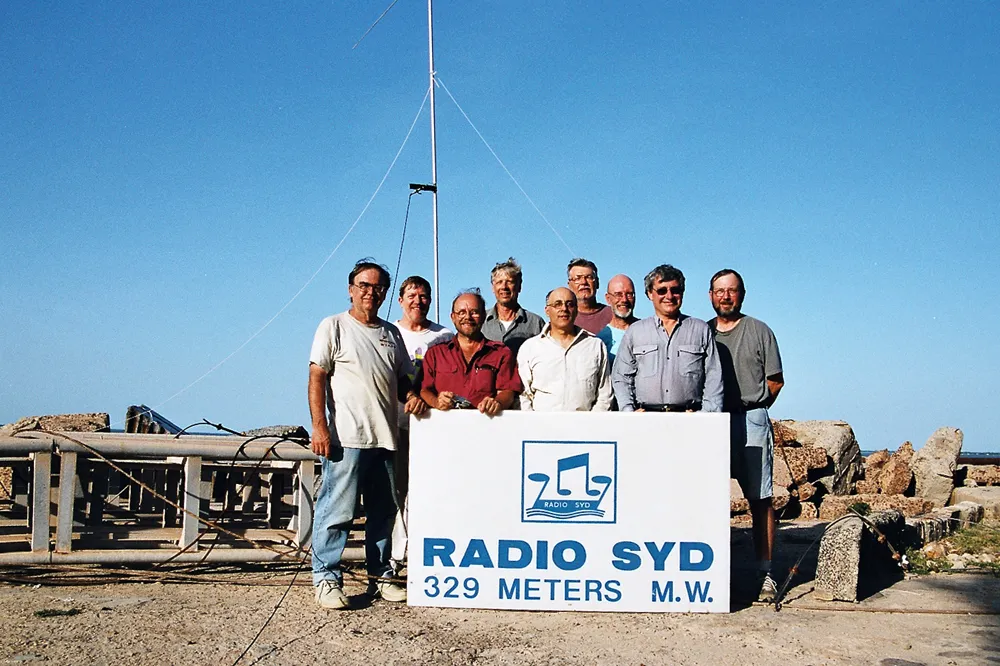
- Verticals at the saltwater edge: The best trick of any island expedition, because sea water acts as a near-perfect ground
- Beams: Yagi or hexbeam for gain towards the target continent
- Wire antennas: Dipoles and inverted-V as a quickly replaceable backup when a storm takes out the main antenna
- Spares: Radials, guys, coax connectors and tools in duplicate, because there is no resupply on site
Video tip: How a team selects and erects its antennas for a Pacific DXpedition:
Logging:
- Software: N1MM+ or Win-Test in network mode, so every station sees the same log and spots dupes instantly
- Cluster: The DX cluster spreads the spots and drives the pile-up whether the team wants it or not
- Upload: Club Log daily if possible, LoTW and QSL handling after the return
Operating technique
Pile-up management:
- Split operation: Transmit on one frequency, listen across a range above it, announced as "up 5" or "up 5 to 10"
- Short QSOs: Callsign and report, nothing else. Every superfluous syllable costs hundreds of contacts over a run
- QSX: "QSX 14.195" means the expedition listens there. Calling on the transmit frequency anyway blocks exactly the station you want to work
- Discipline on the other side: Do not call while a QSO is in progress, and never repeat your own callsign once the expedition has picked up somebody else
Video tip: Split operation explained step by step, for both sides of the pile-up:
Scheduling:
- Grey line: Reserve the twilight zone deliberately for the hardest target continents
- All bands: Cover 160 m through 10 m, even if the low bands are usable only a few hours per day
- Band quotas: An operating plan stops every operator from sitting on the most comfortable band at once
- Continent fairness: Schedule windows for North America, Europe and Asia, otherwise whole regions go home empty-handed
FT8 in Fox and Hound mode
FT8 changed expedition operating because it completes contacts below the noise floor. Expeditions get a dedicated mode:
- Fox and Hound: The expedition is the "Fox" and transmits up to five signals simultaneously, the callers are the "Hounds". In theory this allows rates around 600 QSOs per hour
- SuperFox: The successor transmits up to nine messages at once with no signal-strength penalty, worth roughly 10 dB of system gain compared with classic Fox operation. Callers need at least WSJT-X 2.7.0-rc5
- Consequence for callers: Anyone running an outdated version simply does not see the expedition. Updating before a major DXpedition pays off
The 2026 Bouvet team ran FT8 exclusively in Fox and Hound mode to keep the pile-up orderly.
Video tip: Fox and Hound set up and explained in WSJT-X:
Cost and funding
Small DXpedition (IOTA, easily reachable island): 2,000 to 5,000 euros for flights, accommodation and equipment, usually out of pocket.
Medium expedition with a chartered boat: mid five figures, often with grants from DX foundations.
Major subantarctic expedition: 650,000 US dollars for 3Y0J in 2023, around 1.7 million for 3Y0K in 2026. The bulk goes on the ship and the helicopter, not on radio gear.
Funding:
- Own funds: On large expeditions, team members routinely pay five-figure sums themselves
- Foundations and clubs: The Northern California DX Foundation contributed more than 100,000 US dollars as a matching grant to 3Y0K, alongside national DX associations
- Community donations: Many DX hunters donate up front because they need the entity in their log
- Sponsorship: Manufacturers supply radios, antennas and amplifiers, partly on loan, partly as donations
Famous DXpeditions
- FT5ZM (Amsterdam Island, 2014): around 170,000 QSOs in CW, SSB and RTTY on 160 through 10 m, still a benchmark
- VP8ORK (South Orkney Islands, 2011): 63,643 QSOs from one of the bleakest island groups in the South Atlantic
- 3Y0K (Bouvet, 2026): more than 100,000 QSOs with roughly 25,000 unique callsigns
- 3Y0Z (Bouvet, 2018): the most instructive case, because it shows that a perfectly prepared team can go home without a single QSO
Starting small
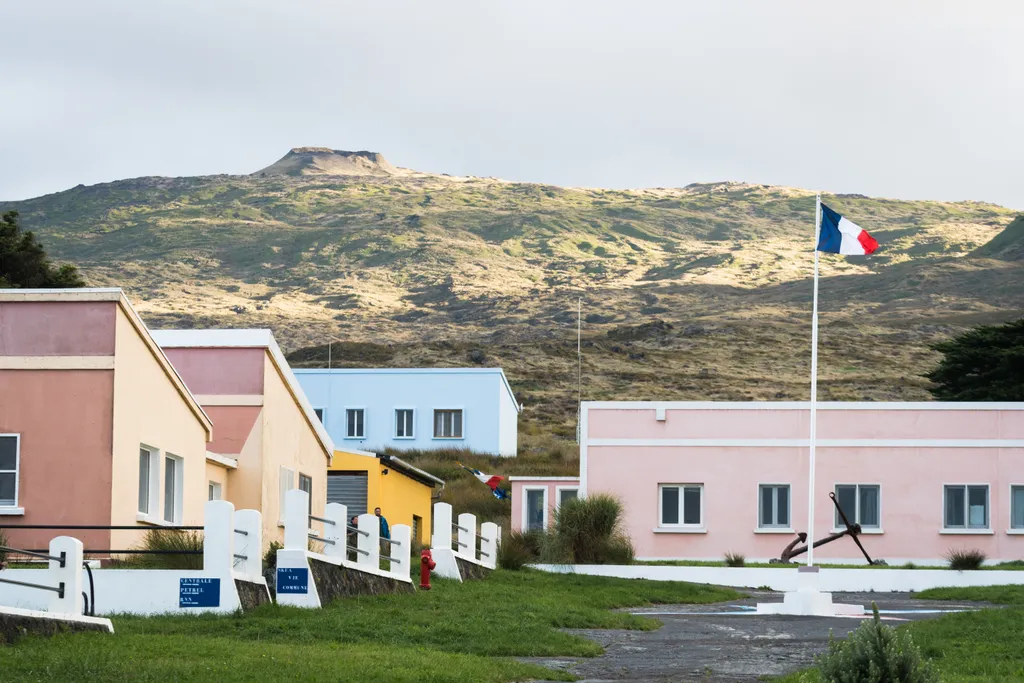
The way into expedition operating does not lead through the subantarctic, but through easily reachable island groups in the Adriatic and the Aegean, through POTA and SOTA. Anyone who has worked an IOTA contest from a small island already knows the decisive part of the experience: limited power, limited time and a pile-up you have to control yourself.
A practical plan for the first attempt:
- Pick an island group reachable by ferry and settle the licence question via the CEPT arrangement
- Announce the activity in advance so DX hunters know the date
- Fix a band plan instead of hopping at random, and practise DX operating at home first
- Upload the log promptly to Club Log and LoTW, which today matters more than any printed QSL card
If you just want a taste of pile-up pressure, a contest is the obvious practice ground.
After the expedition
The work does not end with the last QSO. Logs have to be cleaned, busted calls resolved and uploads pushed to Club Log and LoTW. Only then does the contact count towards an award. Large expeditions use a QSL manager who handles direct requests, OQRS and bureau mailing. And because many donors want their card as proof, card printing is a fixed budget item, not an afterthought.
73 – your oeradio.at editorial team
Sources
- 3Y0K Bouvet Island DXpedition 2026 (official site: team, budget, equipment)
- ARRL: 3Y0Z Bouvet Island DXpedition Aborted over Safety Concerns (2018)
- ARRL: Bouvet Island DXpedition Wraps Up (3Y0J, 2023)
- Wikipedia: 3Y0J Bouvet Island DXpedition (team, vessel, budget)
- Club Log: DXCC Most Wanted List
- ARRL DXCC Program
- RSGB: IOTA Programme (1,200 island groups, activation status)
- K1JT: FT8 DXpedition Mode User Guide (PDF)
- DX-World: Super Fox Mode
- N7NG: DXpeditioning Basics (ARRL, PDF)
- Northern California DX Foundation
Image credit: Title image Bouvetøya, west coast with calving glacier, photo: François Guerraz, CC BY-SA 3.0, Wikimedia Commons. Further credits appear under the individual images.
Transparency Notice
This article was researched and written with the support of AI (Claude, Anthropic). The content was reviewed by the oeradio.at editorial team and prepared for the Austrian amateur radio community. All photographs come from Wikimedia Commons under free licences, with the authors named alongside each image. Questions and corrections to [email protected].