
Table of Contents
- CEPT T/R 61-01 — the Full Licence Abroad
- CEPT T/R 61-02 — for the Novice Class
- Callsign Format Abroad
- Which OE Licence Class Qualifies for What?
- Non-CEPT Countries — Reciprocal Agreements and Special Permits
- Equipment for Operating Abroad
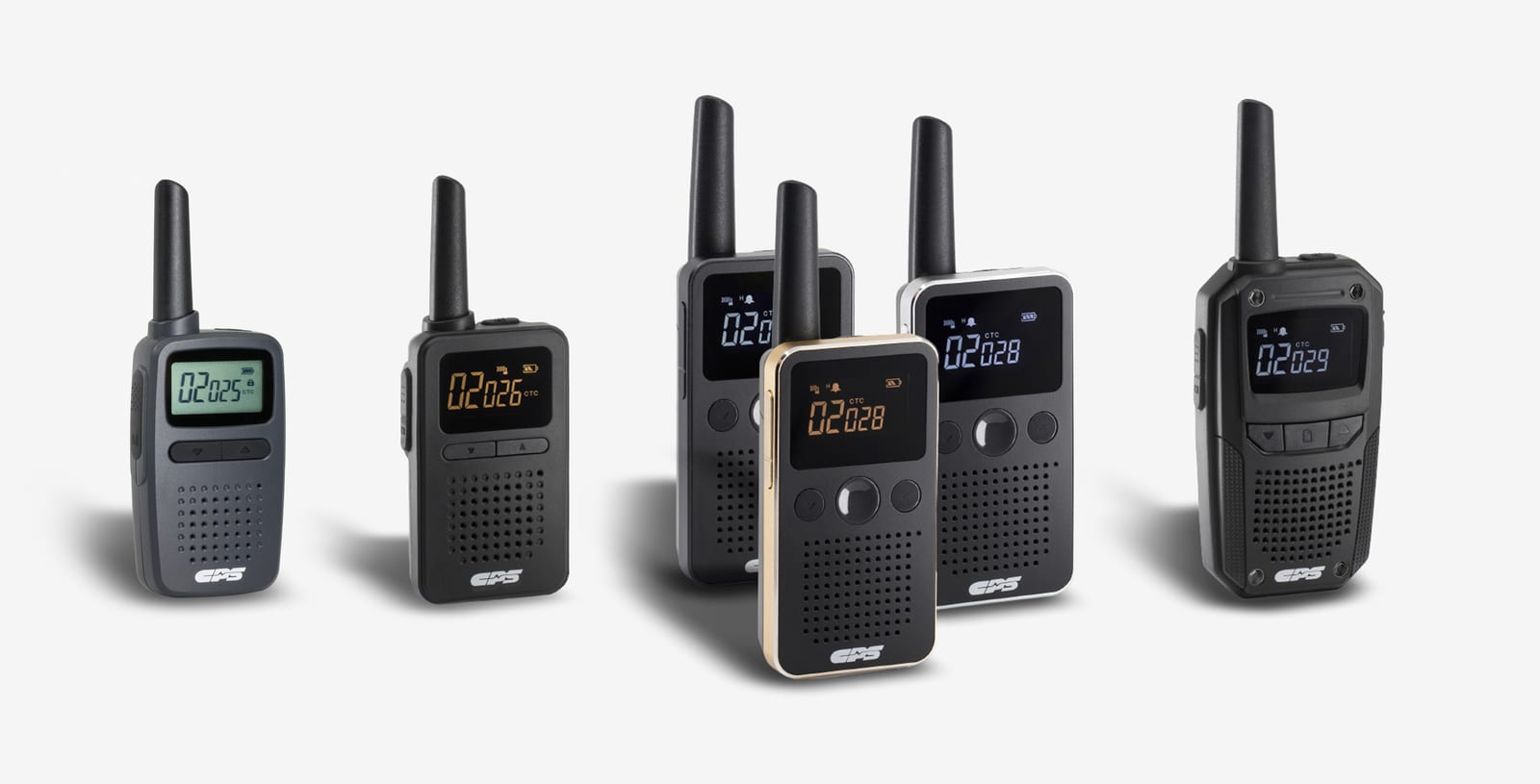
- Transceivers
- Travel Antennas
- Local Band Plans and Power Limits
- Popular Radio Activities Abroad
- Logging and QSL Abroad
- Documents to Carry
- Batteries and Equipment on Aeroplanes
- Internet and Connectivity Abroad
- Austria's Neighbouring Countries — a Quick Travel Guide
- Germany (DL)
- Italy (I)
- Slovenia (S5)
- Switzerland (HB9)
- Czechia (OK)
- Hungary (HA) and Slovakia (OM)
- Practical Tips for a Radio Holiday
- Conclusion: The World Is Your Shack
- Transparency Notice
Amateur radio knows no borders — at least the radio waves don't. But anyone travelling with a transceiver in their luggage quickly faces a crucial question: Am I actually allowed to operate in another country? The answer is yes, but under certain conditions. The European CEPT agreement makes it particularly easy for Austrian radio amateurs to get on the air abroad. This article explains the regulations, what you need to know, and how to prepare optimally for your next radio holiday.
CEPT T/R 61-01 — the Full Licence Abroad
The cornerstone of international amateur radio operation in Europe is CEPT Recommendation T/R 61-01. It allows holders of a full amateur radio licence to operate temporarily in all participating countries — without needing to apply for a local licence. The agreement is recognised by approximately 50 countries, including all EU member states, Switzerland, Norway, Turkey, and many more.
The key principles of T/R 61-01:
- Mutual recognition: The full amateur radio licence from your home country is recognised in the host country — no additional permit is required.
- Temporary operation: The regulation applies to temporary stays. Anyone relocating permanently to another country must obtain a local licence there.
- Local regulations apply: The host country's band plans, power limits, and operating rules must be observed. These may differ from Austrian regulations!
- Callsign format: Abroad, your own callsign is prefixed with the host country's prefix, separated by a slash.
CEPT T/R 61-02 — for the Novice Class
In addition to the full licence, there is CEPT Recommendation T/R 61-02, created specifically for entry-level licence classes — the CEPT Novice Licence. Anyone holding the Austrian Class 4 licence can operate under this regulation in participating countries, though with restrictions compared to the full licence:
- Lower maximum transmit power (typically 100 watts EIRP or less, depending on the host country)
- Restricted frequency access — not all bands are available
- The number of participating countries is smaller than for T/R 61-01
Despite these limitations, T/R 61-02 offers Class 4 holders an excellent opportunity to stay active during holidays — especially on the popular 20 m and 40 m bands, operation is perfectly feasible.
Callsign Format Abroad
Abroad, you use a composite callsign following the pattern host country prefix/home callsign. Some examples for Austrian stations:
- F/OE8XXX — operating from France
- DL/OE8XXX — operating from Germany
- I/OE8XXX — operating from Italy
- S5/OE8XXX — operating from Slovenia
- HB9/OE8XXX — operating from Switzerland
- 9A/OE8XXX — operating from Croatia
- OK/OE8XXX — operating from Czechia
In CW, the slash is sent as "DAH-DI-DI-DAH-DIT". For FT8 and other digital modes, the composite callsign works automatically, though some logging programs may have limitations — check before your trip.
Which OE Licence Class Qualifies for What?
Austria has three licence classes that differ significantly regarding CEPT authorisation:
- Class 1 (CEPT Licence): Full international authorisation under T/R 61-01. Allows operation in all approximately 50 CEPT countries without additional permits. This is the recommended class for anyone who wants to operate abroad regularly.
- Class 4 (CEPT Novice): Authorisation under T/R 61-02 with the described restrictions. Still perfectly adequate for holiday operating.
- Class 3: This entry-level class is valid only in Austria and is not recognised internationally. Anyone wishing to operate abroad with a Class 3 licence must either upgrade to Class 4 or Class 1 — or apply for an individual permit in the host country, which is rarely practical.
Anyone planning the amateur radio exam who also wants to operate abroad should aim directly for Class 1 — the additional preparation effort is well worth it.
Non-CEPT Countries — Reciprocal Agreements and Special Permits
Not all countries participate in the CEPT agreement. Some popular destinations have special regulations:
- USA: A reciprocal permit agreement exists. Austrian radio amateurs can operate with a US callsign (W/OE8XXX) but must apply to the FCC in advance. The process takes several weeks — start well before your trip!
- Japan: A reciprocal agreement also exists here. Applications go through Japan's Ministry of Internal Affairs and Communications (MIC). Processing can take several weeks.
- Canada: Relatively straightforward — the CEPT licence is recognised through an agreement, and operation is possible with the VE/ prefix.
- IARP (International Amateur Radio Permit): For North and South America, the IARP agreement enables operation in participating countries (including Argentina, Brazil, Peru, Uruguay). The IARP is applied for through your national amateur radio association.
- Other countries: In many countries across Asia, Africa, and Oceania, an individual temporary licence must be applied for. Lead times vary from a few days (Thailand) to several months (India). Research requirements well in advance.
Equipment for Operating Abroad
Choosing the right equipment determines the success and enjoyment of operating on holiday. Here are some proven recommendations:
Transceivers
- Icom IC-705: The all-rounder for the road — HF, VHF, and UHF in one compact housing with built-in battery, touchscreen, and Bluetooth. Ideal for hotel, holiday apartment, or the beach. Ten watts with a good antenna are enough for worldwide contacts, as QRP operation impressively demonstrates.
- Yaesu FT-818ND: The proven QRP classic with 6 watts on all bands. Robust, power-efficient, and tried and tested millions of times.
- Xiegu G90: 20 watts on HF with built-in antenna tuner. Compact, affordable, and surprisingly capable.
- Elecraft KX2: Only 370 grams, perfect for backpackers. Premium receiver in an incredibly compact format.
For digital modes like FT8, a Digirig interface is a compact solution for connecting your transceiver to a laptop.
Travel Antennas
The antenna is at least as important as the transceiver when operating on the road. Proven portable antennas for travel:
- EFHW (End-Fed Half-Wave): The most popular travel antenna. A thin wire, a small transformer — done. Can be strung between trees, along a balcony railing, or from a telescopic mast. Multi-band versions cover 40 m to 10 m.
- Telescopic mast with wire: A 6–10 m fibreglass telescopic mast fits in a suitcase and turns any location into a radio station.
- Linked dipole: A dipole with removable extensions for different bands — particularly versatile.
- Magnetic loop: Ideal for hotel operation, as it needs little space and no guy ropes. Works on a balcony or even inside a room.
- Vertical travel antenna: Compact verticals with radials are especially suitable for beach operation — saltwater provides an excellent ground plane.
Local Band Plans and Power Limits
Caution: Band plans and maximum permitted transmit powers vary from country to country! Some important differences:
- 60-metre band: Not permitted in many countries, or only with severely restricted power and on specific frequencies
- Power limits: In Austria, up to 400 watts PEP are permitted on HF. In Italy it is 500 watts EIRP, Switzerland has different limits, and in some countries the cap is considerably lower.
- VHF/UHF: The 70 cm allocation varies considerably — in France, for example, the 430–440 MHz range is restricted
Research local regulations before every trip. The IARU Region 1 band plans are a good starting point, but national regulations may differ.
Popular Radio Activities Abroad
A radio holiday combines perfectly with existing activity programmes:
- SOTA abroad: The Alpine countries (Switzerland, Italy, France, Slovenia) offer spectacular summits. The Pyrenees, Scottish Highlands, and Scandinavian fells are also popular with SOTA activators. Your OE callsign with the host country prefix counts normally for the SOTA programme.
- POTA abroad: Parks On The Air is active worldwide. The USA has thousands of registered parks, and in Europe the number of POTA references is growing steadily.
- WWFF activations: A flora and fauna area in your holiday country? An activation counts towards your WWFF statistics.
- IOTA (Islands On The Air): Anyone visiting an island can activate it as an IOTA reference. Mediterranean islands, the Greek islands, and the Canaries are particularly popular.
- DXpeditions: The ultimate challenge — a trip to a rare DXCC entity to give thousands of radio amateurs worldwide a new country in their log.
- Contest trips: Some radio amateurs travel specifically to countries with multiplier advantages to achieve better results in international contests.
Logging and QSL Abroad
Operating abroad brings some particularities when it comes to logging:
- Use UTC: As always in amateur radio — log all times in UTC, regardless of the local time zone.
- Log callsigns correctly: Your host country callsign (e.g. I/OE8XXX) must appear in the log. In ADIF, this is entered as STATION_CALLSIGN.
- Specify location: Enter the grid locator and DXCC of the host country correctly — this is important for award and diploma credits.
- QSL cards: Via the host country's bureau or your home QSL bureau. Alternatively, electronically via LoTW, eQSL, or Club Log. For LoTW, the host country callsign must be certified separately — handle this before your trip too.
Documents to Carry
You should always have the following documents with you:
- Copy of your amateur radio licence: Original or certified copy — ideally in your wallet and additionally as a scan on your smartphone
- CEPT recommendation (printout): A printout of the relevant CEPT recommendation (T/R 61-01 or 61-02) with the country list can be helpful during inspections
- Identity card or passport: For identification in connection with your callsign
- Any special permit: If you are visiting a non-CEPT country and have applied for a temporary licence
Batteries and Equipment on Aeroplanes
Transporting radio equipment by air requires particular attention, especially regarding batteries:
- Lithium batteries in carry-on: LiPo and LiFePO4 batteries must not be transported in checked luggage — carry-on only! This applies worldwide across all airlines.
- Watt-hour limits: Batteries up to 100 Wh may be carried in hand luggage without restriction. Between 100 and 160 Wh, airline approval is required. Over 160 Wh, transport as a passenger is generally prohibited. Most QRP batteries fall below 100 Wh.
- Tape the terminals: The contacts of all batteries must be protected against short circuits — tape over the terminals or place batteries in individual protective cases.
- Transceiver in luggage: The radio itself can be transported in checked luggage, but carry-on is better — it is sensitive electronics. At security, a brief note helps: "This is an amateur radio transceiver."
- Antenna parts: Telescopic masts, wire spools, and antenna tuners are unproblematic. Long metal rods might raise questions — a brief explanation usually suffices.
Internet and Connectivity Abroad
Modern amateur radio often uses the internet as a supplement — including abroad:
- EU roaming: Within the EU, you can use your mobile plan at no extra cost. This is perfect for accessing DX clusters, POTA spots, SOTA alerts, and APRS-IS via your smartphone as a hotspot.
- FT8 logging: Anyone travelling with a Digirig and laptop needs an accurate time source for WSJT-X or JTDX — your smartphone as a GPS time reference is a reliable solution.
- Spotting: Self-spotting via the POTA app or SOTAwatch is essential for activators — so the hunters can find you.
- Outside the EU: Local SIM cards or eSIMs are often cheaper than international roaming. Many countries offer good prepaid deals.
Austria's Neighbouring Countries — a Quick Travel Guide
For OE radio amateurs, the neighbouring countries are the most obvious destinations for a first experience of operating abroad. All participate in the CEPT agreement:
Germany (DL)
Callsign: DL/OE8XXX. Band plans and power limits very similar to OE. 750 watts PEP on HF for Class A. A very active amateur radio community with many repeaters and good infrastructure. Ideal for your first experience of operating abroad — virtually no language or regulatory barriers.
Italy (I)
Callsign: I/OE8XXX (or IT9/ for Sicily, IS0/ for Sardinia). Power limit 500 watts EIRP. Note: some Italian regions have additional restrictions in nature reserves. The Dolomites and South Tyrol offer spectacular SOTA opportunities with an Alpine backdrop.
Slovenia (S5)
Callsign: S5/OE8XXX. Slovenia is a paradise for SOTA activators — the Julian Alps, the Karawanken, and Triglav National Park offer countless summits. The amateur radio community is active and welcoming. For operators in Carinthia and Styria, Slovenia is often the nearest opportunity for operating abroad.
Switzerland (HB9)
Callsign: HB9/OE8XXX. Switzerland is a SOTA mecca with over 2,500 registered summits. Band plans are largely compatible with OE. Power limit 1,000 watts PEP. Noteworthy: Liechtenstein (HB0) is a separate DXCC entity and easily reached from Vorarlberg — a readily accessible "new country" for DXCC chasers.
Czechia (OK)
Callsign: OK/OE8XXX. An active contest community and many repeater sites. For operators in Upper Austria and Lower Austria, the nearest foreign destination. The Bohemian Forest offers peaceful locations for portable operation away from mass tourism.
Hungary (HA) and Slovakia (OM)
Callsigns: HA/OE8XXX and OM/OE8XXX respectively. Both countries are CEPT participants. The High Tatras in Slovakia offer alpine SOTA summits, while Hungary, with Lake Balaton and the puszta, provides flat but propagation-wise interesting locations — ideal for DX operation with vertical antennas.
Practical Tips for a Radio Holiday
- Test beforehand: Set up your travel station at home and test it — nothing is more frustrating than a faulty cable at your holiday destination.
- Bring spares: BNC adapters, a spare fuse, a second USB cable, and a few metres of wire can save your holiday.
- Choose accommodation wisely: Holiday apartments with a balcony or garden are better than ground-floor hotel rooms. Some landlords allow you to set up a telescopic mast in the garden — ask politely.
- Involve the family: Combine radio operation with hiking, the beach, or sightseeing. A SOTA summit on a shared hike or half an hour of POTA in a park — that turns a radio holiday into a family holiday.
- Enjoy the pile-up: As a host-country station, you are a sought-after target for hunters and DXCC chasers. Enjoy the attention — it is a wonderful feeling when half the world is calling you.
Conclusion: The World Is Your Shack
Thanks to the CEPT regulations, it has never been easier to take amateur radio on your travels. With an OE Class 1 licence, you can get on the air in approximately 50 countries without worrying about local permits. A compact transceiver, a wire antenna, and a few hours of preparation — that is all it takes to reach the world from a beach in Croatia, a mountain summit in Switzerland, or a campsite in Sweden.
Whether you are planning a relaxed POTA afternoon in a national park, want to climb a SOTA summit in a neighbouring country, or wish to work DX from a Mediterranean island — amateur radio turns every trip into an adventure. So pack your transceiver, don't forget the antenna, and 73 from abroad!
73 – your oeradio.at editorial team
Transparency Notice
This article was researched and written with the assistance of AI (Claude, Anthropic). The editorial team has reviewed and edited all content. Despite careful review, occasional inaccuracies may occur — we welcome corrections via email to [email protected].