Table of Contents
- How many people this affects
- Three layers that have nothing to do with each other
- Tenants: § 9 MRG and the two-month deadline
- The catch we ourselves got wrong
- Restoration
- The crucial caveat: does § 9 apply at all?
- Condominiums: § 16 WEG
- What the courts say
- Building codes: nine provinces, nine answers
- The template letter
- What others in exactly this situation are working with
- If the answer is no
- Lightning protection: the argument property managers raise first
- Insurance
- Neighbours and interference
- A look at Germany
- The short way through
- Transparency Notice
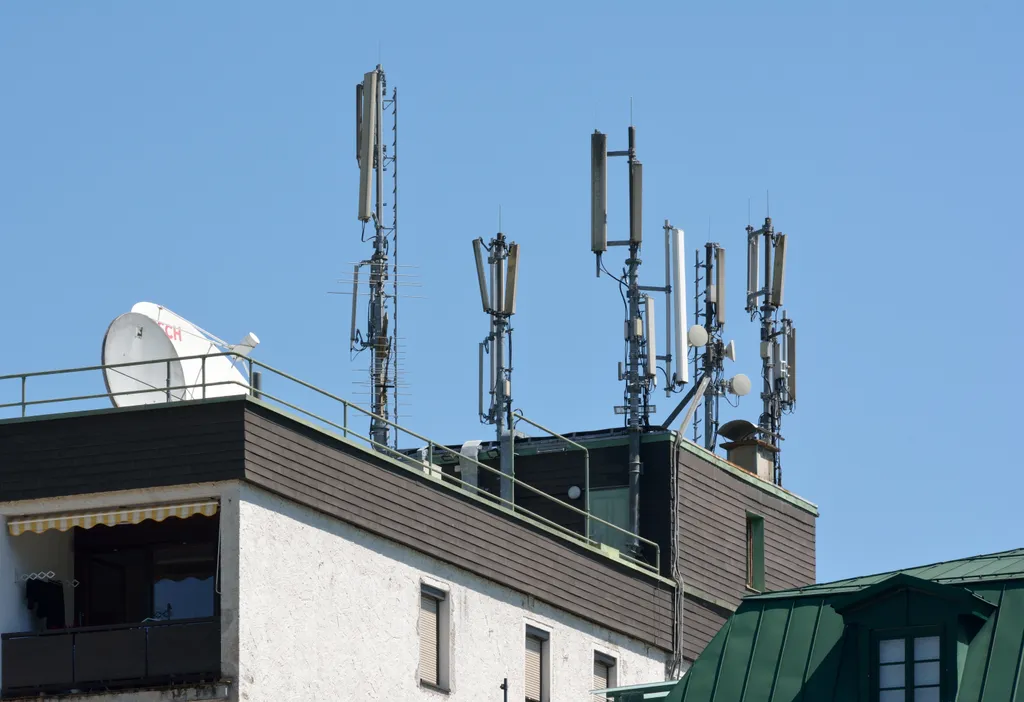
Most antenna problems in multi-party buildings are not antenna problems. They are jurisdiction problems. Which antenna physically fits into a flat, and what invisibility costs in signal, is covered in stealth antennas for apartments and HOA. This article is about the other half: who has to consent, what happens when nobody answers, how a notification should be worded so the deadlines work for you, and where to go when the answer is no.
That is not legal decoration, it is the part where the project actually succeeds or fails. And it is worth knowing, because Austrian law is friendlier at one decisive point than most people assume: silence can mean consent.
How many people this affects
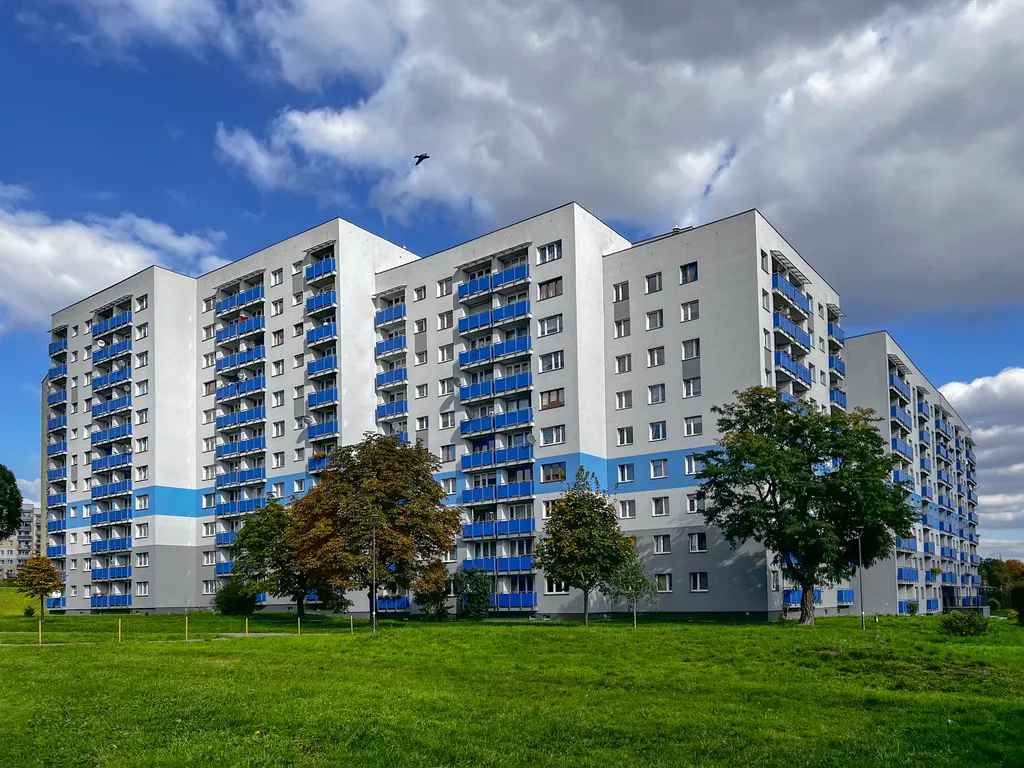
According to the micro-census housing survey by Statistics Austria, 78 per cent of private households in Vienna live in rented accommodation, sublets included. Across Austria, 36 per cent of households live in owner-occupied houses. For radio amateurs that means the majority have no roof of their own to decide over.
Austria has no general antenna ban. It also has no explicit right to a transmitting antenna. What it does have are three separate layers that get mixed up all the time.
Three layers that have nothing to do with each other
- Amateur radio law: your licence allows you to operate a station. It says nothing about whether you may drill into somebody else's façade. What the licensing rules do and do not cover is in our overview of Austrian amateur radio legislation.
- Private law: the lease, the Tenancy Act, the Condominium Act. This is where it is decided whether the landlord or the co-owners get a say.
- Public building law: the building code of the respective province. It does not care who owns the house, only about size, location and townscape.
All three can say no independently. An antenna that is permit-free under the building code can still be refused by the landlord, and an antenna approved by the landlord can be inadmissible in a protection zone.
Tenants: § 9 MRG and the two-month deadline
The central provision is § 9 MRG, alterations by the principal tenant. Its mechanism is the most useful sentence in the whole of housing law for radio amateurs: you notify the alteration in writing, and if the landlord does not object within two months of receiving the notification, his consent is deemed given.
If he does object, that is not the end. He may refuse only if one of the requirements of § 9 para 1 is not met. Seven points are listed there, among them that the alteration corresponds to the state of the art, serves an important interest of the tenant and, under no 5, gives no cause to fear an impairment of legitimate interests of the landlord or of other tenants. Case law places the burden of proving such an impairment on the landlord, not on you.
The catch we ourselves got wrong
§ 9 para 2 MRG lists alterations for which the requirements are deemed satisfied by law. No 5 explicitly mentions antennas, and this is where it is often read too generously. The wording covers the installation of antennas and other equipment necessary according to the state of the art for radio and television reception and for multimedia services, provided that connecting to an existing installation is not possible or not reasonable.
That is a reception privilege. An amateur radio antenna used for transmitting does not fall under it. It has to take the general route via para 1, that is via the important interest and the balancing test. An earlier version of this article said the reasoning from the satellite dish cases could be transferred in principle. That is too simple, and the distinction matters when a property manager replies with the statute in hand.
The good news: the two-month deadline in para 1 still applies. It does not depend on the privilege, it depends on a proper notification.
Restoration
For alterations not covered by para 2, the landlord may under para 3 make his consent conditional on you restoring the previous condition at the end of the tenancy. For a clamp mount on a balcony railing that is a non-issue, for a façade penetration it is not. Offering the restoration yourself takes the edge off the conversation.
The crucial caveat: does § 9 apply at all?
§ 9 sits in the full application area of the Tenancy Act. Simplified: full application covers flats in buildings with a building permit issued before 1 July 1953, and for condominium flats before 9 May 1945. Privately financed new construction based on a permit issued after 30 June 1953 falls under partial application per § 1 para 4 MRG, where only selected provisions apply, for instance on fixed terms, termination protection and succession rights.
For the antenna this means: in a new building you cannot rely on § 9 and its deemed consent. What counts then is the lease, plus general civil law. So before you send off a notification with a calculated deadline, check the year of construction and read the contract. In a Gründerzeit flat you are in a considerably better position than in a 2015 new build, and this is the one point where an old building is a legal advantage.
Condominiums: § 16 WEG
Owners of a condominium flat have a free hand within their own four walls. As soon as common parts are affected, meaning façade, roof, external wall and as a rule the balcony parapet too, § 16 para 2 WEG 2002 applies.
- The change must not damage the building or impair the legitimate interests of the other owners, in particular not the external appearance, and must not create safety risks.
- If common parts are used, the change must either be customary or serve an important interest of the owner.
- Where impairment is possible, you need the consent of all other owners. If it is withheld, the non-contentious court can replace it.
And the trap most people walk into: the deemed-consent rule introduced by the 2022 amendment in § 16 para 5, silence within two months counting as consent, only covers privileged projects. The list includes accessible design, charging stations for electric vehicles, photovoltaics including balcony systems, harmoniously integrated shading and burglar-resistant doors. Antennas are not among them. In a condominium, silence does not work for you, unlike for the old-building tenant.
Practical consequence: in a condominium the antenna that touches no common parts at all is strategically far superior. Free-standing on your own balcony, clamp mounted, no drilling, no projection beyond the building line.
What the courts say
The relevant case law almost all concerns satellite dishes, and it is still useful because it shows the lines of the balancing test. In decision 5 Ob 199/03f of 21 October 2003 the Austrian Supreme Court clarified several points:
- In the light of Article 10 ECHR, the right to use a satellite dish is to be granted to everyone in principle, including within a tenancy.
- An existing cable connection alone is not a reason to refuse the antenna.
- § 9 MRG, however, confers no right to a particular mounting location. The landlord may insist on a reasonable alternative.
- The burden of proving an impairment of legitimate interests under § 9 para 1 no 5 lies with the landlord.
Honestly classified: the ECHR argument carries further for reception than for transmission. Freedom of information protects access to information, not your own emissions. Anyone arguing with this case law should therefore emphasise the transferable part, namely the balancing method and the allocation of the burden of proof, and not claim there is a fundamental right to your own Yagi.
Building codes: nine provinces, nine answers
Building law is provincial law, and the differences are larger than the often quoted two-metre rule suggests. Three documented examples:
| Province | Rule |
|---|---|
| Vienna | § 62a para 1 no 24 of the building code: antenna, radio, solar thermal and parabolic installations are permit-free, outside protected green land, protection zones and areas under a building freeze. Inside a protection zone they do require a permit, and the townscape remains the yardstick. |
| Upper Austria | Antenna installations over three metres in height including the mast, measured from the base point, require a building permit in residential, village, core and mixed zones. In other zoning categories, such as commercial areas or green land, they are merely notifiable. |
| Lower Austria | A free-standing antenna mast requires a permit as the erection of a structure, and so does fixing a mast to a building as an alteration. Antennas without a mast are considerably simpler. |
For the remaining provinces the same logic applies in different packaging: small antennas attached to the building without significant projection are usually free, free-standing masts and anything that shapes the townscape require approval. Asking the municipal building authority costs nothing, often takes one phone call, and is worth its weight in gold if there is a dispute later. If you intend to build properly from the start, the technical side is in towers and masts.
The template letter
A notification under § 9 MRG is not a form, it merely has to arrive and describe comprehensibly what you intend to do. That is exactly where most attempts fail, because they stay vague. This text covers what it needs to cover and starts the clock:
Subject: Notification of an alteration pursuant to § 9 MRG, flat no 12, Musterstraße 1
Dear Sir or Madam,
I hereby notify you of the planned installation of a receiving and transmitting antenna for the amateur radio service on my balcony.Design: circular loop antenna, 90 cm in diameter, total height including tripod 1.6 m, free-standing or attached to the railing with a screw clamp. No drilling into the façade, parapet or masonry. The antenna cable is routed through a flat window feed-through without any structural alteration. The antenna does not project beyond the balcony parapet and is no more visible from the street than the existing satellite dishes in the building. A sketch and a photograph of the planned situation are enclosed.
I operate the amateur radio service on the basis of an official licence, call sign OE0XYZ. Operation uses low power, and the relevant technical standards on earthing and interference minimisation are observed.
I undertake to remove the antenna without trace at the end of the tenancy and to bear any damage arising from the installation. My liability insurance covers damage caused by the installation and I can provide confirmation.
Should you have objections, I ask for written notice within two months of receipt of this letter. I am happy to answer questions or arrange an on-site appointment.
Five things make this letter work. Its arrival is provable, so send it by registered post or with proof of delivery. It states dimensions instead of categories, because "loop antenna, 90 cm" triggers less resistance than "shortwave antenna". It says explicitly what will not happen, namely drilling. It removes two fears from the landlord, restoration and liability. And it mentions the deadline without threatening.
What does not belong in the letter: decibels, band plans, power levels. And no claim that there is a statutory right to the antenna. Come on too strong and you get a written no, and a written no is much harder to undo than a hesitant maybe.
What others in exactly this situation are working with
Before it comes to a dispute, a realistic look at what a low-approval solution actually achieves helps. Not to lower expectations, but because a landlord consents much more readily once he sees what is being discussed: a 90-centimetre object on a balcony.
If the answer is no
Then there are four routes, and three of them are faster than the legal one.
Arbitration board. In Vienna and in other municipalities with their own arbitration board, this route precedes the district court. In Vienna it is MA 50, housing subsidies and the arbitration board for housing law matters, at Muthgasse 62 in 1190 Vienna. The proceedings are free, the facts are investigated, there is usually an oral hearing, and if no settlement is reached the board decides on the merits. Only then does it go to court. In municipalities without a board the route leads directly to the district court. In a condominium it runs through non-contentious proceedings at the district court.
Stay inside. Whatever does not leave the flat needs nobody's consent. Attic, window frame, indoor loop. The price is one to two S-units, documented with measurements in stealth antennas.
Set up temporarily. An antenna that goes back into the cupboard after the session is not an alteration of the rented object. A telescopic radiator on a tripod on the balcony, or the kit in a rucksack for SOTA and POTA, moves the question from the property manager into the open air.
Operate elsewhere. The club station has an antenna nobody argues about. And if you want it permanently, put the station where the antenna belongs and operate it over the network. What that looks like in practice is in the remote shack.
Lightning protection: the argument property managers raise first
As soon as an outdoor antenna is involved, the question of lightning protection and liability comes up. Being prepared for it looks professional, and the standards are clearer than one might think. The relevant documents are the OVE information sheet BL02 in its 2021 edition, which explicitly addresses amateur radio antennas, the lightning protection series OVE EN IEC 62305, under which antenna installations are to be assessed at protection class III as a minimum, and OVE EN 60728-11 for earthing and equipotential bonding of receiving and amateur radio antennas. For the electrical installation in the shack, OVE E 8101 has applied since 2019, replacing the frequently quoted ÖVE/ÖNORM E 8001. Cross-sections for supplementary protective equipotential bonding: at least 2.5 mm² mechanically protected, at least 4 mm² unprotected.
For a small balcony antenna with no connection to the building's lightning protection system this stays manageable. As soon as you connect to an existing system it belongs in the hands of a specialist firm, and saying exactly that in your letter takes the wind out of the discussion. The details are in our article on station earthing and lightning protection.
Insurance
Three policies matter, and none of them covers everything automatically.
- Liability: if the antenna comes down in a storm and hits a car, you are liable. Private liability policies usually cover this, but check whether antenna installations are expressly included or excluded.
- Household contents: damage to your own installation from storm, hail or lightning is often but not always covered, and outdoor antennas like to appear among the exclusions.
- The owner's building insurance: if a leaking cable feed-through causes moisture damage, the recourse comes to you.
A short enquiry with your own insurer costs nothing and produces a sentence for the letter that carries more weight than any assurance.
Neighbours and interference
Legally separate, practically decisive: if the neighbour has interference, an approved antenna quickly becomes a contested one again. The competent authority for interference reports is the Fernmeldebüro, not the RTR, and in the majority of cases the problem lies with the immunity of the affected device rather than with the station. That does not change the fact that the first step is always your own installation: common mode choke, ferrites on every cable, clean matching, and less power when in doubt. The systematic route to the source is in our EMC guide.
An unsolicited handful of ferrite cores for the neighbour's equipment has resolved more antenna questions than any statute.
A look at Germany
Germany has no antenna right that overrides the landlord either. An earlier version of this article claimed the German amateur radio act granted the right to erect antenna installations. That is not the case; the AFuG regulates admission to the amateur radio service, not the relationship with the building owner.
What Germany does have is dense case law on the balancing test: the Federal Constitutional Court requires a concrete case-by-case balancing between the tenant's freedom of information under Article 5(1) of the Basic Law and the landlord's property under Article 14(1), and schematic solutions are ruled out. Where no damage to the fabric and no significant visual impairment are to be expected, the landlord may be obliged to consent in good faith under § 242 BGB. In substance that is the same balancing idea as in § 9 para 1 MRG, only with different doctrine.
The short way through
- Check whether the flat falls under the full application area of the Tenancy Act, because that determines whether the two-month deadline applies at all
- Choose an antenna variant that touches no common parts and needs no drilling
- Call the building authority and clarify the building law classification, in Vienna also the protection zone question
- Serve the notification in writing and provably, with dimensions, a sketch and undertakings on restoration and liability
- Wait out the two months and document the deadline
- Answer objections factually, offer an alternative location, pre-empt the lightning protection and insurance questions
- If it gets hard: the arbitration board, and meanwhile keep operating indoors or portable
And the sentence that describes most cases in the end: the antenna nobody talks about is the antenna nobody refuses. The law is plan B, choosing the right antenna is plan A.
73 – your oeradio.at editorial team
Transparency Notice
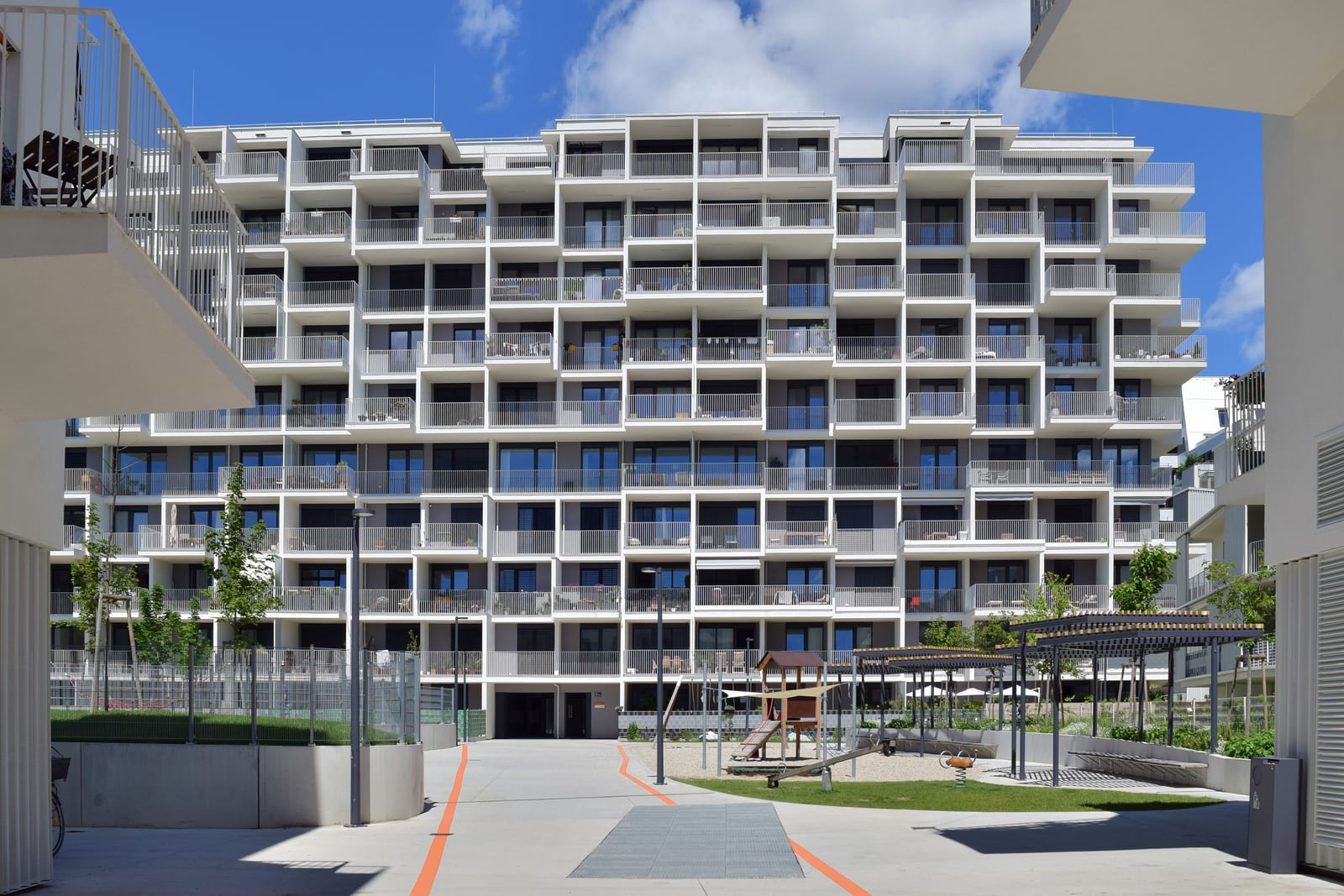
This article was researched and written with the support of AI (Claude, Anthropic) and completely revised on 28 September 2026. Several errors in the first version were corrected: the antenna privilege in § 9 para 2 no 5 MRG applies to receiving antennas and not to amateur radio, the two-month deemed consent in § 9 para 1 was missing, § 8 MRG was wrongly described as protecting the building fabric, the difference between full and partial application of the Tenancy Act was missing, the majority requirements in condominium law were misstated, the lightning protection standards were out of date, the RTR was named instead of the Fernmeldebüro for interference reports, and the description of the German amateur radio act was wrong. Sources for the revision were § 9 and § 1 para 4 MRG, § 16 WEG 2002 as amended in 2022, Supreme Court decision 5 Ob 199/03f, § 62a para 1 no 24 of the Vienna building code, the procedural descriptions of the province of Upper Austria and the Lower Austrian building code 2014, OVE information sheet BL02 as well as OVE EN IEC 62305, OVE EN 60728-11 and OVE E 8101, City of Vienna information on the arbitration board, the micro-census housing survey by Statistics Austria, and for German law the line taken by the Federal Constitutional Court and the Federal Court of Justice on satellite dishes. The title image shows a housing estate in Vienna-Penzing (Photo: Haeferl, CC BY-SA 4.0), the other photographs are by P e z i (CC BY-SA 3.0) and Krzysztof Popławski (CC BY-SA 4.0), all via Wikimedia Commons and credited at each figure. The embedded videos are from German channels. This article is not legal advice; in an individual case the lease, the condominium agreement, the building code and, in a dispute, the arbitration board or the court decide. Corrections and additions, including experience reports from negotiations with property managers, to [email protected].