Table of Contents
- Overview: licence-free radio in Austria
- PMR446: the all-rounder for leisure and work
- Technical facts
- Channel conventions: calling, prepper, practice
- CTCSS and DCS: not privacy
- Digital PMR446: dPMR and DMR Tier 1
- Range: height beats power
- Baofeng on PMR446: not permitted
- Popular PMR446 radios
- CB radio: the classic with range
- Technical facts for Austria
- Strengths of CB radio
- Drawbacks of CB radio
- Popular CB radios
- Freenet: legal in Germany only
- LPD433: small, weak, all but forgotten
- The big comparison
- Recommendations by use case
- Hiking, skiing, mountain tours
- Convoys, off-road, travel groups
- Preparedness and emergency communication
- Family and leisure
- Construction site, events, security
- Data instead of voice
- Licence-free radio when travelling
- Common mistakes and misconceptions
- The next step: amateur radio
- Conclusion
- Sources and further reading
- Transparency Notice
Transmitting without a licence, is that possible? Yes, through several radio services open to everyone in Austria and across Europe. The choice is confusing though: PMR446, CB radio, LPD433, Freenet. Which of these are actually legal in Austria, which service offers the best range, and when is it time to move up to amateur radio? This article compares the common licence-free services from an Austrian perspective, states the limits that apply and clears up the most frequent misconceptions.
Overview: licence-free radio in Austria
Licence-free radio means services that may be used without an exam, without a licence and without registration. The frequencies are assigned generally, and anyone may use them with approved equipment. Three services are legal in Austria: PMR446 on 446 MHz, CB radio on 27 MHz and LPD433 on 433 MHz. Freenet on 149 MHz is authorised in Germany only, a frequent and expensive misunderstanding.
Three ground rules apply to all three services:
- Approved equipment only: CE marking and conformity for exactly this service, no reprogrammed amateur or business radios
- No modifications: neither raising the power nor swapping the antenna where an integral antenna is prescribed
- No protection from interference: licence-free radio has no priority. If you suffer interference you have to live with it, and if you cause it you have to stop
The legal basis is the Austrian Telecommunications Act (TKG 2021) together with the assignments made by the telecoms authority. Breaches are administrative offences, and the radio monitoring service can confiscate equipment.
Video tip: A hands-on overview of what CB radio, PMR446 and Freenet can and cannot do in emergency communication (in German):
PMR446: the all-rounder for leisure and work
PMR446 (Private Mobile Radio, 446 MHz) is by far the most popular licence-free service in Europe. The radios are compact, cheap and ready to go: unpack, switch on, talk.
Technical facts
- Frequency range: 446.0 to 446.2 MHz (UHF)
- Channels: 16 analogue channels on a 12.5 kHz raster, plus digital channels (dPMR446 on 6.25 kHz, DMR Tier 1 on 12.5 kHz)
- Power: 500 mW ERP maximum
- Antenna: integral antenna mandatory, external antennas are not allowed
- Form factor: handheld radios only, no base stations and no repeaters
- Modulation: FM (analogue), dPMR or DMR Tier 1 (digital)
- Range: 1 to 5 km in built-up areas, 5 to 12 km with clear line of sight, considerably more summit to summit
The channel count has a history: ERC Decision (98)25 released 446.0 to 446.1 MHz for eight analogue channels in 1998, ECC Decision (05)02 added the upper part for digital use in 2005, and ECC Decision (15)05 doubled the analogue channels to 16 in 2015. That is why older radios only have eight channels. If you pair an old radio with a new one, stay on channels 1 to 8, where both work.
Channel conventions: calling, prepper, practice
PMR446 has no official channel allocations, but well-established conventions:
- Channel 1 (446.00625 MHz): calling channel, the factory default on most radios
- Channel 3 (446.03125 MHz): the emergency channel widely used in preparedness circles, with the rule of three, meaning listen for three minutes every three hours
- Channel 8 (446.09375 MHz): in Carinthia the practice channel of the KÄRNTEN FUNKT initiative, every second Saturday of the month at 12:00, with CTCSS switched off
If you want to find out whether your radios are any good, such a scheduled net is the easiest opportunity: a real counterpart, a real distance, no marketing leaflet.
CTCSS and DCS: not privacy
Many PMR446 radios offer so-called sub-codes or privacy codes, technically CTCSS (Continuous Tone-Coded Squelch System) and DCS (Digital-Coded Squelch). This is not encryption. The codes only open the squelch of your own radio for particular tones. Every other receiver on the same channel hears you regardless of the code it has set. Calling them privacy codes in the manual is simply misleading, they are a comfort filter.
The filter even has a downside: with CTCSS active you no longer hear the other users on the channel and cheerfully transmit over them. For nets and for emergency use, CTCSS belongs switched off.
Encryption is not provided for in licence-free radio at all. If you need confidential communication, you are in the wrong place.
Video tip: What is actually behind those alleged privacy codes, and why encryption has no place in licence-free radio (in German):
Digital PMR446: dPMR and DMR Tier 1
Besides the analogue channels there are digital modes: dPMR446 (FDMA, 6.25 kHz) and DMR Tier 1 (TDMA, 12.5 kHz). The benefits are consistent audio quality right up to the edge of coverage, more efficient use of the band, and short text messages. In practice digital PMR446 radios are uncommon and more expensive, and they are not compatible with analogue sets. For a group buying a complete new fleet, digital can make sense. If you are adding to existing radios, stay analogue.
Range: height beats power
The figures on the box, often 10 km and more, apply to optical line of sight with no obstruction at all. At 446 MHz the waves travel quasi-optically, and buildings, forest and terrain edges attenuate heavily. So in practice:
- Town, forest, valley: 500 m to 2 km, often less indoors
- Open terrain: 2 to 5 km
- Mountain to valley or summit to summit: 10 km and more, considerably further with true line of sight
One metre of extra height does more at UHF than any permitted increase in power. Standing in a valley, 500 mW will not get you past the hillside in between. The trick is the location, not the radio.
Video tip: A range test showing what PMR446 really achieves under good conditions (in German):
Baofeng on PMR446: not permitted
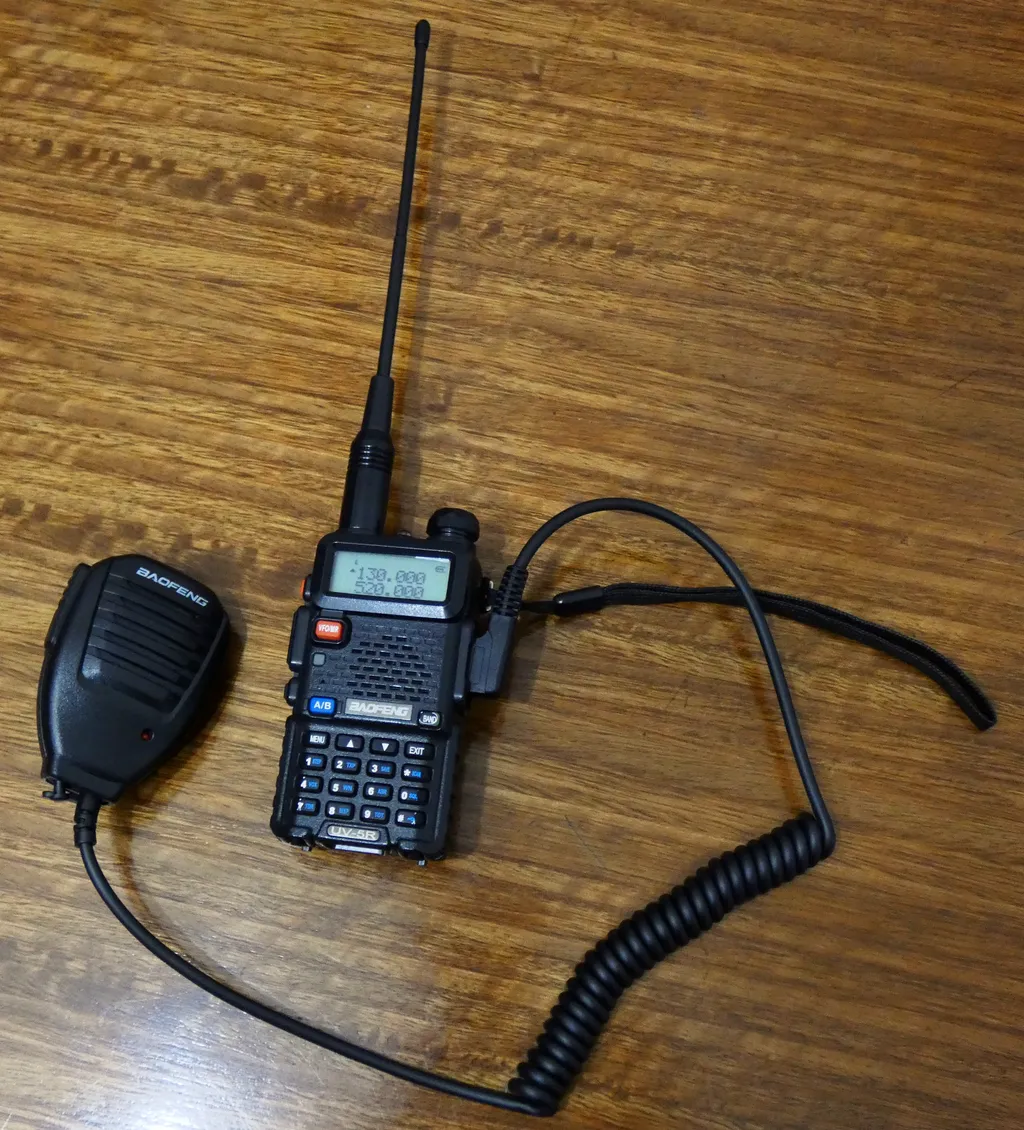
An important warning: the popular Baofeng UV-5R and similar Chinese handhelds, including the Quansheng UV-K5, may not be operated on PMR446 frequencies, even though the channels can be programmed. The reasons:
- Detachable antenna, whereas an integral one is mandatory
- Up to 5 watts of output instead of 500 mW ERP maximum
- No declaration of conformity for the PMR446 service
There is a practical problem on top: these radios often have a coarse transmit chain and splatter into adjacent channels. Getting caught risks confiscation and a fine. To use such a radio legally there is no way around the amateur radio exam. That is not red tape: with a licence the very same radio may be used on the amateur bands with far more power.
Video tip: Why amateur radios keep causing trouble on licence-free channels (in German):
Popular PMR446 radios
- Motorola Talkabout T82 Extreme: rugged, splash-proof, charging cradle included in the twin pack, the classic for outdoor use (around 80 euros)
- Midland G9 Pro: analogue and digital, vibrate alert, high build quality, one of the most capable PMR446 radios (around 100 euros)
- Midland XT70: compact all-rounder with good range, ideal for families (around 50 euros per pair)
- Motorola Talkabout T62: entry-level model, simple to use, inexpensive (around 40 euros per pair)
Prices are guide values from the Austrian market and vary considerably with promotions.
CB radio: the classic with range
CB radio (Citizens Band) on 27 MHz is the oldest licence-free service and offers what no other licence-free service does: range, SSB operation and external antennas. For the history and the current scene we have a dedicated article: CB radio in 2026.
Technical facts for Austria
- Frequency range: 26.965 to 27.405 MHz (11 metre band, HF)
- Channels: 40 channels in Austria
- Power: 4 watts AM and FM, 12 watts PEP on SSB
- Antenna: external antennas allowed, no directional antennas
- Modulation: AM, FM and SSB
- Range: 5 to 30 km by ground wave, hundreds to thousands of kilometres during band openings
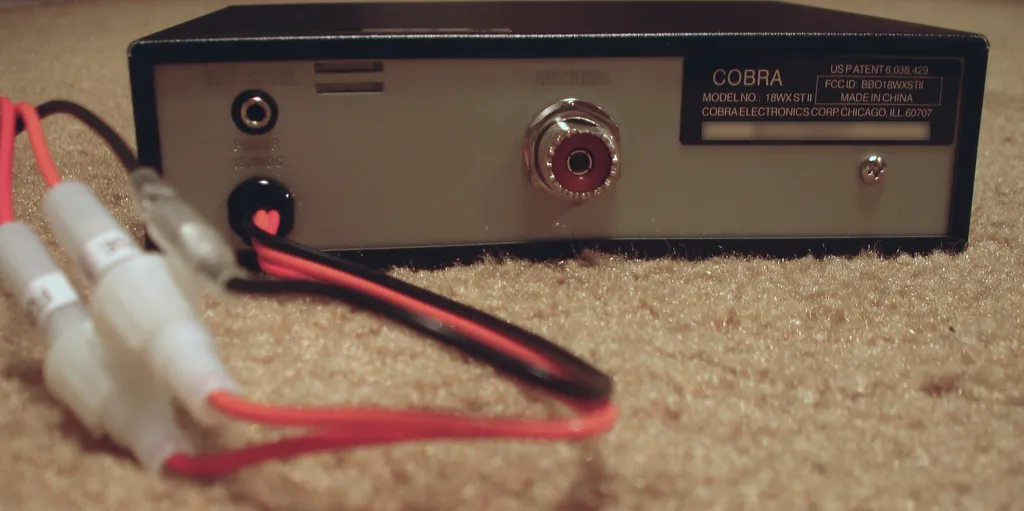
Careful with multi-standard radios: Germany and Czechia permit 80 FM channels, Austria does not. Many radios have a country switch. Running your radio in Austria set to the German standard means transmitting on frequencies not assigned here, which is an offence even if you only meant to listen and hit the transmit key by accident. Check the country setting before the first transmission and set it to AT.
Strengths of CB radio
The biggest advantage over PMR446 is range. At 27 MHz the waves propagate as a ground wave and get around hills and light obstructions better than quasi-optical 446 MHz signals. With a decent mobile antenna on the car roof, 20 to 30 km is realistic, and more from a base antenna on the roof of a house.
Then there are band openings. Around the maximum of solar cycle 25 the 11 metre band opens regularly for contacts over hundreds or thousands of kilometres. SSB with 12 watts PEP gives another noticeable step over AM and FM, because the power sits in a narrower signal.
Another plus is the emergency convention: channel 9 is the calling and emergency channel, channel 19 the fallback if channel 9 is congested. In Austria the notfunknetz.at project is building a CB emergency network on that basis, aimed at blackout preparedness. More on the topic in our article PMR, CB and LPD in emergencies.
Video tip: An introduction to CB radio, from the channels to your first contact (in German):
Drawbacks of CB radio
The longer wavelength comes at a price: the antennas are big. A quarter-wave antenna for 27 MHz is about 2.75 metres, conspicuous on a car roof and impractical on foot. CB handhelds inevitably use heavily shortened antennas that radiate poorly, so a CB handheld may well reach less far than a PMR446 radio.
On top of that, the 27 MHz band is vulnerable to home-made noise. Switch-mode power supplies, LED drivers, PV inverters and chargers often raise the noise floor far enough to bury weak stations. If you plan a base station, put the antenna as far away from those sources as you can.
Popular CB radios
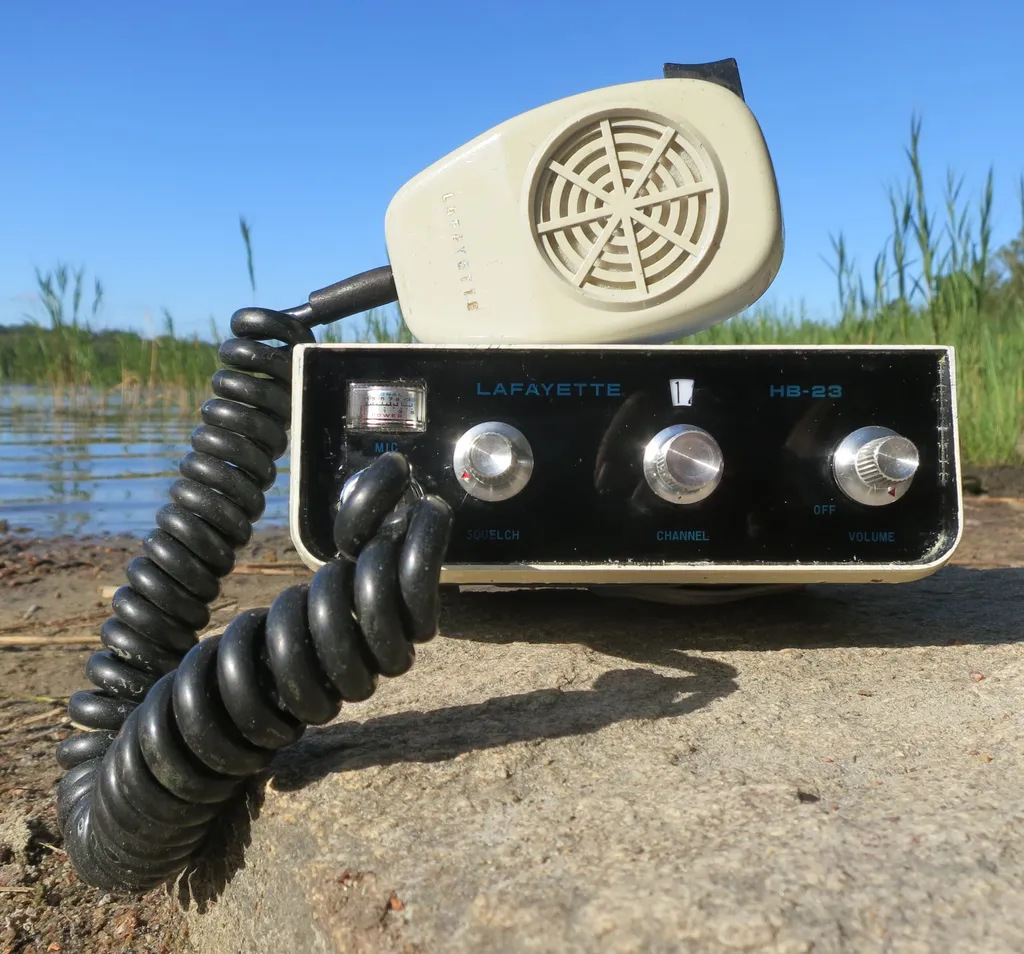
- President Bill II: AM and FM, compact, an ideal starter set (around 70 euros)
- President McKinley III: AM, FM and SSB, SWR meter, noise blanker, the flagship (around 170 euros)
- Albrecht AE 6110: ultra-compact in DIN slot format, FM, 40 channels (around 60 euros)
- Midland Alan 42 DS: handheld with 40 channels, AM and FM, for portable use (around 80 euros)
For every multi-standard radio the same rule applies: set the country to Austria, otherwise operation is not covered.
Freenet: legal in Germany only
Freenet is a licence-free service on 149 MHz (VHF) with six analogue channels between 149.025 and 149.1125 MHz, a 12.5 kHz raster and 500 mW ERP maximum. Since 2016 digital voice and additional channels on a 6.25 kHz raster have been permitted on the same frequencies. Thanks to favourable VHF propagation the typical range is 3 to 8 km, sitting between PMR446 and CB.
The catch: Freenet is assigned in Germany only. In Austria, Switzerland, Italy, Slovenia and every other neighbouring country its use is prohibited, because the 149 MHz frequencies are assigned to other users there, some of them governmental or military. That makes a breach here more delicate than a wrongly set CB channel.
A common mistake: buying a Freenet radio from a German online shop does not make it usable in Austria. That applies in border regions too, since the assignment follows the territory, not the place of purchase. The bottom line: leave Freenet alone if you want to transmit in Austria. The radios are not even useful as receivers here, because there is nothing on that band that would interest a hobbyist.
LPD433: small, weak, all but forgotten
LPD433 (Low Power Device, 433 MHz) uses 69 channels in the 433 MHz ISM band. With just 10 mW the range is severely limited, in practice 100 to 500 metres, perhaps a kilometre under ideal conditions.
There is a fundamental problem too: the band is used by countless other devices, from wireless thermometers through garage door openers and remote sockets to IoT sensors. Interference is common, and as a user of this band you have no claim to protection. For reliable voice communication LPD433 is effectively useless today. What remains are toy walkie-talkies and the simplest short-range use. For all practical purposes PMR446 is the better choice, at almost the same size and fifty times the power.
The big comparison
The table summarises the licence-free services that are legal in Austria, with Freenet alongside for comparison:
| Property | PMR446 | CB radio | LPD433 | Freenet |
|---|---|---|---|---|
| Frequency | 446 MHz (UHF) | 27 MHz (HF) | 433 MHz (UHF) | 149 MHz (VHF) |
| Channels | 16 analogue plus digital | 40 (AT) | 69 | 6 analogue plus digital |
| Power | 500 mW ERP | 4 W AM/FM, 12 W SSB | 10 mW ERP | 500 mW ERP |
| Typical range | 1 to 5 km | 5 to 30 km | 100 to 500 m | 3 to 8 km |
| External antenna | No | Yes, no directional | No | No |
| SSB | No | Yes | No | No |
| Form factor | handheld only | handheld, mobile, base | handheld only | handheld only |
| Typical cost | 30 to 100 euros (pair) | 60 to 170 euros plus antenna | 15 to 30 euros (pair) | 80 to 200 euros |
| Legal in Austria | Yes | Yes | Yes | No |
| Susceptible to interference | Low | Medium | High | Low |
Recommendations by use case
Hiking, skiing, mountain tours
Recommendation: PMR446. Compact, light, rugged, and in the mountains the service plays to its strength because line of sight across valleys is often available. On summits, 10 to 12 km is nothing unusual. A radio with a belt clip and a decent battery is enough. Important: a radio is not a substitute for an emergency call, and in a real emergency the mobile phone or the alpine emergency number still applies.
Convoys, off-road, travel groups
Recommendation: CB radio. A vehicle has room for a mobile set and a proper antenna, and 20 to 30 km covers even long gaps in a convoy reliably. A magnetic mount antenna is fine to start with, and a properly tuned standing wave ratio matters more than the radio itself.
Preparedness and emergency communication
Recommendation: CB radio plus PMR446. In a blackout scenario both services work without any infrastructure. CB covers the distance to the next village, PMR446 the coordination close by, within a neighbourhood or a family. What matters is not the equipment but the agreement: a fixed channel, fixed times, everyone informed. Without that, everyone sits in the dark with a switched-on radio on a different channel. If you are serious about it, consider the amateur radio exam as well.
Family and leisure
Recommendation: PMR446. Simple to operate, cheap in twin packs, nothing to configure, ideal for children on a campsite, family hikes or a skiing holiday. A pair of entry-level radios under 40 euros will do.
Construction site, events, security
Recommendation: dPMR446 or DMR Tier 1. The digital channels give clearer audio at the edge of coverage and allow cleaner group addressing. Anyone using radio professionally on a regular basis should check whether a proper business radio assignment makes more sense: it brings more power, dedicated frequencies and protection from interference, at the cost of a fee.
Data instead of voice
If you want to move text messages and positions rather than voice over longer distances, look at LoRa and Meshtastic. How it compares with PMR and CB is covered in our article PMR vs. Meshtastic vs. CB radio.
Licence-free radio when travelling
Assignments stop at the border, radios do not. So a quick check before a holiday trip pays off:
- PMR446 is harmonised across Europe and the least complicated companion. In almost every European country it may be used without registration
- CB radio is largely harmonised but not identical: Germany and Czechia have 80 FM channels, Austria has 40. In Italy residents still face a registration requirement and a fee
- Freenet remains restricted to Germany
- Outside Europe entirely different rules apply, and the US services FRS and GMRS sit on other frequencies and cannot be used here
When in doubt the rule is simple: a CE marked radio, factory settings, country setting matching where you are.
Common mistakes and misconceptions
- Using an amateur radio on PMR446: not permitted, because of the detachable antenna, too much power and the missing approval
- Using Freenet in Austria: not permitted, the service does not exist here
- Treating CTCSS and DCS as encryption: wrong, they are only a squelch filter
- Overestimating PMR446 range: the box figures apply to clear line of sight, not to town centres
- Running a CB radio in German mode: Austria has 40 channels assigned, not 80
- Adding a linear amplifier to a CB set: amplifiers are not permitted on CB and interfere with half the neighbourhood
- Base stations or repeaters on PMR446: only handheld radios are authorised
The next step: amateur radio
Licence-free radio is a good way in, but sooner or later you hit the limits: 500 mW on PMR446, 4 watts on CB, no repeaters, no satellites, no digital modes such as FT8, no worldwide contacts on HF. If you want more, you need an amateur licence.
The amateur radio exam in Austria is no insurmountable hurdle. The entry class already allows operation on VHF and selected HF bands with noticeably more power. We also have an overview of the licence classes.
What amateur radio offers over licence-free radio:
- Power: up to 1,500 watts depending on class, instead of 12 watts maximum
- Frequencies: access to dozens of bands from long wave to microwave
- Repeaters: hundreds of VHF and UHF repeaters in Austria multiply your range
- Digital modes: FT8, JS8Call, Winlink, APRS, SSTV and more
- Emergency communications: organised operation tied into the official structures
- Home building: build and operate your own radios and antennas, something expressly forbidden in licence-free radio
- Community: a worldwide community, contests, awards, SOTA, POTA
Video tip: CB radio or amateur radio, an honest comparison of the two worlds (in German):
The transition need not be a break: in Carinthia several radio awards are open to CB and PMR users too, and the Funkparcours deliberately runs on PMR radios. Many of today's radio amateurs started on PMR446 or CB. If you have caught the bug, our article first steps in amateur radio shows the way to your own licence.
Conclusion
For most everyday situations PMR446 is the right choice: simple, cheap, compact and usable across Europe. If you need more range, in a vehicle, on off-road trips or for preparedness, reach for CB radio. Leave Freenet alone in Austria, and LPD433 is only good for playing around. And if you find that radio is more than a tool, amateur radio offers a whole world waiting to be explored.
73 – your oeradio.at editorial team
Sources and further reading
- RTR: Austrian regulatory authority, frequency management
- RIS: Austrian Telecommunications Act 2021 (TKG 2021)
- ECC/DEC/(15)05: harmonisation of PMR446, 16 analogue channels
- Wikipedia: PMR446, channel plan and ECC decisions
- notfunknetz.at: what is allowed on CB radio in Austria
- notfunknetz.at: CB emergency network, channel 9 and fallback channel 19
- KÄRNTEN FUNKT: PMR446 channel list with usage notes
- Wikipedia: Freenet, frequencies and the German general assignment
- Wikipedia: LPD433
- ÖVSV: Austrian amateur radio society, the route to a licence
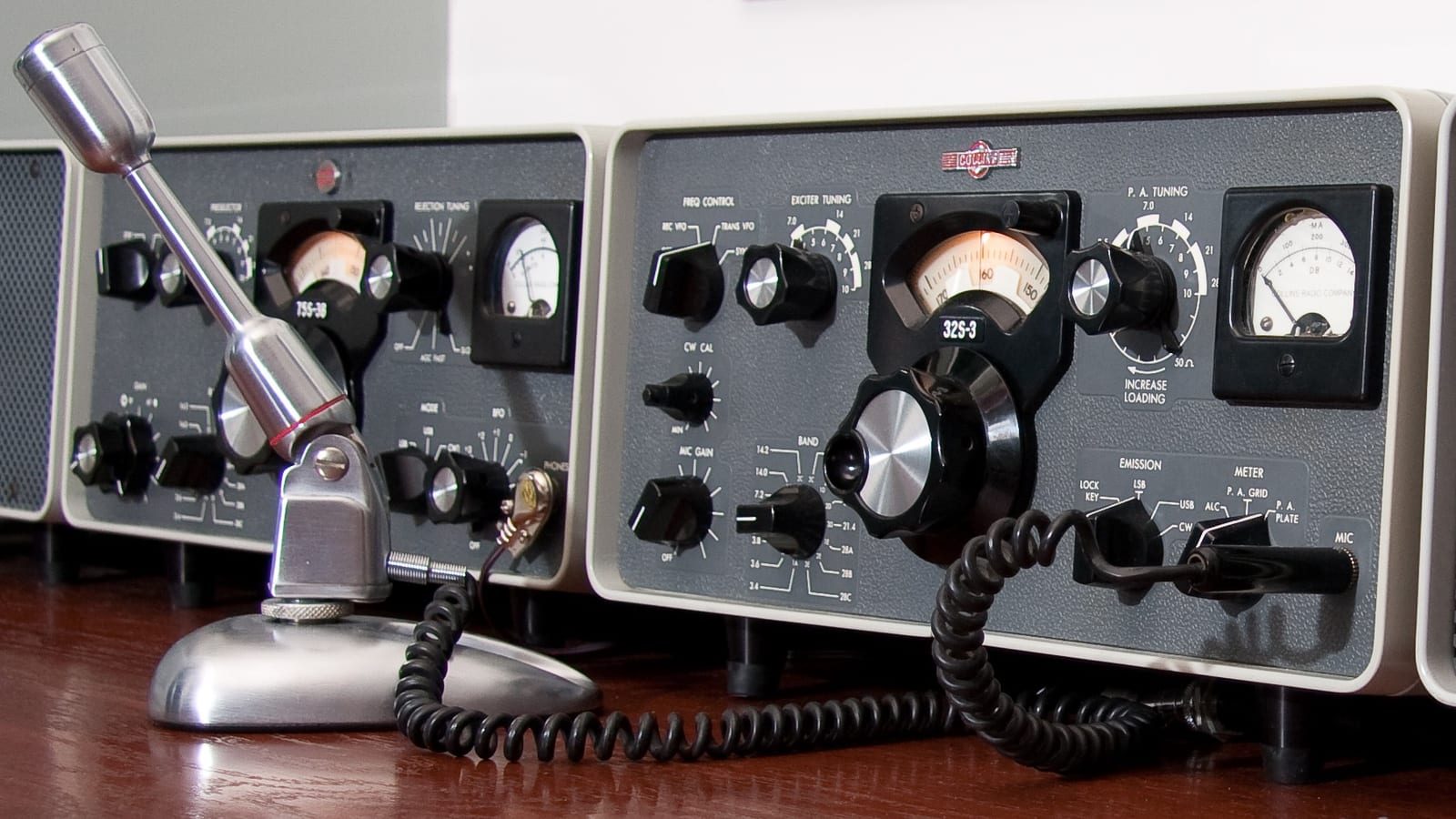
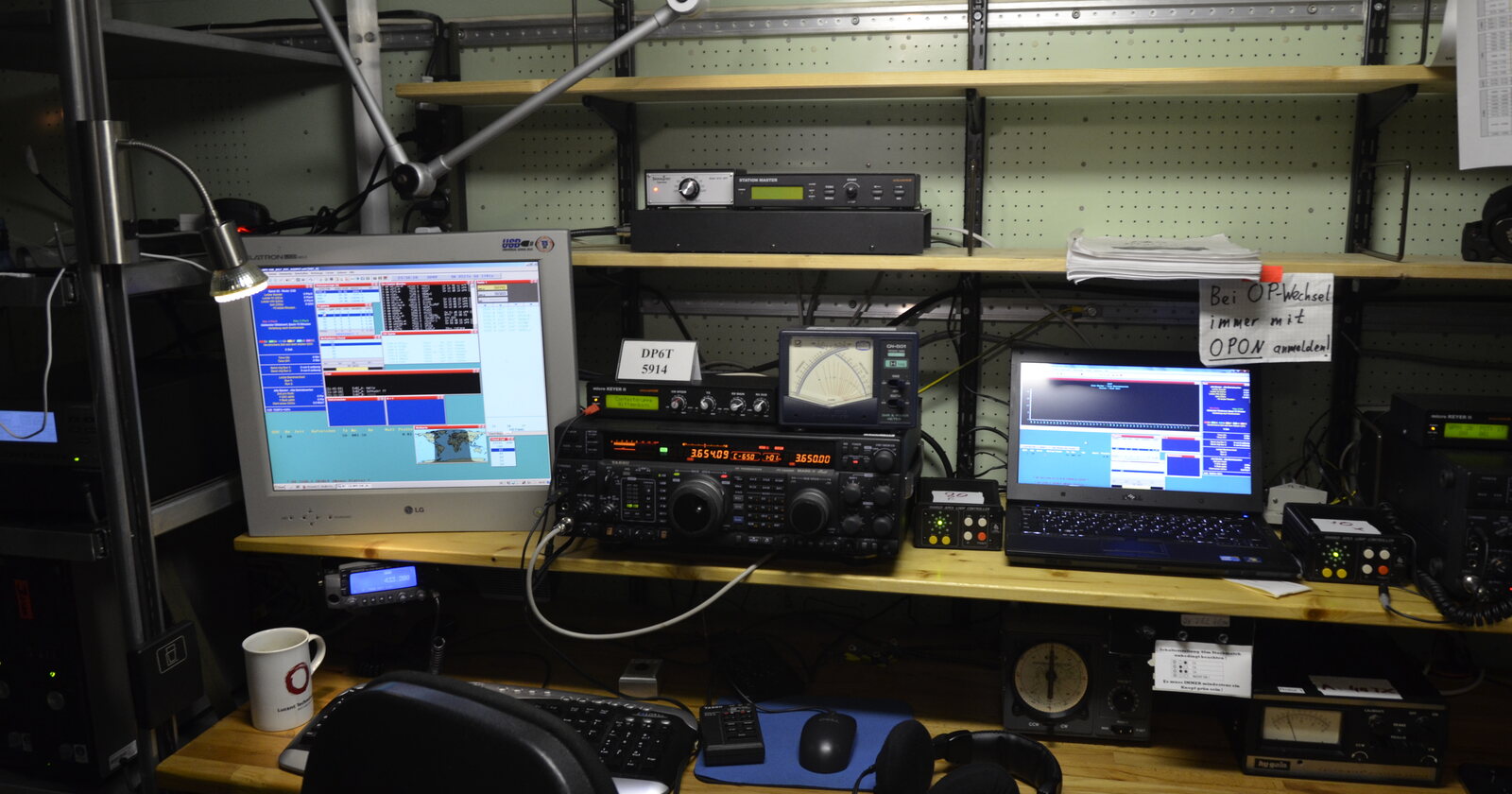
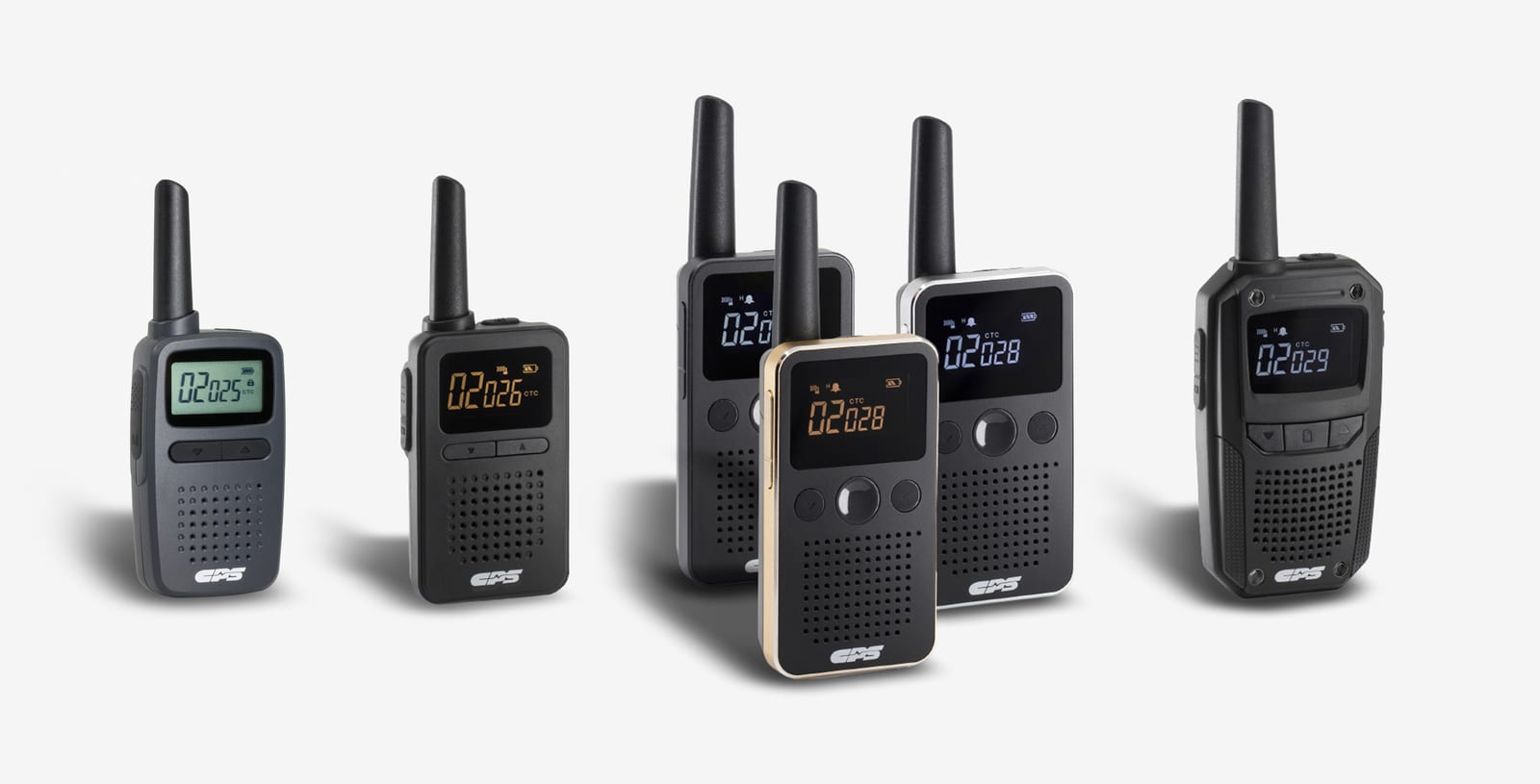
Image credit: Title image, a line-up of licence-free handheld radios, photo: CPSGHK, CC BY-SA 4.0, Wikimedia Commons. Further credits appear under the individual images.
Transparency Notice
This article was researched and written with the support of AI (Claude, Anthropic). The editorial team reviewed and edited all content. The photographs come from Wikimedia Commons under free licences, with the authors named alongside each image. Details of authorisations and limits reflect the situation in September 2026 and are no substitute for legal advice. Despite careful checking, occasional inaccuracies may remain, and we welcome corrections by email to [email protected].