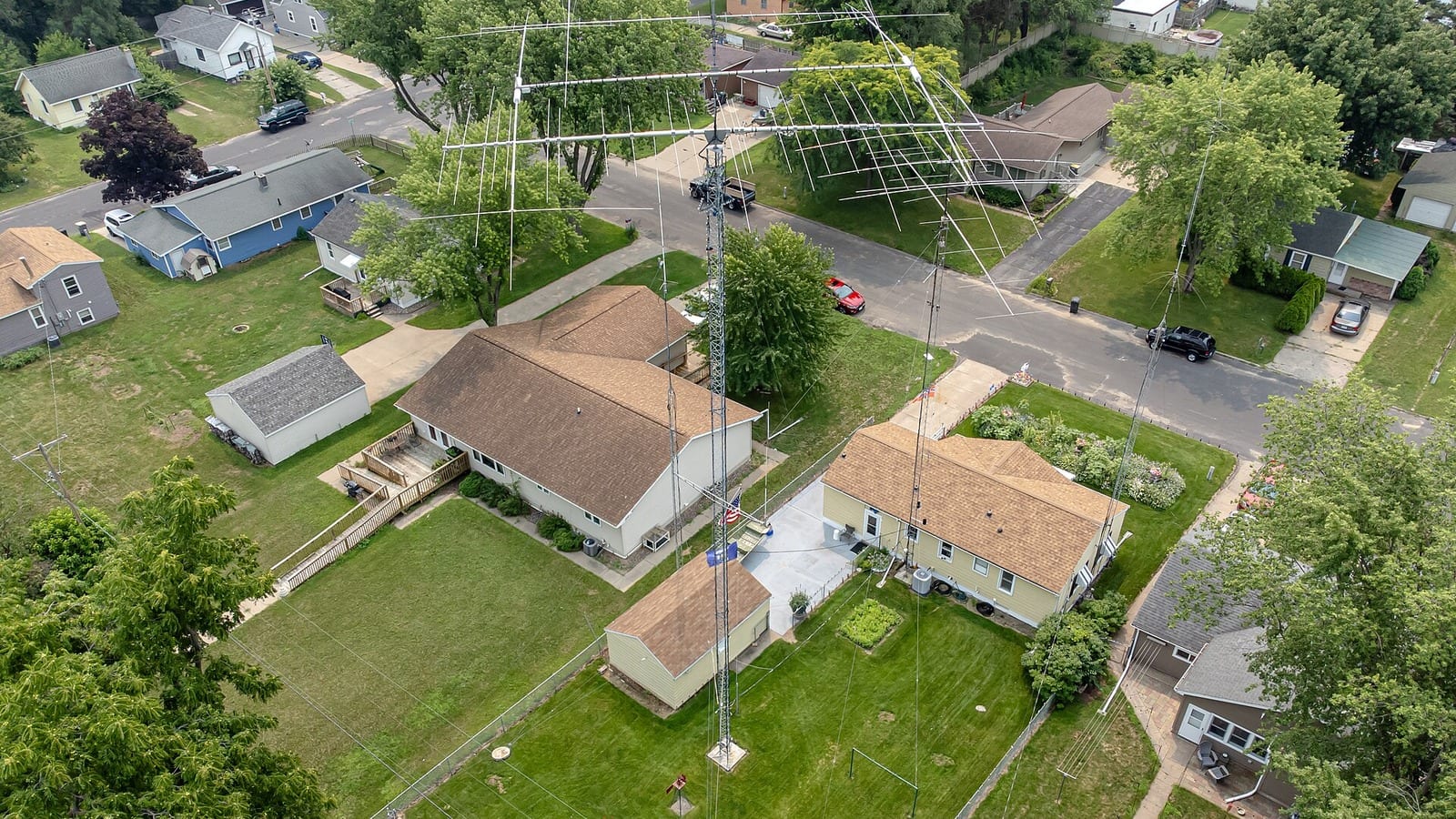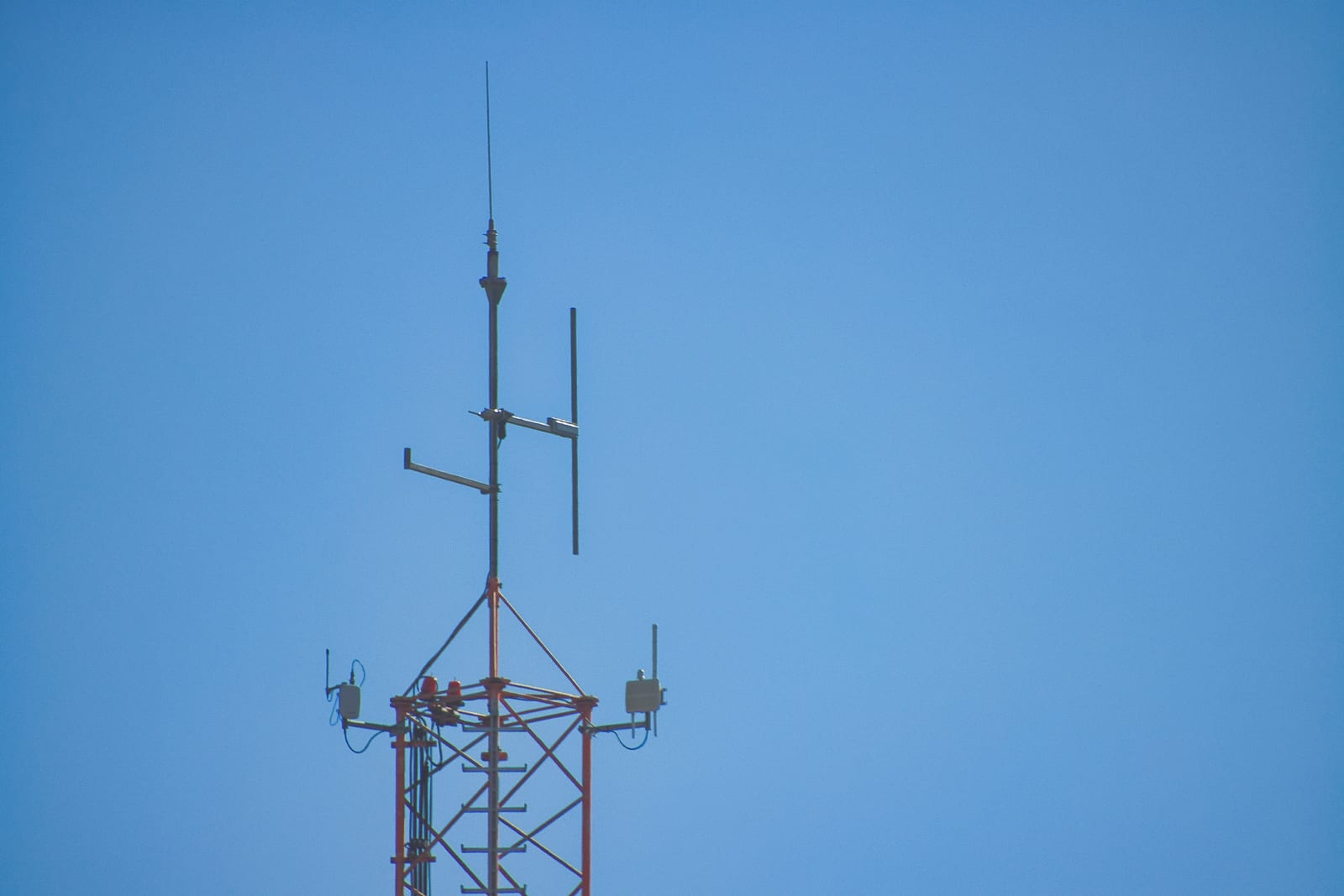
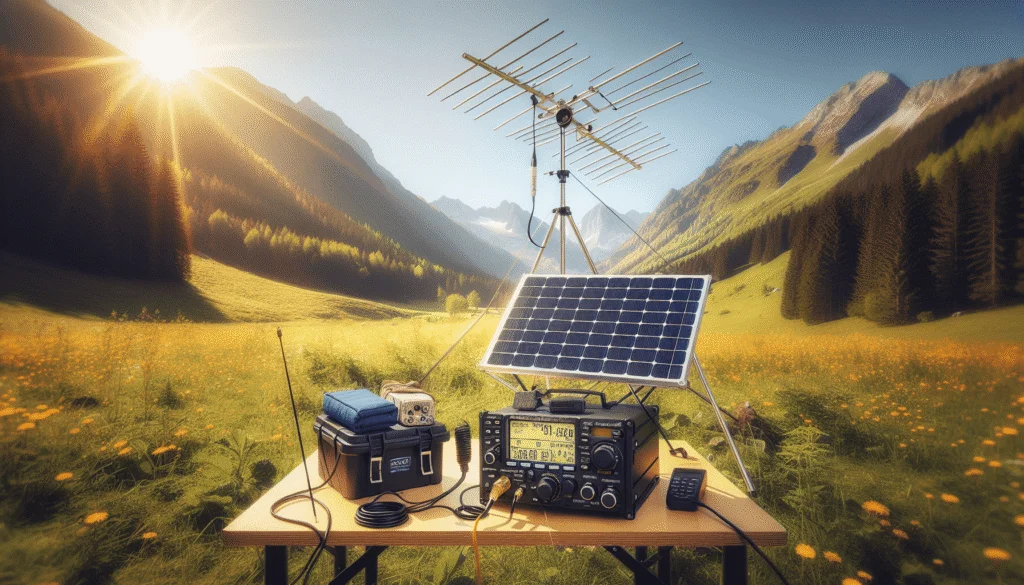
When the power grid fails, mobile networks, internet, and landlines typically go silent within a few hours. That is precisely when amateur radio comes into its own: radio amateurs can continue communicating with relatively simple means — locally via VHF repeaters and over long distances via shortwave. But even an amateur radio station needs power. In this article, we show you how to set up a grid-independent, self-sufficient radio station that works reliably during a blackout — from energy generation with solar panels to optimal sizing of LiFePO4 batteries.
Whether natural disaster, large-scale power outage, or planned emergency exercise: those who are prepared can not only operate their own station in an emergency but also serve the community as a communication hub. The following sections cover all relevant aspects — solar panels, batteries, charge controllers, power-efficient transceivers, cabling, and concrete sizing examples.
Why Blackout Preparedness Matters for Radio Amateurs
Austria and Central Europe are not immune to large-scale power outages. The European interconnected grid has narrowly avoided a major blackout several times in recent years — for example in January 2021, when a frequency deviation split the grid into two parts. A complete blackout could last days or even weeks until all grid sections are resynchronized.
Radio amateurs play a crucial role in such scenarios. In disaster management, amateur radio stations are often the last functioning communication infrastructure. Organizations like ARES (Amateur Radio Emergency Service) and emergency communication initiatives in Austria specifically rely on radio amateurs as the backbone of emergency communications. The prerequisite, however, is that your own station can operate without mains power.
Solar Panels: The Energy Source for Self-Sufficient Operation
Solar energy is the most obvious solution for grid-independent power supply for radio amateurs. Solar panels are maintenance-free, silent, and reliably deliver energy during daylight. Two basic form factors are relevant for amateur radio operation: foldable and rigid panels.
Foldable Solar Panels
Foldable solar panels are ideal for portable and SOTA/POTA activations. They can be transported compactly and typically weigh between 3 and 7 kg. Common power classes are 60 W, 100 W, and 200 W. Recommended models for radio amateurs include the Jackery SolarSaga 100 W (approx. 4.7 kg, folds to briefcase size), the EcoFlow 110 W Solar Panel, or the Bluetti PV120 (120 W). These panels typically deliver 70-85% of their rated power under good sunlight conditions in Central Europe during summer.
For pure QRP operation (5-10 watts transmit power), a single 100 W panel on a sunny day is sufficient to recharge the battery during operation. If you want to transmit at higher power (50-100 watts), you should plan for at least 200 W of panel capacity.
Rigid Solar Panels
For a permanently installed emergency radio station at home, rigid solar panels are the way to go. They are more efficient than foldable models (typically 20-22% efficiency versus 18-20% for foldable panels) and significantly more durable. One or two 100 W panels on the balcony or roof, permanently mounted and wired, form the basis of a reliable home station for blackout scenarios.
Recommendation: Install at least 200 W of panel capacity for a stationary emergency radio station. This allows you to harvest 30-50 W even under overcast skies — enough to slowly recharge the battery while simultaneously operating a QRP transceiver.
LiFePO4 Batteries: The Energy Storage of Choice
Lithium iron phosphate batteries (LiFePO4) have become the standard for self-sufficient amateur radio stations in recent years. They offer decisive advantages over conventional lead-gel batteries: higher energy density (more capacity at less weight), significantly more charge cycles (2,000-5,000 versus 300-500), a flat discharge curve (voltage remains stable at approximately 13.2 V for a long time), and an integrated Battery Management System (BMS) that protects against overcharging, deep discharge, and short circuits.
Recommended LiFePO4 Batteries
- PowerQueen 12V 100Ah — Excellent value for money, approx. 11 kg, integrated 100A BMS. Ideal as a base battery for the home station.
- EcoFlow DELTA 2 — All-in-one power station with 1 kWh capacity, integrated inverter and MPPT charge controller. Simplest solution, but more expensive.
- Jackery Explorer 1000 Plus — 1.26 kWh LiFePO4 power station, expandable with additional batteries. Very user-friendly.
- Individual 3.2V LiFePO4 cells (EVE, CATL) — For DIY builders: 4 cells in series yield 12.8 V. Cheapest option per kWh, but requires your own BMS and enclosure.
Battery Sizing
The required battery capacity depends on the planned operating scenario. Here are some reference values:
- 24-hour emergency operation (QRP, 5 W): An IC-705 in receive draws approx. 0.5 A, when transmitting approx. 2.5 A. With a typical ratio of 80% receive and 20% transmit, the average consumption is approx. 0.9 A. Over 24 hours, that is 21.6 Ah — a 50 Ah battery is more than sufficient.
- 3 days of self-sufficient operation (50 W): An FT-891 at 50 W transmit power draws approx. 1.2 A in receive and approx. 10 A when transmitting. At 50% operating time and 20% transmit ratio, you need approx. 40 Ah per day, so 120 Ah for three days — a 200 Ah battery with solar recharging.
- Several weeks (continuous operation): Here the solar system becomes the limiting factor. With 200 W of panel capacity and a 200 Ah battery as a buffer, you can operate indefinitely in good weather. For bad weather periods, plan for at least 3 days of battery reserve.
Charge Controllers: MPPT vs. PWM
The charge controller is the link between the solar panel and the battery. It ensures the battery is charged correctly and protects against overcharging. Two types are relevant for radio amateurs: PWM (Pulse Width Modulation) and MPPT (Maximum Power Point Tracking).
PWM Charge Controllers
PWM controllers are the simpler and cheaper option (from approx. 15 euros). They essentially connect the panel directly to the battery and regulate voltage through rapid switching on and off. The disadvantage: they cannot optimally utilize the panel output because they pull the panel voltage down to battery level. With an 18 V panel and a 12.8 V battery, approximately 30% of the potential power is lost. PWM controllers are suitable for small systems with a single 12 V panel up to a maximum of 100 W.
MPPT Charge Controllers
MPPT controllers are significantly smarter and more efficient. They continuously seek the optimal operating point of the solar panel (Maximum Power Point) and efficiently convert the higher panel voltage into the correct charging current. This harvests 20-30% more energy than a PWM controller — especially under cloudy skies or suboptimal orientation, this makes a noticeable difference.
Recommended MPPT controllers for radio amateurs include the Victron SmartSolar 75/15 (up to 200 W panel capacity, Bluetooth monitoring via app), the EPEver Tracer 2210AN (20 A, budget alternative), and the Genasun GV-10 (specifically optimized for LiFePO4). For most amateur radio setups, a controller with 10-20 A charging current is sufficient.
Important: Make sure the charge controller supports a specific LiFePO4 charge profile or can be manually set to the correct charge cutoff voltages. LiFePO4 requires a charge cutoff voltage of 14.2-14.6 V (depending on the manufacturer), while lead batteries are charged at 14.4-14.8 V.
Power-Efficient Transceivers for Emergency Operation
In a blackout scenario, every watt counts. Choosing the right transceiver can drastically extend the operating time of your self-sufficient station. Here is an overview of particularly power-efficient devices:
Icom IC-705
The IC-705 is the dream transceiver for portable and self-sufficient operation. With a maximum of 10 W transmit power on HF, 2 m, and 70 cm, a built-in battery, and a power consumption of only 0.5 A in receive, it is extremely efficient. The integrated antenna tuner, waterfall display, and built-in GPS receiver make it a Swiss army knife for emergency communication scenarios. The only downsides: maximum 10 W transmit power and a high price (approx. 1,300 euros).
Yaesu FT-891
Those who need more transmit power should consider the FT-891. It delivers up to 100 W on HF with a power consumption of approx. 1.2 A in receive and approx. 20 A when transmitting at full power. At reduced power (20-30 W), the transmit current drops to approx. 8-10 A. The FT-891 is compact, rugged, and offers excellent value for money (approx. 700 euros). However, it requires an external antenna tuner.
Xiegu G90
The G90 is a budget-friendly alternative (approx. 450 euros) with 20 W transmit power and a built-in antenna tuner. Power consumption is approx. 0.4 A in receive and approx. 4 A when transmitting. This makes it ideal for solar-powered stations: 20 W is sufficient for most HF contacts, and the moderate transmit current places minimal strain on the battery.
(tr)uSDX
For absolute minimalists, there is the (tr)uSDX — an open-source QRP transceiver that transmits with only 3-5 W and draws just 100-150 mA in receive. It costs under 100 euros as a kit and fits in the palm of your hand. With a small 20 Ah battery and a 60 W solar panel, you could theoretically operate indefinitely. The downsides: limited receiver, no DSP filters, and a certain willingness to tinker is required.
Cabling and Connectors
An often underestimated component of a self-sufficient station is the cabling. In 12 V systems, high currents flow, and every voltage drop in the wiring means lost power.
Anderson Powerpole — The Amateur Radio Standard
Anderson Powerpole connectors have established themselves as the de facto standard in the amateur radio community. They offer decisive advantages: genderless design (every connector fits every connector), color coding (red for positive, black for negative), easy assembly with a crimping tool, rated for 30 A (PP30) or 45 A (PP45), and recommended as a standard by ARES/RACES.
Tip: Convert all your 12 V equipment to Anderson Powerpole. Then in an emergency, you can connect any device to any power source without searching for matching adapters. A set of Anderson Powerpole PP30 connectors with matching 10 AWG cable (approx. 2.5 mm²) costs just a few euros and holds rock solid.
Cable Cross-Sections
Use at least 2.5 mm² (10 AWG) cable for the main wiring between battery and transceiver. For cable lengths over 2 meters or currents above 15 A, you should use 4 mm² (8 AWG) or even 6 mm² (6 AWG). The same recommendations apply between the solar panel and charge controller. As a rule of thumb: the voltage drop should stay below 0.1 V per meter of cable length and 10 A of current.
Portable Antennas for Emergency Communications
A self-sufficient radio station naturally also needs an antenna that can be set up quickly and does not require a permanent installation.
- Wire antennas (EFHW, long wire): An End-Fed Half-Wave (EFHW) antenna for 40/20/10 m is lightweight, compact, and can be strung between trees or on a telescopic mast. Cost: approx. 50-80 euros as a kit.
- Vertical antennas: A portable vertical antenna like the Packtenna or the SOTAbeams Band Hopper can be set up in minutes. Ideal for emergency scenarios where no trees are available.
- Telescopic mast (6-10 m): A fiberglass telescopic mast of 6-10 m length weighs approx. 2-3 kg and raises a wire antenna to a usable height. Models like the Spiderbeam HD or the DX-Wire telescopic mast cost approx. 60-100 euros.
- Magnetic loop antennas: For confined spaces (balcony, roof terrace), magnetic loop antennas are an option. They are extremely narrowband but efficient and require little space. However, they must be retuned with every frequency change.
Practical Example: Self-Sufficient Emergency Station for 3 Days
Here is a concrete setup for a self-sufficient HF station that will last three days without mains power:
- Transceiver: Xiegu G90 (20 W, HF)
- Battery: PowerQueen 12V 100Ah LiFePO4 (approx. 1,280 Wh)
- Solar: 2x 100 W foldable panels (200 W total)
- Charge controller: Victron SmartSolar 75/15 MPPT
- Antenna: EFHW 40/20/10 m on 10 m telescopic mast
- Cabling: Anderson Powerpole PP30, 2.5 mm² cable
- Additionally: 12V USB adapter for smartphone charging, LED lamp
Calculation: The G90 draws approx. 0.4 A in receive and approx. 4 A when transmitting (20 W). With 12 hours of operation per day, of which 20% is transmitting, the daily consumption is approx. 13 Ah. Over three days, that is approx. 39 Ah. With the 100 Ah battery, you have a reserve of more than 60%, even if the sun does not shine at all. On sunny days, the 200 W panels easily recharge the battery — even under overcast skies, typically 40-60 Wh per day are harvested.
Total cost of this setup: approx. 800-1,000 euros (G90 approx. 450 euros, battery approx. 200 euros, panels approx. 180 euros, charge controller approx. 80 euros, antenna and accessories approx. 100 euros). This is an investment that pays for itself many times over in an emergency — and also brings joy during normal amateur radio operation at SOTA, POTA, or Field Day activations.
Tips for the Real Emergency
- Test your emergency radio equipment regularly: At least twice a year, you should set up the complete setup and test it in real operation. This is the only way to discover weaknesses in time.
- Keep the battery charged: LiFePO4 batteries should be stored at approx. 50-60% charge. Before an expected emergency (e.g., severe weather warning), charge to 100%.
- Know your emergency frequencies: In Austria, the emergency communication frequencies 3.643 MHz (80 m), 7.110 MHz (40 m), and 145.500 MHz (2 m calling) are particularly relevant. Internationally, 14.300 MHz is recognized as an emergency frequency.
- Document your setup: Create a short checklist with all components and setup steps. In the stress of a real emergency, you will be grateful for clear instructions.
- Think about basic needs: A radio station is useless if you have no drinking water. Blackout preparedness always includes food, water, medication, and lighting.
- Network with others: Talk to other radio amateurs in your area about emergency communication concepts. In a real emergency, a network of prepared stations is incomparably more effective than a single one.
Conclusion
Self-sufficient radio operation with solar and battery is easier and more affordable than ever. LiFePO4 batteries provide reliable, long-lasting energy storage, modern MPPT charge controllers extract the maximum from solar panels, and power-efficient QRP transceivers enable hours of operation with minimal energy consumption. With a well-thought-out setup for under 1,000 euros, you are well prepared for blackout scenarios — and at the same time have a versatile portable radio setup for everyday use.
Investing in a self-sufficient radio station is not just insurance for an emergency, but also an enrichment for normal amateur radio operation. Once you have experienced the thrill of operating completely grid-independently from a mountain summit or an alpine meadow, you will not want to miss this freedom.
If you want to learn more about crisis communication, visit bosarsa.oeradio.at.
73 – your oeradio.at editorial team
Transparency Notice
This article was researched and written with the assistance of AI (Claude, Anthropic). All content has been reviewed by the oeradio.at editorial team.