Table of Contents
- What Is SDR?
- Entry Level (Under EUR 50)
- RTL-SDR Blog V4
- Nooelec NESDR Smart v5
- Mid-Range (EUR 100 to 300)
- RSP1B (SDRplay)
- RSPdx-R2 (SDRplay)
- Airspy HF+ Discovery
- Airspy R2
- RX-888 MKII
- Transmit and Receive SDRs (Transceivers)
- HackRF One / PortaPack H2+
- ADALM-Pluto (Analog Devices)
- Top Class (From Around EUR 1000)
- Elad FDM-S3
- Comparison Table
- Software for SDR Receivers
- Which SDR Is Right for Me?
- Sources and Further Reading
- Transparency Notice
A USB stick for around 30 euros that makes aircraft, weather balloons and shortwave audible. Or a 16-bit receiver that records the entire shortwave spectrum at once. Software Defined Radio (SDR) has fundamentally changed how we receive radio signals: instead of fixed filters and analogue demodulators, software handles the signal processing. This comparison shows which device suits which purpose in 2026, from entry level to the top class.
What Is SDR?
In an SDR, the RF signal from the antenna is digitised as early as possible. Filtering, demodulation and noise reduction then happen in software, on a computer or on an embedded processor. The advantage: one and the same hardware receives AM, FM, SSB, CW and digital modes, and the software determines the mode. You can find more basics in our article What Is an SDR?
Entry Level (Under EUR 50)
RTL-SDR Blog V4
The RTL-SDR is the classic way in. Originally these were repurposed DVB-T sticks, but the RTL-SDR Blog V4 is built specifically for radio reception. The most important improvement over the V3 concerns shortwave.
- Frequency range: 500 kHz to 1.766 GHz
- Shortwave: built-in upconverter. HF frequencies are tuned directly, without the V3's direct sampling mode and without its image signals around 14.4 MHz.
- Tuner: R828D with a triplexer that splits the input into HF (up to 28 MHz), VHF and UHF, plus switchable notch filters for broadcast AM, FM and DAB
- ADC: 8 bit
- Bandwidth: up to 3.2 MHz, usually stable at 2.4 MHz
- Other features: 1 ppm TCXO, software-switchable bias tee (4.5 V) to power an external preamplifier
- Price: from around EUR 30, about EUR 40 with an antenna kit
- Ideal for: aviation radio and ADS-B, FM, weather balloons, SSTV, amateur radio monitoring on VHF/UHF and first steps on shortwave
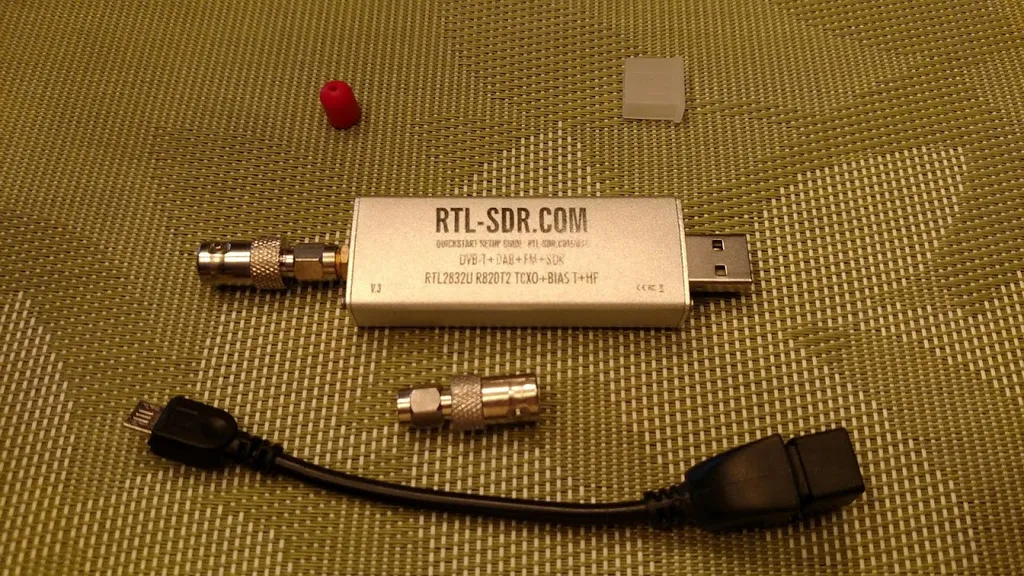
Limitations: receive only, and the 8-bit resolution quickly reaches its limits with strong signals. According to the manufacturer, the V4 can be 2 to 3 dB less sensitive than the V3 on average on some bands. Manuel Lausmann shows how the V4 stacks up against the V3, in German:
Nooelec NESDR Smart v5
An alternative to the RTL-SDR Blog with similar technology, its own aluminium case and a 0.5 ppm TCXO. Price: around EUR 35. Functionally comparable for VHF/UHF; for shortwave the V4 has the edge thanks to its built-in upconverter.
Mid-Range (EUR 100 to 300)
RSP1B (SDRplay)
- Frequency range: 1 kHz to 2 GHz, without gaps and without an upconverter
- Bandwidth: up to 10 MHz
- ADC: 14 bit
- Price: around EUR 130 net at distributors
- Special features: continuous reception from long wave into the GHz range, much more dynamic range than an RTL-SDR, free SDRuno software
- Ideal for: shortwave listening, wideband monitoring, amateur radio observation on all bands
RSPdx-R2 (SDRplay)
- Frequency range: 1 kHz to 2 GHz
- Bandwidth: up to 10 MHz
- ADC: 14 bit
- Price: around EUR 230 net at distributors
- Special features: three selectable antenna inputs, 500 kHz low-pass filter for LW/VLF, HDR mode for better performance below 2 MHz
- Ideal for: serious shortwave listeners, DX reception, medium wave and long wave
Airspy HF+ Discovery
- Frequency range: 0.5 kHz to 31 MHz and 64 to 260 MHz
- Bandwidth: 768 kHz sample rate, of which about 660 kHz is free of alias and image signals
- Technology: two high-dynamic-range sigma-delta converters, 18-bit digital downconverter, tracking preselection filters for HF
- Price: around EUR 180
- Special features: very good sensitivity and strong-signal handling on HF. In the comparison measurements by Leif SM5BSZ it finished just behind the considerably more expensive Perseus.
- Ideal for: HF DX, when a narrow slice in the best possible quality matters more than a lot of bandwidth
Airspy R2
- Frequency range: 24 to 1700 MHz, with the SpyVerter also shortwave
- Bandwidth: 10 MSPS, of which up to 9 MHz is usable alias-free
- ADC: 12 bit at 20 MSPS, up to 16 bit in narrow channels through oversampling
- Price: around EUR 200
- Special features: very good VHF/UHF receiver, popular for ADS-B, trunking and wideband scanning
RX-888 MKII
- Frequency range: 1 kHz to 64 MHz directly sampled, above that up to 1.7 GHz via an R828D tuner
- ADC: 16 bit (LTC2208)
- Bandwidth: up to 64 MHz simultaneously in the HF range, 10 MHz above 64 MHz
- Price: around EUR 170 to 200, usually from the Far East
- Special features: digitises the complete shortwave spectrum in one pass. With SDR Console or SDR++ you can watch or record all HF bands at the same time. Compared with its predecessor it has an adjustable attenuator, an adjustable amplifier and a better 64 MHz low-pass filter. Needs USB 3.0 and a powerful computer.
Tech Minds presents the RX-888 MK2 and shows what 64 MHz of real-time bandwidth means in practice (in English).
Transmit and Receive SDRs (Transceivers)
HackRF One / PortaPack H2+
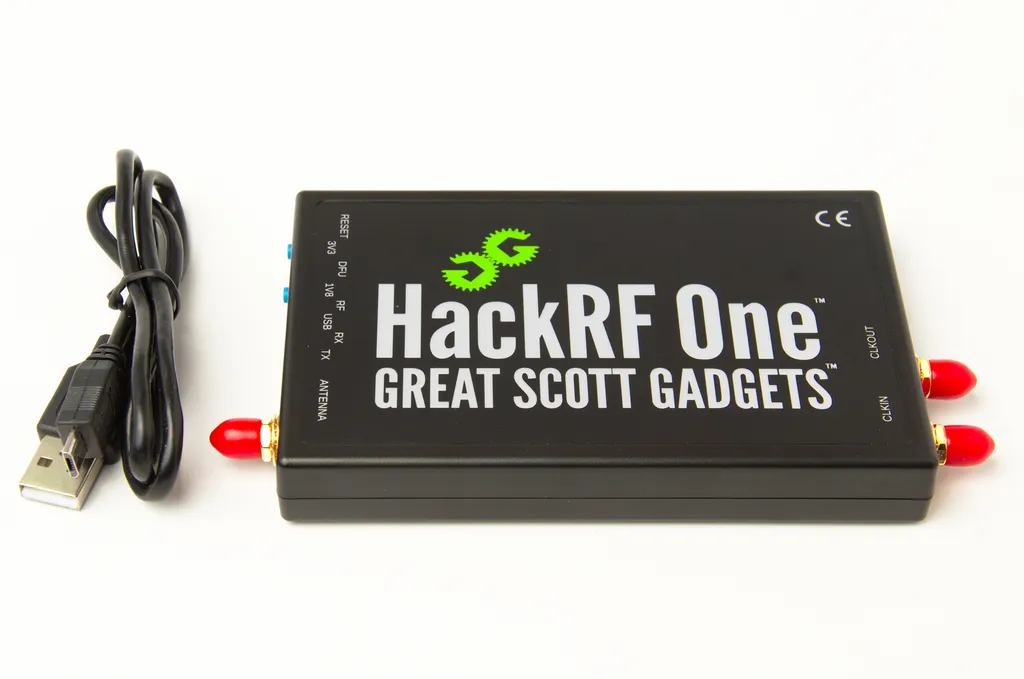
The HackRF PortaPack is a versatile transmit and receive SDR for experiments:
- Frequency range: 1 MHz to 6 GHz
- Bandwidth: up to 20 MHz
- ADC: 8 bit, half duplex (transmit or receive)
- Transmit power: depending on frequency from under 1 mW to about 15 dBm (around 30 mW). Not a transmitter for on-air operation, but good for lab work and signal generation.
- Price: around EUR 250 to 350 with PortaPack
- Special features: usable without a PC thanks to the PortaPack display, open-source Mayhem firmware with many built-in applications
ADALM-Pluto (Analog Devices)
- Frequency range: 325 MHz to 3.8 GHz (considerably extendable with a well-known firmware trick)
- ADC/DAC: 12 bit
- Bandwidth: up to 20 MHz
- Price: around EUR 200
- Special features: full-fledged transceiver SDR, originally intended as a learning platform for students, popular for QO-100 operation and DATV
Top Class (From Around EUR 1000)
Elad FDM-S3
- Frequency range: 9 kHz to 108 MHz directly sampled, with an optional internal downconverter up to 2 GHz
- ADC: 16 bit at 98.304 to 122.88 MSPS
- Bandwidth: up to 24.576 MHz as an I/Q stream
- Reference: 10 MHz TCXO with 100 ppb, optional OCXO with 3 ppb, can be synchronised to GNSS or an external 10 MHz
- Price: introductory price in 2020 of EUR 949.90, check current prices with the dealer
- Special features: professional HF receiver from Italy, its own FDM-SW2 software, I/Q recording
The comparison with the RX-888 MKII is interesting: both work with 16 bit and direct sampling, but the Elad offers a considerably better reference, well-thought-out software and European support. If you simply want to record the whole shortwave spectrum, the RX-888 will take you a long way for a fraction of the price.
Comparison Table
The most important SDR receivers side by side (prices rounded, as of October 2026):
| Device | Frequency | ADC | BW | TX | Price |
|---|---|---|---|---|---|
| RTL-SDR V4 | 0.5–1,766 MHz | 8 bit | 2.4–3.2 MHz | No | ~€30 |
| RSP1B | 0.001–2,000 MHz | 14 bit | 10 MHz | No | ~€130 |
| Airspy HF+ Disc. | 0.0005–31 + 64–260 MHz | 18-bit DDC | 0.66 MHz | No | ~€180 |
| Airspy R2 | 24–1,700 MHz | 12 bit | 9 MHz | No | ~€200 |
| RX-888 MKII | 0.001–64 + 64–1,700 MHz | 16 bit | 64 MHz | No | ~€180 |
| RSPdx-R2 | 0.001–2,000 MHz | 14 bit | 10 MHz | No | ~€230 |
| Pluto SDR | 325–3,800 MHz | 12 bit | 20 MHz | Yes | ~€200 |
| HackRF One | 1–6,000 MHz | 8 bit | 20 MHz | Yes (mW) | ~€250 |
| Elad FDM-S3 | 0.009–108 MHz | 16 bit | 24.6 MHz | No | ~€950 |
The RSP prices are net prices at distributors; the other figures are retail guide prices.
Software for SDR Receivers
- SDR++: cross-platform, modern, supports almost all SDR hardware. Open source. Our recommendation for getting started.
- SDR# (SDRSharp): Windows, mature, large plugin collection, ideal for RTL-SDR and Airspy
- SDRuno: specifically for SDRplay hardware, free, good HF features
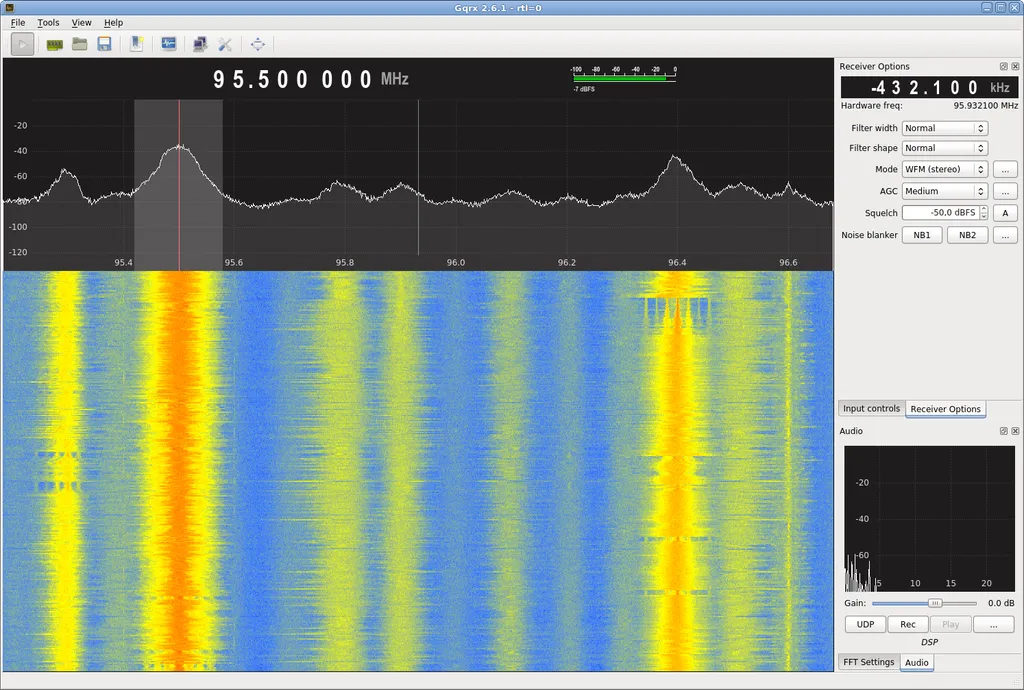
- Gqrx: Linux and macOS, simple, lightweight, open source
- SDR Console: Windows, free, supports many receivers and copes well with large bandwidths such as the RX-888's
- GNU Radio: framework for your own signal processing chains, for developers and the experimentally minded
If you want to share your receiver over the internet, our guides to OpenWebRX and the KiwiSDR network are the next step.
Which SDR Is Right for Me?
- Beginners and the curious: RTL-SDR V4. Dive into the SDR world for EUR 30, shortwave included. Ideal together with our RTL-SDR beginner's guide.
- Shortwave listeners: Airspy HF+ Discovery or RSPdx-R2, both with excellent HF reception quality
- VHF/UHF and ADS-B: Airspy R2
- Wideband monitoring: RX-888 MKII, watch all HF bands at the same time
- Experimenters: HackRF PortaPack, transmit and receive, even without a PC
- QO-100 and DATV: ADALM-Pluto, ideal for the geostationary satellite
- Demanding HF reception: Elad FDM-S3, when reference accuracy and software matter as much as bandwidth
To finish, a video that presents the RTL-SDR V4 and its built-in upconverter in detail (in English, Tech Minds):
SDR receivers have democratised access to radio technology. For the price of a dinner, an RTL-SDR opens up the whole VHF/UHF world and, thanks to the V4, shortwave as well. Those who go deeper will find the right hardware for every budget and purpose.
73 – your oeradio.at editorial team
Sources and Further Reading
- RTL-SDR Blog: RTL-SDR Blog V4 Dongle Initial Release and V4 Users Guide
- Airspy: HF+ Discovery and Airspy R2 (manufacturer data)
- SDRplay: RSPdx-R2 Released, prices according to distributor lists (RS Components, Distrelec), October 2026
- RX-888 MKII: TechMinds Reviewing the RX888 MK2 (RTL-SDR Blog)
- Elad FDM-S3: New Elad FDM-S3 Specifications and Photos (RTL-SDR Blog)
- Comparison measurements by Leif SM5BSZ: Airspy HF+ Discovery, RSP1, Perseus and more
- Videos: Manuel Lausmann: RTL SDR V4 vs V3, Tech Minds: RX888 MK2, Tech Minds: RTL SDR V4
- Images: cover image Michaelgraaf, Wikimedia Commons, CC0. RTL-SDR: Joeceads, Wikimedia Commons, CC BY-SA 4.0. HackRF One: Alexander Neumann, Wikimedia Commons, public domain. Gqrx: AsciiWolf, Wikimedia Commons, CC BY-SA 4.0.
Transparency Notice
This article was researched and written with the assistance of AI (Claude, Anthropic). The editorial team has reviewed and edited all content. Despite careful review, occasional inaccuracies may occur, and we welcome corrections via email to [email protected].