The 2 m band has become quieter, and many contacts today run through repeaters or internet links. The Winter VHF Simplex Challenge from the 145 Alive initiative wants to change that: from 1 October 2026 to 1 February 2027, every direct contact on 2 m counts, in FM or SSB. Anyone can join in, from a shack at the kitchen table to a summit activation.
What is the challenge?
145 Alive is an international initiative around the 2 m band, with regional coordinators in Germany, Norway, Sweden and the UK, among others. The Winter Challenge is explicitly not a contest: there are no result lists, and everyone plays against themselves. Anyone who uploads a log receives a personal certificate with their score. The challenge is already underway, and at the time of our research 79 participants had registered.
The idea suits Austria well. Between valleys and peaks, simplex contacts on 2 m are often more exciting than you would think, as we described in Alpine Propagation: How Mountains Affect VHF/UHF Propagation.
The rules at a glance
- Period: 1 October 2026 to 1 February 2027, 23:59 UTC
- Band: 2 m only
- Modes: FM and SSB, simplex only
- Not allowed: repeaters, internet links such as EchoLink or AllStar, satellites, crossband and digital modes such as FT8 or DMR
- Power: maximum 25 W at the transmitter output
- Calling frequencies: 145.500 MHz FM and 144.300 MHz USB, move to a free frequency after the contact
- Exchange: signal report and six-character locator (for example JN66xp)
- Points: 1 point per station in FM, 2 points per station in SSB, 10 points per new six-character locator square. Duplicate contacts do not count.
- Mode-switch bonus: +25 points if the same station was worked in both FM and SSB
- Log submission: ADIF file by 14 February 2027, 23:59 UTC
The quickest way to find your own locator is an online locator map or directly in your logging software. If you enjoy SSB, the 2 m SSB round by OE8ANK on 144.320 MHz is a good place to find stations for the mode-switch bonus.
Bonus for SOTA, POTA and low power
Portable operators in Austria get two interesting extras. They are listed separately in the rules and can be combined:
- SOTA/POTA bonus: +50 points for an activation from a summit or a park with at least five different simplex contacts. The SOTA or POTA reference must appear in the log.
- Low-power factor: your total score is multiplied by 1.5 if you operated with no more than 10 W throughout the entire challenge.
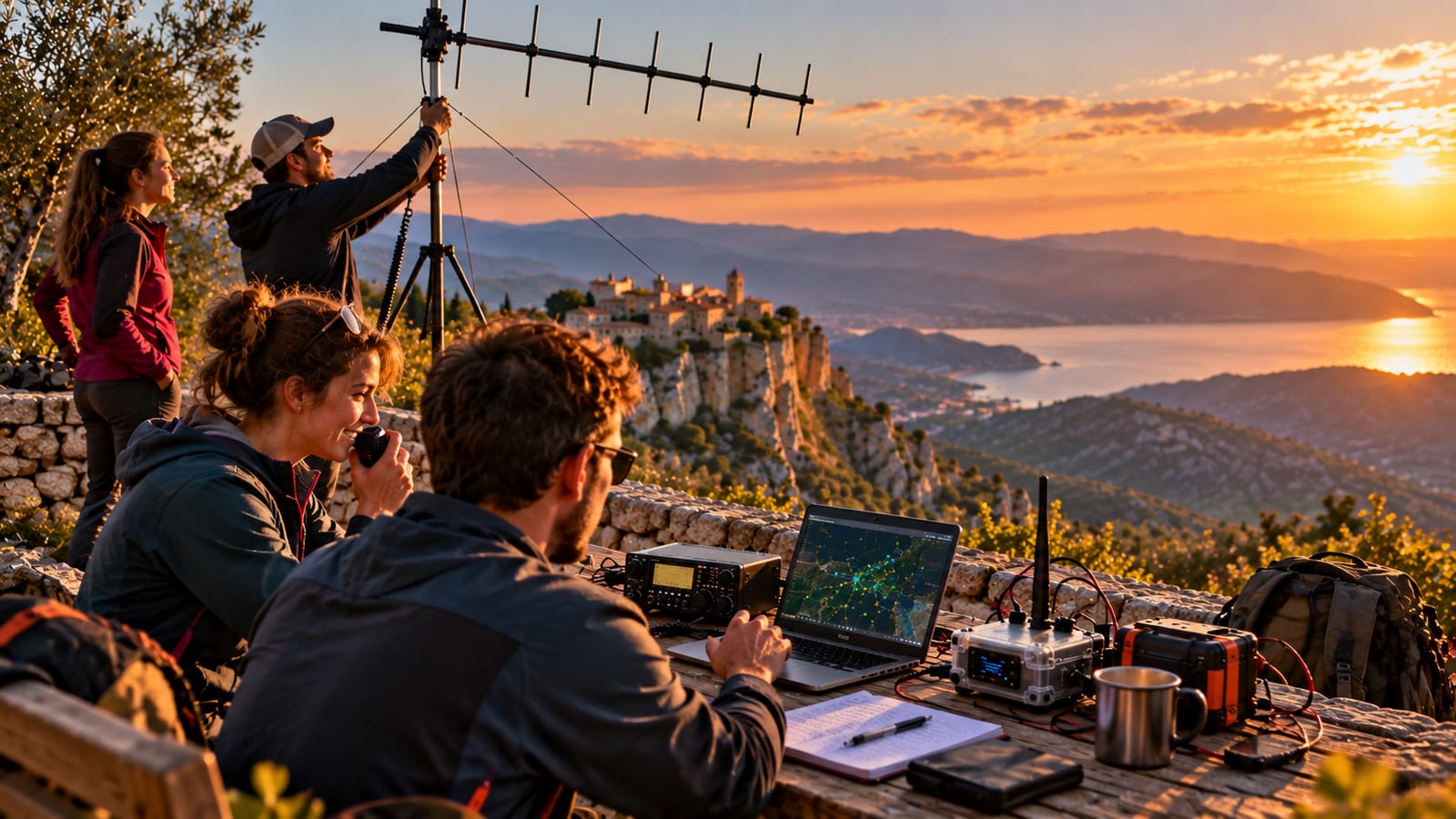
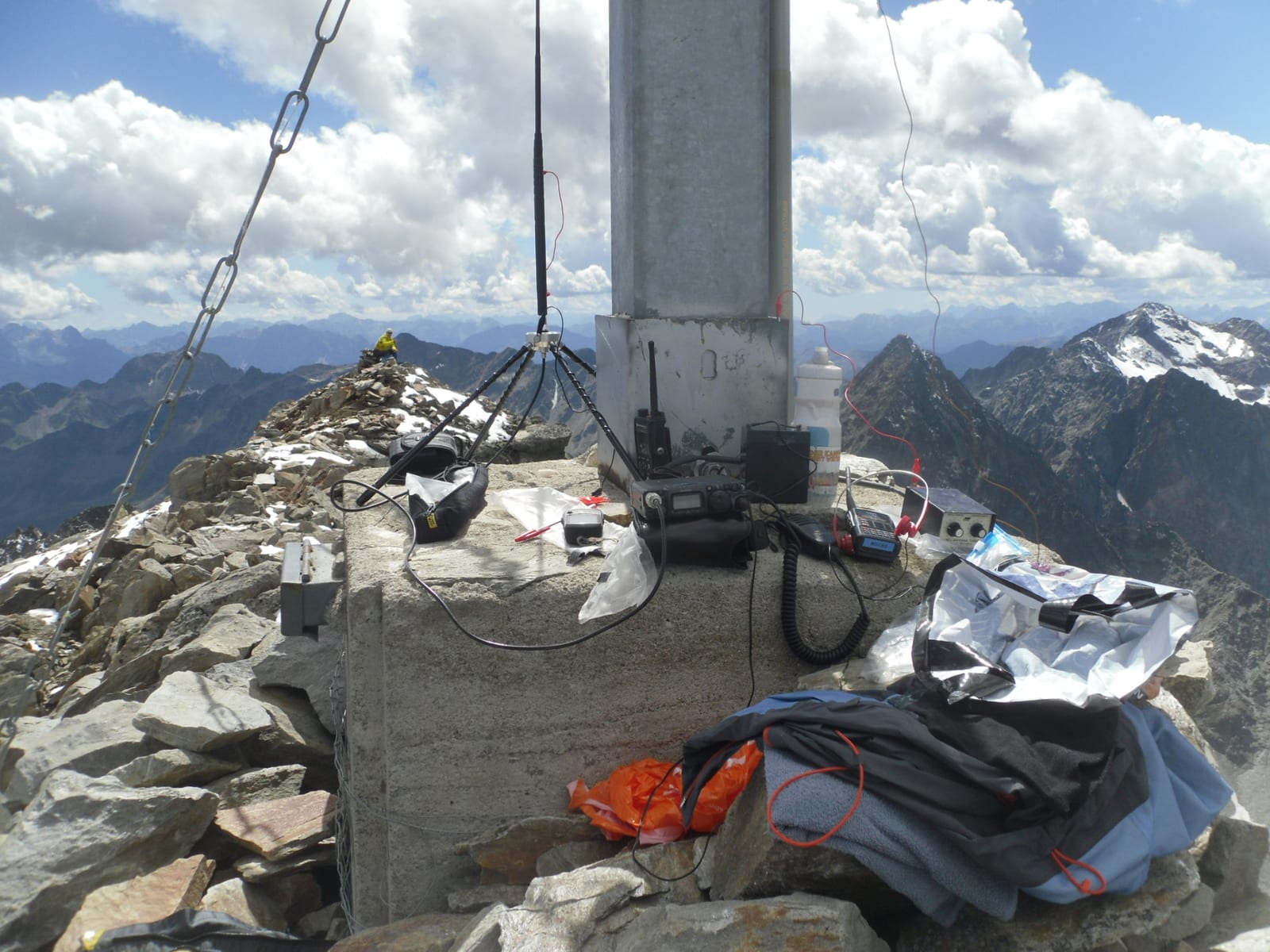
A 5 W handheld automatically meets the 10 W limit, and a summit often brings astonishing range on 2 m. If you are climbing SOTA summits or activating POTA parks in winter anyway, a small 2 m Yagi in your backpack picks up a few bonus points along the way. How cold such an activation can get is shown in our report Radio, Frost and Cold Fingers. A word of caution on the factor: it only applies if you never used more than 10 W during the whole challenge. If you have already operated with more power, you no longer qualify.
How to take part
- Register: sign up at 145alive.com with your callsign and name. Anyone may operate, but registration is required for the certificate.
- Operate and log: enter your contacts with signal report and six-character locator, and the reference too for SOTA or POTA.
- Upload ADIF: export your log as an ADIF file, for example from Wavelog or another online logbook, and upload it via the log upload on 145alive.com. Points are calculated there automatically.
- Certificate: if you submit by 14 February 2027, you receive a personal certificate.
The complete rules with a worked example are on the website. Some bonus rules are worded slightly differently in two places there. If you want to be sure, it is best to ask the organisers directly.
Links
- 145 Alive: homepage and registration
- Event page of the Winter VHF Simplex Challenge 2026/2027
- Rules document
- Challenge Facebook group
Thanks to Romano IU3GMW for the tip!
73 – your oeradio.at editorial team
Title image: SOTA activation on the Roter Knopf, photo: Ptolusque, Wikimedia Commons, licence CC BY-SA 4.0, resized for the website.
Transparency Notice
This article was researched and written with the assistance of AI (Claude, Anthropic). The editorial team has reviewed and edited all content. Despite careful review, occasional inaccuracies may occur, we welcome corrections via email to [email protected].