Table of Contents
- The legal basis, in the right order
- The competent authority
- Licence classes
- Class 1
- Class 4
- Class 3
- Power levels: the most important correction
- Licences now run for ten years
- What it costs: TKGV 2025
- The examination
- Call signs
- Operating obligations
- The log: yes, it is mandatory
- Intelligibility instead of encryption
- No broadcasting
- Reception
- Emergency traffic
- Training operation
- Technical duties and EMC
- Operating abroad
- Comparison with Germany
- How this differs from licence-free services
- Penalties
- The ten points that really matter
- Transparency Notice
Amateur radio is a technical hobby with a law of its own. That is unusual and it is a privilege: radio amateurs may build, modify and operate their own transmitters, they get dedicated frequency allocations and they may work internationally. The price is a set of rules worth knowing, because it determines which bands you may use, at what power, under which call sign and with what record keeping.
This overview reflects the situation in September 2026 and has been thoroughly corrected compared with its first version. That was necessary, because more has changed in the past three years than in the twenty before: power levels were extended upwards in 2023, licences have been time-limited since 2018 and the old open-ended ones are now expiring on a staggered schedule, and the amateur radio fee ordinance was repealed outright in 2025 and replaced.
The legal basis, in the right order
Contrary to what is often written, the Telecommunications Act is not the only foundation. Austria has a dedicated amateur radio law, and that is the more important norm.
Amateurfunkgesetz 1998 (AFG). It establishes the amateur service as a service in its own right: definitions, the licence requirement, prerequisites, examinations, call signs, competent authority and penalties. Anyone who only reads the TKG misses the essentials.
Amateurfunkverordnung (AFV), BGBl. II No. 126/1999. The implementing ordinance to the AFG and the document you actually deal with day to day. It has been amended several times, most recently by BGBl. II No. 61/2023. It contains the licence classes, the power levels, the band plan in its annexes, call sign formation and the operating obligations including the log.
Telekommunikationsgesetz 2021 (TKG 2021), BGBl. I No. 190/2021. The general framework for everything radio. For radio amateurs the relevant parts are frequency management, market surveillance of radio equipment under EU Directive 2014/53/EU and the powers of the authority.
Frequenznutzungsverordnung (FNV). It assigns the frequency ranges in concrete terms. The amendment of 13 March 2023 is the reason Austria allows more transmit power today than it used to.
Telekommunikationsgebührenverordnung 2025 (TKGV 2025), BGBl. II No. 356/2024. In force since 14 July 2025. It replaced the old amateur radio fee ordinance, whose provisions were repealed in full. All amounts below come from this ordinance.
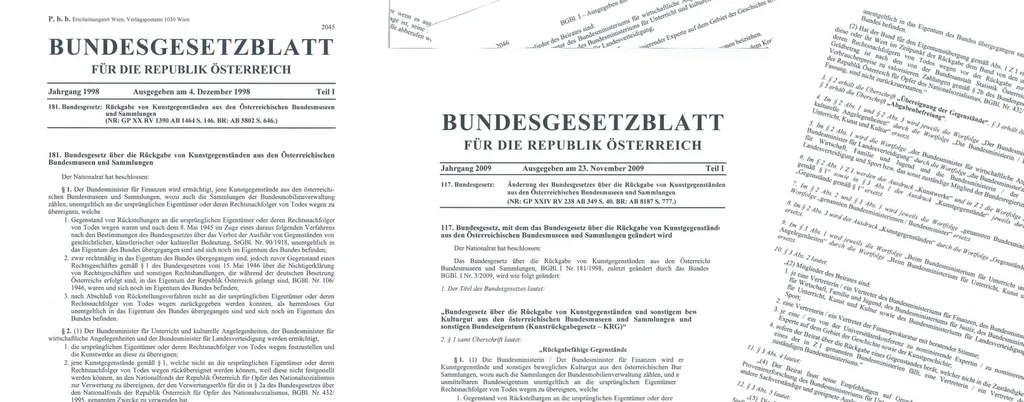
The competent authority
Responsibility rests with the Fernmeldebüro as the telecommunications authority. It is a subordinate agency of the Federal Ministry for Housing, Art, Culture, Media and Sport. That assignment has shifted with several government reshuffles, which is why older ministry names still circulate online.
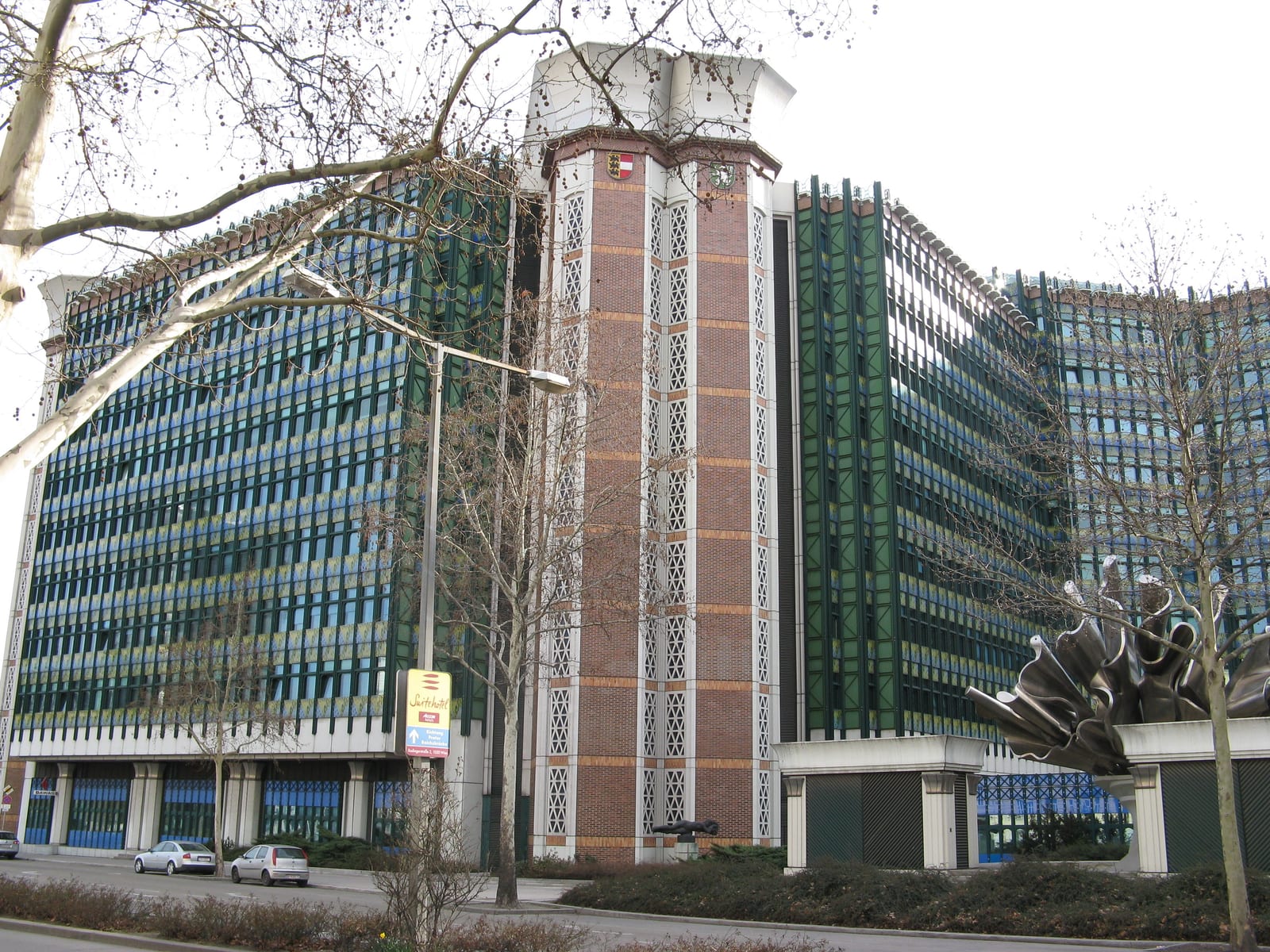
The Fernmeldebüro issues licences, runs the examinations, coordinates frequencies, performs market surveillance on radio equipment and operates radio monitoring. Its seat is in Vienna at Radetzkystraße 2, with branch offices in Linz, Salzburg, Innsbruck, Bregenz, Graz and Klagenfurt. Lower Austria and Burgenland have no dedicated branch.
Licence classes
Austria has three licence classes. They differ in the scope of the examination, frequency access, permitted power and whether home-built equipment is allowed.
Class 1
The full class, with access to every band allocated to the amateur service, from long wave up into the microwave ranges. Home construction permitted, all power levels accessible. The examination meets the HAREC standard and therefore CEPT Recommendation T/R 61-01, which allows operation in CEPT countries without additional permission.
Class 4
The entry class with HF access. It covers several ranges, among them 160 m, 80 m, 15 m and 10 m plus 2 m and 70 cm. Operation only with commercially manufactured, unmodified equipment, and only at power level A. It corresponds to the CEPT Novice Recommendation T/R 61-02, so abroad the host country's novice conditions apply.
Class 3
The smallest class, limited to 144 to 146 MHz and 430 to 440 MHz, also with commercial equipment only and only at power level A. This class is purely national, there is no CEPT recognition for it. It is enough to get started via VHF repeaters, but not for HF.
Moving up to a higher class is possible through a supplementary examination, the whole exam does not have to be repeated. The minimum age for a licence is 14.
Power levels: the most important correction
The original version of this article got this wrong, in both directions. The correct scheme under § 9 AFV is:
| Power level | Maximum power (PEP) | How you get it |
|---|---|---|
| A | 100 watts | Default after passing the exam |
| B | 200 watts | Application to the authority |
| C | 400 watts | Application after one year of interference-free operation at level B from that site |
| D | 1,000 watts | High power, since the FNV amendment of 13 March 2023, class 1 on selected HF bands |
Two points, because they are regularly mixed up. First, level A is the default power, not the ceiling for the experienced. Second, the Austrian ceiling is 1,000 watts PEP, not 1,500 watts. High power at level D is available on 80 m, 40 m, 20 m, 17 m, 15 m, 12 m and 10 m, subject to at least one year of interference-free operation at level B from the site in question. Classes 3 and 4 are limited to level A by § 8 AFV, that is 100 watts.
Some bands carry their own lower limits regardless of level, for instance the long-wave segment at 135.7 to 137.8 kHz. What counts is always the band plan in the annexes to the AFV together with the FNV. And whatever the ceiling, the principle stands: use the minimum power necessary for the contact.
Licences now run for ten years
This is the change with the greatest practical consequences. Amateur radio licences are no longer issued indefinitely but for ten years. After that a new application is required.
For the many old open-ended licences there is a phase-out plan based on the year of issue:
- Issue years ending in 8 or 9: expired on 31 December 2025
- Ending in 0 or 1: expiry on 31 December 2026
- Cohorts 1980 to 1989: expiry in 2026
- Cohorts 1990 to 1994: expiry in 2027
- From 1995 onwards: expiry in 2028, at the end of the month in which the licence was originally issued
The Fernmeldebüro notifies those affected in writing around two months in advance and encloses an application form. The formal route is to surrender the old open-ended licence and file a new application at the same time, so that operation continues without a gap. Miss the deadline and you no longer hold a valid licence and may not transmit. We have broken down the detail in a separate piece on the expiry of open-ended licences.
What it costs: TKGV 2025
The amateur radio fee ordinance is history, its provisions have been repealed. Since 14 July 2025 the TKGV 2025 applies. The positions relevant to radio amateurs under § 15:
- Amateur radio licence: 200 euros once, covering the ten-year term
- Club station: 800 euros for ten years
- Change to a different licence class within the ten years: 50 euros
- Licence on the basis of a foreign authorisation: 50 euros
- Examination fee per category, including supplementary exams: 50 euros
On top of that come two charges under the Fees Act 1957: 21 euros for the application and 21 euros for the certificate, the latter only if you pass. The examination therefore costs 92 euros in total, of which 71 euros fall due before the appointment. From 1 January 2027 the amounts are index-linked and the licence rises to 206.40 euros per BGBl. II No. 267/2026.
Spread over ten years that is roughly 20 euros a year for the licence. Internationally that is still cheap, but the frequently quoted 21 euros for the exam is out of date.
The examination
Three subjects are examined: legal provisions, operating practice and skills, and technical fundamentals. Each subject brings three questions, and the examiners work from the published question catalogue. The examination categories match licence classes 1, 3 and 4.
A Morse test is voluntary and only available in addition to category 1. It requires sending and receiving plain text at at least twelve words per minute for three minutes each. It has long ceased to be a prerequisite for normal operation, but it still makes sense for some awards and for its own sake.
Exams are usually held in Vienna at Radetzkystraße 2, with sittings in Graz, Linz and Innsbruck as well, and in Klagenfurt and Hard when needed. The invitation with the details arrives about two weeks beforehand. How preparation works and which courses exist is covered in our guide to the Austrian amateur radio exam.
Call signs
Austrian call signs consist of the country identifier OE, a digit for the province and a suffix of one to three letters. The digits: OE1 Vienna, OE2 Salzburg, OE3 Lower Austria, OE4 Burgenland, OE5 Upper Austria, OE6 Styria, OE7 Tyrol, OE8 Carinthia, OE9 Vorarlberg.
Plus the additions set out in § 22 AFV:
- Operation in another province: slash plus the digit of the province you are operating from
- /M for mobile, /P for portable operation
- /MM for maritime mobile, /AM for aeronautical mobile
- Club stations: the letter X is inserted into the call sign
- Visitors holding a CEPT licence in Austria: prefix your own call sign with OE/
The call sign must be unmistakably identifiable, and in text or image transmissions separated by at least one blank field. During longer transmissions it must be sent at least every ten minutes. Allocation is made by the authority, preferences may be expressed, but there is no legal entitlement to a particular call sign.
Operating obligations
The log: yes, it is mandatory
The first version of this article was wrong here too. § 24 AFV requires a log with consecutively numbered pages, signed by the licence holder or the responsible person. Each contact needs date, start and end time, the other station's call sign or CQ for general calls, frequency, mode and location.
There are concessions. In mobile operation above 30 MHz, date, time span, frequency range and area suffice. Operators with a physical disability may limit themselves to date, time span and frequency band, and an audio recording counts as a log. In practice any electronic logbook satisfies the requirements as long as the mandatory fields are there and it can be printed or exported.
Intelligibility instead of encryption
The AFV frames the encryption ban from the other side: under § 20 para. 5 the use of devices that restrict the intelligibility of the message is not permitted. Standardised procedures, meaning the usual digital modes with openly documented coding, are not affected. For non-standardised procedures § 20 para. 3 requires that transmissions remain reproducible for three weeks.
No broadcasting
Amateur radio is communication between radio amateurs, not programming for the general public. Music, advertising and transmissions to an undefined audience are not permitted. CQ calls and the bulletins of the national societies are expressly fine.
Reception
§ 19 AFV limits what may be received with the amateur station, namely transmissions in the ranges allocated to the amateur service, broadcasting, public announcements and emergency and disaster traffic. This is not a ban on running an SDR, but it does constrain the amateur station itself.
Emergency traffic
Emergency traffic takes priority and distress calls must be relayed. What the international side says, and what the updated recommendation ITU-R M.1042-4 means for Austria, we covered separately.
Training operation
§ 23 AFV allows a class 1 club station to be used by holders of examination categories 3 or 4 where this serves training purposes and happens under the supervision of a class 1 holder. That is the legally clean way to put newcomers on the microphone.
Technical duties and EMC
The AFV also covers technical matters. Unwanted emissions must be limited under § 17, and tuning the transmitter must be done into a dummy load able to absorb the licensed power under § 14. Repeaters and beacons have their own rules, among them that a repeater must stop transmitting within ten seconds after the end of reception, or within three minutes for television.
For interference the Fernmeldebüro is the place to go. It accepts reports, can measure on site and order measures. The proven sequence remains: check your own station first, then talk to the neighbour, and only then involve the authority. How to track down interference sources systematically is in our EMC guide. Anyone planning to put up an antenna should also know the civil law side, which we wrote up in antennas and tenancy law.
Operating abroad
Class 1 equals HAREC and therefore T/R 61-01, so operation in CEPT countries is possible without additional permission, using the host country prefix before your own call sign. Class 4 falls under the novice recommendation T/R 61-02 and applies in those countries that have implemented it, subject to their national novice conditions. Class 3 is national and does not authorise operation abroad.
Outside the CEPT area an individual authorisation is usually required. If you are planning a SOTA or POTA trip, settle the question before you are on the summit.
Comparison with Germany
The comparison is worth making because many operators are active in both countries. It shifted in 2024, when Germany introduced a new entry class.
- Authority: Fernmeldebüro in Austria, Bundesnetzagentur in Germany
- Classes: Austria has 1, 3 and 4. Germany has had three classes N, E and A since the amendment of 24 June 2024, with N limited to 10 m, 2 m and 70 cm at a maximum of 10 watts
- Maximum power: Austria 1,000 watts PEP at level D on selected HF bands, Germany 750 watts PEP in class A. The Austrian advantage is real, but smaller than often claimed
- Exam costs: Austria 92 euros including application and certificate, Germany in a similar range depending on class
- Licence term: Austria ten years with a fee covering the period, Germany recurring contributions under its frequency usage contribution ordinance
- Site certification: more formalised in Germany under the BEMFV than in Austria
- Society: ÖVSV in Austria, DARC in Germany, both IARU members with a QSL bureau
How this differs from licence-free services
Amateur radio is not citizens' band radio. CB, PMR446 and Freenet need no exam and no licence, but frequencies, power and equipment choice are tightly limited and home construction is not part of the deal. The examination is precisely why radio amateurs may do so much more. If you are weighing up which route suits you, amateur radio as a hobby takes the beginner's view.
Penalties
Breaches are administrative offences. Fines, revocation of the licence and seizure of equipment are all possible. Transmitting without a valid licence is an offence regardless of whether anyone is being interfered with. That is exactly why the time limit is not a formality: an expired licence is no licence.
In practice the authority starts with education. It gets serious with repetition and with deliberate interference.
The ten points that really matter
- Hold a valid licence, and keep an eye on the expiry date. Ten years pass faster than you think
- Send your call sign, at least every ten minutes during longer transmissions
- Use only the bands of your own class
- Stay within your power level, the default is 100 watts and more only with a decision in hand
- Keep a log with the mandatory fields from § 24
- Transmit nothing that restricts intelligibility
- No broadcasting and no music
- Emergency traffic takes priority
- Take responsibility for EMC and limit unwanted emissions
- Clarify the CEPT status of your destination before you travel
Austrian amateur radio law remains liberal: high power limits, low fees, home construction cleanly regulated, straightforward operation across Europe. What is new is that you now need a date in your calendar. Renew the licence in time and keep the log properly, and you will hardly ever deal with the authority at all.
73 – your oeradio.at editorial team
Transparency Notice
This article was researched and written with the support of AI (Claude, Anthropic) and completely revised on 26 September 2026. That revision corrected several errors in the first version, in particular the power levels, the maximum transmit power, the citation of the Amateurfunkverordnung, the logging obligation and the fees. Sources for the revision were the consolidated texts of the Amateurfunkgesetz 1998 and the Amateurfunkverordnung in the Austrian RIS database, the Telekommunikationsgebührenverordnung 2025 including its indexation from 2027, the Fernmeldebüro information pages on examinations, fees and the expiry of open-ended licences, ÖVSV announcements, and the German rules under the 2024 Amateurfunkverordnung for the country comparison. The title image shows the office building at Radetzkystraße 2 in Vienna, seat of the Fernmeldebüro (Photo: Yair Haklai, CC BY-SA 4.0, via Wikimedia Commons); the other illustration is an official work in the public domain. The embedded videos are from Germany and labelled accordingly; for Austrian law the provisions stated here apply. Editorial responsibility and review lie with the oeradio.at editorial team. We accept no liability for accuracy or completeness; in an individual case the Fernmeldebüro decides. Corrections and additions to [email protected].