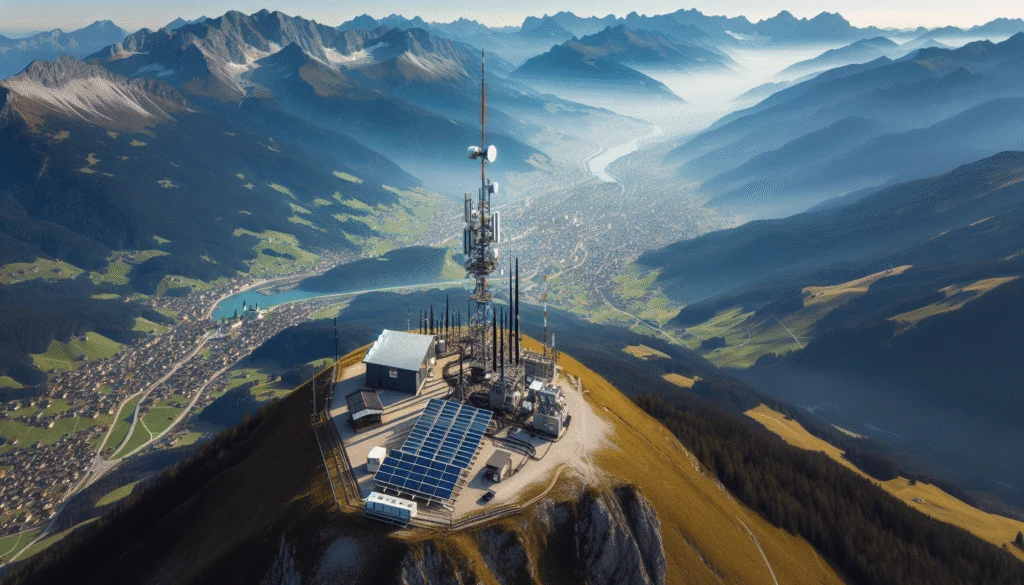
Repeaters are the backbone of VHF/UHF communication in amateur radio. Thanks to their elevated locations on mountains and buildings, they enable radio contacts far beyond the direct line of sight. Austria has a dense network of 2 m and 70 cm repeaters, operated on a volunteer basis by dedicated radio amateurs. This article explains how the system works and how to use it.
How a Repeater Works
A repeater receives on one frequency (input) and simultaneously transmits on another frequency (output) — hence the name. The frequency offset (shift) is -600 kHz by default on 2 m and -7.6 MHz on 70 cm. The repeater sits at an elevated location and thereby bridges obstacles that would make a direct connection between two ground stations impossible.
To activate a repeater, the radio must transmit a CTCSS sub-audible tone (typically 88.5 Hz in Austria) or a DCS code. This tone prevents interfering signals from opening the repeater unintentionally.
How a repeater works, briefly summarized in this video:
The Repeater Network in Austria
Thanks to its topography, Austria offers ideal locations for repeaters. Amateur radio repeaters stand on virtually every significant mountain peak and on many high-rise buildings:
- 2 m band (144–146 MHz): FM repeaters in the range 145.600–145.800 MHz (output), with -600 kHz shift. Ranges of 50–150 km depending on site elevation.
- 70 cm band (430–440 MHz): FM repeaters in the range 438.200–439.400 MHz (output), with -7.6 MHz shift. Somewhat shorter range, but more available channels.
- DMR repeaters: Digital repeaters in the 70 cm band, linked via the BrandMeister network or IPSC2. They enable worldwide connections via talkgroups.
- C4FM/Fusion repeaters: Yaesu System Fusion repeaters, some with WIRES-X linking.
- D-STAR repeaters: Icom-based digital repeaters, linked via DCS reflectors.
Platforms such as repeaterbook.com or hearham.com provide an up-to-date overview of all repeaters.
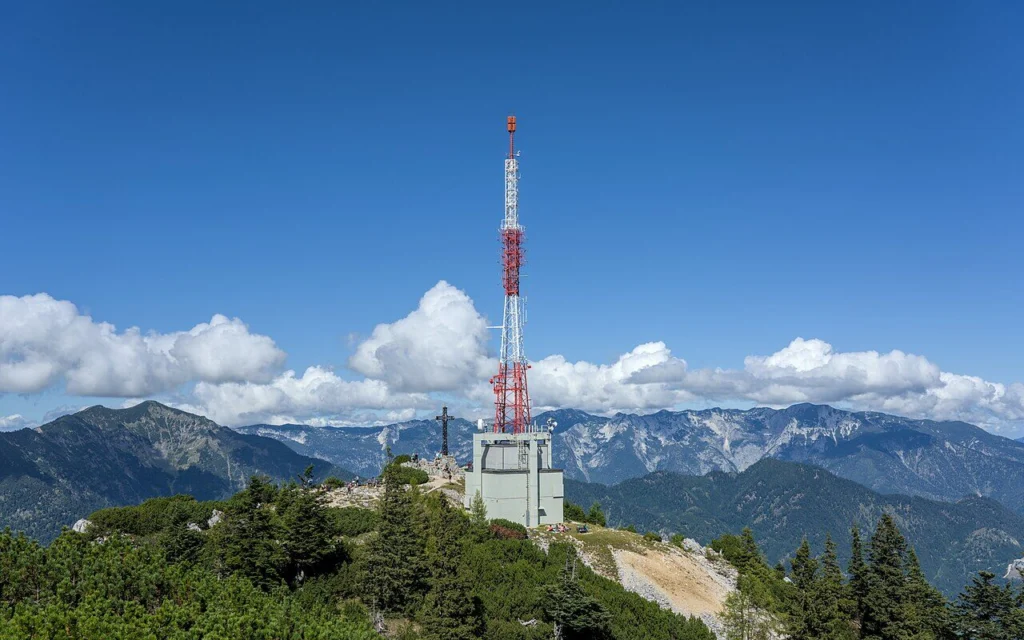
This video shows how to find repeaters in your own area:
Using Repeaters Correctly
Correct repeater operation follows a few simple rules:
- Give your callsign: Every transmission begins and ends with your own callsign — a legal requirement.
- Wait briefly: After releasing the PTT button, wait a moment so that other stations can join in (keyword: avoid kerchunking).
- Respect nets: Many repeaters host regular nets (e.g. local club nets). Don't simply transmit over them — wait and check in.
- Emergency traffic has priority: In emergency situations, every station has the right to use the repeater.
- Respect the repeater operators: Repeaters are operated and financed on a volunteer basis. A friendly tone goes without saying.
Setting Up Your Radio
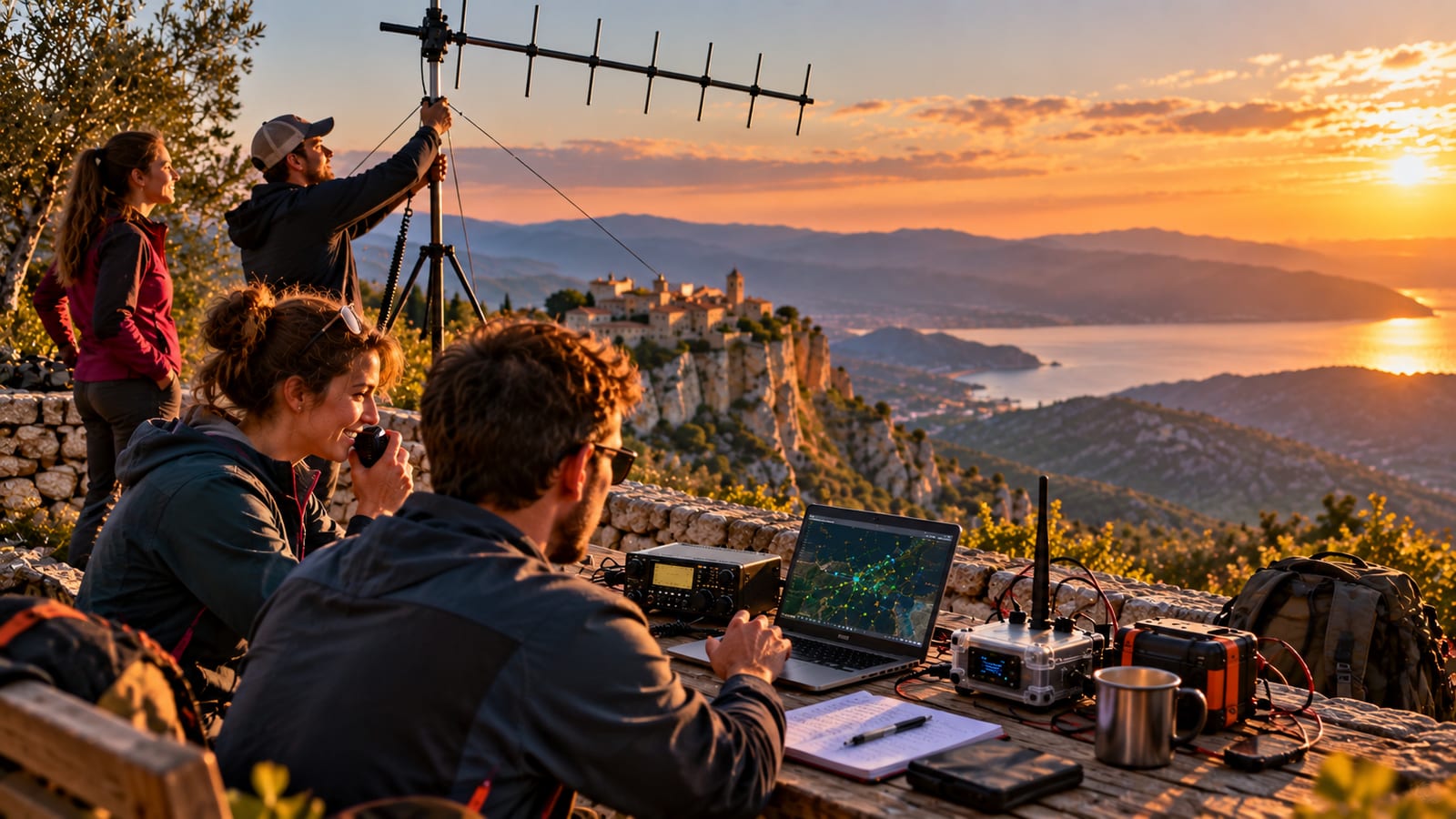
You don't need expensive equipment to get started with repeater operation. A simple handheld radio like the Quansheng UV-K5 is enough for your first QSOs via the local repeater. Important when programming:
- Set the repeater's output frequency (this is the frequency you listen on)
- Set the shift correctly (-600 kHz on 2 m, -7.6 MHz on 70 cm)
- Enable the CTCSS tone (for transmitting — typically 88.5 Hz)
- Adjust the power — low power is often enough for a nearby repeater
If you have just passed the amateur radio exam, repeaters offer the easiest entry into practical radio operation.
This video explains what matters with the CTCSS tone:
Linked Repeaters: EchoLink, HAMNET, and Co.
Many Austrian repeaters are linked via IP-based networks:
- EchoLink and AllStarLink: Connect repeaters worldwide via the internet. A QSO through the local repeater can take place with a station on the other side of the globe.
- HAMNET: The high-speed data network of radio amateurs — some repeaters use the HAMNET backbone for linking instead of the commercial internet.
- DMR networks: BrandMeister and IPSC2 link digital repeaters via talkgroups — from the local club to worldwide connections.
Antennas for Repeater Operation
If you need more range to reach the repeater, you should invest in a good antenna:
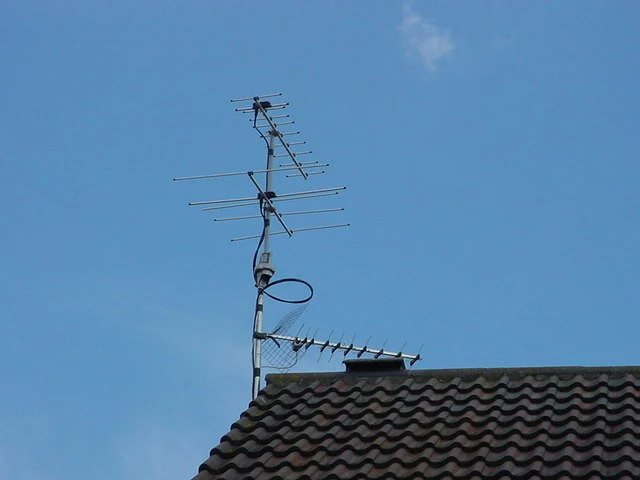
- Omnidirectional antennas: Vertical groundplane or J-pole for a fixed station — uniform radiation in all directions
- Yagi antenna: Directional antenna for hard-to-reach repeaters — high gain, but directional radiation
- Mobile antennas: Magnetic-mount antennas for vehicle operation — significantly better than the stubby antenna on a handheld
DX on VHF/UHF: Sporadic E and More
Normally, range on VHF/UHF is limited to the line of sight. But there are exceptions: under Sporadic-E conditions, repeaters from hundreds of kilometers away can suddenly become audible. Those prepared for such openings experience exciting DX moments on 2 m and 6 m. EME (Earth-Moon-Earth) also enables contacts across continents on VHF/UHF — though not via repeaters, but directly.
Repeaters and APRS
The APRS network in Austria uses its own infrastructure of digipeaters, which, much like repeaters, are located at elevated sites. APRS digipeaters relay position packets, weather data, and short messages — an automatic network that also provides valuable services during emergency communication operations.
Operating Your Own Repeater?
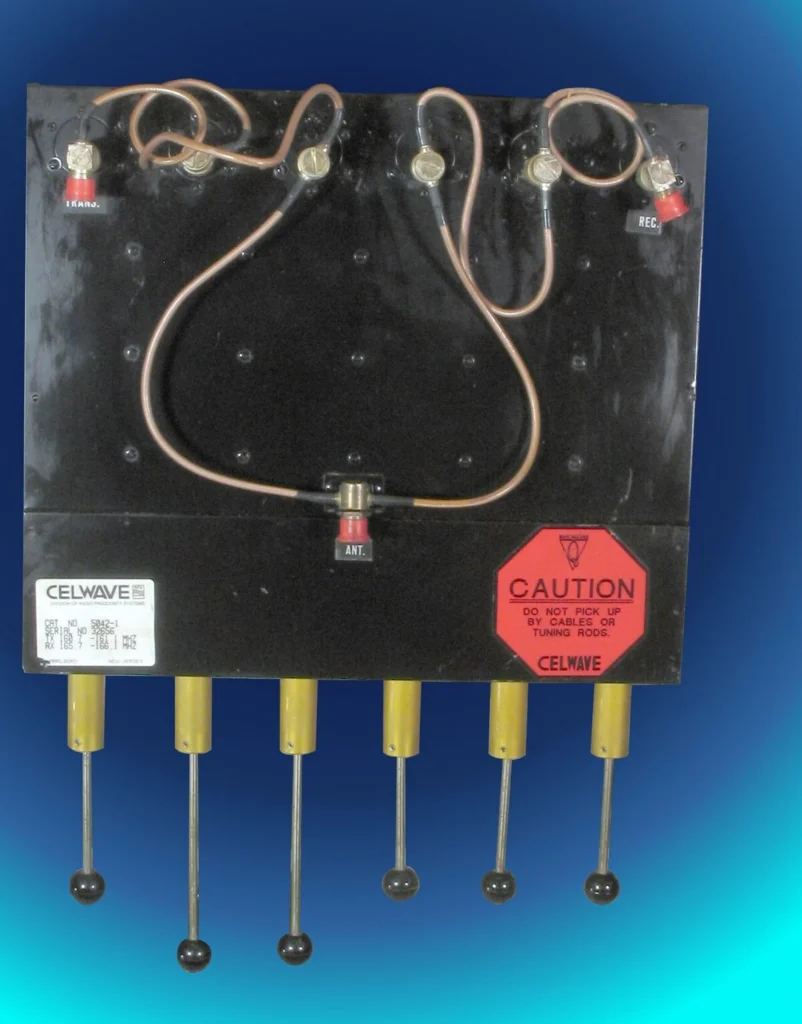
Anyone wanting to set up their own repeater needs a permit from the telecommunications authority and the necessary frequency coordination. The technical requirements include: duplex filters (cavity resonators), a stable power supply, a weatherproof enclosure, lightning protection, and a good antenna system. Operation is voluntary — the operators themselves bear the costs for site rental, electricity, and maintenance.
Repeaters remain the most widely used infrastructure in amateur radio. They offer the easiest entry into the hobby and connect radio amateurs from the fog-filled valley to the mountain peak.
73 – your oeradio.at editorial team
Transparency Notice
This article was researched and written with the assistance of AI (Claude, Anthropic). Any illustrations used were generated with AI (ChatGPT/DALL·E, OpenAI) unless otherwise noted. The editorial team has reviewed and edited all content. Despite careful review, occasional inaccuracies may occur — we welcome corrections via email to [email protected].