A hands-on report by Michael, OE8YML
My old Samsung Galaxy S9+ spent years in a drawer. Now it is, among other things, a 2-metre radio — and it gets used for other amateur radio and radio purposes as well. This is made possible by a small open-source project called kv4p HT: a piece of hardware you plug into the phone, turning it into a real FM transceiver on 144 MHz. Not an internet relay, but actual RF. These notes refer to the v1.
What is the kv4p HT?
The kv4p HT comes from Vance Vagell, KV4P. The idea behind it: instead of carrying a separate handheld with a tiny display and fiddly menus, you use the smartphone you already have with you — and simply add the RF part it lacks. In the following video, Vance introduces the project himself:
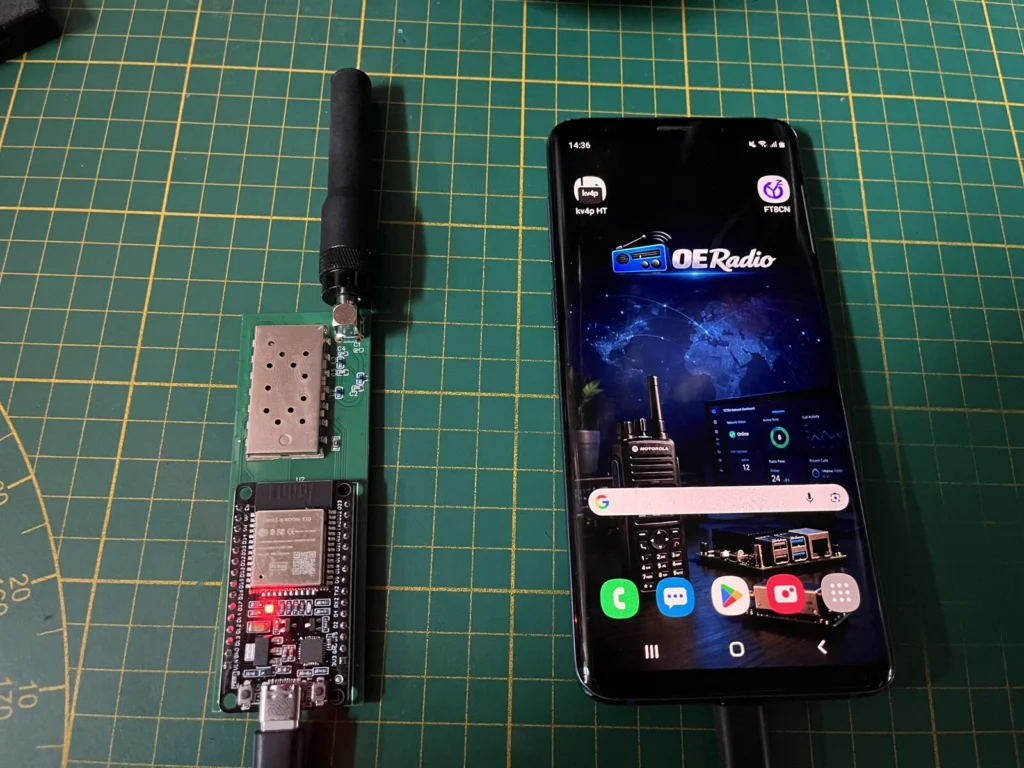
Technically it is refreshingly simple:
- Microcontroller: an ESP32 (WROOM-32) for control and the audio link to the phone
- Radio module: an SA818-V for the 2 m band (the v1 is VHF only)
- Transmit power: around 1 watt
- Connection: a single USB-C cable to the Android phone (the phone must support USB-OTG)
- App: "kv4p HT" from the Google Play Store, Android 8 and up
- Licence: app, firmware, PCB and 3D-print files are all under GPL3 on GitHub
Besides FM voice, the kv4p HT also handles APRS through a built-in 1200-baud modem — SMS-like text messages and position beacons. If you want to read more: APRS in Austria: Position Reports, Weather Data and More.
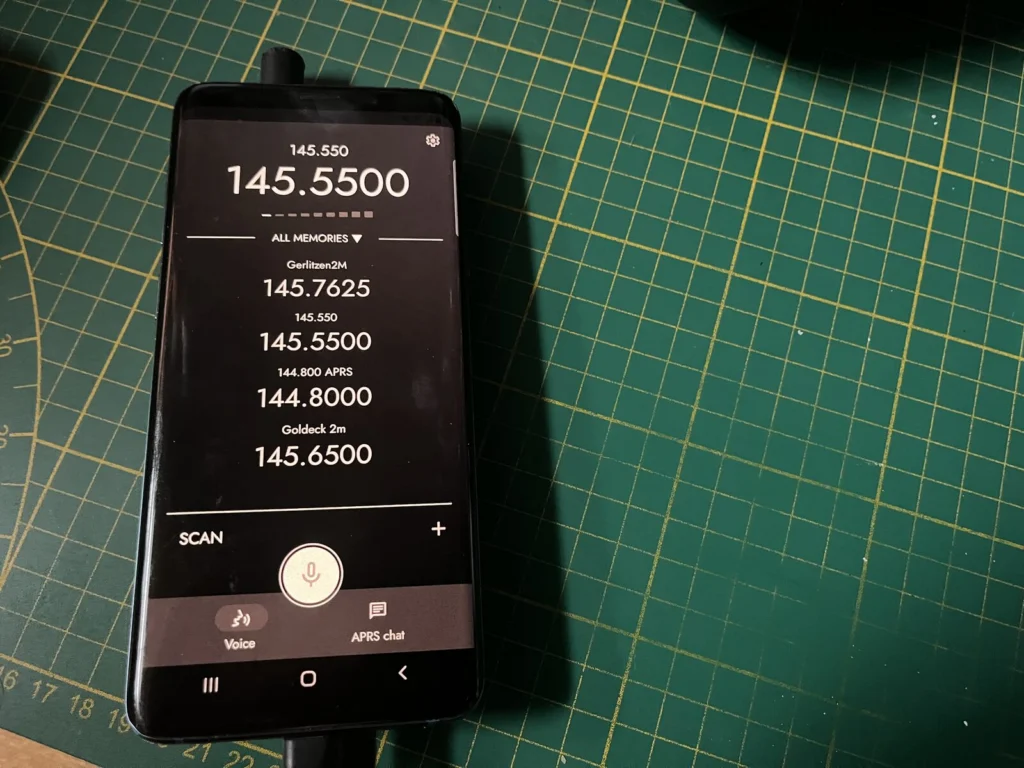
The old smartphone as a radio
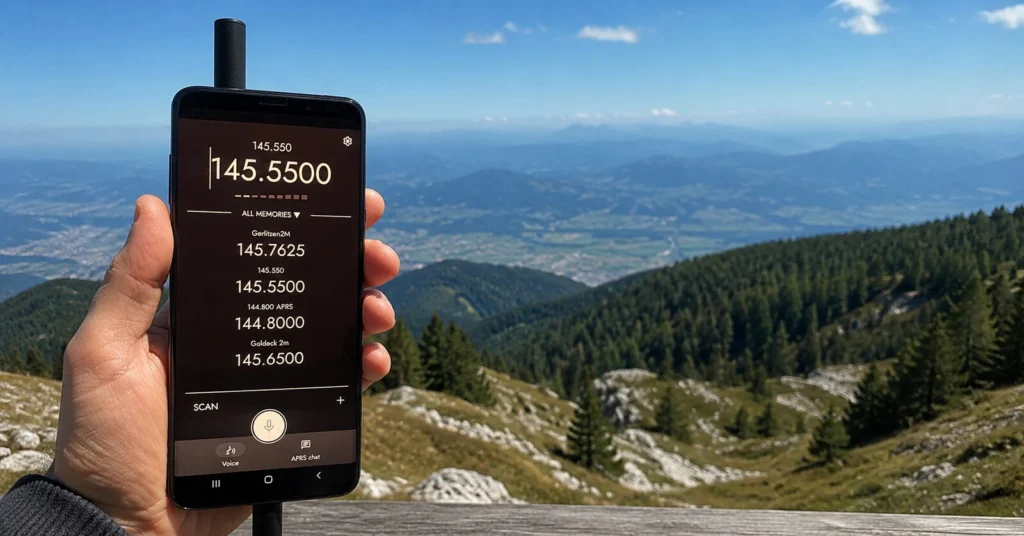
By the way, you don't need a new phone for this — but you don't need an old one either. It works with practically any Android smartphone from Android 8 (2017) onwards, whether a retired drawer device or a current flagship; all it takes is USB-C with OTG / USB-host support. In my case it is the S9+. The app controls frequency, squelch, transmit power and mode via the touchscreen, and the phone brings along GPS for APRS. Anyone who has ever hunted for an offset on the tiny display of a cheap handheld will appreciate the big screen.
And the iPhone? Sadly, no luck: the kv4p HT runs on Android only, there is no iOS app and none has been announced. The reason is technical — the ESP32 communicates over a USB serial connection, and Apple heavily restricts exactly that access for third-party apps, even on the newer USB-C iPhones. There is a community alternative client (kv4p-go) that lists Raspberry Pi and macOS, plus iPadOS and "maybe iOS" as possible targets — but for now that is wishful thinking. So if you use an iPhone, as I do, you need a second Android device for the time being. And that is exactly where the old phone from the drawer comes in handy again.
In principle it reminds me of the Digirig Mobile: a small piece of hardware that gives an existing device the radio part it lacks — except here the phone is the computer, not a laptop.
What can you do with 1 watt?
For long-distance work, 1 watt is little, sure. But for FM on 2 m it is plenty: local QSOs, getting into a nearby VHF repeater, a bit of simplex on 145.500. With a proper antenna instead of the rubber duck you can do more — and in my experience that helps more than any extra watt anyway.
I also find the approach interesting in an emergency communications context: a light, low-power device that reuses an old phone. And for anyone currently discovering the digital side of the hobby — via DMR or a Quansheng UV-K5, say — it is a nice look beyond the usual.
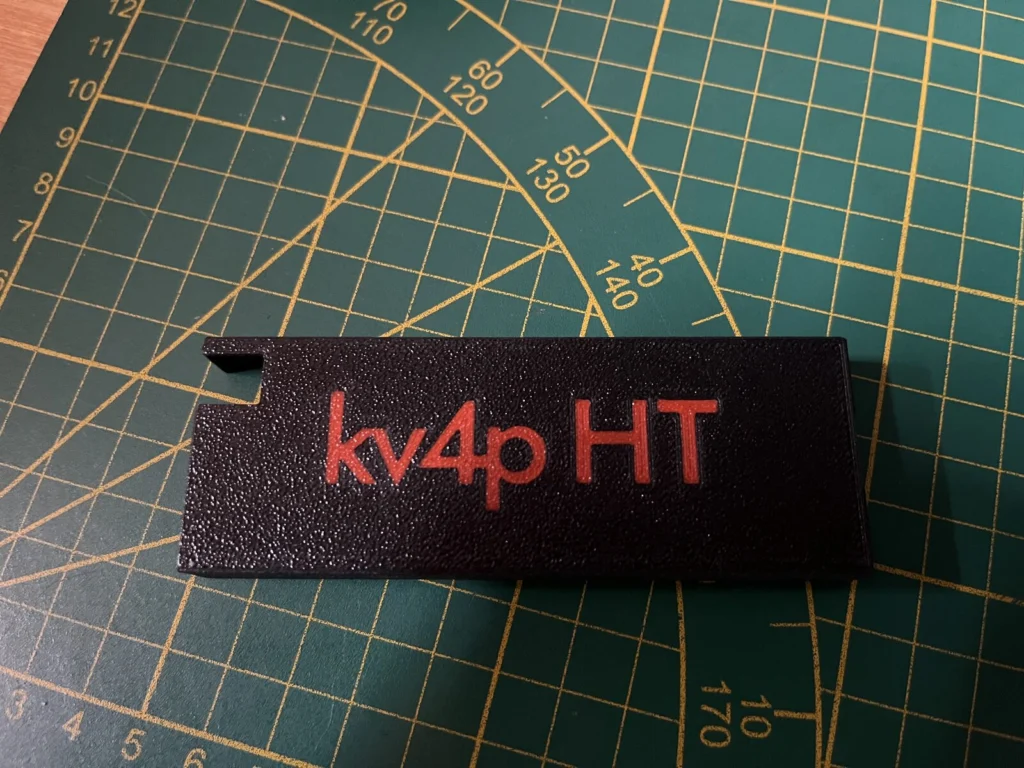
Case and build
The case is 3D-printed — the print files are part of the project, with official designs and community variants. To see what the internals look like and how a build goes, Vance walks through it in this step-by-step guide:
Conclusion
The kv4p HT is a nice project for putting an old phone to good use and approaching 2 m from a different angle. You can build it yourself or buy it ready-made. If you have one or are tempted, do get in touch; I am curious about your experiences. More outdoor tests will follow.
Don't want to or can't solder yourself? No problem: the kv4p HT can also be bought fully assembled and ready to use — for example from Halibut Electronics, Chelegance or New DIY. That way you get the smartphone radio without ever picking up a soldering iron.
- Project site: kv4p.com
- Source & build docs: github.com/VanceVagell/kv4p-ht
- App: "kv4p HT" on the Google Play Store
73 de Michael, OE8YML
Building this is at your own risk. Transmitting is only permitted with a valid amateur radio licence and on the frequencies authorised for it. Please see our disclaimer.
Transparency Notice
This article was researched and written with the support of AI (Claude, Anthropic). The experiences, build and assessment are the author's own. Content is editorially reviewed before publication. Questions or corrections? Write to us at [email protected].