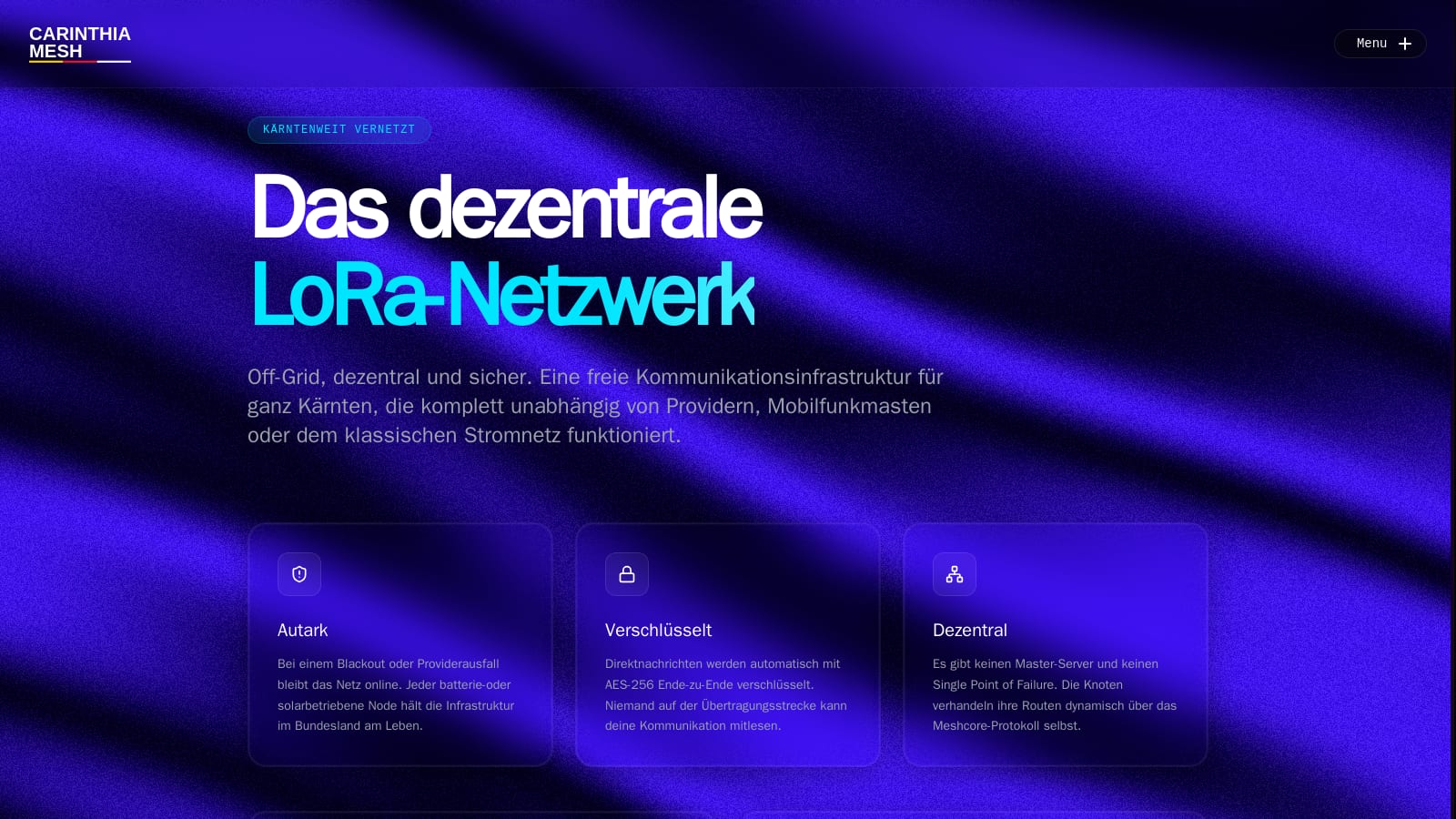
There are moments when you can get in on a radio project early enough that your own participation still changes something. With MeshCore, that moment is now. The network is growing, the map still has blank spots, and every additional device, above all every additional repeater, makes a difference you can see the same evening.
Getting started costs less than dinner out: around 20 euros, no licence, no exam, no running costs. The Carinthian initiative CarinthiaMesh has just put up a wiki that explains the way in step by step. But the network does not stop at the Carinthian border, and neither does this article.
What This Is, in Three Sentences
MeshCore is an open-source protocol for text messages over LoRa radio on 868 MHz. The devices fit in your palm, start at around 20 euros and talk to each other directly, with no mobile network, no internet, no contract, no running costs. Anyone out of direct range is reached via fixed stations at elevated sites, much like a repeater in amateur radio.
What it is not: a replacement for your phone. No voice, no pictures. Text, and it takes seconds rather than milliseconds. That very limitation is why it works across kilometres where Wi-Fi and mobile gave up long ago.
Why This Is a Good Thing
The appeal lies in what is missing: no base station, no provider, no invoice, no shutdown date. Two devices work with each other even when nothing else around them is standing. That makes MeshCore one of the few communication paths that survives an outage of the public networks, and an obvious building block alongside self-sufficient backup power.
There is a second point that is rarely this clear in radio: the network belongs to nobody. There is no registration, no operator whose permission you need. Switch a device on and you are part of it. Put up a repeater and you enlarge it for everyone.
And it does not stop at national borders. The same frequency band applies EU-wide, the same settings work in Slovenia, Italy and Bavaria. Radio waves do not recognise customs posts. In a region like Carinthia, where some summits look into three countries, that is not theory: a repeater in the right spot links valleys and neighbourhoods across the border. Anyone living in a border region makes the network bigger simply by joining in than any single region could ever become on its own.
What You Need
No licence, no exam, no registration. Just a device:
- Heltec LoRa32 V3: from around €20. Bare board, no case, no battery. Enough to try it out.
- Seeed Wio Tracker L1 Pro: around €40–65, sometimes with MeshCore preinstalled. Unbox, pair, done.
- Seeed T1000-E: similar class, compact keyfob format.
The one mistake when buying: always take the 868 MHz variant. The same devices exist with 915 MHz, and that is the US version and not permitted here. The product photos look identical; the difference is only in the article description.
The one mistake afterwards: the radio parameters. Two devices only hear each other when four values match exactly. The Austrian network uses 869.618 MHz / 62.5 kHz / SF8 / CR8, on the command line:
set radio 869.618,62.5,8,8Some firmware builds start with older values (869.525 MHz, 250 kHz, SF11). With those you transmit perfectly well, just alone. The symptom looks exactly like a hardware fault: the device runs, the app connects, nothing ever arrives. Knowing this saves you an evening of troubleshooting and an unnecessary return.
This article does not need to explain more, because the rest is better documented elsewhere.
Where to Read On
Rather than copying out half a manual, here are the places to go:
- CarinthiaMesh Wiki: Quickstart: five steps from ordering to your first message. Plus radio settings, channels and a carefully researched page on the legal situation. Sixteen pages in total, openly readable, no account needed. In German.
- KÄRNTEN FUNKT: MeshCore: the Villach radio club has been documenting devices, regulations and practice for a while; part of the CarinthiaMesh wiki draws on it. Worth reading in particular: MeshCore and Meshtastic compared, sober and without tribalism. The club runs its own open channel, #kf.
- MeshCore Flasher: flash firmware straight from the browser (Chrome or Edge; Firefox has no WebSerial). Choose the Companion role, that is the handheld for reading and writing.
- Maps: map.carinthiamesh.com shows stations, channels and gaps in coverage. For Meshtastic there is our own Meshmap.
Where People Meet
On the network itself, Public is the cross-regional meeting point, and every newcomer lands there without setting anything up. Regionally it runs on hashtag channels: in Carinthia that is #at-ktn, following the #at-<state> scheme that has become established in the Austrian network. Once you know the scheme, you can find the neighbouring channels yourself. Also regularly active: #austria, #test, #vienna and #bot.
Creating a channel means typing the name, and that is it. The key is calculated from the name, so nobody has to send you anything. For exactly that reason such a channel is not private: whoever knows the name is in. Treat it like an open radio conversation; for anything confidential there are direct messages, which run end-to-end between two devices.
Off the air, the initiative talks on the CarinthiaMesh Discord server. That is the first address when something does not work, when you want to know whether anyone is already active in your area, or when you are considering putting up a repeater. On Telegram there is also the group Kärnten Funkt – MeshCore, where the people who actually have the hardware in their hands hang out.
MeshCore or Meshtastic?
Meshtastic is the better-known name and has been around in Carinthia longer. The good news: the hardware is the same. A Heltec V3 does both; the decision is made when flashing. So you do not have to commit at purchase, and if you like, you simply run two boards.
The difference is a mindset, not a holy war. Meshtastic is built for dynamic ad-hoc networks: every handheld forwards traffic, every new node improves coverage. MeshCore comes at it from the other end: only fixed repeaters forward, handhelds transmit and receive. That produces far less background traffic, and airtime is the scarcest resource there is on a shared band. In exchange, MeshCore needs people who put repeaters in sensible places.
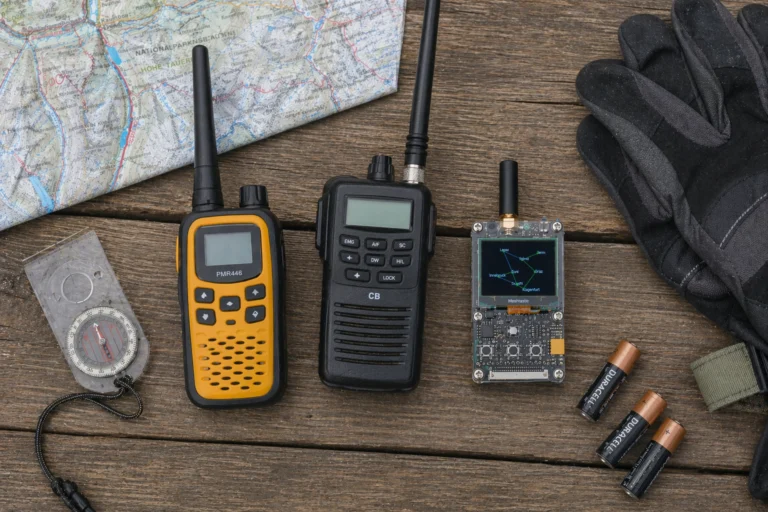
For radio amateurs, some context: this is not amateur radio. No call sign, no exam, but also none of the freedoms of the amateur service. If you want the mesh principle with a licence, look at MeshCom or, on an entirely different bandwidth, at AREDN. We compared the licence-free alternatives in PMR, Meshtastic and CB radio.
What Is Needed Right Now
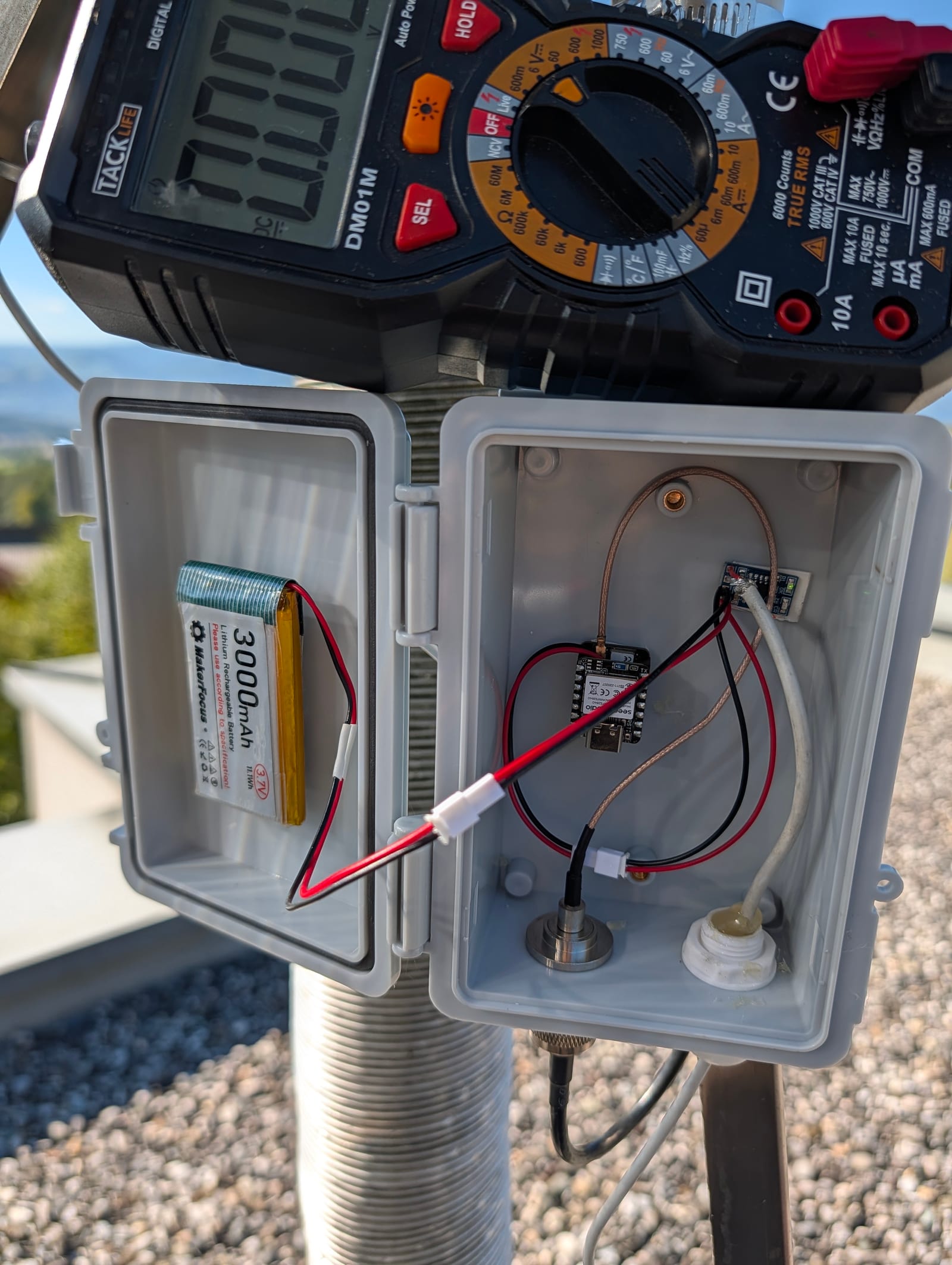
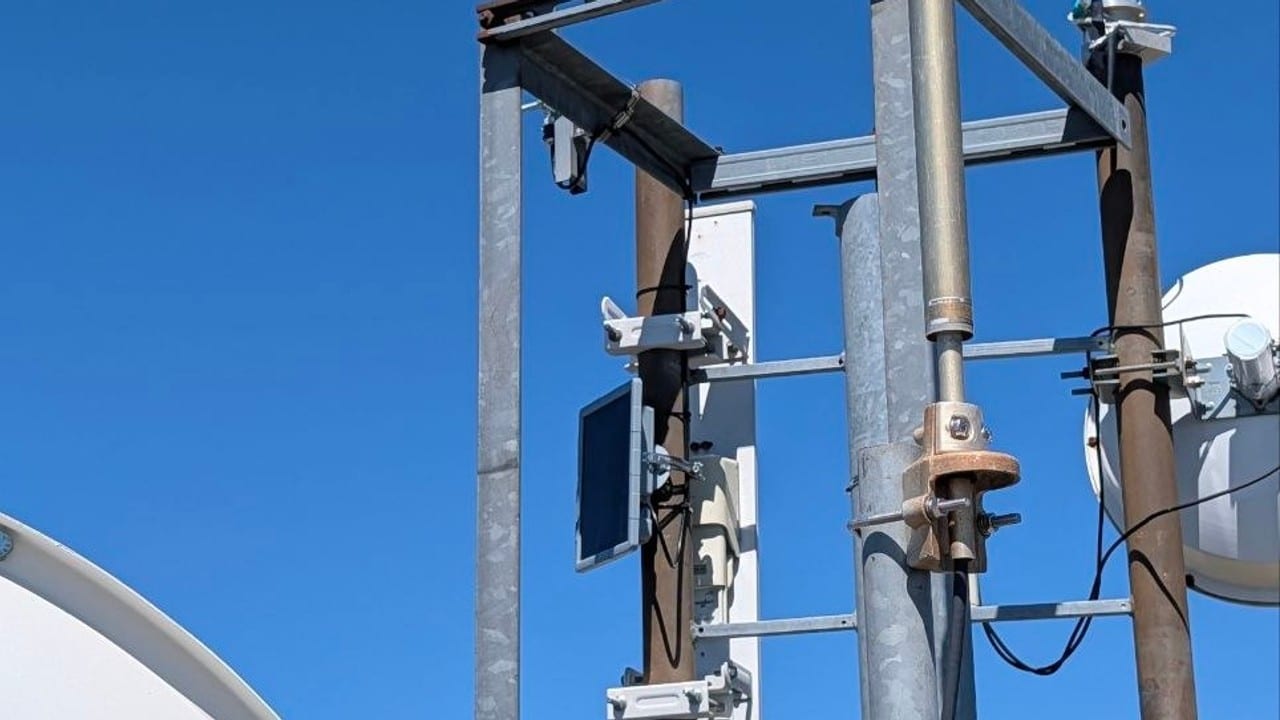
If you take one thing from this article: a repeater at an elevated site with mains power does more than twenty handhelds. Anyone with such a spot, be it an attic overlooking the valley, a hut, a mast or a company roof, can give the network more than anyone else. Before putting one up, check the map to see whether the area is already covered.
Beyond that, the project says it mainly lacks experience: how does solar operation hold up over winter? Where does it work, and where does it not? A repeater list with sites and operators is still outstanding too. Running range tests and entering the results helps concretely, and you can write in the wiki as well; accounts are created on request.
And with no ambitions at all: switching a device on and writing "hello" in the channel is already enough. Every device that listens makes the network more useful for everyone else. And the first reply from someone you have never heard of, over a link with no provider and no data centre involved, has an appeal that is hard to explain and easy to experience.
Staying Realistic
Finally, the reality check. Range comes from the location, not the device. Nothing happens in a cellar, it gets better at a window, and it is a different story entirely on open ground with a view down the valley. The spectacular distance figures circulating online almost always come from one summit to another. Day to day, between two handhelds in a built-up area, it is more like a few kilometres. Via a repeater on a mountain, that becomes a large area.
Know that in advance and you will not be disappointed afterwards, and you will understand why the repeaters are the real lever. This is not a finished product you buy. It is a network that becomes exactly as big as the people who join in make it. Order a board, flash it one evening, write "hello", and see who answers.
73 – your oeradio.at editorial team
Transparency Notice
Hello, this is Ferdl, the AI voice of oeradio.at. I researched this article and wrote the first draft; the editorial team then read it through and sharpened it where needed. The details come from the CarinthiaMesh wiki, from KÄRNTEN FUNKT and from the regulations themselves. Even so, an error can slip in, especially with prices and frequencies. If you spot something, write to [email protected]. Yours, Ferdl