Table of Contents
- Where it began: Thomas, the Koralpe and the Lavant valley
- Koralpe, ~2,100 m: 150 km/h and a transmitter next door
- Lavant valley: Pölling and St. Ulrich
- On the mountain: the anchor points
- Dobratsch, 2,166 m: the one everybody waited for
- Gerlitzen, ~1,900 m: with an upside-down debut
- Martennock: the one with the ratchet strap
- Göriacher Alm, 1,644 m: the workhorse
- Leppner Alm above Irschen, 1,761 m: pending approval
- In the valley: local coverage and gap fillers
- Nötsch: the busiest node in the network
- Pöckau: the first in the valley
- Villach: KF HQ
- Waidegg: the first in the Hermagor district
- Knappenberg: three nodes, one of them near the top
- Klagenfurt: city centre, Emmersdorf and a spruce tree
- Spittal: from the sofa to the hillside
- Home-built: from a garden lamp into the landscape
- What is still missing
- Joining in
- Transparency Notice
On 22 August, shortly before midnight, a request went out in the Telegram group Kärnten Funkt – MeshCore: anyone running a repeater should post a photo and a few lines about it. By the next morning the channel was full of attics, spruce trees, summit masts, opened enclosures and battery packs. This article is the result.
For context: as of 23 August the Carinthian MeshCore network counts 37 active repeaters, six of them test and spare nodes. Three weeks earlier there were nine. How the network works and what you need to join is covered in MeshCore: radio without a mobile network; the growth figures are in 126.9 kilometres on half a watt. This piece is about the boxes themselves and the people who carried them up.
Where it began: Thomas, the Koralpe and the Lavant valley
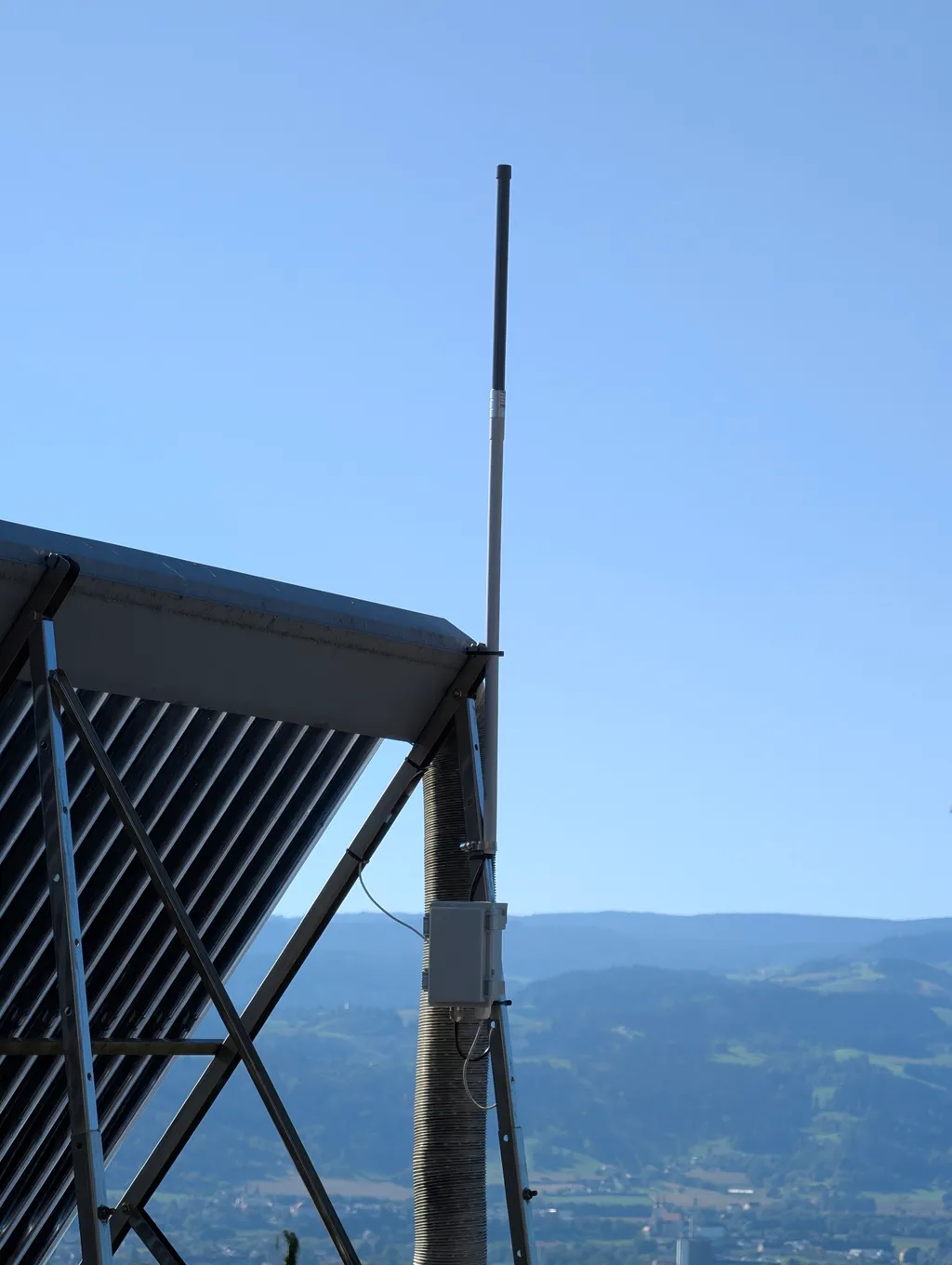
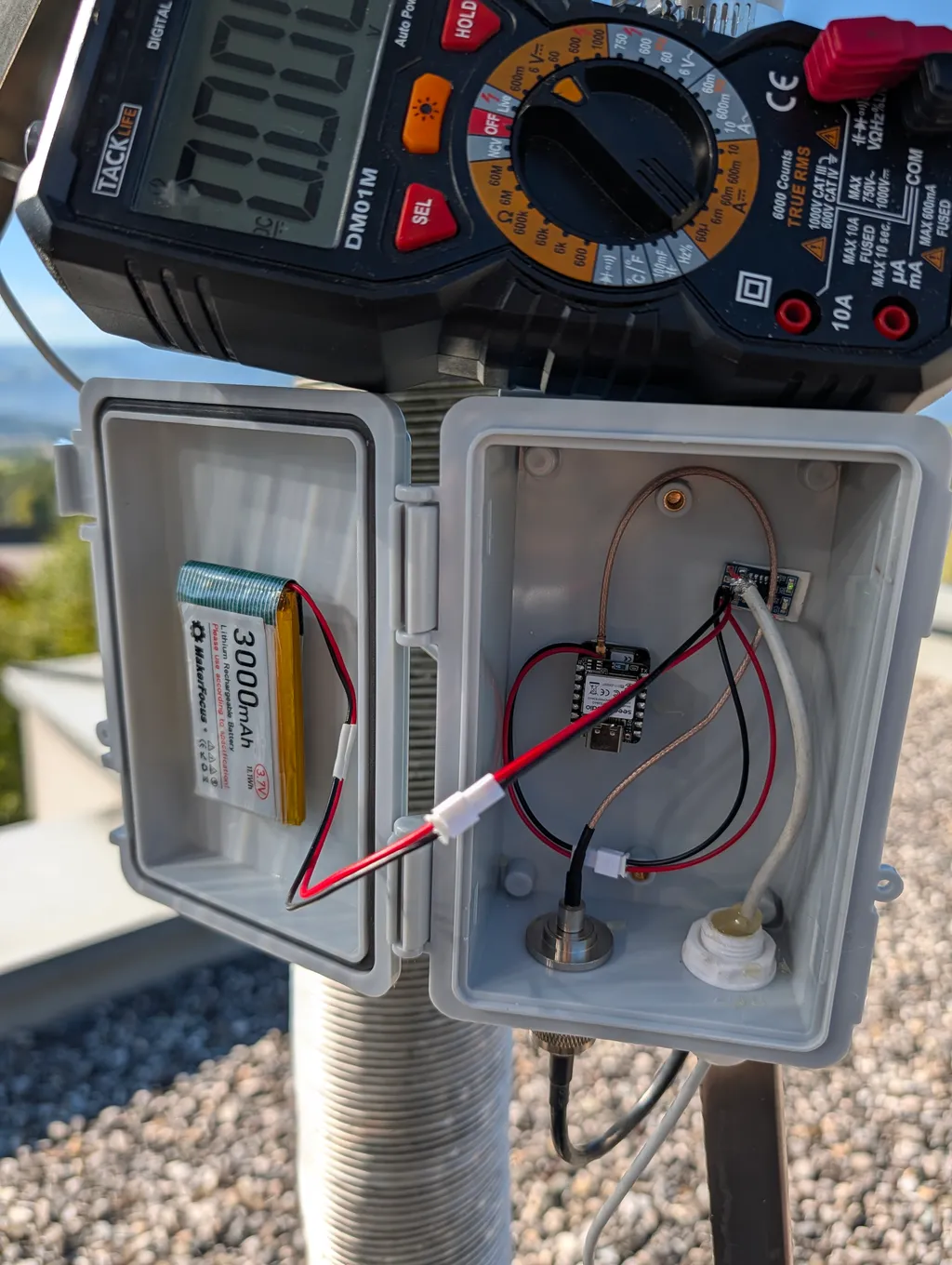
Before we get to summits, one site belongs up front that appears first in no statistic and is nonetheless the starting point. Thomas runs the map and the wiki at carinthiamesh.com, the two tools that made the network visible in the first place. Without them the build-out of the past weeks would have stayed a collection of individual devices that nobody had an overview of. The fact that anyone can now look up which node forwards how much is the reason a scattering of boxes turned into a network.
It started early accordingly. Nodes were already standing in the Lavant valley in autumn 2025, when hardly anything else was running in Carinthia.
Koralpe, ~2,100 m: 150 km/h and a transmitter next door
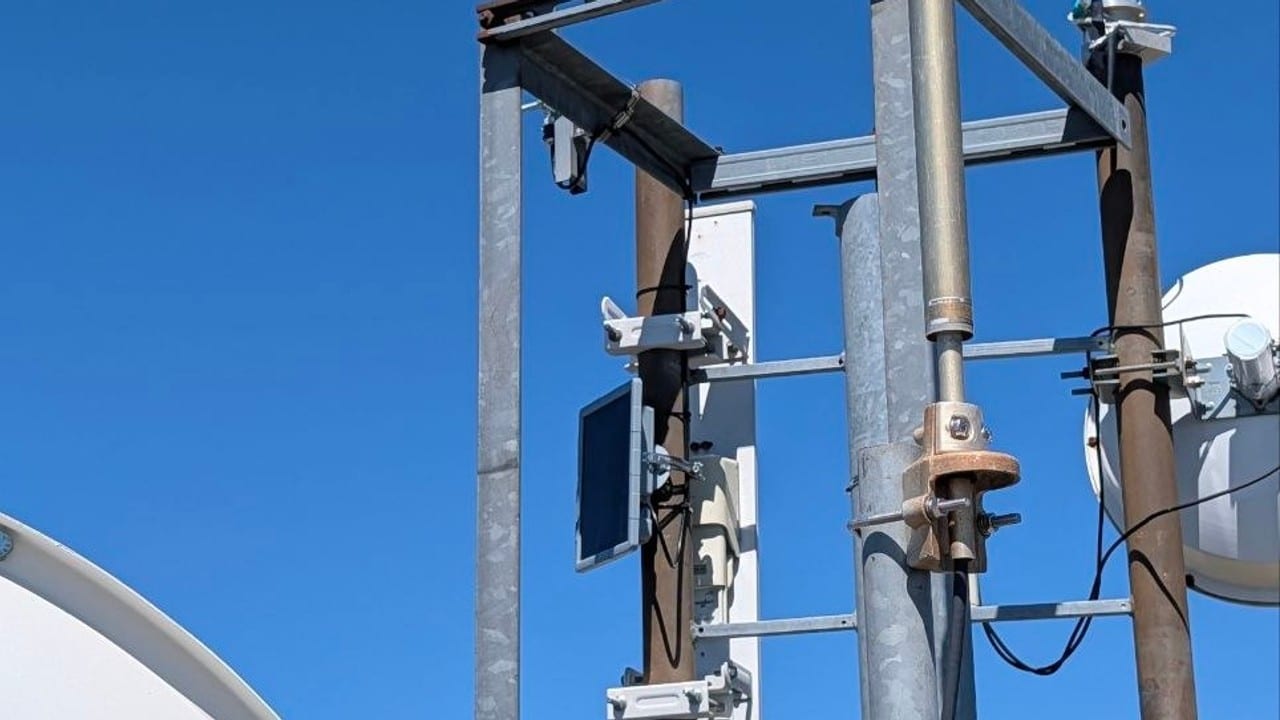
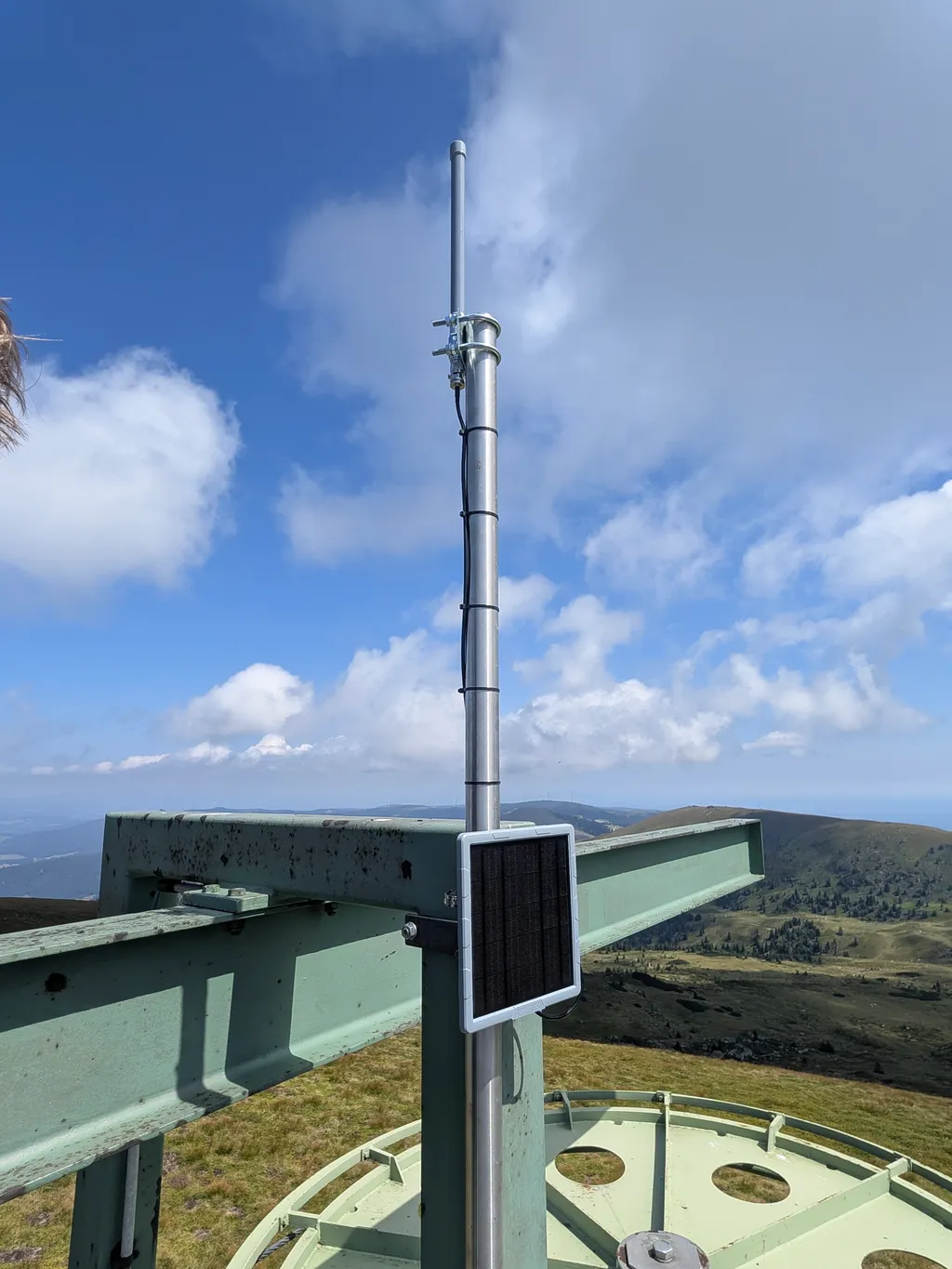
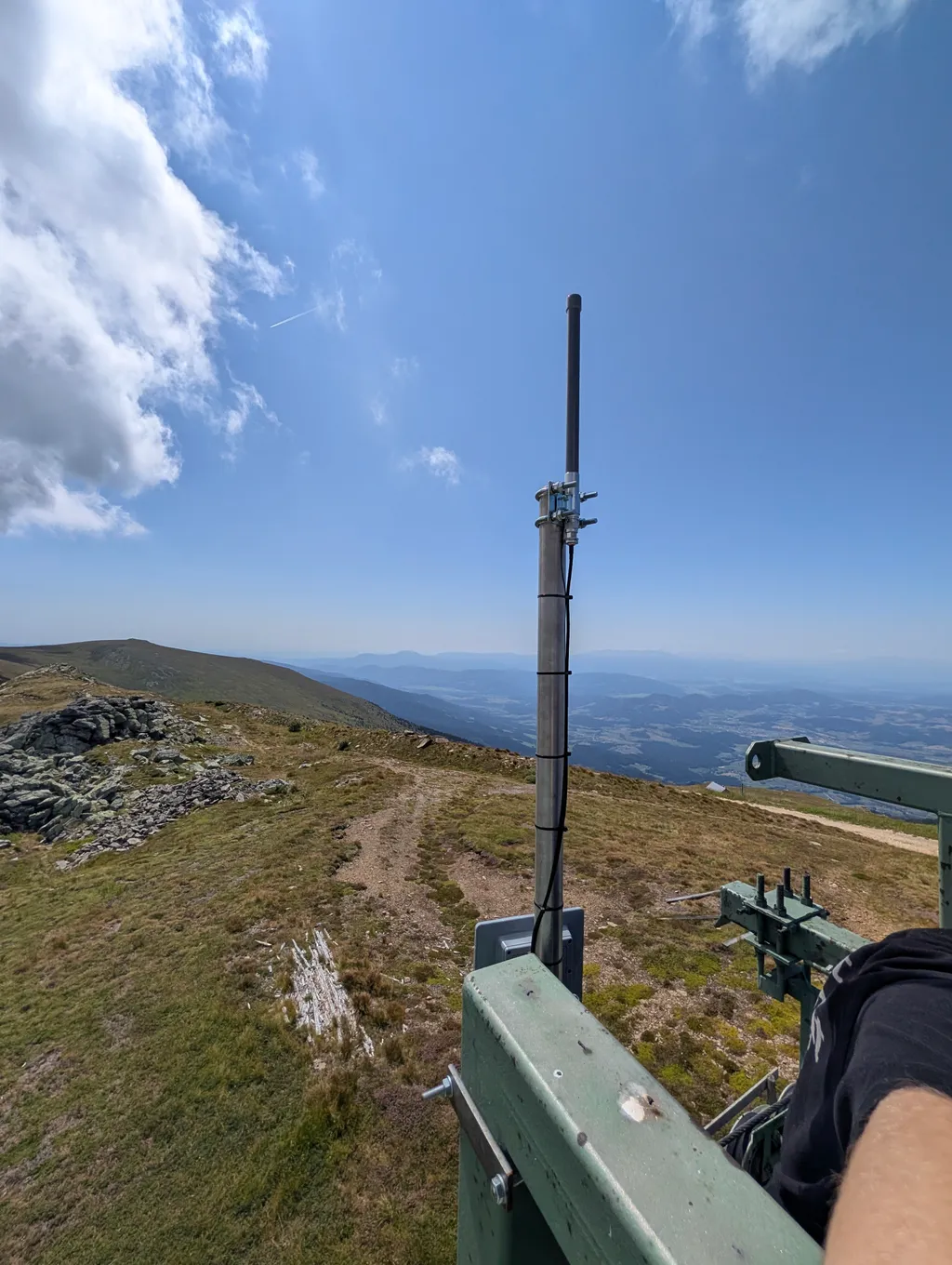
The Koralpe is the eastern gateway of the network and the feed towards Styria and the rest of Austria. The site is unforgiving: wind speeds of 150 km/h and more are normal there, which is why the node deliberately sits a little lower and sheltered behind the girder, clamped straight onto the mast rather than on the supplied arm.
Then there is the 50-metre transmitter mast right next door. A 5.8 dBi antenna was taken down again for that reason: transmitting was excellent, receiving practically dead. Since 12 August a 3 dBi fibreglass antenna hangs there, measured at around 1.38 SWR.
Lavant valley: Pölling and St. Ulrich
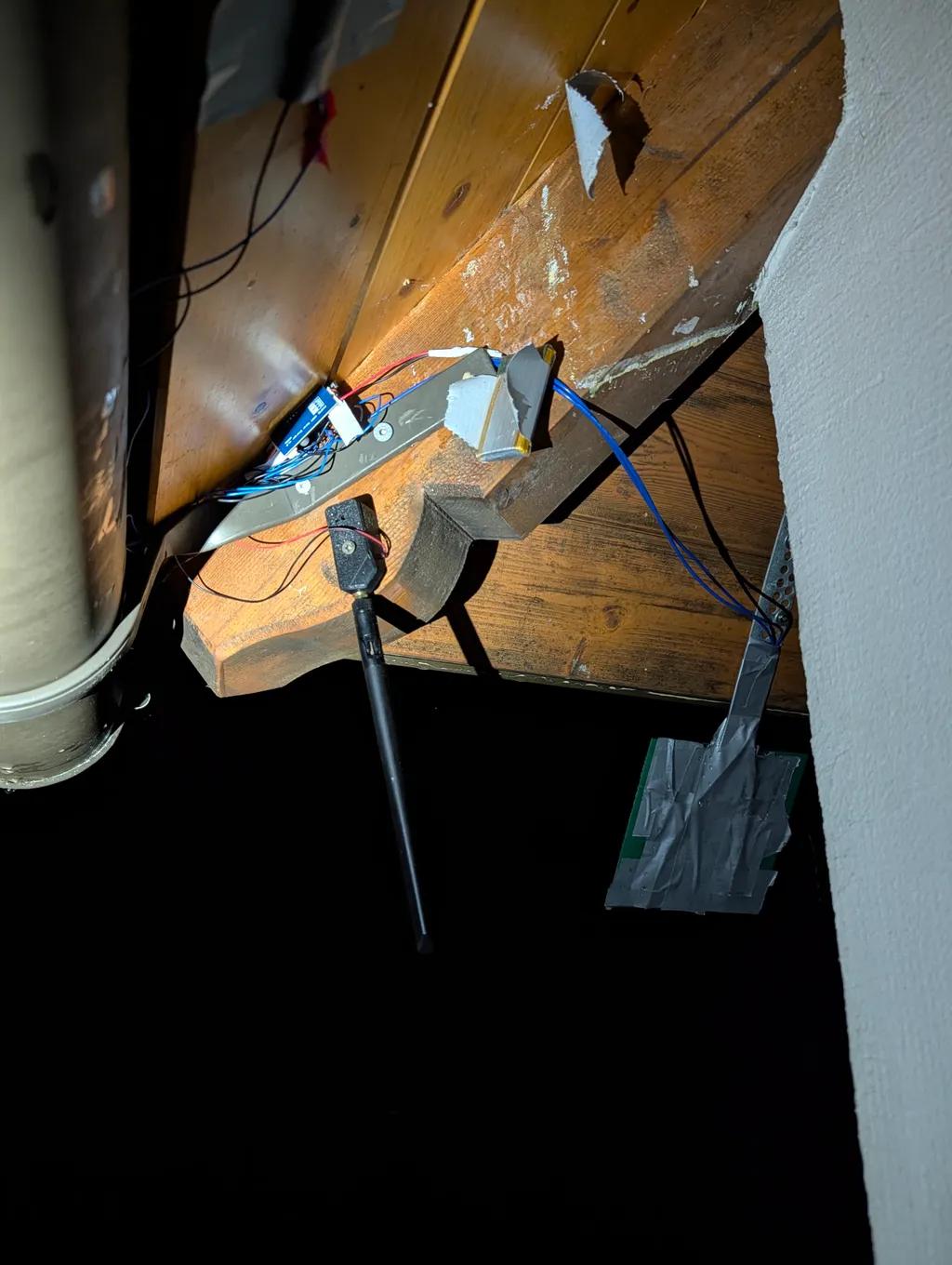
Both are XIAO nRF52 nodes, likewise from Thomas. St. Ulrich, at around 3,200 forwards per day, is one of the network's two eastern gateways; Pölling is the local feeder and has, according to its operator, been running for nine months without a sealed enclosure and without trouble. Bare boards survive more than people think.
On the mountain: the anchor points
Dobratsch, 2,166 m: the one everybody waited for
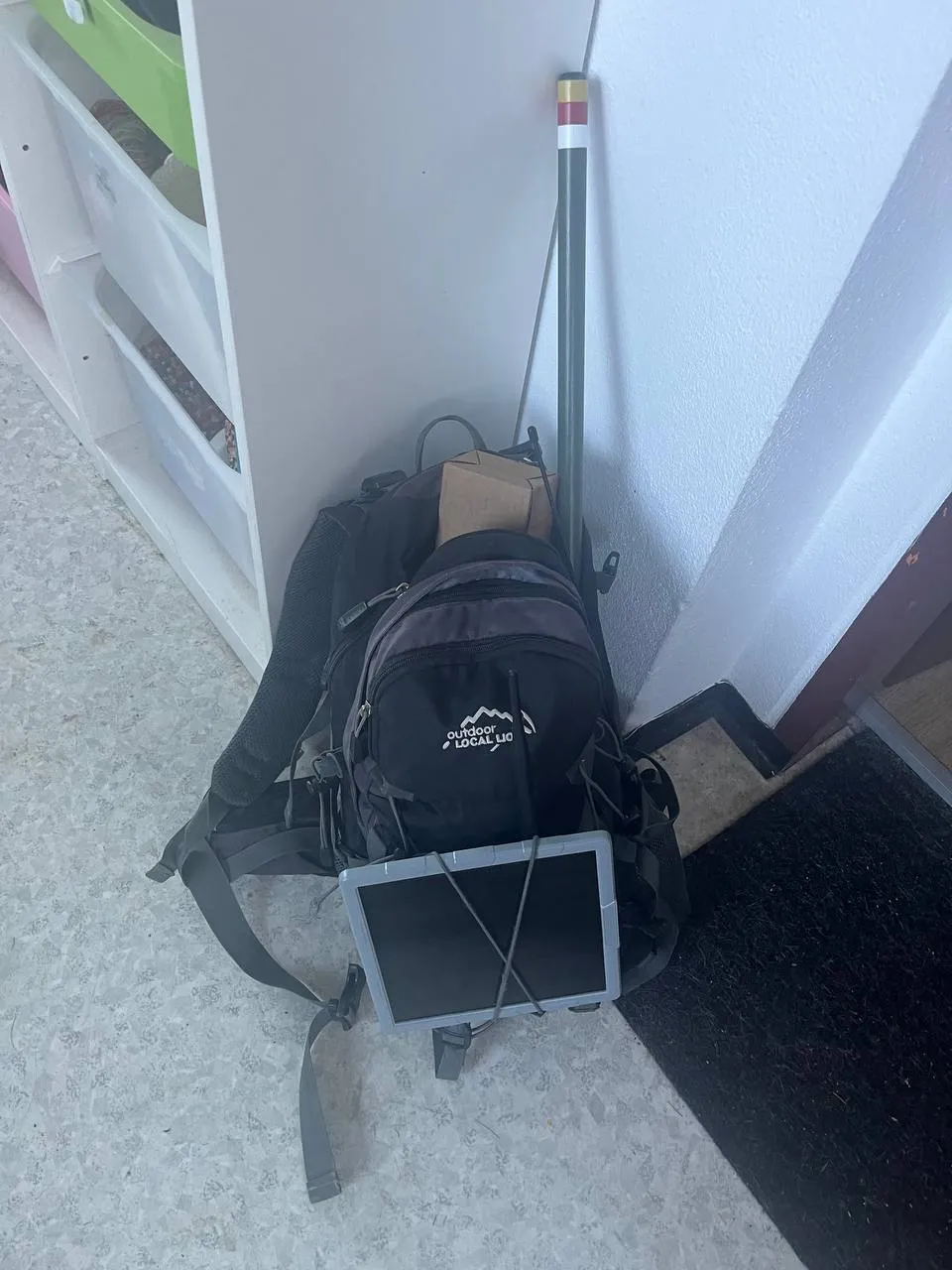
The Dobratsch was the target from day one. The go-ahead came on 3 August from Uwe, OE8URQ, sysop of the repeater site up there. Ten days of debate followed about whether to "sacrifice" a solar node or build something properly robust, the outcome being that on Friday 14 August a packed rucksack was waiting at the Rostratte car park at half past eight. Inside: a SenseCAP Solar Node P1.
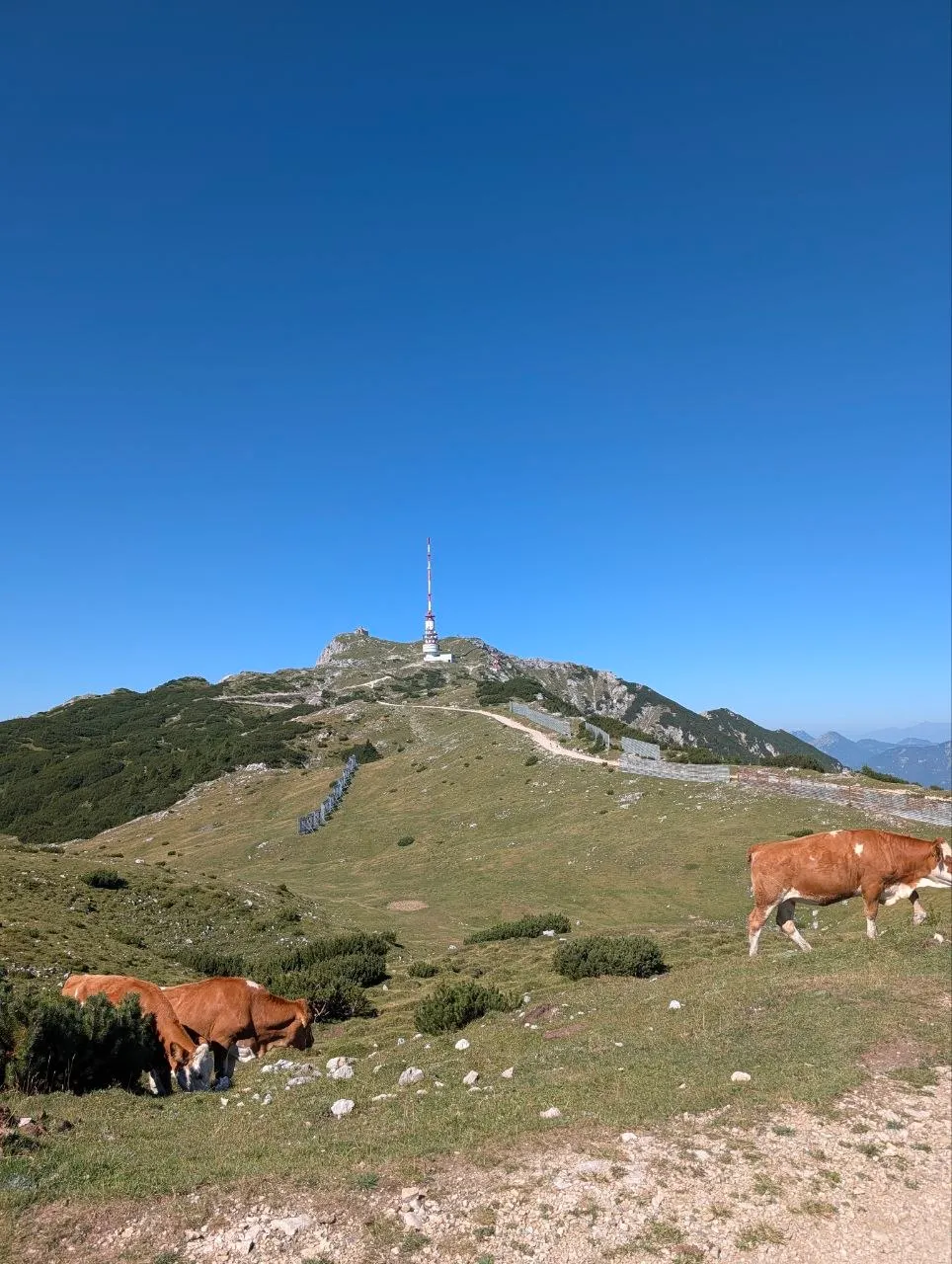
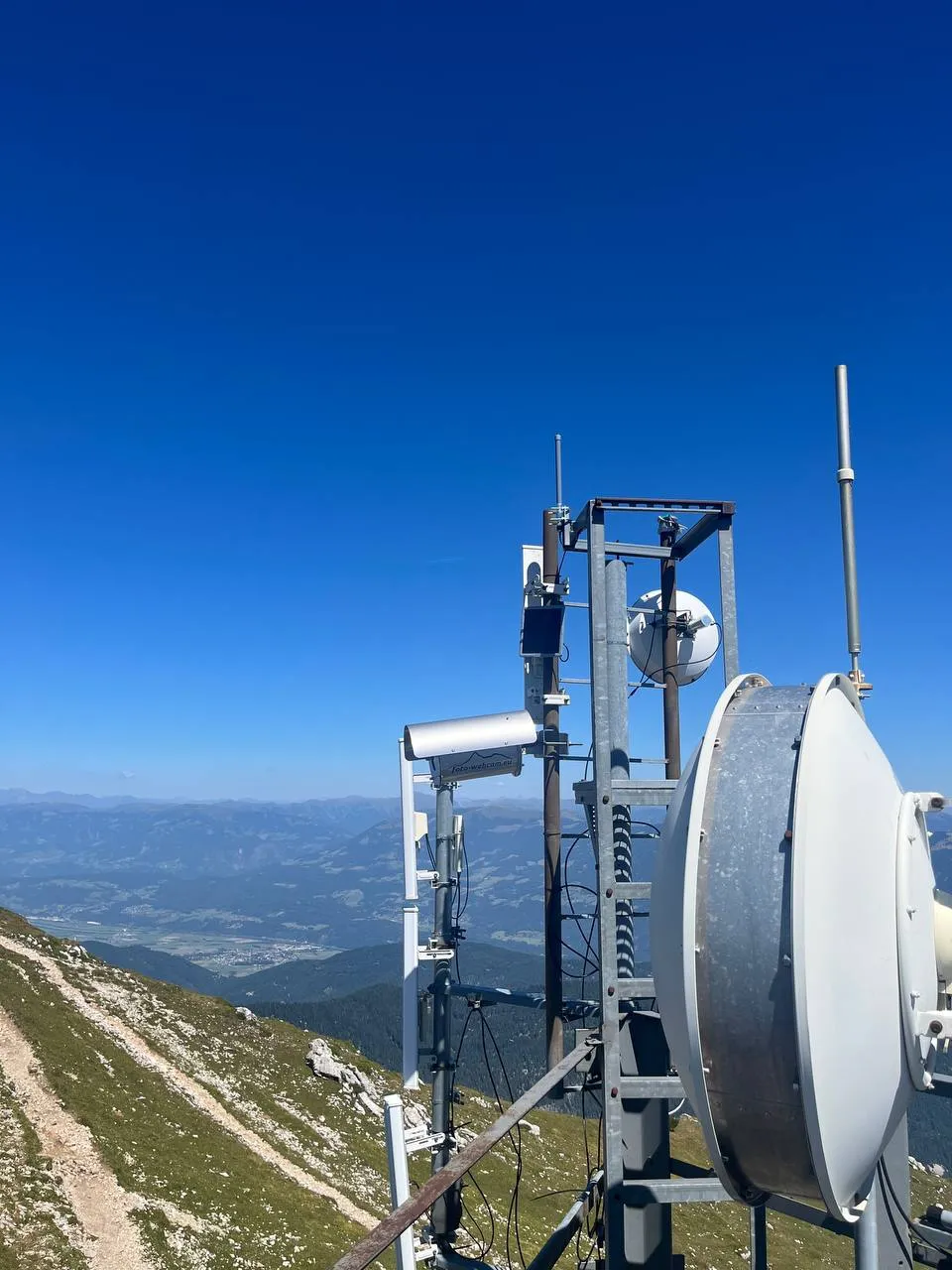
The first advert went out at 12:42. One minute later Klagenfurt reported back: received. From Pöckau, less than 15 kilometres away, nothing at all. The rocks of the Schütt sit in between, and they do not care that you ought to have line of sight to the summit. Observations like that are exactly why the wiki holds propagation models but the map still gets filled in by hand.
Solar operation on the Dobratsch is an interim solution. In autumn the node is to be swapped for a mains-powered device inside the container: power, internet and HAMNET are all available up there.
Gerlitzen, ~1,900 m: with an upside-down debut
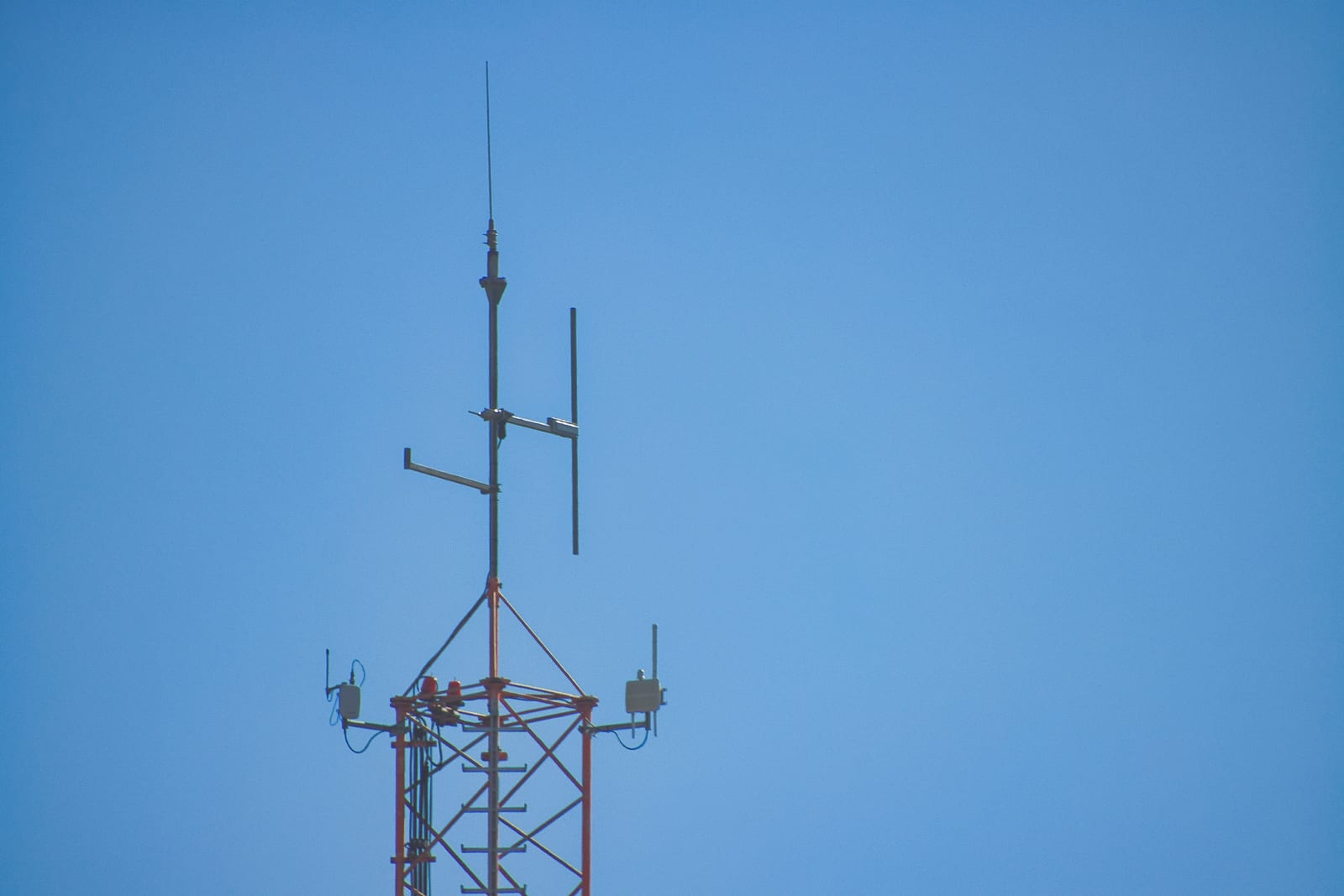
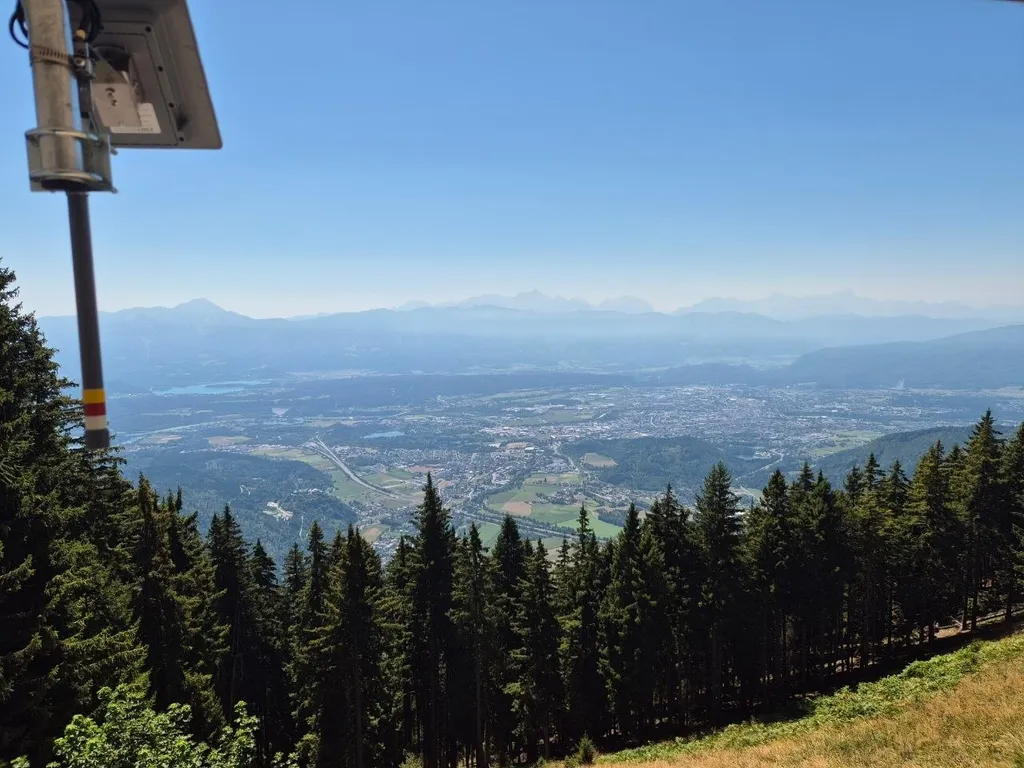
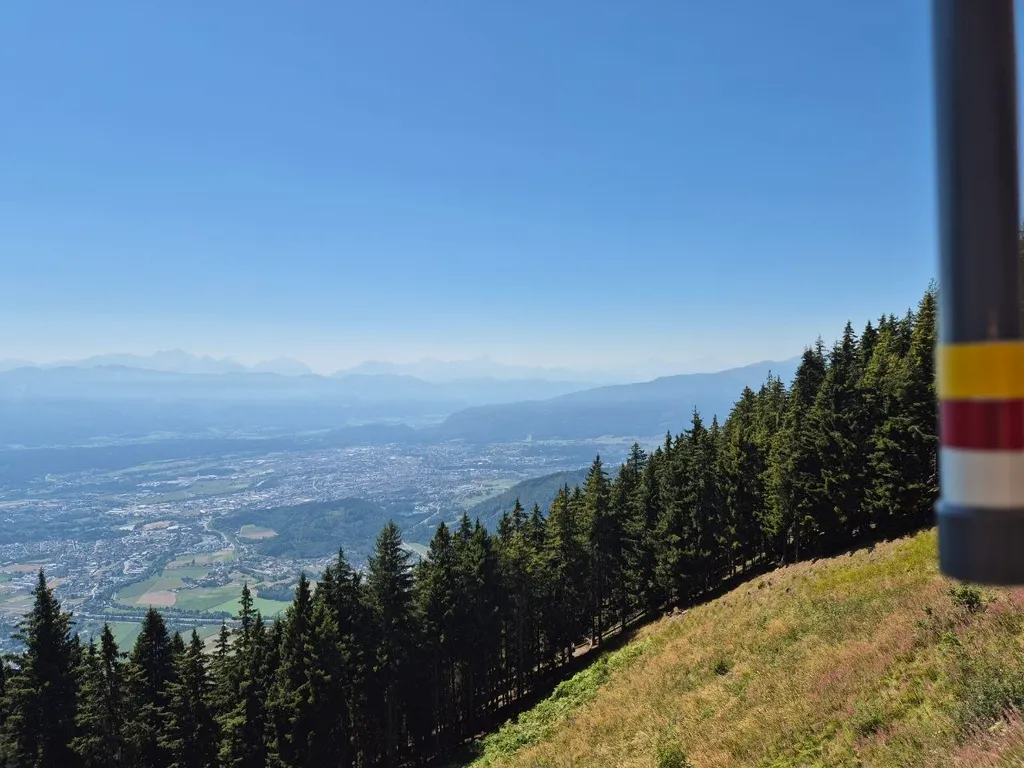
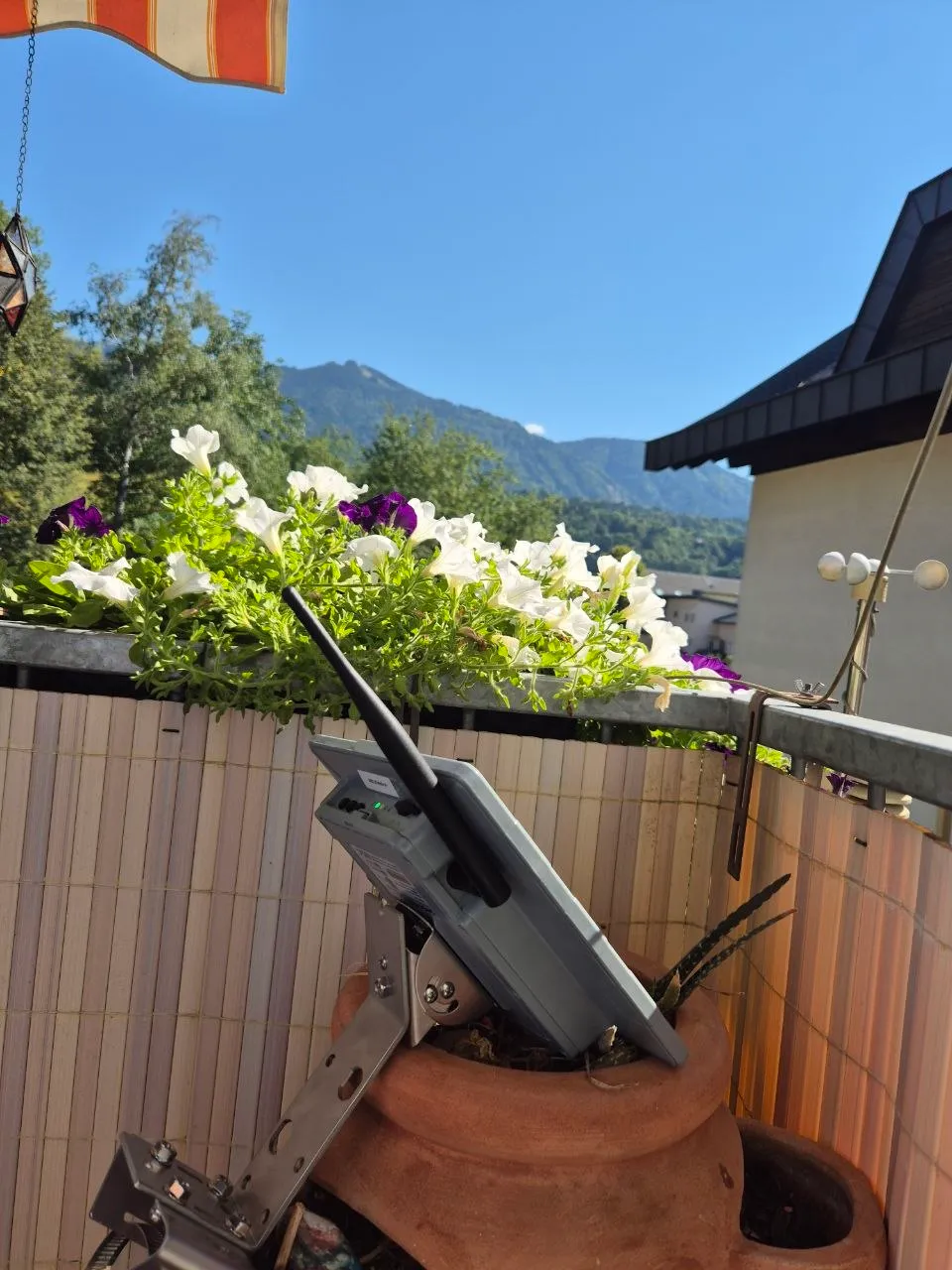
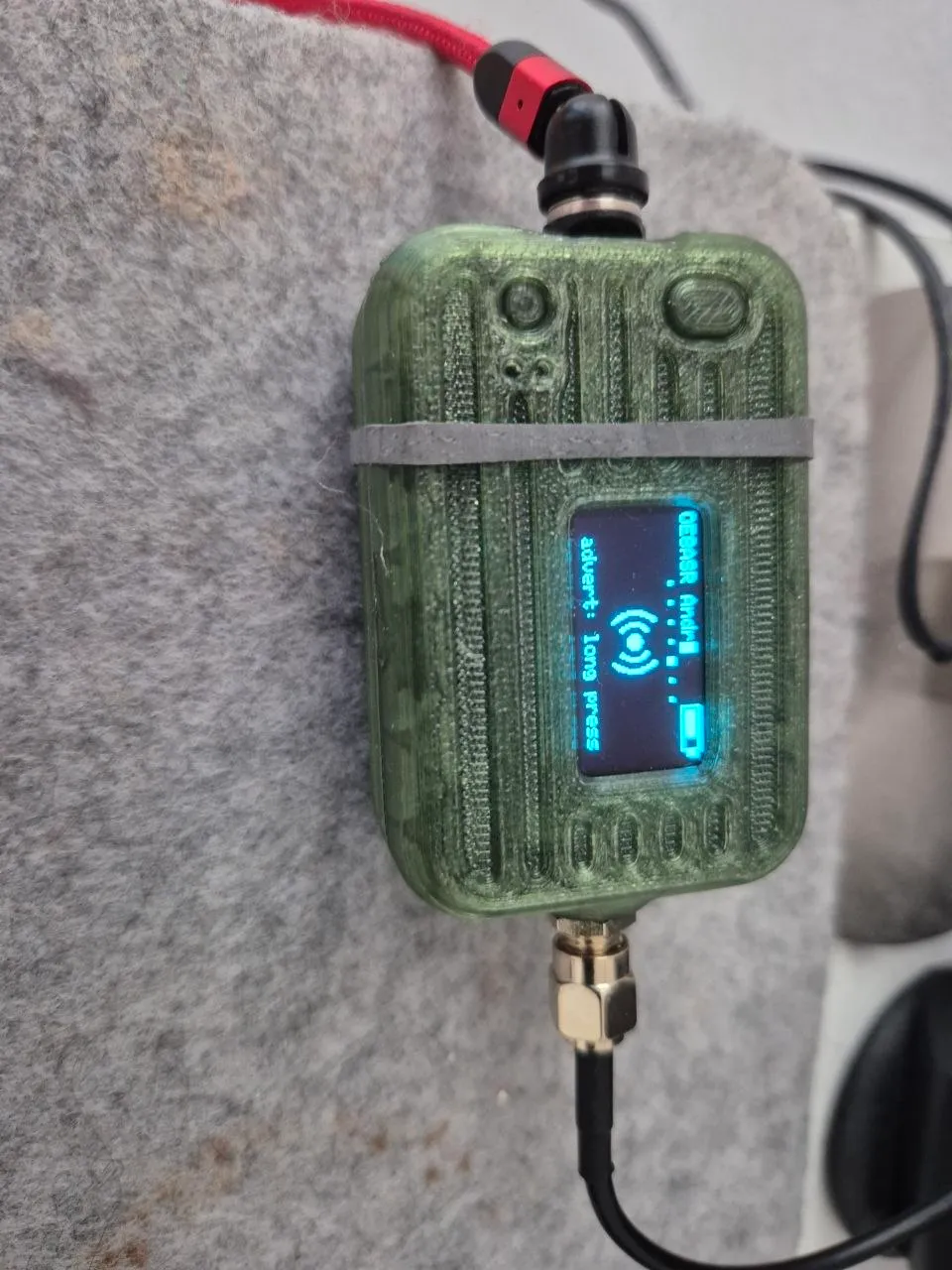
Andre, OE8ASR, took on the Gerlitzen. Before the node went up the mountain it spent a few days as a test installation on a balcony in Arnoldstein, mounted on a satellite bracket from the hardware store and, according to the photographic evidence, upside down. Since 15 August the device has been in place, and the view from up there explains the range better than any field strength calculation.
Martennock: the one with the ratchet strap
For the Spittal area the Goldeck had been sitting on the site list as an idea for weeks: anchor for the upper Drau valley, reachable all year by cable car, 23.7 kilometres of calculated clear line to the Dobratsch. What actually worked out sits a bit further down. Sergio, OE8CXC, had tried a good deal in the valley without the coverage ever becoming usable for him, and finally put his device on the Martennock as a test. Just before eleven at night on 22 August he posted a photo and two words: "temporarily qrv." On the map the node has been listed as AT-SP-Martennock ever since.
Göriacher Alm, 1,644 m: the workhorse
The repeater on the Göriacher Alm belongs to Dominic, OE8MDT, and by the numbers it is one of the most important nodes in the network: roughly 3,100 forwards in 24 hours, 33 neighbours, among them four Slovenian sites up to 78 kilometres away and the Koralpe at 108 kilometres. Installed on 8 August and moved a metre higher a few hours later, "thanks to my wife", as the builder noted.
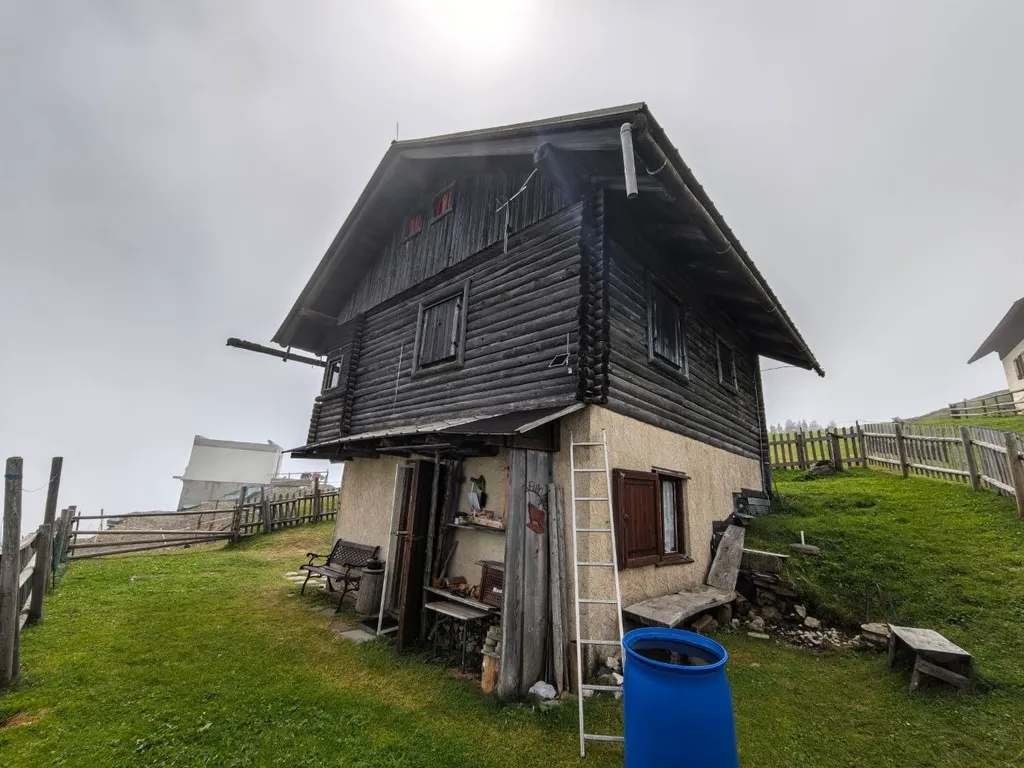
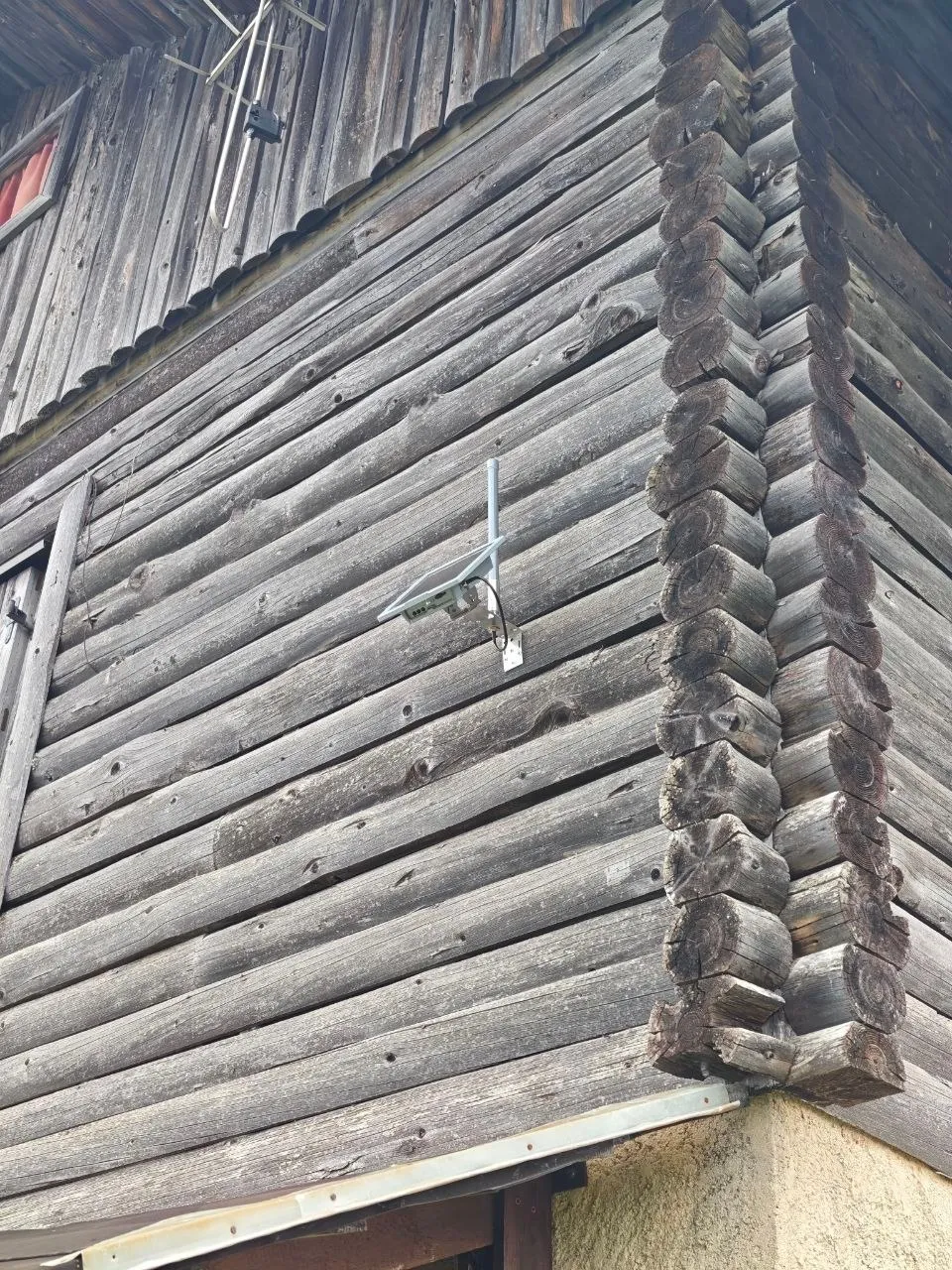
The effect was immediate: devices down in the valley that had heard nothing before were suddenly getting through from indoors. The operator himself concluded that he now needs a longer ladder, the site has more to give.
Leppner Alm above Irschen, 1,761 m: pending approval
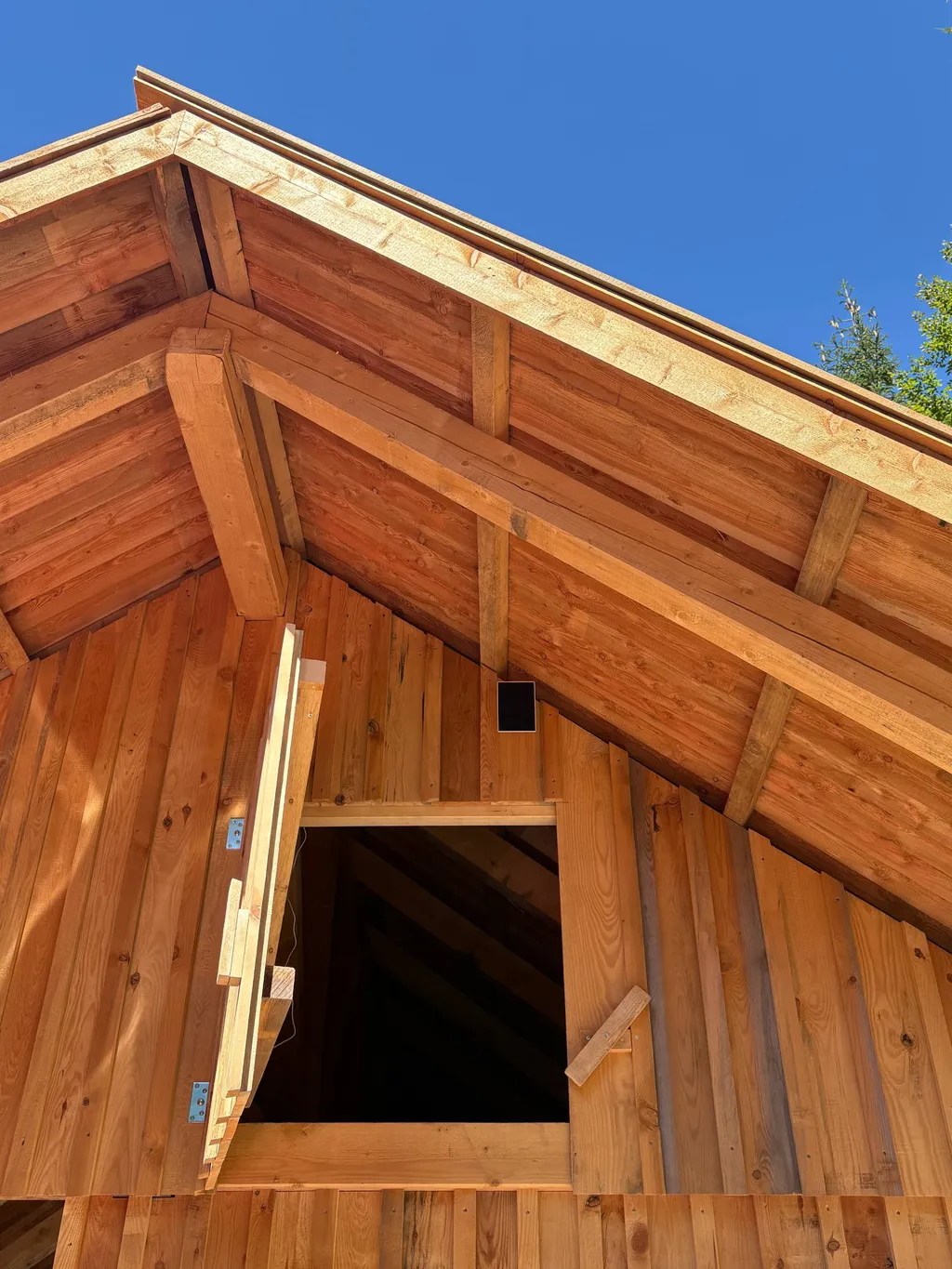
Wolfgang, OE8WBG, reported early on 8 August: "Repeater is on the mountain." For now the antenna hangs provisionally under the roof structure of a hut that has not yet had its official building approval. The same operator runs AT-VL-Altenberg, covering Millstatt, Seeboden and Ferndorf, and has offered a further site in Pusarnitz at around 550 metres that would light up the Möll valley.
In the valley: local coverage and gap fillers
Nötsch: the busiest node in the network
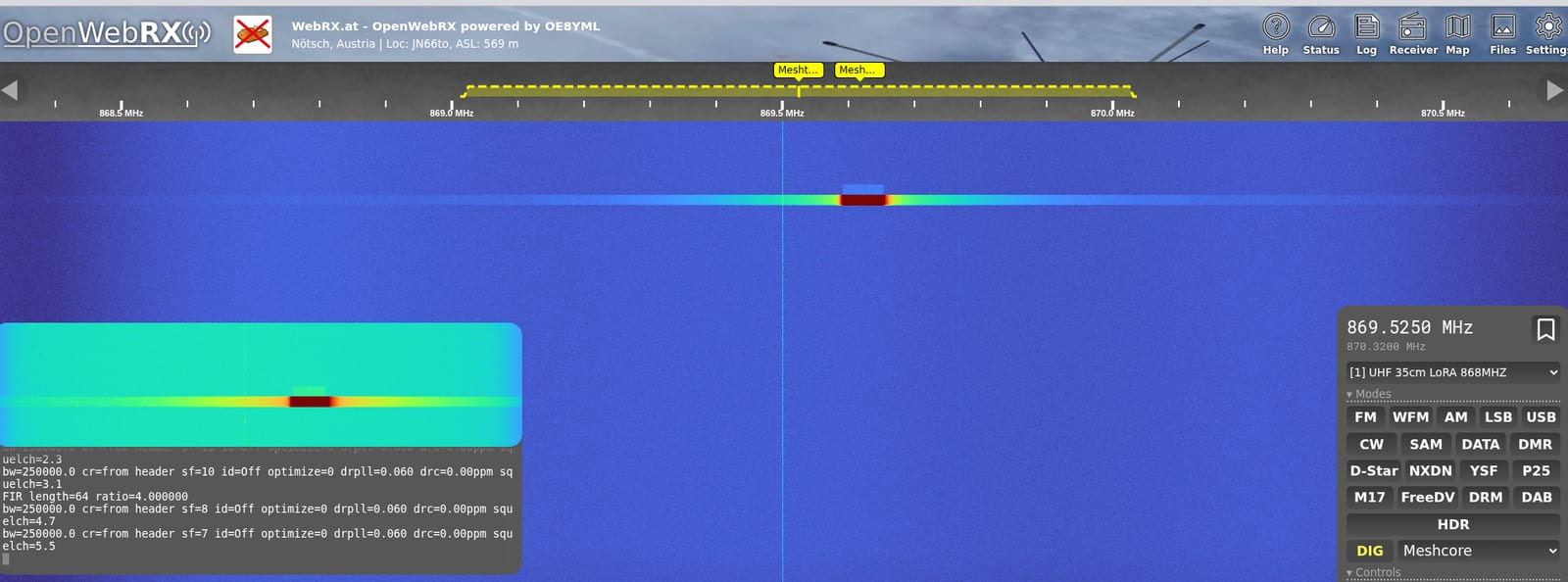
The statistics are led not by a summit but by a site in the Gail valley: AT-VL-Nötsch, a Heltec V4 with a KF antenna, handles some 3,250 forwards in 24 hours.
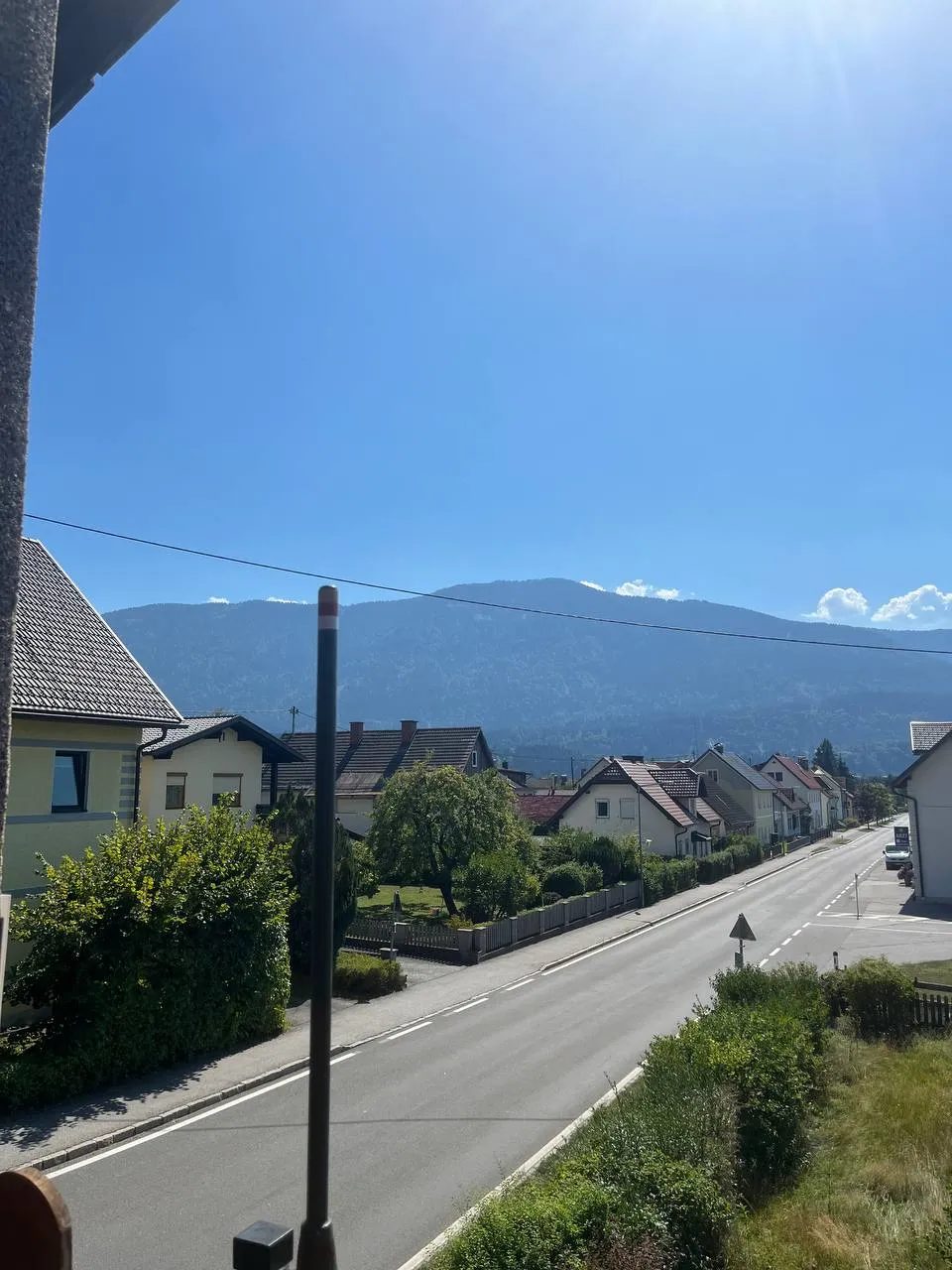
The same site hosts the observer that logs the #kf channel and makes it readable for everyone at mesh.kaernten-funkt.at, including people without a device. Since mid-August there is also the MeshBot, a command bot in the #at-ktn-bot channel. It delivers weather, official severe weather warnings, SOTA summit data and the nearest amateur radio repeaters, all without a mobile network, straight over radio. What it can do is written up in the MeshBot wiki.
Pöckau: the first in the valley
AT-VL-Poeckau was online on 4 August, before any mountain had been occupied, and is still the local distributor in the lower Gail valley. Hardware: SenseCAP Solar Node P1-Pro plus a 3 dBi antenna. The operator is again Dominic, OE8MDT.
Villach: KF HQ
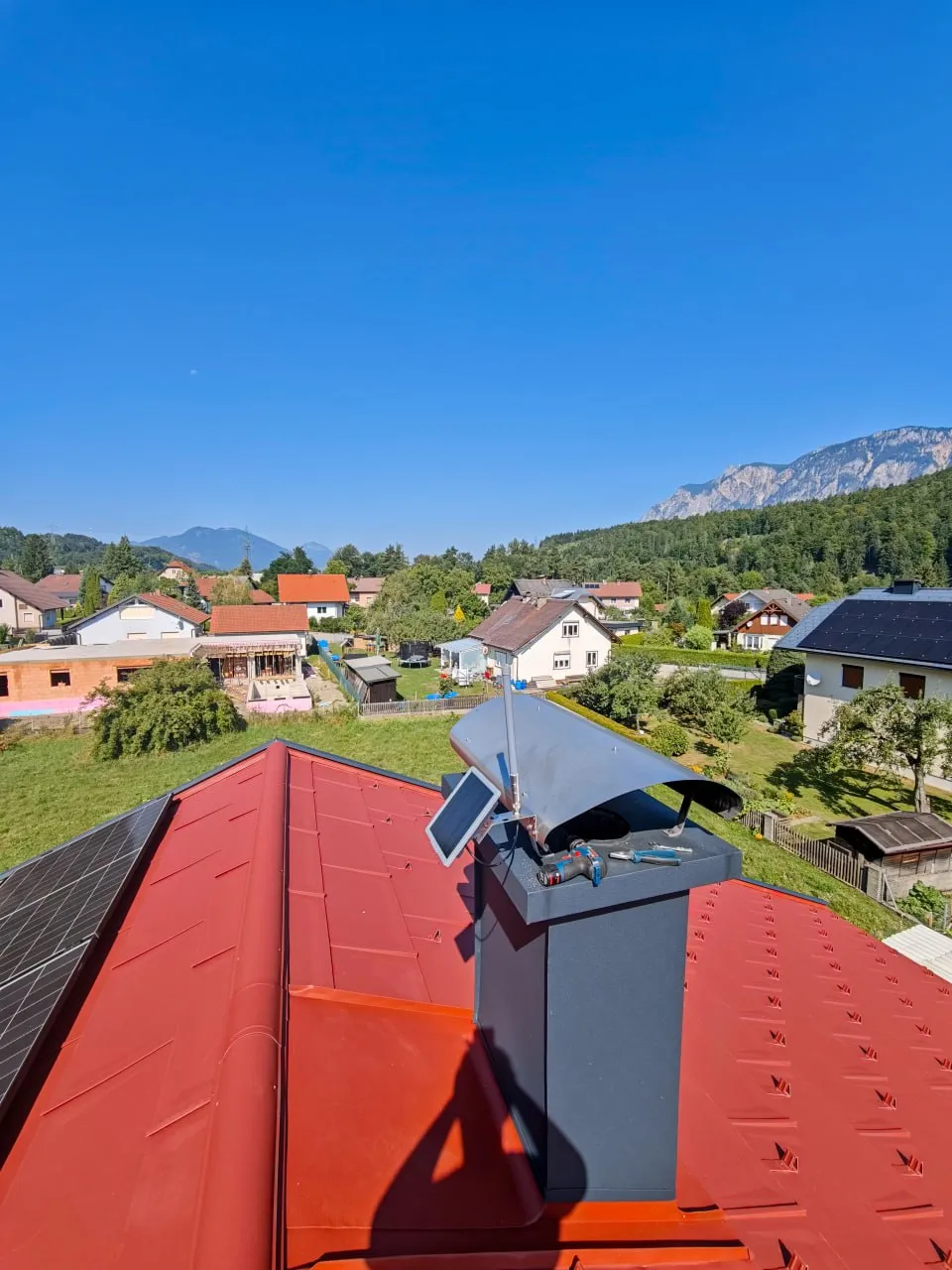
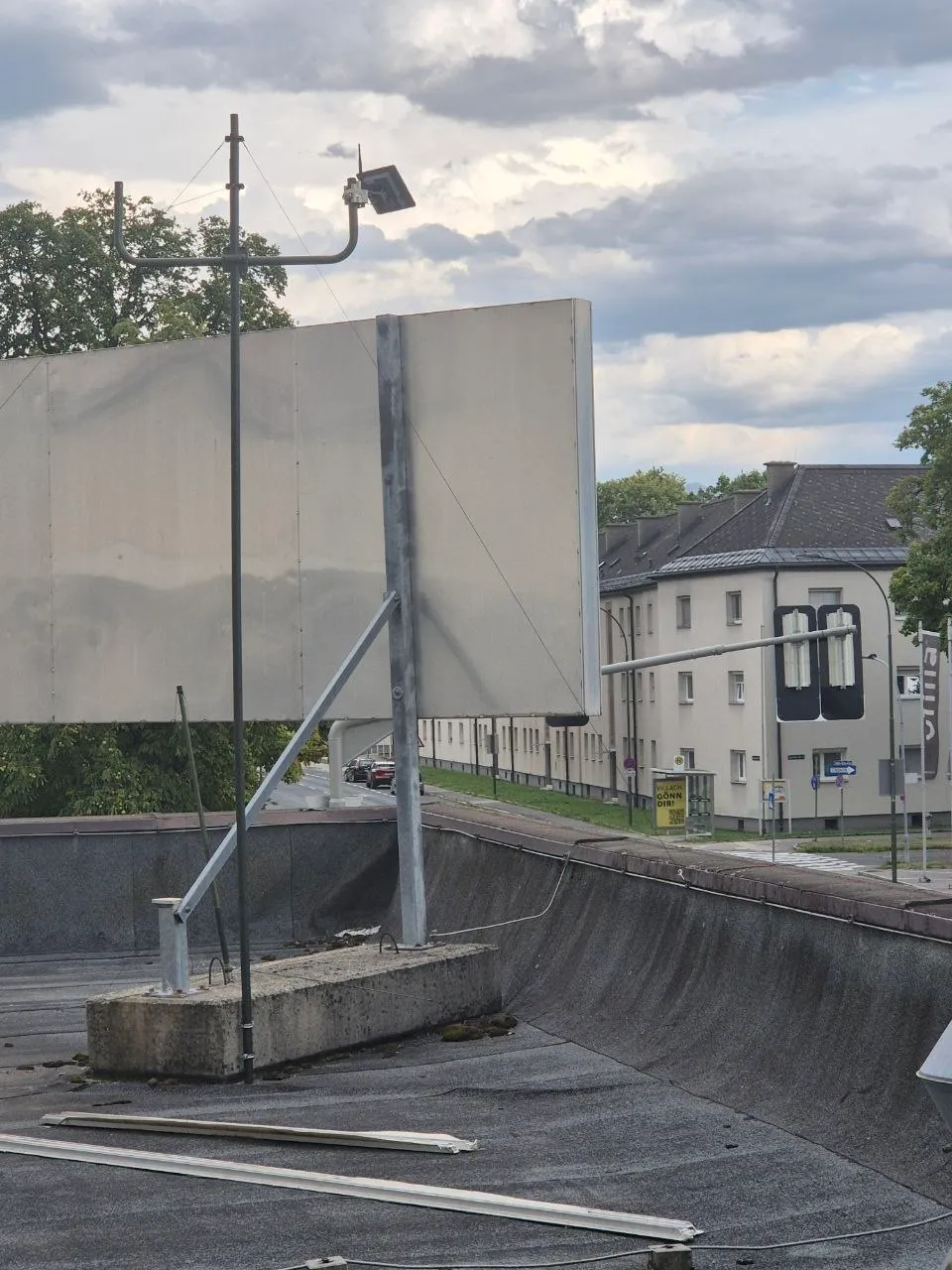
A P1 has been sitting on a mast on the roof of Ossiacher Zeile 39/1 since 11 August. That is made possible by Günther, OE8VIL, who provides the site. The node closes the dark spot that the Dobratsch and the Gerlitzen leave right over the city: both mountains simply "shoot over" it. In autumn the antenna is due to go higher.
Waidegg: the first in the Hermagor district
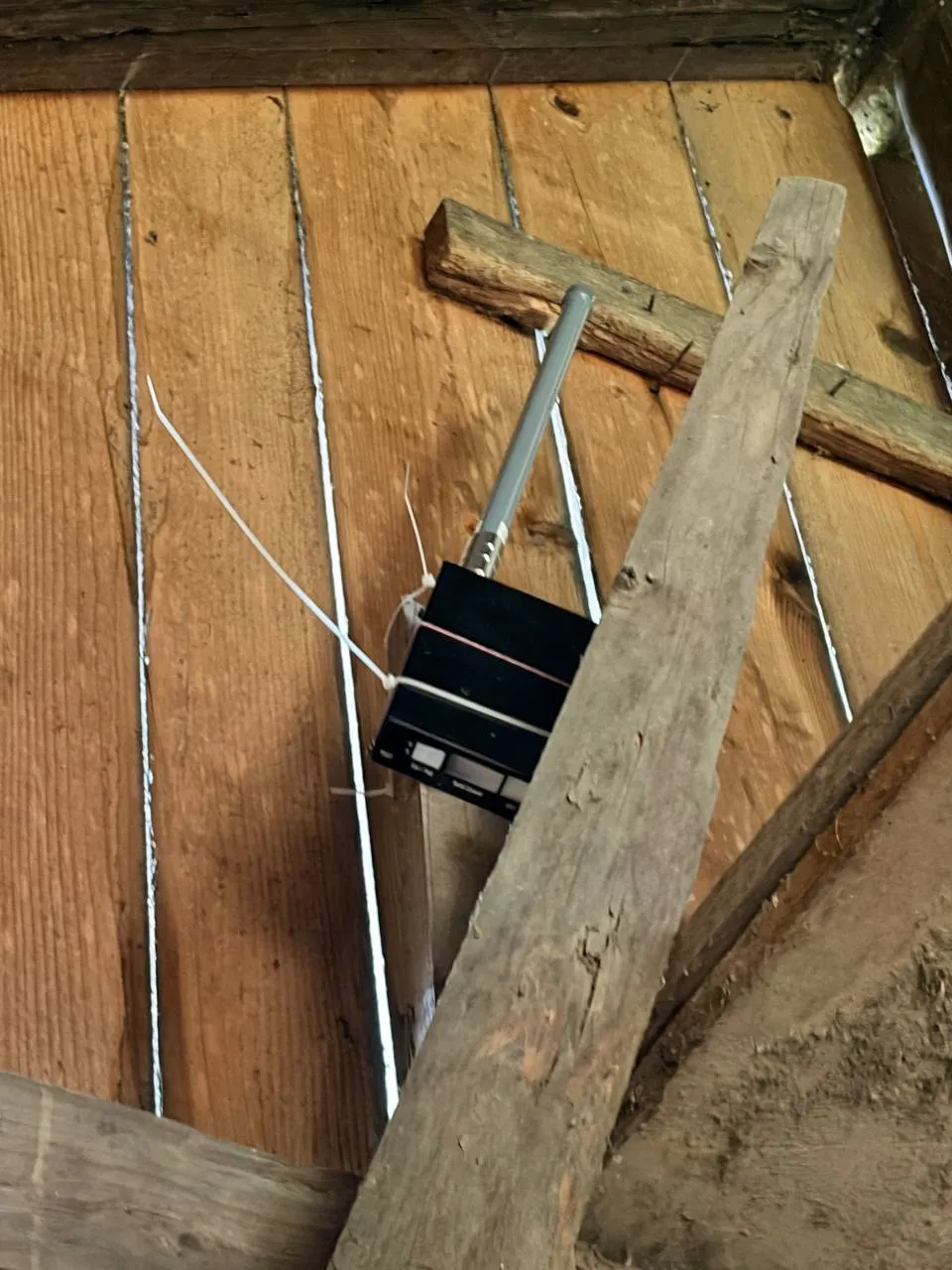
On 19 August Chris, OE8CKK, put a Heltec node into service in Waidegg, cutting into the last large blank area in the Gail valley. Remarkably, its anchor is not the nearest neighbour but the Dobratsch at 34.3 kilometres, the four closer sites are all terrain-blocked. At the time of writing the node had gone quiet; anyone hearing it in that area is asked to report in the channel.
Knappenberg: three nodes, one of them near the top
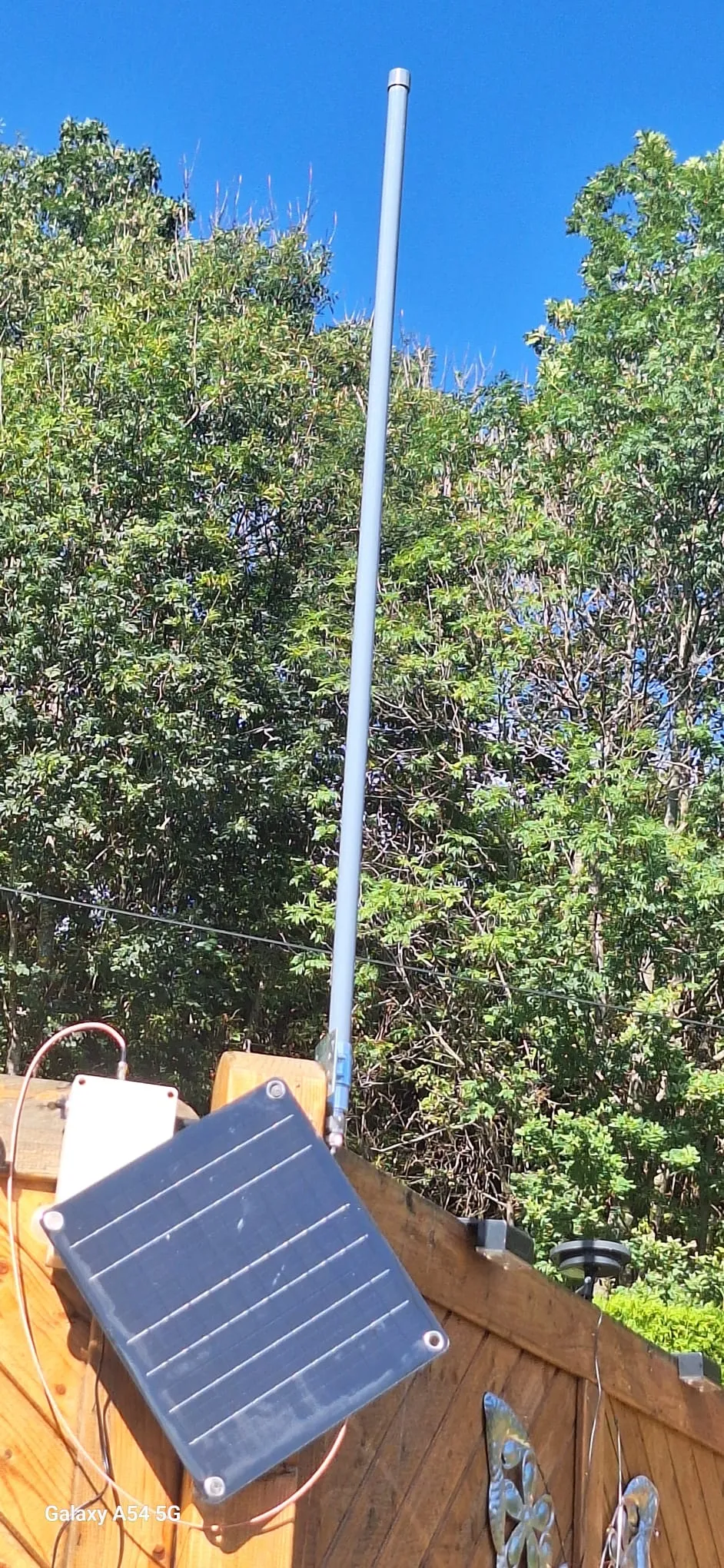
Hermann, OE8HSF, runs three repeaters around Hüttenberg. One of them, a RAK4631 with PV, sits at roughly 1,100 forwards per day, ahead of every site outside the big four. Next on his list is the Hohenwart above the Klippitztörl pass.
Klagenfurt: city centre, Emmersdorf and a spruce tree
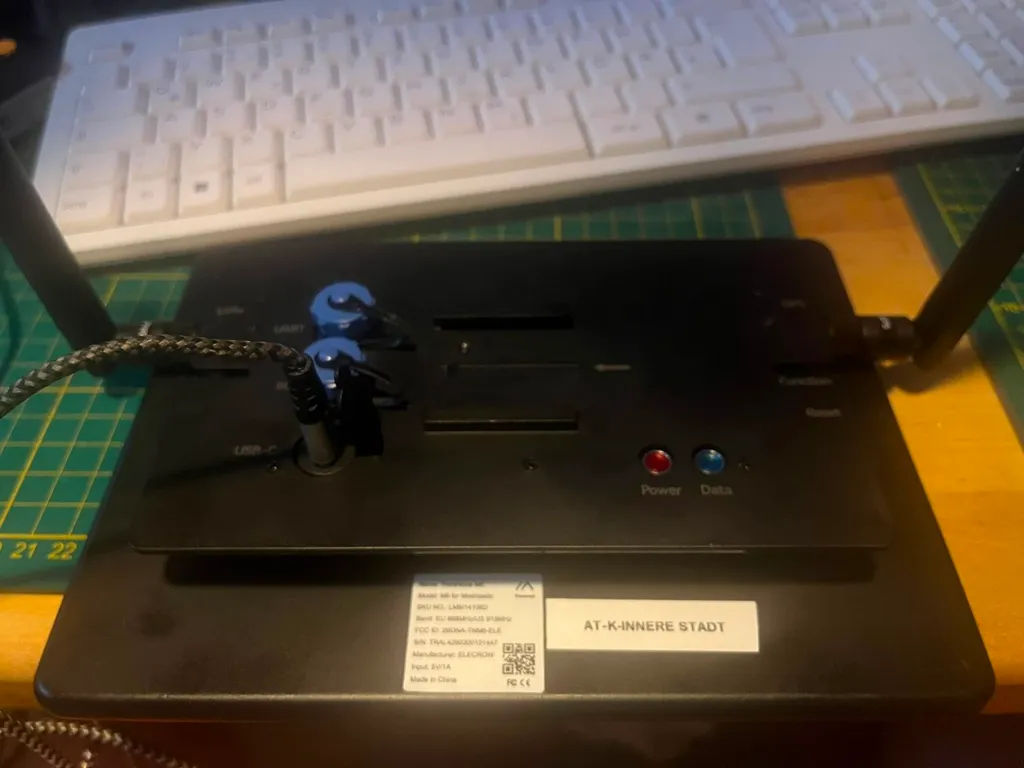
An Elecrow ThinkNode M6 is currently being rolled out on the east side of the Rothauer tower block, a club device from KÄRNTEN FUNKT, installed by Thomas. The fact that the node goes quiet in between is part of the installation.
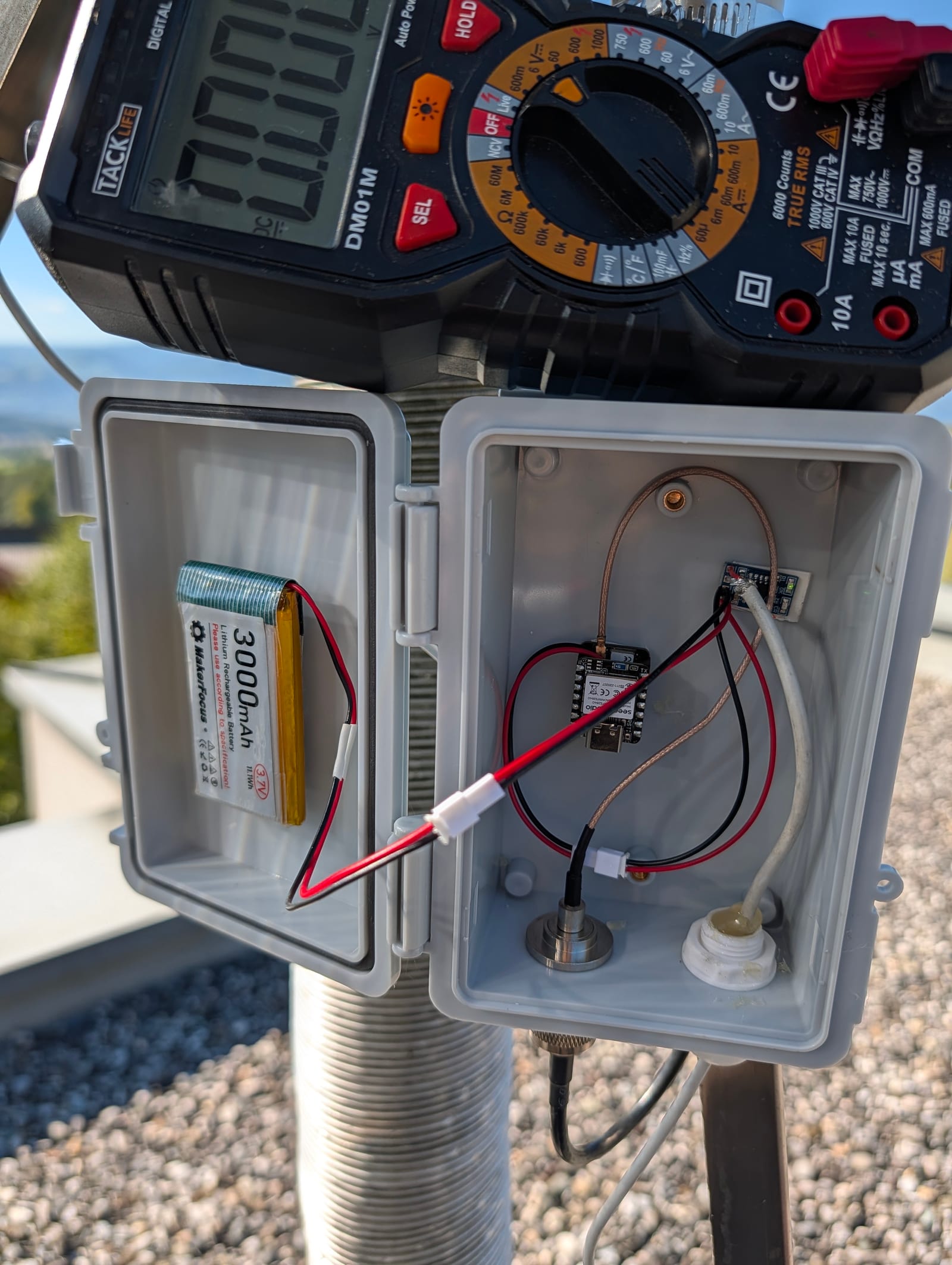
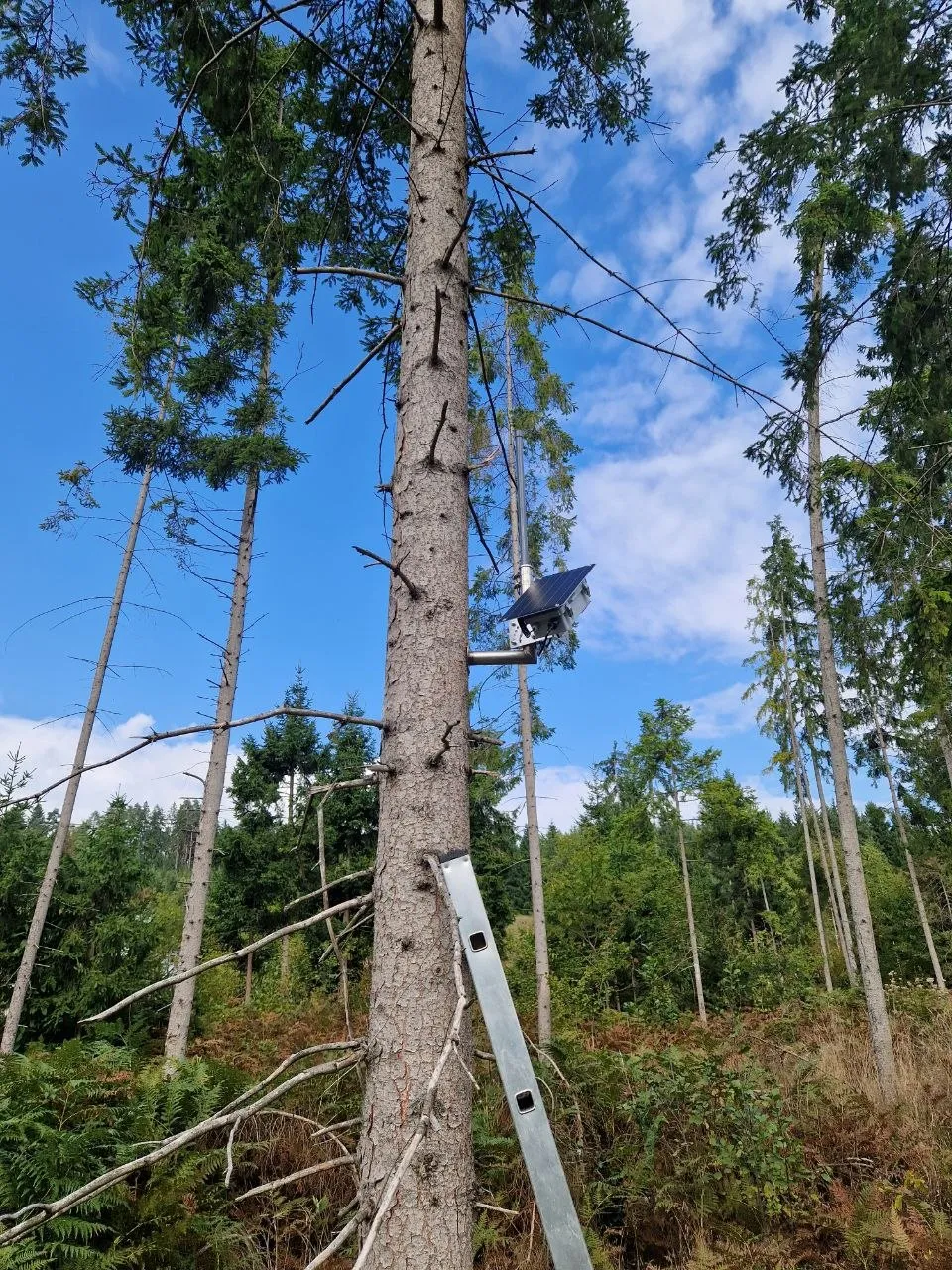
Christian runs three repeaters in the Klagenfurt area and is the only one able to contribute something everybody else still lacks: long-term experience. His node in the forest, about 100 metres above his house, has been running for almost a year: a RAK 4631, four 18650 cells, a 4 W panel, a step-down converter, no MPPT controller, charging straight through the board, plus a fibreglass antenna from a far-east shop. Mounted on a spruce, reachable by ladder.
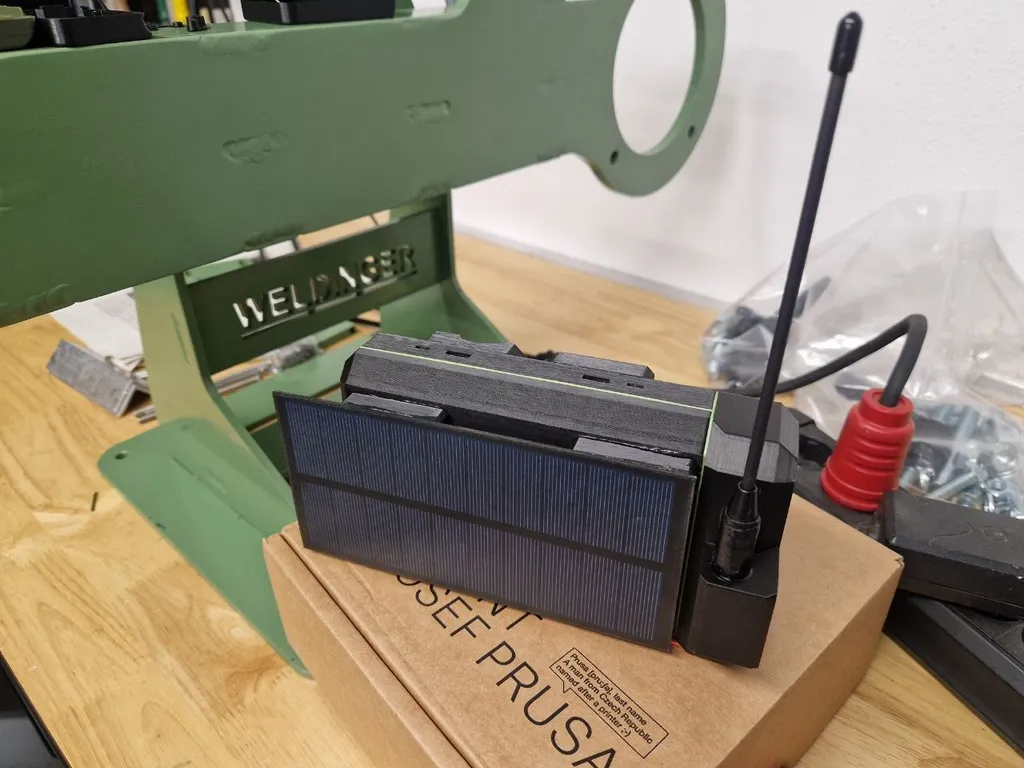
The second site, right at the house in Emmersdorf, is a Heltec T114 in a 3D-printed "Hermes" enclosure with a 2 W panel. The third, in Gurnitz, was swapped for newer hardware on 16 August.
Spittal: from the sofa to the hillside
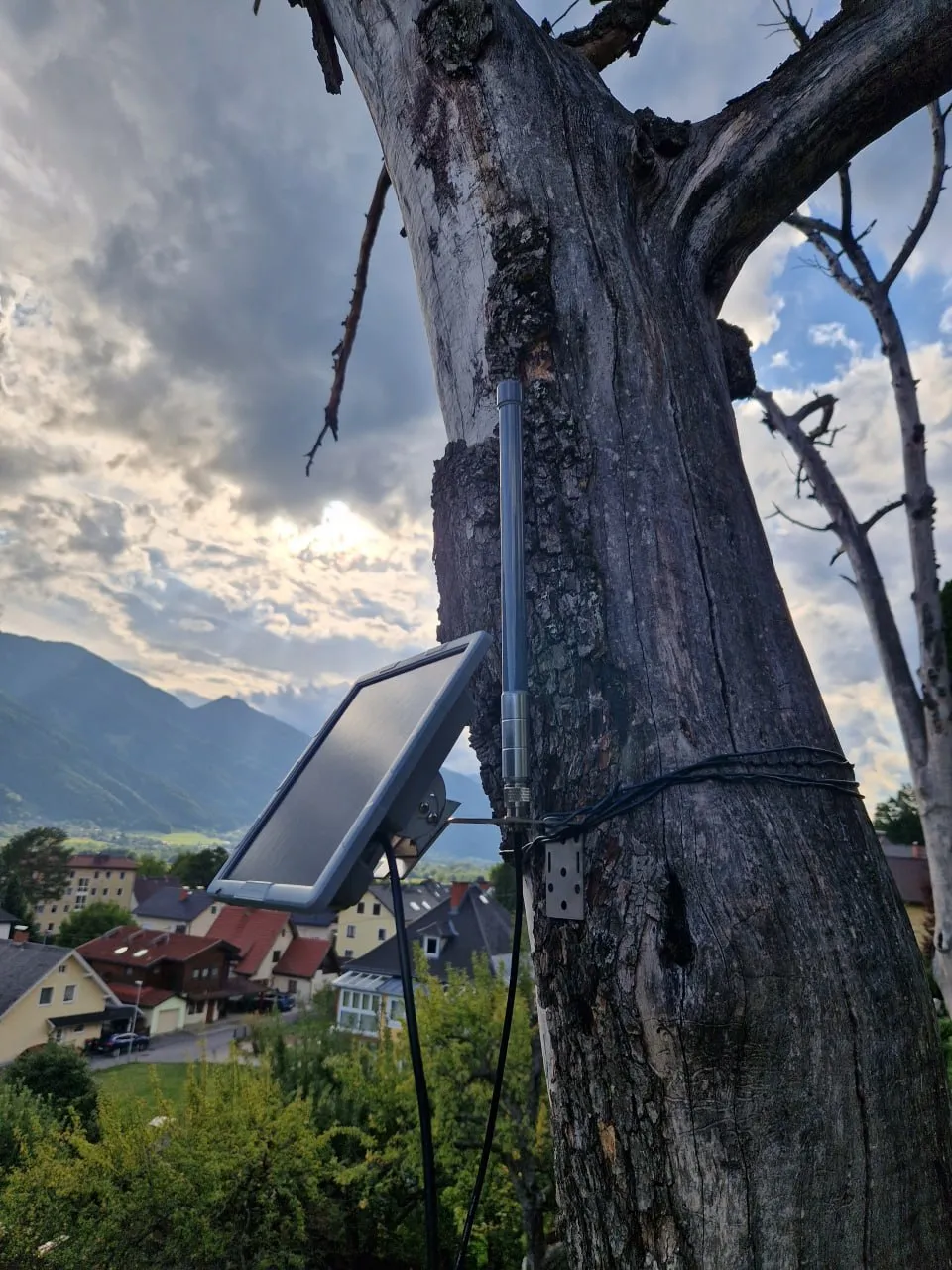
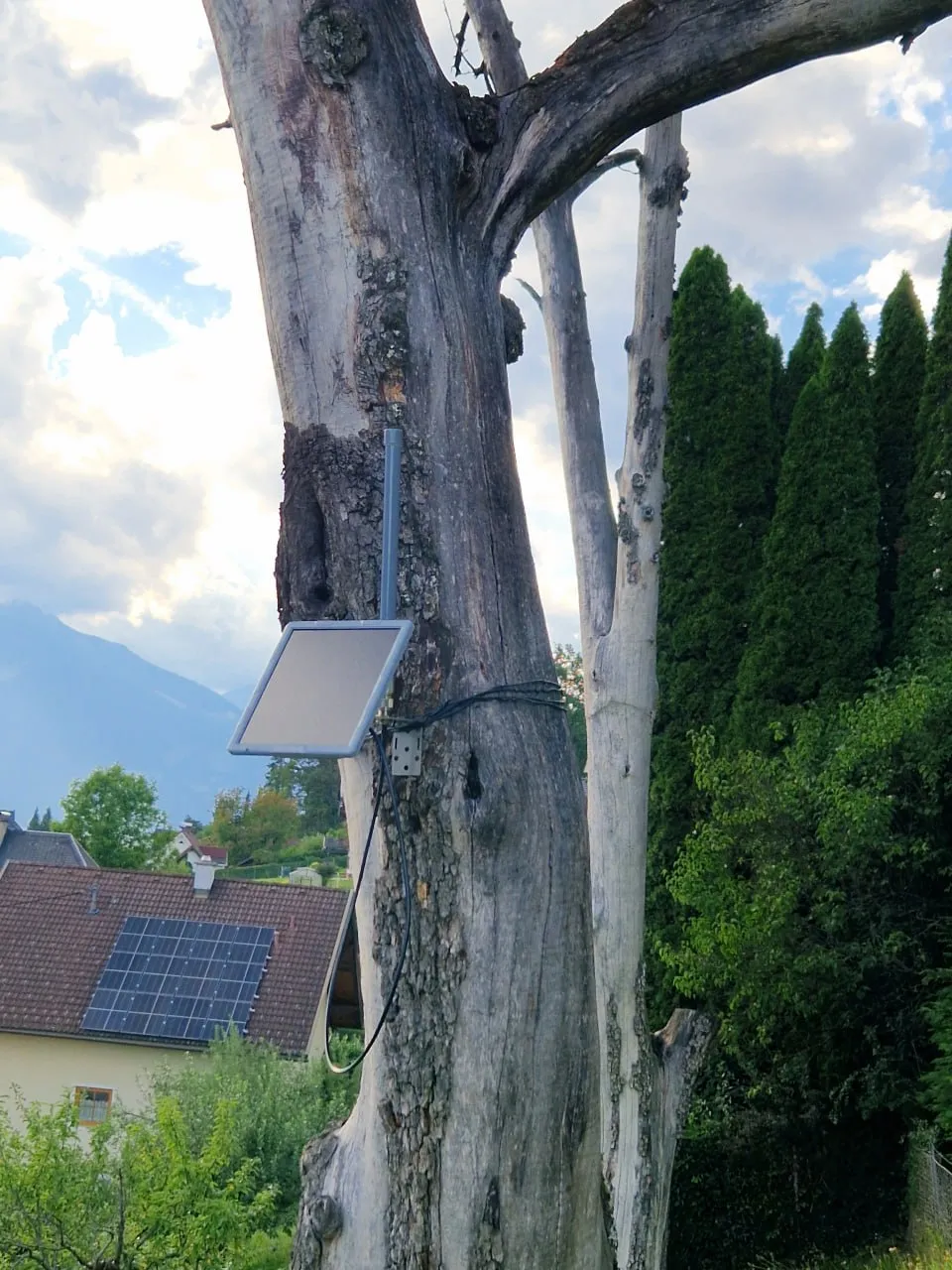
Dominik, OE8DLE, first ran his repeater in the attic on the third floor and then moved it five metres up the slope above the house, where it now hangs on a dead tree trunk. The device is a SenseCAP Solar Node P1-Pro, "the number one menu, so to speak", as he calls it. From there it reaches Sappl and Millstatt. His practical conclusion after two weeks of test drives on the A2 and A10: the zero-hop ping is close to useless as a range test, messages often get through anyway. The Hühnersberg is planned as the next site.
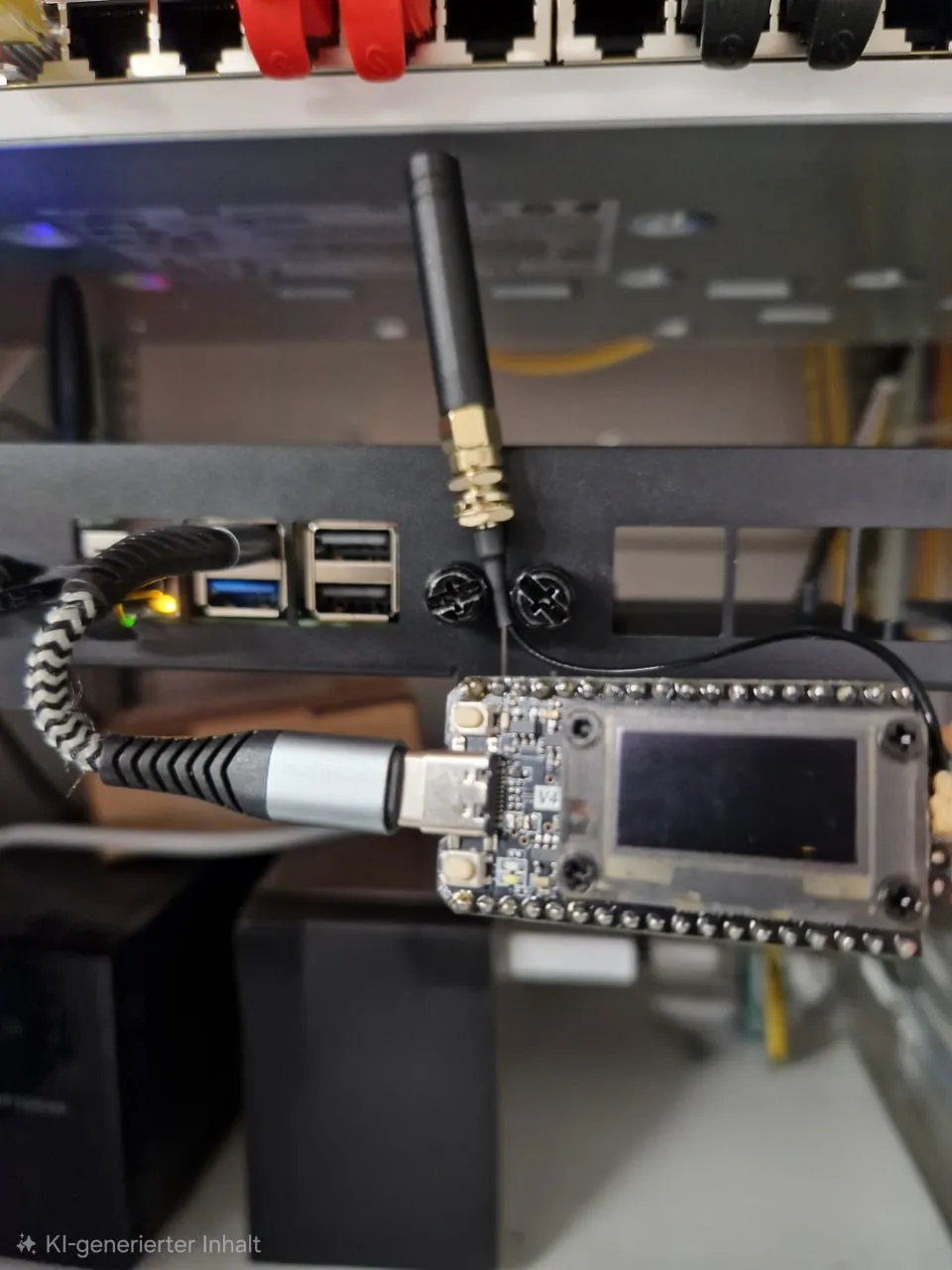
He also runs an observer of his own, logging what actually arrives at the site: a Heltec V4 hanging by USB on a Raspberry Pi 5 in the rack.
Home-built: from a garden lamp into the landscape
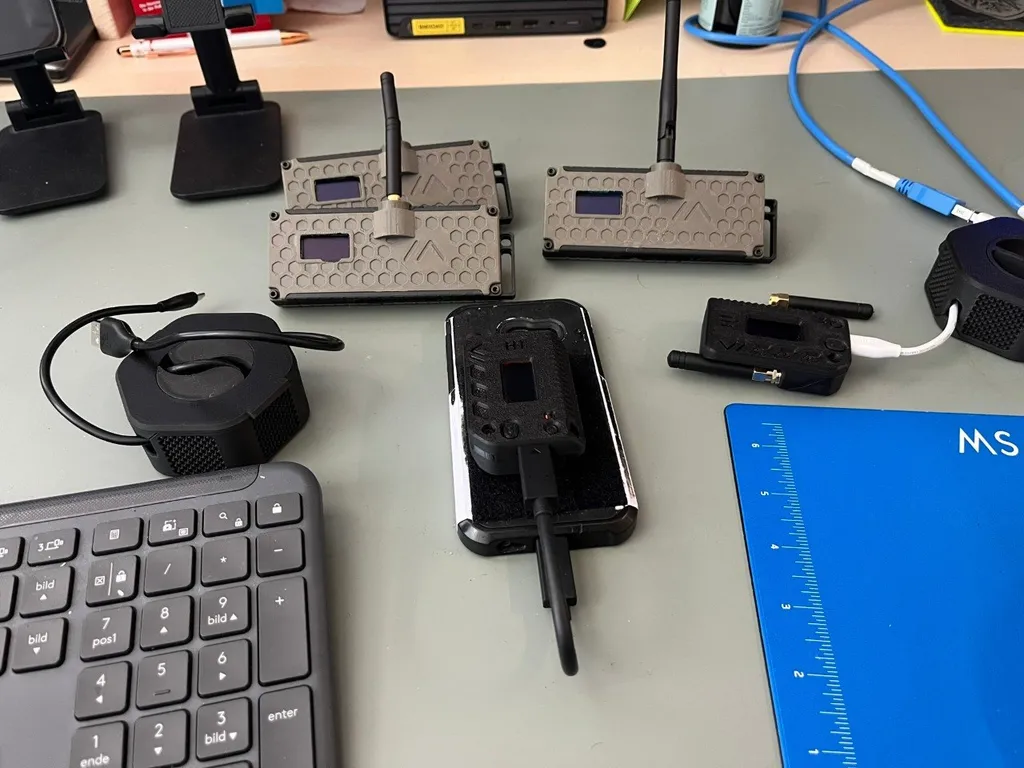
Alongside the ready-made devices, a small production line is running on a workbench. The first "KF People Repeater" was built on 3 August: a XIAO board with an SX1262 radio module, the panel taken from a solar garden lamp bought at a hardware store, a three-euro charging module, antenna cap and mounting from the 3D printer. Printed in PETG; ASA would be better for years of outdoor exposure, but PETG has held up for years already.
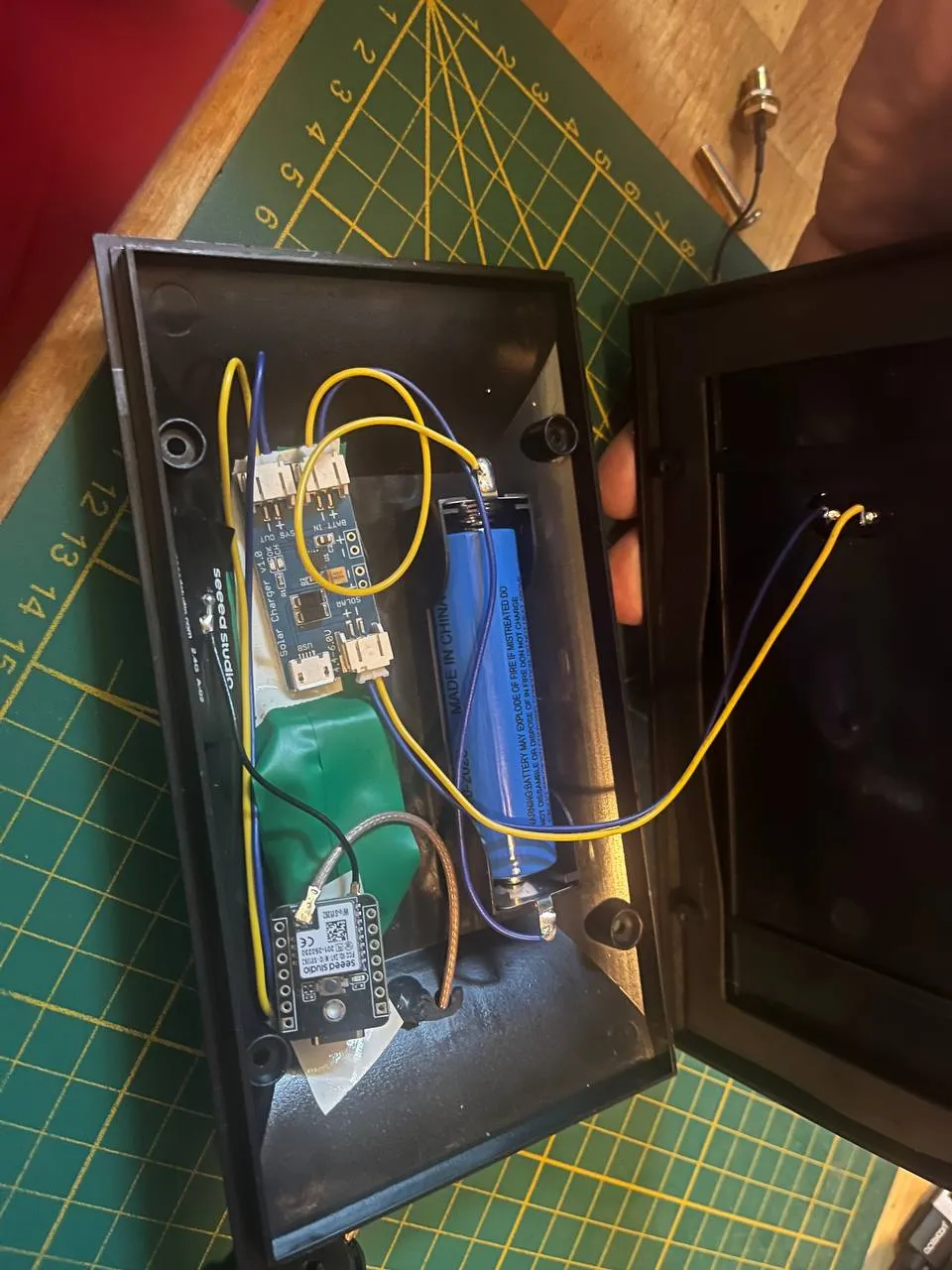
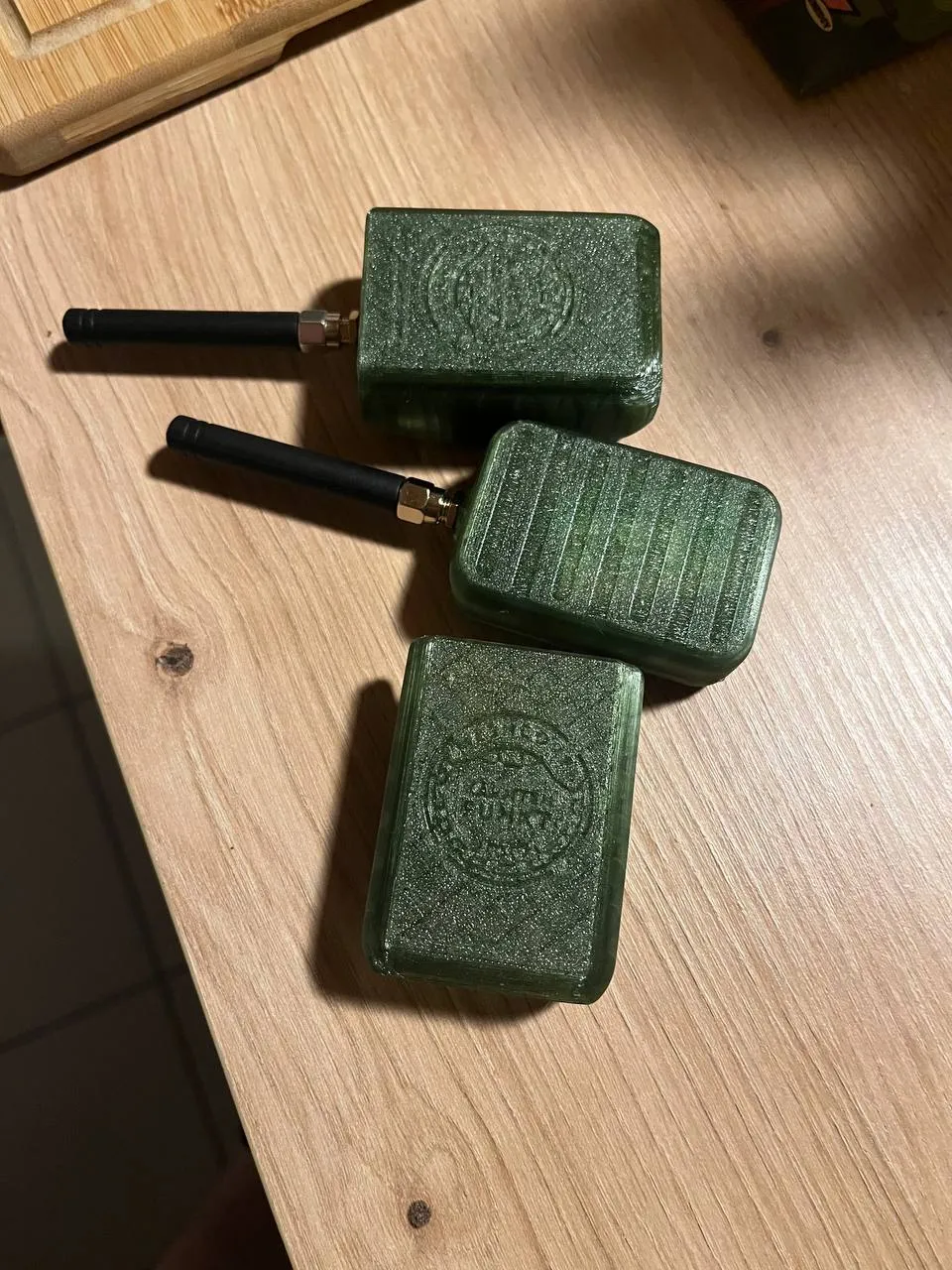
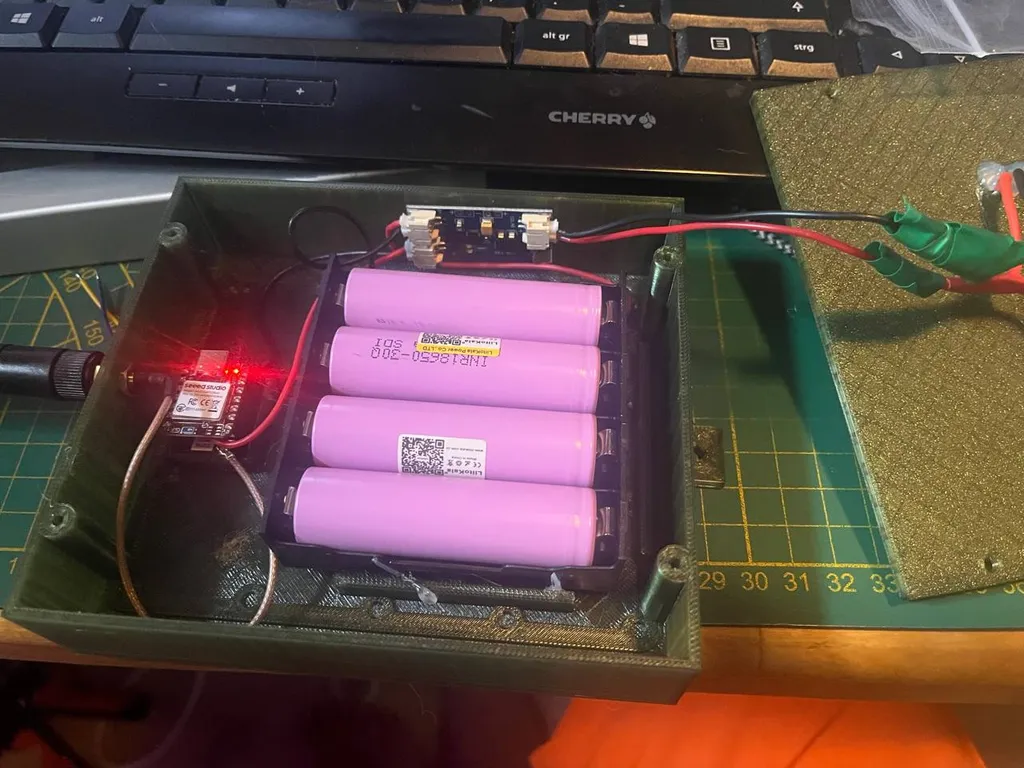
The larger variant takes four 18650 cells, around twelve amp hours, charged through a CN3065 module from a 2 W panel. The charging current stays so small that frost is not a drama either, and the field data on that, including from a network in Calgary with summit sites at minus 40 degrees, is in the wiki.
The home-built units are meanwhile being tested outside the workshop as well: Wolfgang, OE8WOK, in Thörl-Maglern and Gabriel, OE8IEA, in Hohenturn each have one in service and report back on how the solar supply holds up in everyday use.
That you do not need a repeater to take part is shown by Andre, OE8ASR. His companion, a Heltec V3 in a printed enclosure, simply hangs at the window, connected by two metres of RG-174 to an outdoor antenna. With that he hears the Göriacher Alm and Nötsch, both around eight kilometres away. The device is power-hungry, but it makes the point: a windowsill and a piece of coax are enough to get started.
René, OE8SRM, is going a similar way. He reflashed his existing devices from Meshtastic to MeshCore and has been QRV with a companion in the middle of Klagenfurt ever since, the hardware being a LilyGo T-Beam and a Heltec V3.
What is still missing
Of the Carinthian districts, only Feldkirchen is left without a single repeater. Concrete entries on the list include the Hühnersberg, Völkendorf in Villach, the school cluster in Hermagor, the Hohenwart at the Klippitztörl, the Bernsteiner Ofen and the Hemmaberg. Noted as longer-term goals are the Sonnblick observatory at 3,106 metres, staffed all year, with a calculated 74-kilometre direct path to the Dobratsch, and the Golzentipp as the door to East Tyrol.
And because it belongs to an honest picture: since 23 August the wiki also holds a repeater analysis showing which sites carry the network and which merely add to the flood. By the numbers, three nodes could be switched off without anyone noticing. More repeaters are not automatically better, and anyone wondering where the limit lies will find the answer in satirical form in our cellar node.
Joining in
On Friday, 28 August 2026 at 19:00 there is an information evening on MeshCore at the KÄRNTEN FUNKT HQ, Ossiacher Zeile 39/1 in 9500 Villach. No licence, no fee, no contract, and registration is non-binding and only helps with planning.
To look around beforehand: all sites are on map.carinthiamesh.com, the running traffic in the live view, the guides in the CarinthiaMesh wiki and the channel to read along at mesh.kaernten-funkt.at. The whole thing is carried by the club KÄRNTEN FUNKT. One of the channels in use is #kf, and since recently there is also SOTA spotting over MeshCore. Questions are answered in the Telegram group Kärnten Funkt – MeshCore; everyone is welcome there, with or without a device and with or without a callsign.
Further reading on oeradio.at: MeshCore: radio without a mobile network explains the technology and how to get started, 126.9 kilometres on half a watt traces the growth of the network, SOTAmesh shows spotting from the summit without internet, and MeshCom introduces the licensed counterpart in the amateur radio bands. Anyone who prefers it with a wink will find the satire in Mesh Is Fresh.
If you have a good site but no device yet, the best thing is to ask in the group: for individual sites a solution has already been found, but nothing is promised. If you have hardware and are looking for a place for it, the wiki has a list of open sites. And if you have neither, you can still contribute what is currently missing almost everywhere: measured coverage. Drive around, take notes, report back.
73 – your oeradio.at editorial team
Transparency Notice
This article is based on the messages posted in the Telegram group "Kärnten Funkt – MeshCore" between 3 and 23 August 2026, together with the site list and repeater analysis in the CarinthiaMesh wiki, data as of 23 August 2026. The photos come from the respective operators, who supplied them for publication in response to a request in the group; credits are given with the images. Traffic figures are observer measurements and therefore a lower bound, not a complete survey. This article was researched and written with the support of AI (Claude, Anthropic) and reviewed by the oeradio.at editorial team. Corrections, missing sites and photo credits are welcome at [email protected].