Anyone who has stood on a summit that is not directly above a district capital knows the problem: the antenna is up, the callsign is logged, and the phone shows exactly zero bars. The spot that would bring the chasers to your frequency simply never goes out. So you call CQ for half an hour and hope somebody tunes past by accident.
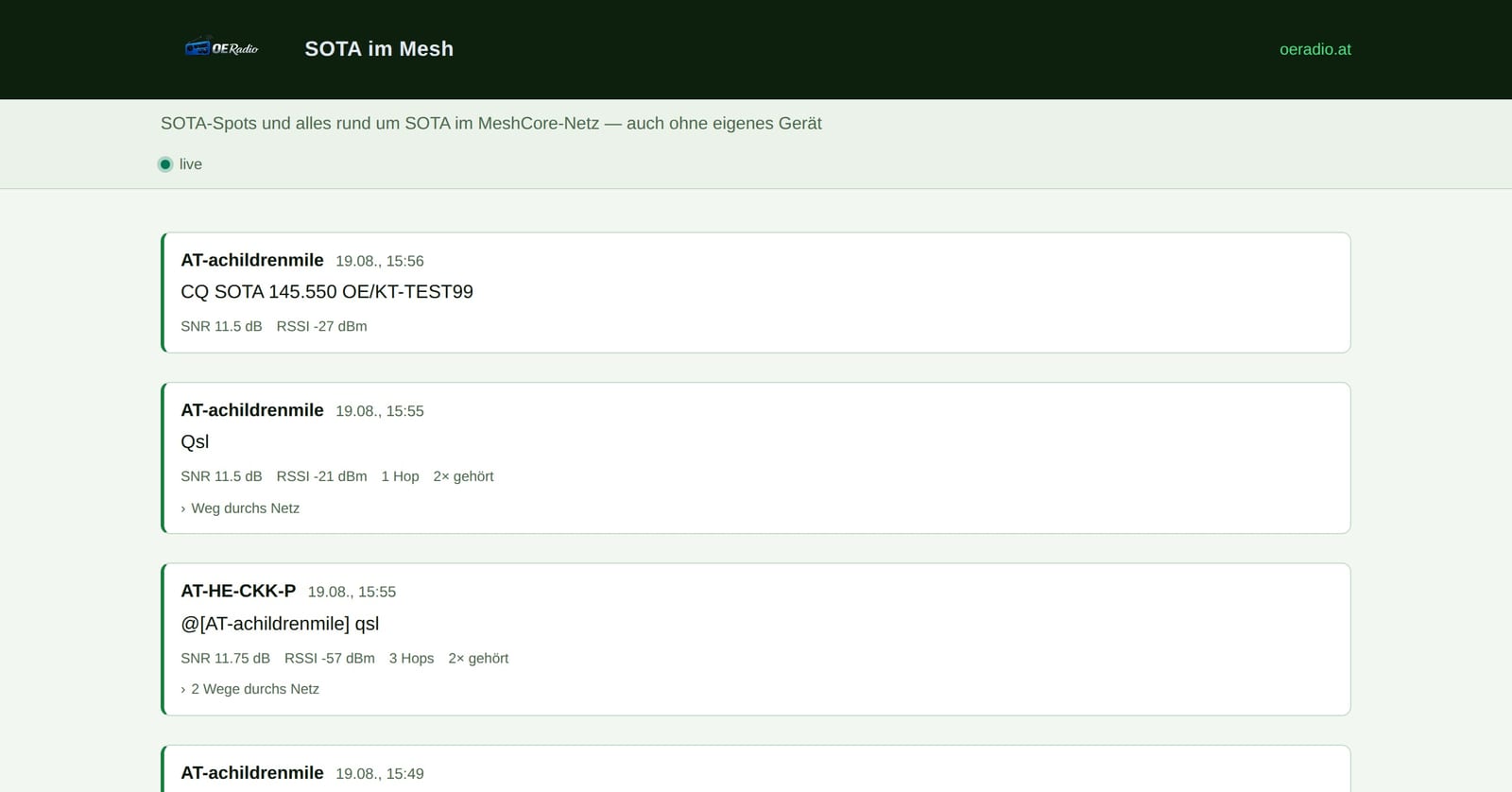
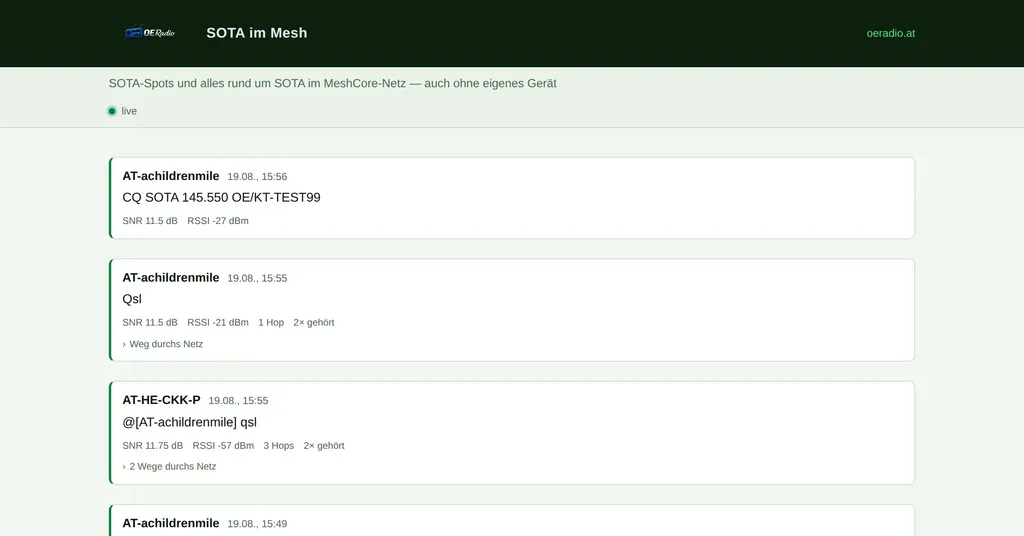
As of today there is another way, and it works entirely without mobile coverage: the MeshCore channel #sota, plus a web page where you can follow that channel live. It is called sotamesh.oeradio.at.
The idea came from Chris, OE8CKK
The channel was not the editorial team's idea. It came from Chris, OE8CKK. He suggested opening a dedicated MeshCore channel just for SOTA instead of letting spots disappear in general traffic. Chris has been activating summits for years, so he knows fairly precisely where the friction is. Thanks for the idea, it was overdue.
The technical part was the easy bit: create the channel, set up the web view, done. What makes this interesting is not the software, it is what the software makes possible on the mountain.
For activators: spotting where nothing else works
If you carry a MeshCore device, create a channel named #sota in the app. That is all. For hashtag channels the key is derived from the name itself, so there is nothing to distribute and nothing to coordinate. Anyone who types #sota is in the same channel as everybody else.
After that you simply send your spot as a text message. A workable pattern looks like this:
OE8XXX/P OE/KT-123 145.550 FMCallsign, SOTA reference, frequency, mode. That is not a rule, it is a suggestion, so the chasers do not have to guess. If you QSY or pack up, send a short second line. That is worth more than any automation.
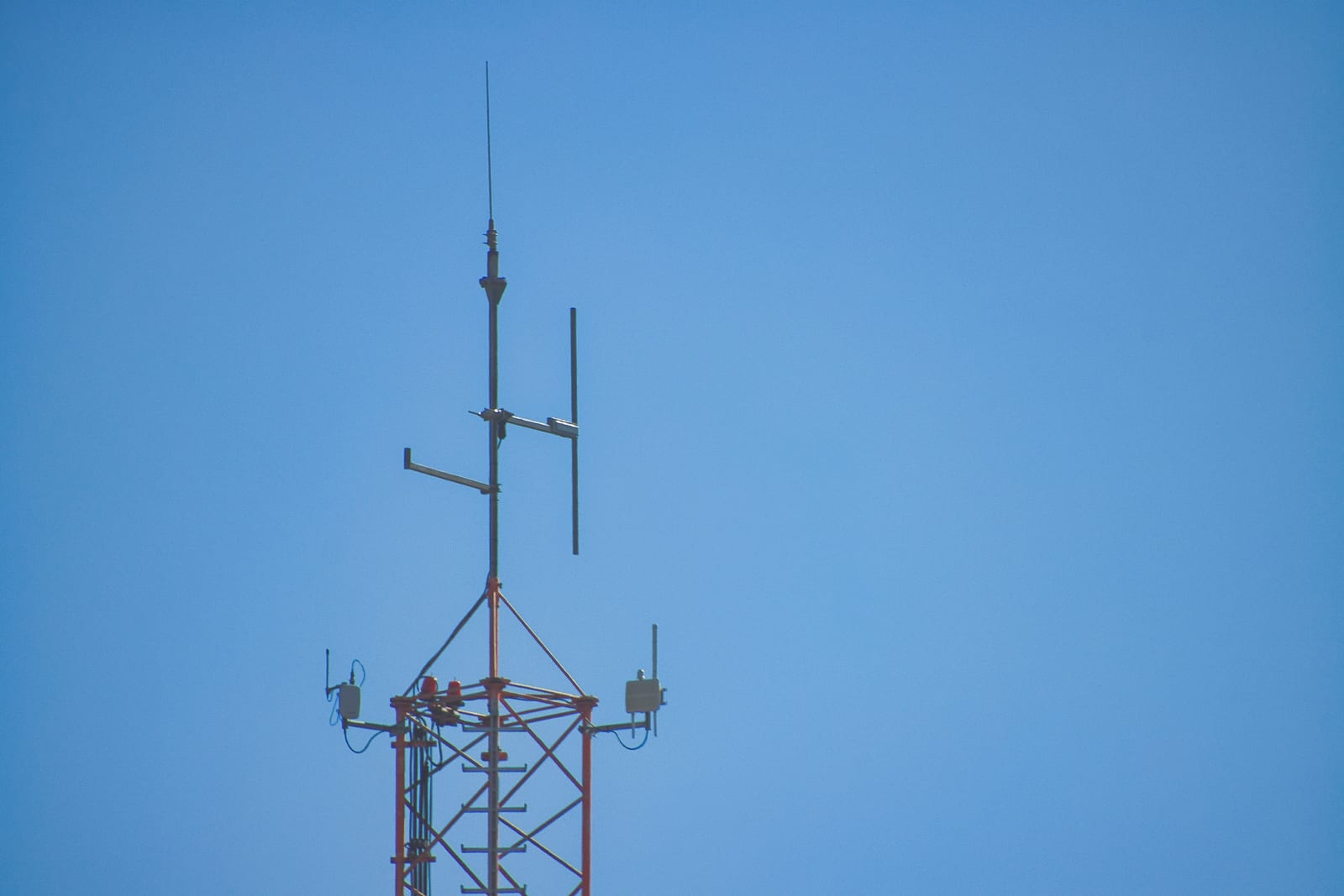
The key point: all of this runs over LoRa on 868 MHz and needs neither mobile coverage nor internet. The repeaters in the network pass the message along until it reaches somebody down in the valley. How far that carries is documented in our report on the Carinthian mesh network: 126.9 kilometres with half a watt.
For chasers: two ways to know who is up there
If you have a MeshCore device yourself and are within reach of a repeater, the spot appears directly on your display. No detour, no server, no internet. That is the actual point of the whole thing.
If you do not have one, open sotamesh.oeradio.at in a browser. The channel runs through live, with no sign-up, no account and nothing to install. The page updates itself the moment something arrives. Each message carries signal figures and, where known, the path it took through the network. So you see not just that somebody is on a summit, but which repeaters carried the news.
Why this complements APRS rather than replacing it
SOTA spots over APRS have existed for years and they work well. But they require two things: an amateur radio licence, and a digipeater network within range that forwards the message to the internet.
MeshCore handles both conditions differently. It runs in the licence-free 868 MHz band, so no exam and no licence are needed. And it still works when nothing else does: no mobile network, no WiFi, no internet. Wherever a repeater is in sight, the message gets through.
This replaces neither APRS nor SOTAwatch. It is a second, independent path, and that is exactly how it is meant. Using both simply improves your odds of being heard.
What is under the hood
SOTAmesh is not a new development. It is a second instance of meshfeed, the software that has been making the #kf channel readable in a browser at mesh.kaernten-funkt.at for a while now. The mechanism is identical in both cases.
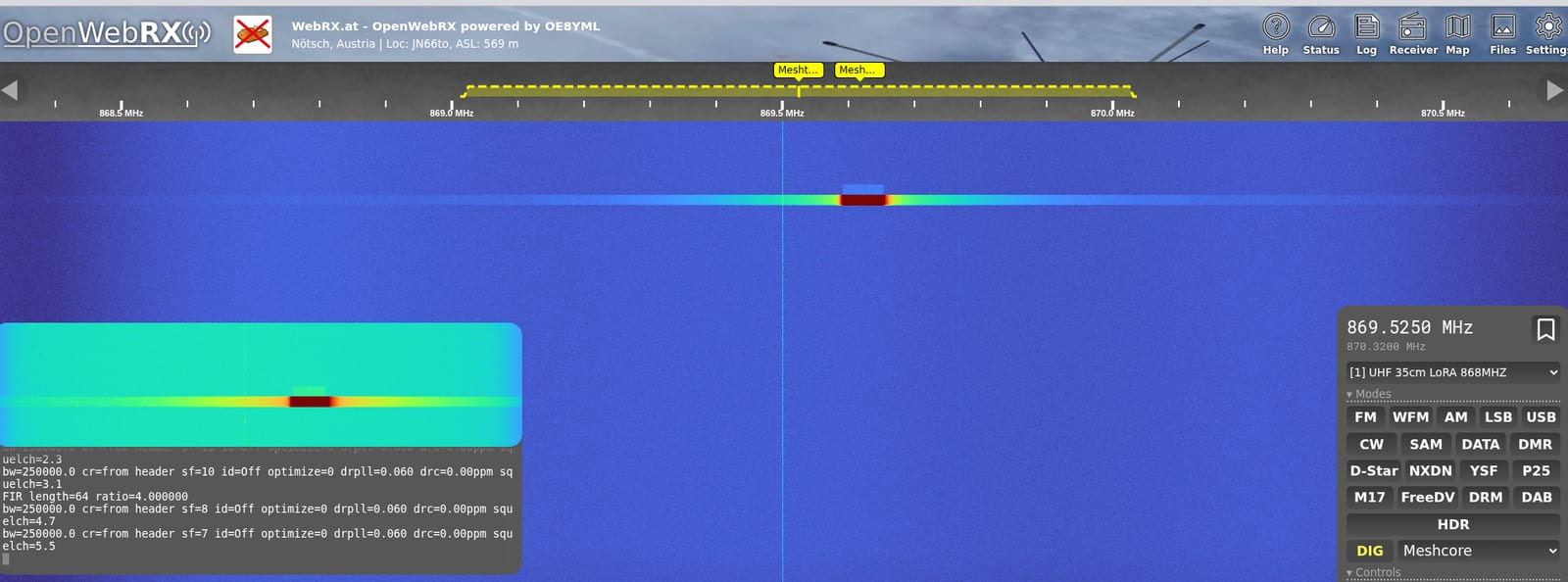
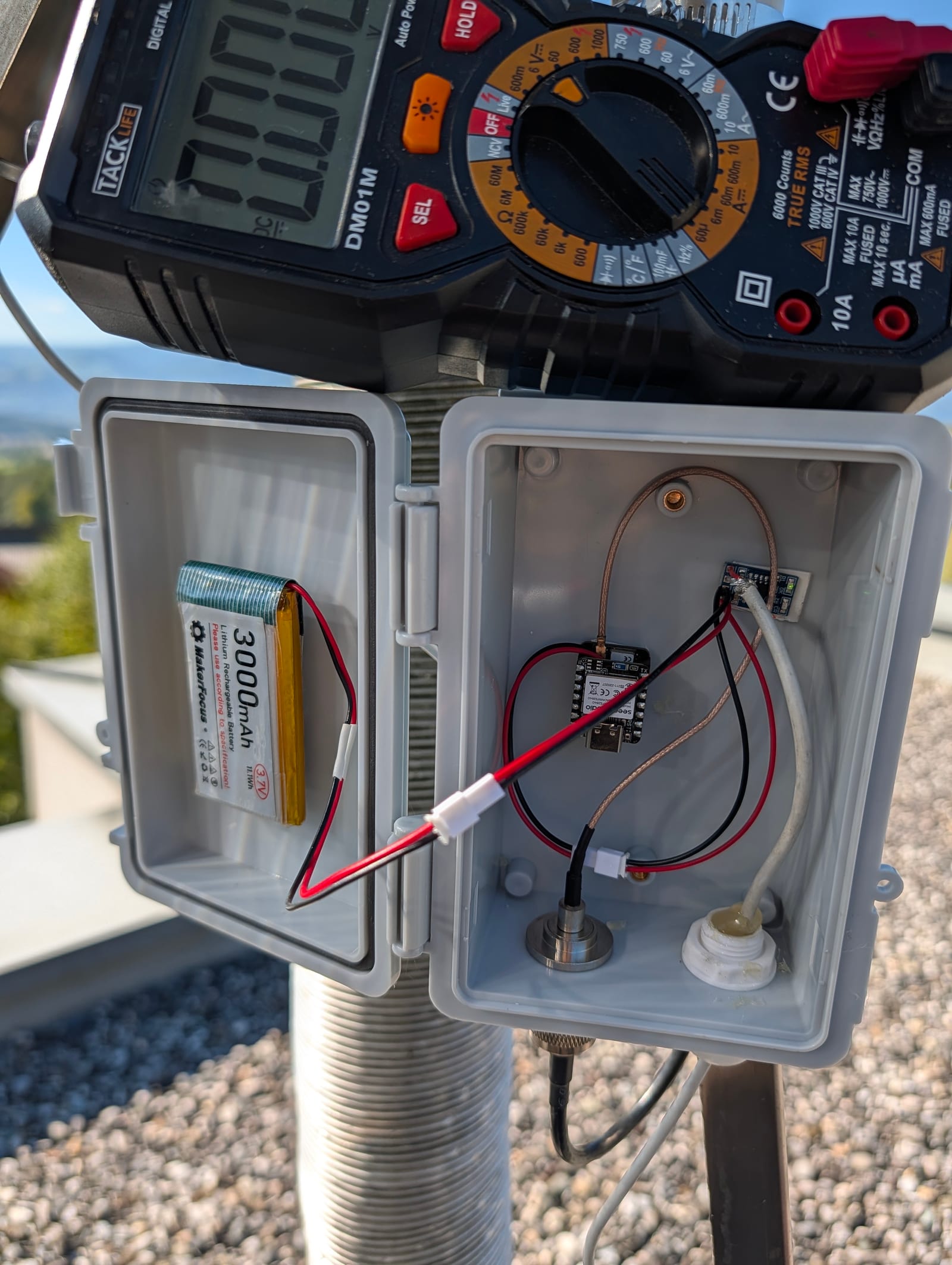
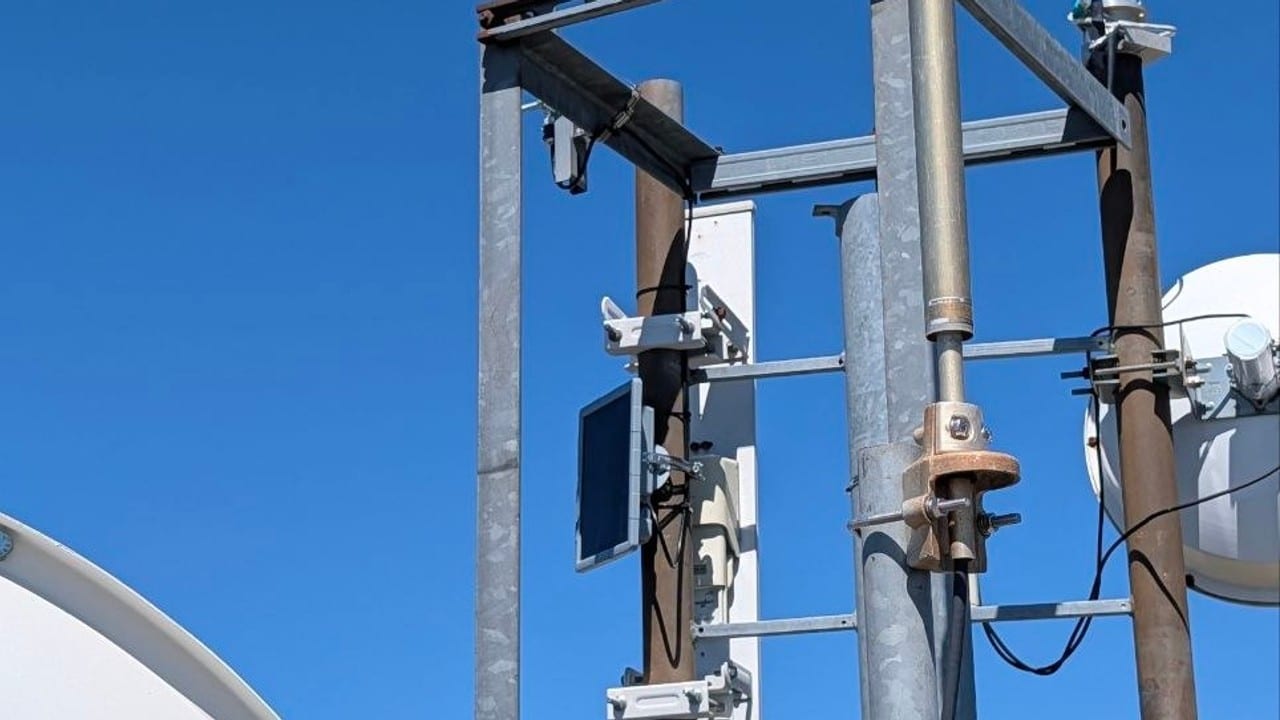
An observer listens on the air with an ordinary MeshCore node and pushes every packet it hears to an MQTT broker. meshfeed attaches to that broker read-only, decrypts the channel messages and displays them. For SOTAmesh that observer is currently AT-VL-Nötsch.
Two things are worth knowing. First: the page does not transmit. There is no way to send anything into the radio network through SOTAmesh. It listens, nothing else. Second: a hashtag channel is not private. The key is derived from the name, so any device within radio range can read along. The MeshCore documentation says as much. SOTAmesh therefore makes nothing visible that is not already travelling openly across the network. It is the wrong place for anything confidential and exactly the right place for spots.
The limits, stated honestly
This is new, and it has the rough edges to match:
- Coverage ends where the network ends. What no observer hears does not appear on the page. A gap is therefore rarely a bug, usually it is simply radio. At the moment one observer is attached to the channel, in the Villach area.
- Spots do not reach SOTAwatch automatically. If you want to appear there, you still spot yourself once you have coverage again. There is no bridge in that direction at present.
- It lives on participation. A channel nobody writes in is useless. The first entries on the page are test messages, and they will stay that way until the first real spot arrives.
Getting involved
No MeshCore device yet? A suitable board starts at around 20 euros, and there are no fees after that. Our article MeshCore: radio without mobile networks covers the entry, including the parameters used in this network.
If you already have one, create the #sota channel and try it on your next summit. And if you want to know whether anyone is reading at all, watch sotamesh.oeradio.at for a week first. It costs nothing and commits you to nothing.
Feedback, requests and bug reports are welcome at [email protected]. One question is particularly interesting: where does the network carry from a summit, and where does it not?
Read on
- MeshCore: radio without mobile networks
- 126.9 kilometres with half a watt: the Carinthian mesh network
- All oeradio.at tools at a glance
73 de OE8YML