Between a site on the Koralpe and a Slovenian site called Dol-Gače lie 126.9 kilometres. That is not a calculation and not an estimate but an actually observed radio link: one heard the other. The transmit power involved is 500 milliwatts, half a watt. About as much as a baby monitor, less than a mobile phone puts out.
What makes it possible is a radio network that has grown quietly and rather quickly over the past two weeks. It is called CarinthiaMesh, works on 868 MHz and carries text messages without a mobile network, without the internet and without a contract. How that works in principle and what you need to take part is covered in our article MeshCore: radio without a mobile network. This piece is about something else, namely who actually built the network.
One thing up front, because everything else follows from it: the network belongs to nobody. There is no operator you sign up with, no association that decides over it, and no authority that could admit or reject anyone. The firmware is open source, the map is public, the guides are free to read. Switch on a device and you are part of it. Put up a repeater and you make it bigger for everyone else.
From nine to 32
Fourteen days ago, nine repeaters were visible in Carinthia, meaning fixed stations at elevated sites that pass messages on. Today there are 32. The strongest day was 15 August, when four sites appeared at once: Nötsch, Gerlitzen, Altenberg and the Leppner Alm.
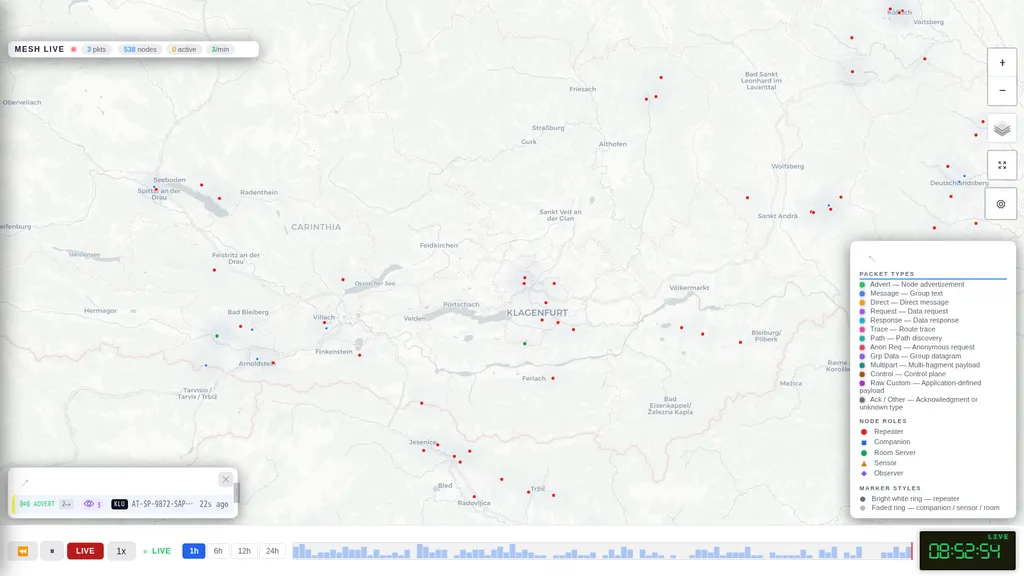
Together the 32 Carinthian repeaters forward around 28,000 messages a day. The entire network this analysis can see comprises 611 nodes across several countries. Carinthia contributes only a small share of the stations but carries roughly 40 percent of the observed traffic. That has to do with geography: stand on a mountain here and you see a very long way.
If you would rather watch it move than read it as a number, the map has a live view in which every forwarded packet shows up as it happens. No device and no sign-up required, you simply watch. On an ordinary evening it shows quite clearly which sites do the work and which are currently just listening in.
Part of it is better visibility, not more hardware
Before the numbers take on a life of their own, a caveat belongs here, in the middle of the text rather than at the end.
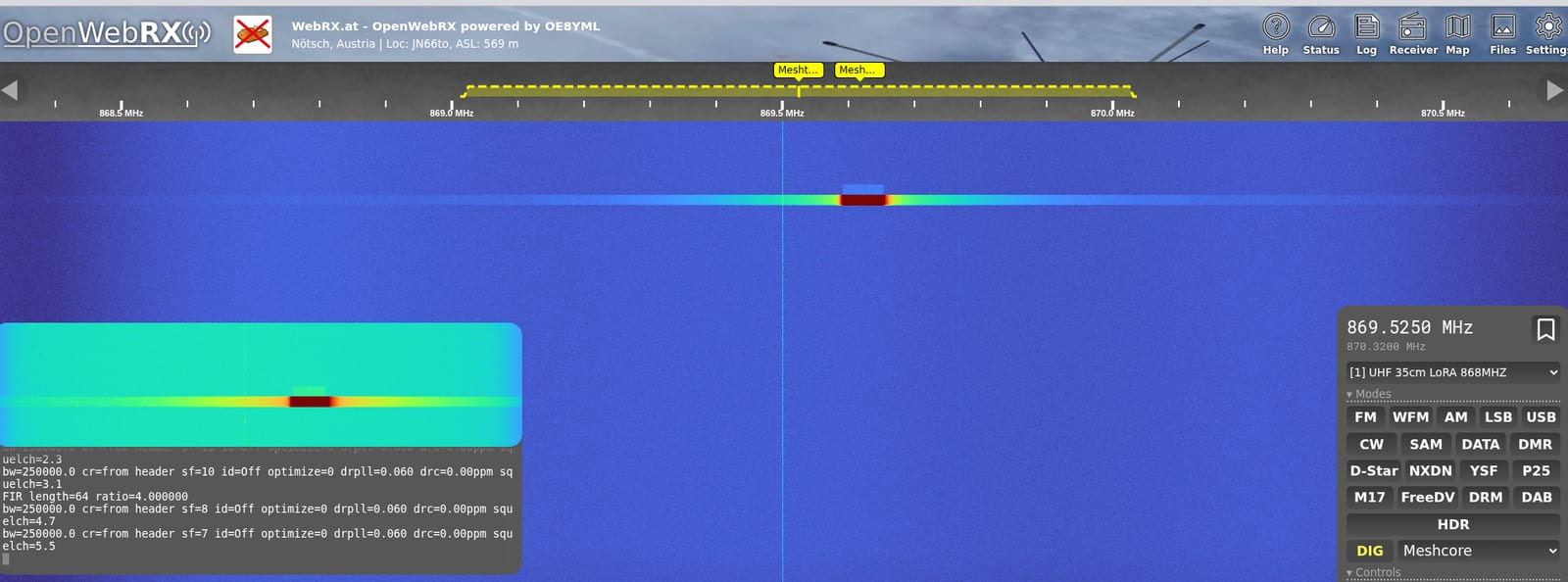
The map only knows a repeater once somebody hears it. That takes observers, stations that record the radio traffic and report it. Of the four observers currently running, three appeared in the very same period in which the network supposedly grew by 23 sites.
Which means: some of the new sites may well have been standing there before and simply went unheard. In this statistic, "new" reliably means no more than "heard for the first time". You can turn that into a figure like "+311 percent", and arithmetically it even holds, but it claims more than the data supports. The growth is real. A substantial part of it is nevertheless just a better view of what was already there.
The sites that carry the network
Not every repeater works equally hard. Six stand out clearly:
| Site | Forwards in 24 h | Role in the network |
|---|---|---|
| St. Ulrich (Lavanttal) | 3,749 | on air since 3 August |
| Pölling (Lavanttal) | 3,708 | the oldest of the leading group, since 9 July |
| Göriacher Alm (lower Gail valley) | 3,576 | 33 neighbours, the crossing into Slovenia |
| Koralpe | 2,807 | feeder into Styria and further east |
| Knappenberg-PV (Hüttenberg) | 2,237 | only since 13 August and already in the leading group |
| Knappenberg | 2,201 | second site of the same group |
More interesting than the ranking is how it has changed. Three sites currently carry around 39 percent of Carinthian traffic between them. A week ago it was 81 percent, and that with less total traffic than today. The load is measurably spreading out. For a network without a central authority that is precisely the good news, because it no longer hangs on two or three mountains.
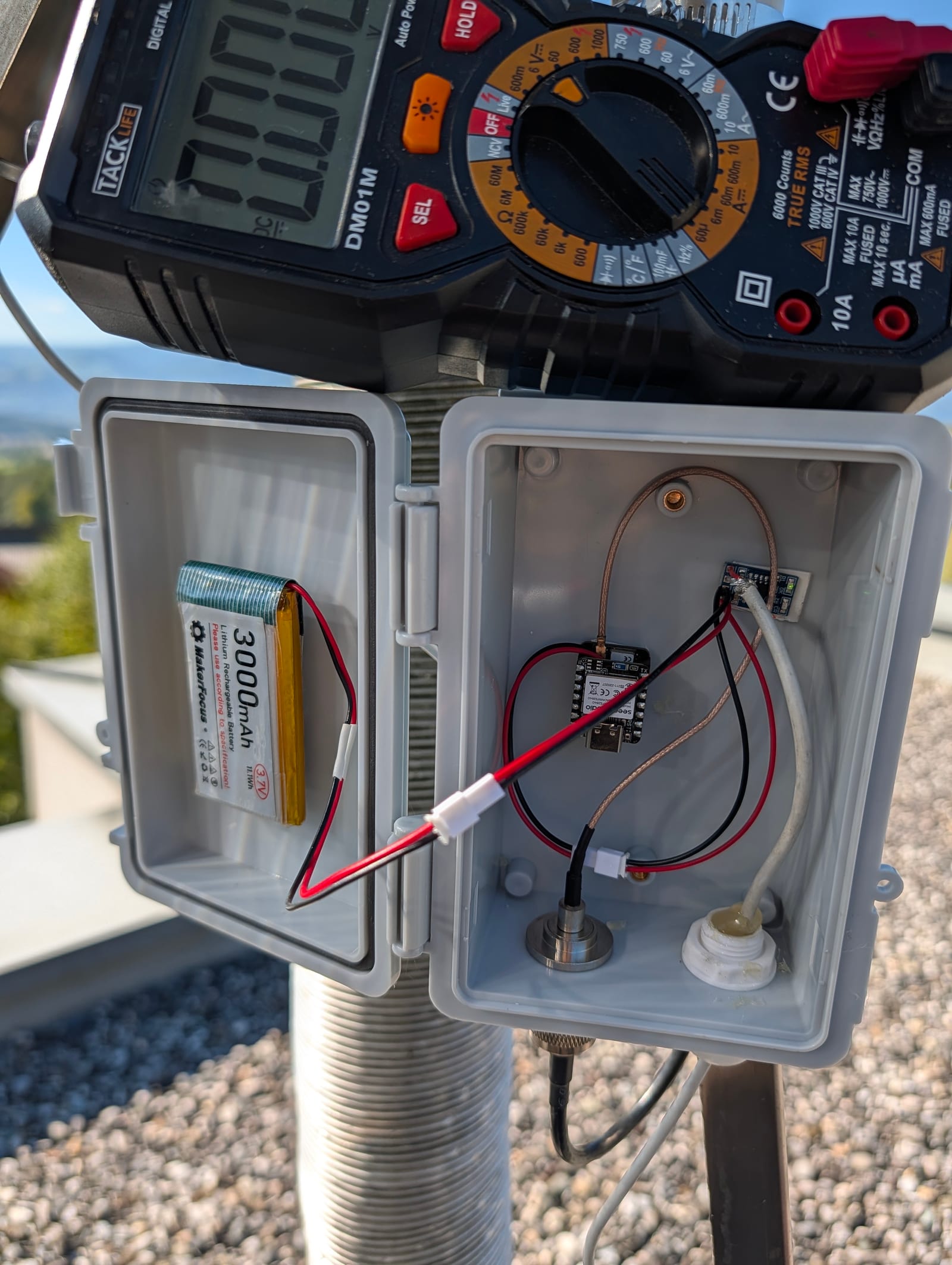
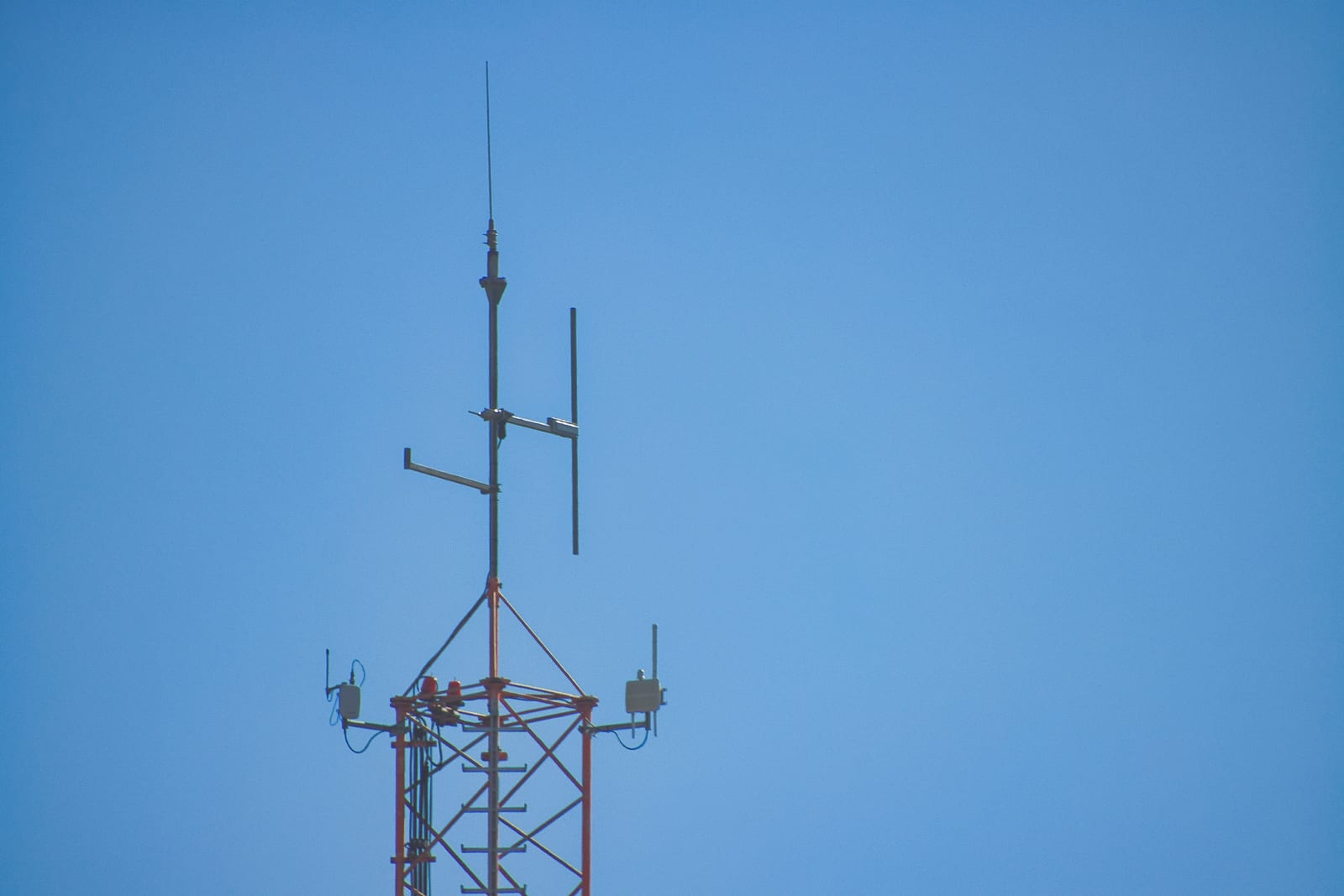
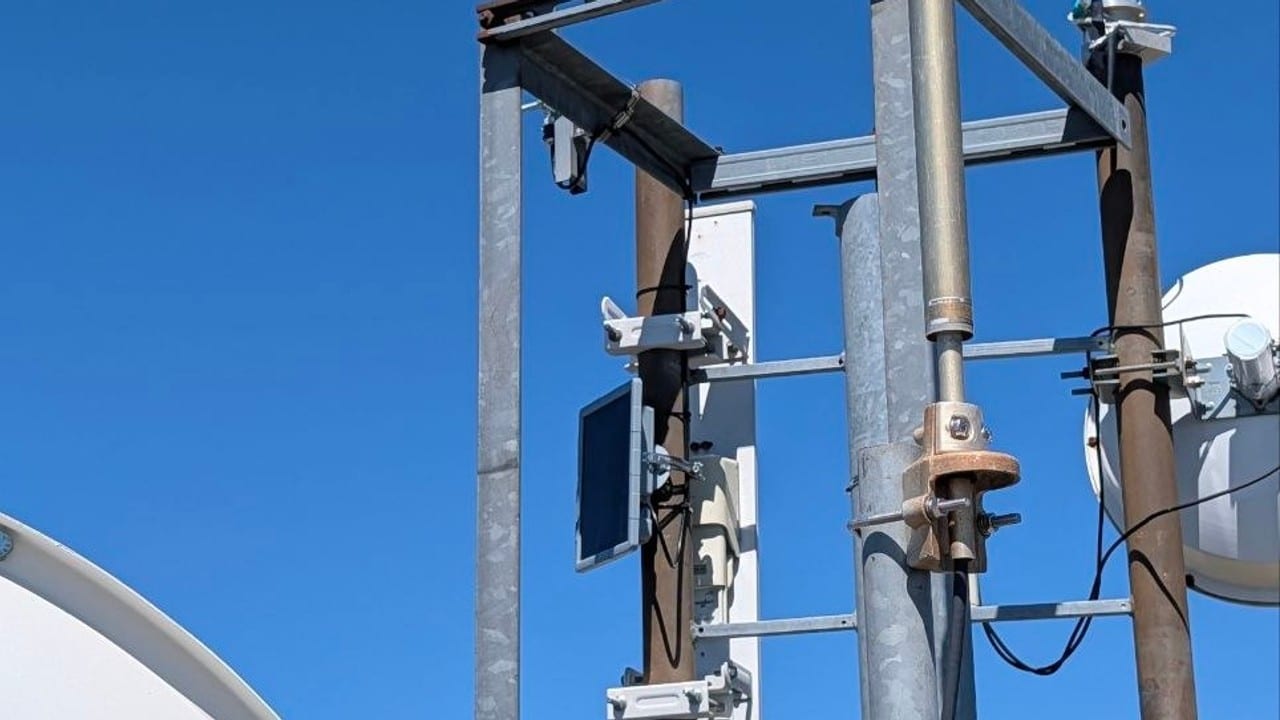
One detail that is easily misread: the Dobratsch has only medium traffic despite its position. That is not a shortcoming. Two older sites simply pass the same packets along faster, which leaves nothing for the newcomer to do. In a mesh network, little traffic does not mean "bad" but often just "quiet area" or "quicker neighbour". The title image of this article, incidentally, shows exactly that site: the mast on the Dobratsch, with the small solar panel and the enclosure between the big dishes.
Across the border
The most interesting site is the Göriacher Alm in the lower Gail valley. It has 33 direct neighbours, four of them in Slovenia: Krvavec at 78 kilometres, Kriška gora at 61, Dobrča at 52 and Zabreška planina at 46 kilometres. Through this one site Carinthia hangs off the Slovenian network, in which 56 nodes are recorded.
To the east the Koralpe takes over. From there the network reaches into Styria and as far as the Hochwechsel in Lower Austria, 109.2 kilometres away.
Notable is how Italy is connected, namely not via Carinthia. The Italian cluster in the Veneto and around Gorizia hangs off the network through Slovenia. The straight-line distance would be shorter, but radio waves follow mountains, not maps.
Eight people, many hands
Behind the 32 sites stand at least eight different operators. Each decides for themselves where their device goes and how they run it; coordination happens voluntarily at most. Some of it is purely private initiative, elsewhere somebody has chipped in.
One example of that: at four sites the hardware came from the association KÄRNTEN FUNKT, which in turn had it sponsored. In early August a delivery arrived from Strali Solutions, including three solar-powered outdoor nodes and a further solar node with panel, plus handhelds and a few smaller boards. The association documented that publicly, along with the reasoning behind it: handhelds are rarely in short supply, fixed infrastructure is. Those sites are nonetheless put up and looked after by individuals, just like all the others.
What tends to get lost amid all the number-counting: there is no provider, no funding and no mandate, and there is nobody who ordered any of this. Every one of these boxes is up there because somebody carried it up, mounted it and connected it, in their spare time and mostly without anyone taking notice. The forwarding figures in the table above are ultimately the receipt for a few afternoons of hillwalking with tools in the rucksack.
What has grown around it
A small support structure now belongs to the radio network. It did not emerge in one place but in various corners of the community, and all of it is open to anyone:
- #kf, an open channel that KÄRNTEN FUNKT runs in the MeshCore network. It is one of several; across regions people still meet in the Public channel.
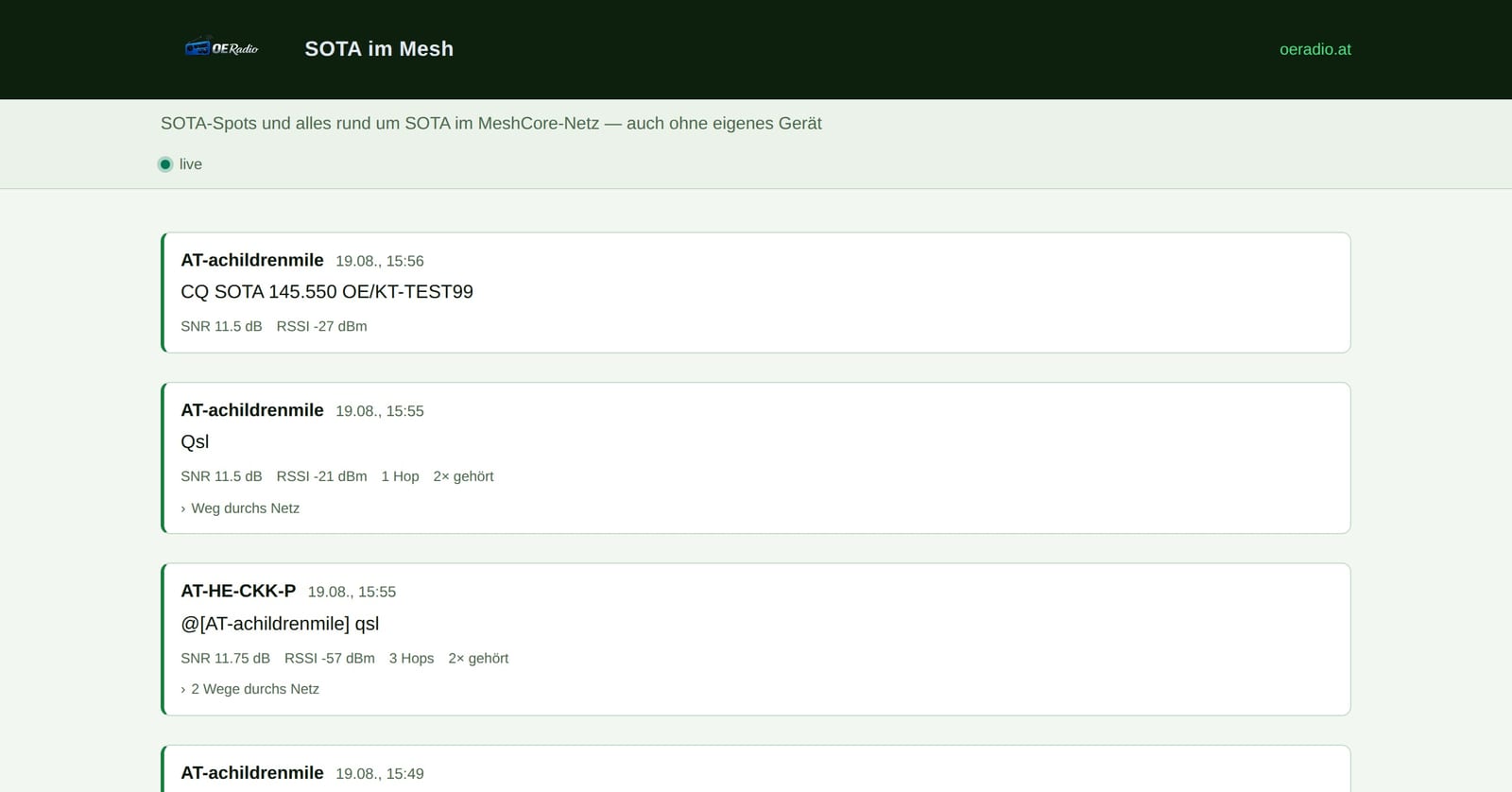
- mesh.kaernten-funkt.at, where that channel can be read live in a browser, without a device and without signing up. If you want to know whether the whole thing is for you, just watch there for a week.
- wiki.carinthiamesh.com, the initiative's wiki. It has existed considerably longer than the latest build-out; the people around the Koralpe and Klagenfurt started it. By now it holds 24 pages, among them the repeater list, a device list with prices, troubleshooting and sensors.
What it offers anyone
You need not be a radio amateur and you sit no exam. A device costs from about 20 euros, after which there are no fees, no contract and no provider who will eventually switch it off. Two devices talk to each other for as long as they have power.
In everyday terms that means short text messages where the mobile network ends. On a mountain hut, in the gully behind the ridge, on a tour, across the grounds at a club event. Via a repeater on a mountain, two or three kilometres of handheld range quickly become an entire valley. It is no replacement for a phone, being too slow for that and text only. But it works without everything that usually sits between two people.
On top of that comes the part that is hard to explain and easy to experience: you write "hello" into a channel, and a few kilometres away somebody you have never heard before answers, over a connection involving no provider and no data centre. For many people that is exactly why trying it out turned into a hobby.
Sixteen sites are on the list
The planning list currently holds 16 sites, from vague notion to "under construction". It reaches well beyond Carinthia: Golzentipp in East Tyrol, Hochkönig and Untersberg in Salzburg, the Edelweißspitze on the Grossglockner High Alpine Road, the Zirbitzkogel in Styria.
At four of those sites the person is missing. They are pure suggestions from terrain analysis: the map says a repeater there would help a great deal, but nobody has yet come forward to climb up. A ready-to-run spare device is waiting. Whoever has a suitable site gets the hardware.
What makes a site suitable is unspectacular: a clear view into the valley or over a ridge, power or a sensible solar solution, and permission to mount something. An attic with a south-facing window has already achieved more than many a summit.
Joining in
The network grows exactly as far as people build it. Four ways in, from non-committal to hands-on:
- Watch. Read along on mesh.kaernten-funkt.at for a week and follow the traffic in the live view of the map, both without a device and without signing up. If you are still interested afterwards, the rest is worth it.
- Switch on a device. A board for 20 to 60 euros, the right radio parameters, and into the channel. Every device that listens makes the network more useful for everyone else.
- Report your range. Anyone who notes down where they reach which repeater fills a gap hardly anyone is filling: for most sites nobody knows exactly what area they cover. Such measurements are unglamorous and worth more for planning than any simulation.
- Offer a site. An attic with a view down the valley, a hut, a mast, a company roof. If you have the spot, you need not buy the hardware yourself, a ready-to-run device is waiting.
Questions are sorted out fastest where the devices are actually running: in the Telegram group Kärnten Funkt – MeshCore or on the initiative's Discord server. Both are open to anyone.
To have a look for yourself: the map of all sites is at map.carinthiamesh.com, the ongoing traffic in the live view, the channel to read along at mesh.kaernten-funkt.at, the guides in the wiki. One of the associations taking part is KÄRNTEN FUNKT, though you need not be a member of anything to get on the air.
How MeshCore compares with the other licence-free systems is set out in PMR, Meshtastic and CB radio compared, and anyone looking at all this from an emergency communications angle will find the sober framing in blackout preparedness.
73 – your oeradio.at editorial team
Transparency Notice
All figures in this article come from an analysis of the map API at map.carinthiamesh.com, the neighbour data of the nodes and the public site list, as of 16 August 2026. Distances are observed radio links, not calculated lines of sight. The number of active sites reflects what the four observers hear, which makes it a lower bound and not a full survey. The title image shows the site on the Dobratsch, photo: Michael, OE8YML. This article was written with the support of AI (Claude, Anthropic) on the basis of that data and reviewed by the oeradio.at editorial team. Corrections, additions and measured coverage areas are welcome at [email protected].