Week 34 / 2026 | 17–23 August | SFI now 117, NOAA 27-day 100–115 | SSN 95 | A 6, K 2 | Kp Mon/Tue up to 4, G1 possible | Source: NOAA SWPC / hamqsl.com
Summary
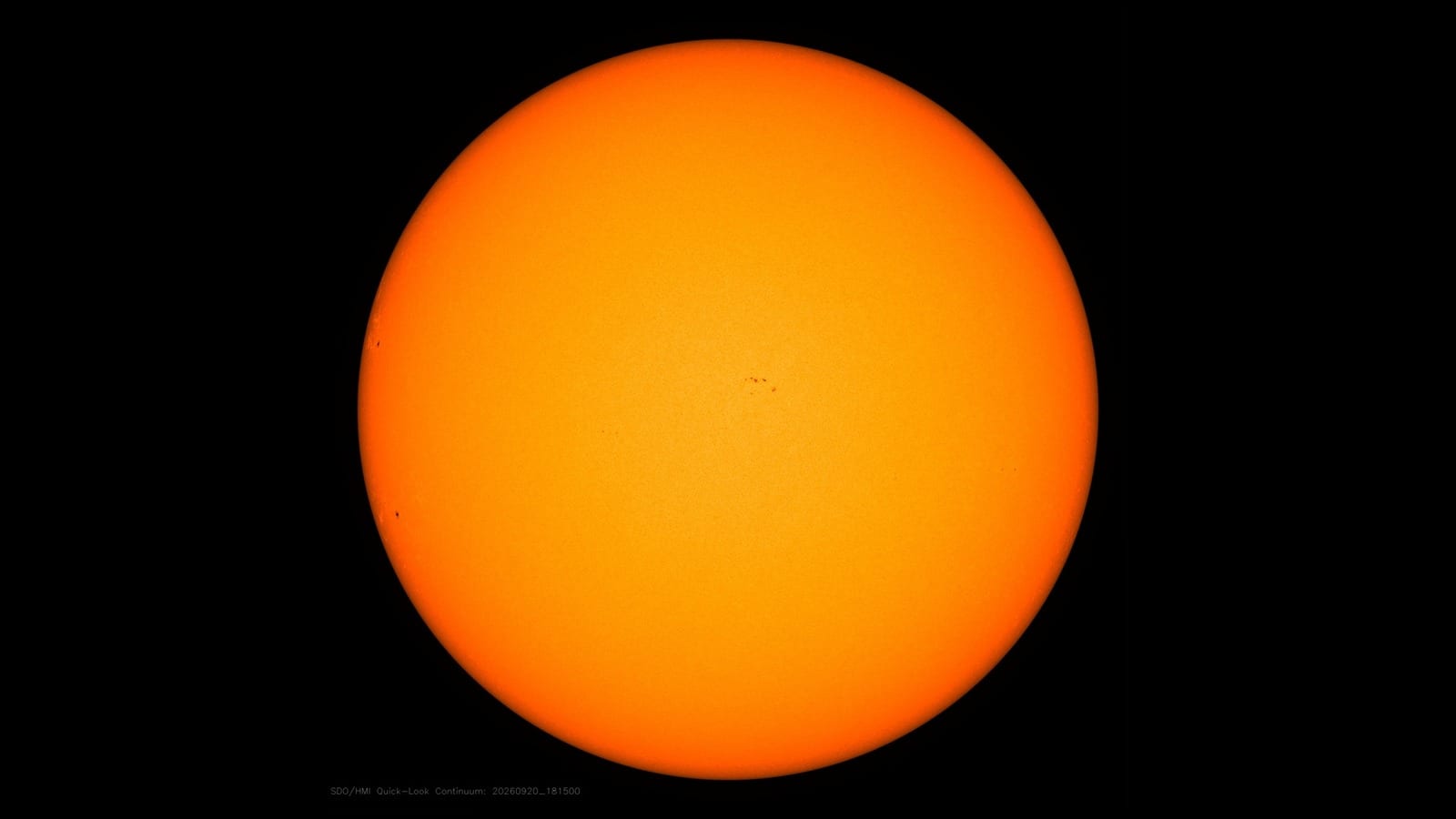
The recovery came just as fast as the slump. A week ago the solar flux stood at 94, the lowest value in months. Since then it has risen every single day: 95 on Monday, 96 on Tuesday, 100 on Wednesday, 108 on Thursday, 114 on Friday, 117 on Saturday — and that is where it still stands today. The sunspot number climbed from 41 to 111 and currently reads 95. The X-ray background is even more telling: from B2.4 a week ago to B8.7 today. That is nearly four times as much, and the more honest indicator that something is happening on the Earth-facing side again.
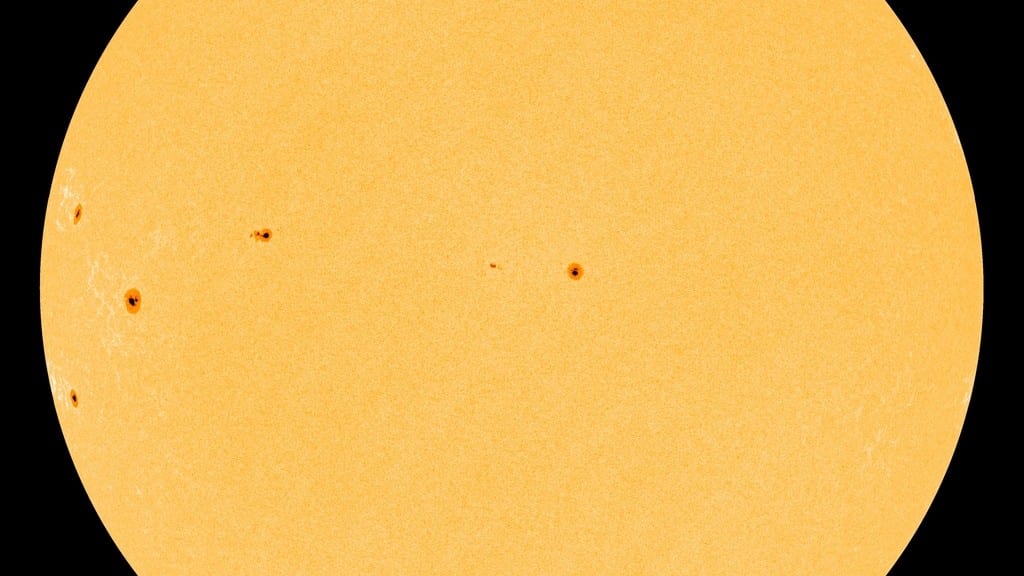
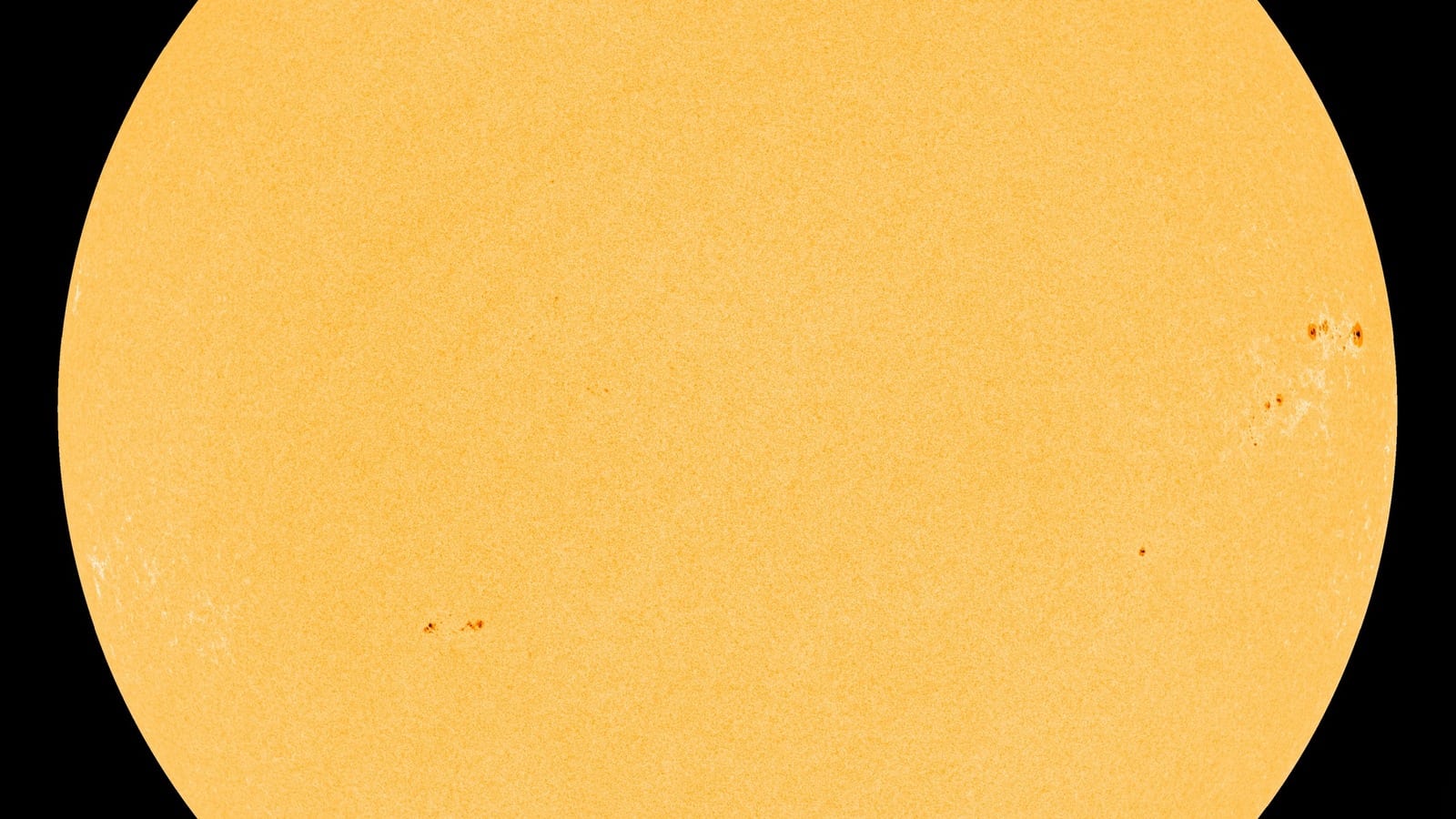
The reason is the same as for the slump, only with the sign reversed: there are regions again. SWPC lists four spot groups in beta configuration, three of which grew over the past 24 hours — 4507 (N04W15), 4506 (N11W31) and the newly numbered 4512 (S19W15). The heaviest of them is Region 4508 (N08E15), which produced a C3.3 flare on Saturday morning. It still sits east of centre, so it will only turn fully towards us over the coming days.
For week 34 the NOAA 27-day outlook shows 100 to 115. That number was computed on 10 August, when the flux stood at 95 — which makes it probably too low rather than too high. We are setting a corridor of 115 to 130, with the upper end mid-week when 4508 is central. One caveat we brought upon ourselves last week: 4506 already sits at W31 and is drifting towards the west limb. Whatever it contributes to the flux, we lose again towards the weekend. The arithmetic only works as long as the eastern regions deliver.
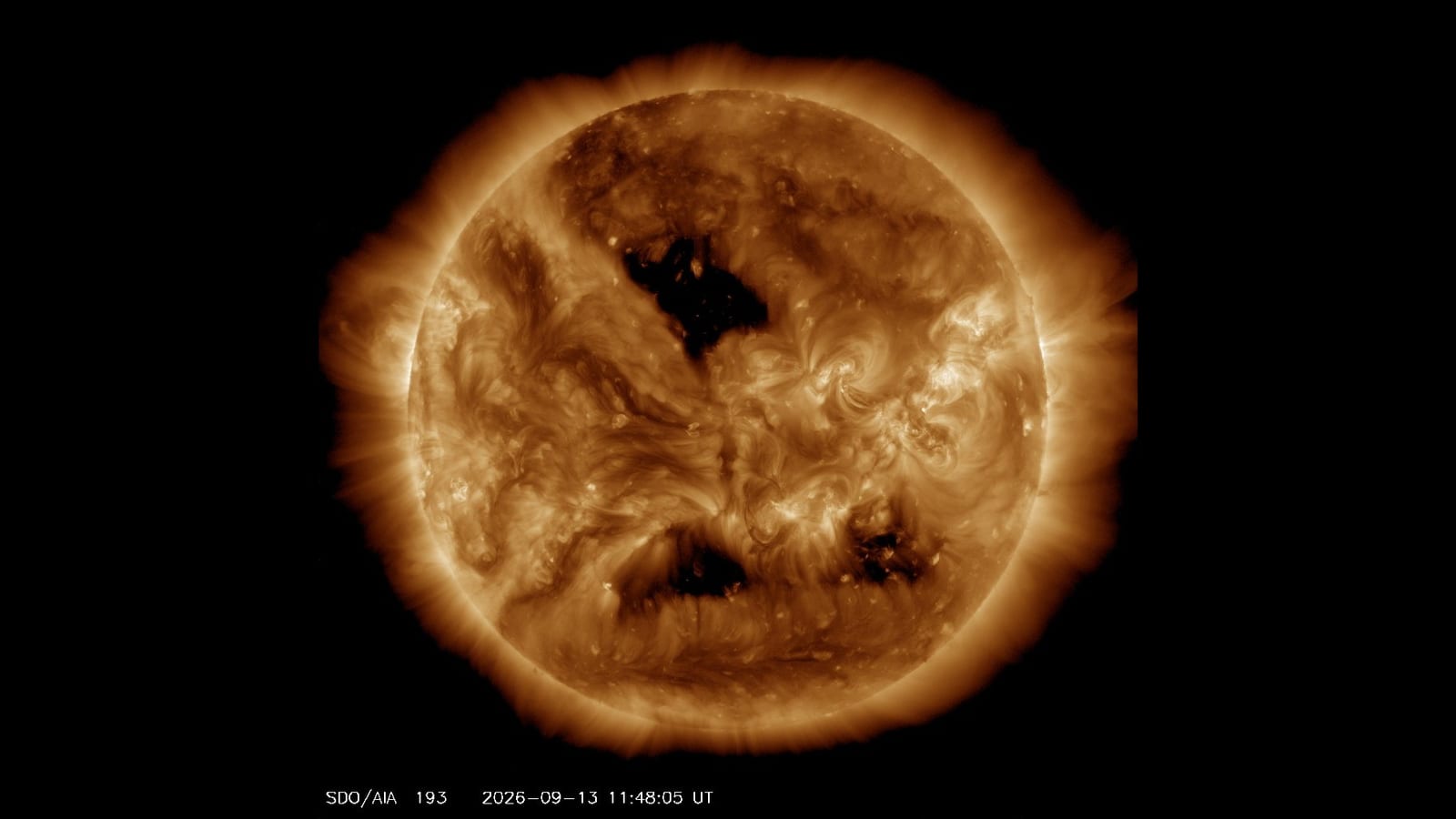
Geomagnetically, the start of the week is the building site. A CME left the Sun on 14 August, and SWPC expects the solar wind effects on Monday and Tuesday: active conditions with a chance of a G1 storm. The three-day forecast issued on Sunday morning puts the planetary Kp for Monday at up to 4.00. On top of that comes a second item that the 27-day table derives from solar rotation recurrence: for 19 August it shows A 20 and Kp 5, which points to a recurrent coronal hole stream. Two occasions in three days, then. From Thursday the field should settle down and stay settled.
The bottom line: the first week since the beginning of August in which HF is fun again — with a subdued Monday and Tuesday as the drawback.
Band forecast
With a flux around 120, 17 and 15 m come back, and the noise floor has dropped noticeably: hamqsl reports S1–S2 instead of last week's S2–S3. The sporadic E season is still over; on 6 m nothing runs except meteor scatter.
| Band | Day | Night | Comment |
|---|---|---|---|
| 160m | Poor | Fair | Nights are getting longer, QRN is falling — the first usable nights of the season |
| 80m | Poor | Good | Solid within Europe from dusk, DX in the second half of the night |
| 40m | Fair | Good | Reliable as ever — NA window late evening, the gray line is worth working |
| 30m | Good | Good | Usable around the clock, the quietest band of the week |
| 20m | Good to very good | Fair to good | Main band, open well into the evening at a flux of 120 |
| 17m | Good | Poor | Coming back — reliable in the afternoon, clearly better than last week |
| 15m | Fair to good | Poor | Midday and afternoon openings towards the south and south-east |
| 12m | Fair | Poor | Short windows around midday, more with FT8 than with SSB |
| 10m | Poor to fair | Poor | On days with a flux above 125 southern openings are possible, otherwise silent |
| 6m | Poor | Fair (meteor scatter) | The Perseids are fading, usable morning rates remain until about 24 August |
Geomagnetic forecast
Monday and Tuesday are shaped by the CME of 14 August; for Wednesday the 27-day table additionally flags a recurrent stream. We are deliberately setting the first two days a little higher than the plain three-day forecast, because in our experience a CME arrival is modelled early more often than late.
| Day | Kp expected | SFI forecast | Assessment |
|---|---|---|---|
| Mon 17 Aug | 3–4 | ~118 | CME arrival, active phases, G1 possible — upper bands subdued, aurora chance in the north |
| Tue 18 Aug | 3–4 | ~120 | Aftermath of the disturbance, recovery during the day, still unsettled in the evening |
| Wed 19 Aug | 3–5 | ~122 | 27-day shows A 20 — possible coronal hole stream, the least certain day of the week |
| Thu 20 Aug | 2–3 | ~125 | The field settles, 20 and 17 m carry cleanly again |
| Fri 21 Aug | 2 | ~125 | Quiet, the best day for DX on the upper bands |
| Sat 22 Aug | 2 | ~120–125 | Quiet, 4506 turns over the west limb — the flux begins to crumble |
| Sun 23 Aug | 2 | ~118 | Quiet, stable conditions to end the week |
Why the flux is back
Last week we wrote in this spot that a high flux is not a state but the effect of specific spot groups, and that a group near the west limb is a notice of decay. This week delivers the counterpart, and it is worth a closer look, because there is something in it for the rest of the cycle.
- New regions do not form at the limb, they appear there. The Sun rotates once in roughly 27 days. What shows up at the eastern limb today faces us fully in a little under a week. Region 4508 sits at E15 and is thus almost central — its contribution to the flux is not yet exhausted.
- The X-ray background is the more honest early indicator. The jump from B2.4 to B8.7 says more about the state of the corona than the spot number, which depends heavily on how the groups happen to be counted.
- Beta means active, not dramatic. All four regions are beta groups, none with a complex magnetic field. That means C flares yes, the occasional R1 possible, but no basis for the big events. SWPC gives 15 percent for R1–R2 through 18 August.
- In practice: a flux around 120 is not a return to July's 150s, but the difference between 97 and 120 is immediately audible on 17 and 15 m. Anyone who got no further than 20 m last week should look higher again this week.
Recommendations for the coming week
- Monday and Tuesday: stay low. While the CME disturbance runs, 30 and 40 m are the reliable choice. At high latitudes an active field makes aurora worth a look.
- From Thursday, test the upper bands. A quiet field plus a flux around 125 is the best combination since late July. 17 m in the afternoon, 15 m at midday towards the south, and on good days a quick listen on 12 and 10 m.
- Take the low bands seriously. Nights have grown roughly an hour longer since the beginning of August, and the noise floor has dropped to S1–S2. 80 m is fit for DX again at night, and the gray line is moving into usable hours. If you have a receive antenna, this is when you notice the difference.
- 6 m: the Perseids are fading, but they are not gone. Until about 24 August the shower still delivers usable rates between 02 and 08 local time, plus the sporadic background. That is plenty for MSK144 on 50.260 MHz — how it works in practice is in our WSJT-X article.
- Wednesday is the wobbler. The 27-day table shows A 20 there, the three-day forecast does not reach that far yet. If you have plans for that day, check the current solar wind data in the morning rather than this table.
- A quick look before switching on. With a flux that has moved 23 points in a week, any weekly forecast is a snapshot. The RBN shows in thirty seconds which band is actually open, and VOACAP works it out for your own station.
Looking back at week 33
On the flux we were right, but too cautious. We named a corridor of 95 to 110 with a slight upward tendency towards the weekend, and explicitly called the NOAA forecast of 105–115 too optimistic. In fact the flux ran from 95 on Monday to 117 on Saturday — it broke through our upper limit on Friday and ended up above the very NOAA figure we had considered too high. The direction was right, the slope was not.
That is notable because we had made the opposite mistake a week earlier. Both times the cause was the same: we extrapolated the current reading instead of asking what is coming up on the Sun. In the week before, the load-bearing region turned over the west limb; this time four new groups rotated in.
Geomagnetically the week was unspectacular and our forecast a shade too gloomy. We had set Kp 3–4 for Monday because we expected a recovery day after Saturday's G1 and an announced second CME passage. The planetary Kp did not get above 2.0 on Monday and the A index came in at 5. The announced second passage never materialised. The rest of the week matched: quiet to slightly unsettled, with the small bump mid-week (A 8 on Wednesday, exactly as in the 27-day table); the peak was Kp 3.3 on Tuesday.
The Perseids delivered what could be expected of them. Anyone out on 6 m during the maximum night had the best conditions of the year for MSK144, with a new moon and a quiet field.
vy 73 and gud DX — your DX weather desk
Transparency Notice
This outlook was produced with the support of AI (Claude, Anthropic) on the basis of public space weather data: the NOAA SWPC 27-day outlook (as of 10 August), the three-day forecast and forecast discussion (both 16 August, 00:30 UTC), Daily Solar Data and Daily Geomagnetic Indices, plus the current readings from hamqsl.com (16 August, 11:06 UTC). The title image is AI-generated. Forecasts are uncertain by their nature — actual conditions may differ. Questions or corrections? Write to us at [email protected].