Week 36 / 2026 | 31 August – 6 September | SFI now 116, NOAA 27-day 120 falling to 90 | SSN 82 | A 15, K 2 | Kp 2–3 expected Monday to Sunday | X-ray B5.0 | Source: NOAA SWPC / hamqsl.com
Summary
The week opens with two opposing pieces of news: the magnetic field is calming down, the flux is not. The solar flux fell from 143 on 24 August to 116 on 28 August within five days — via 132, 131 and 122, so no outliers, a clean slide downwards. The X-ray background sits at B5.0, well below the C threshold, and hamqsl reports noise at S1–S2.
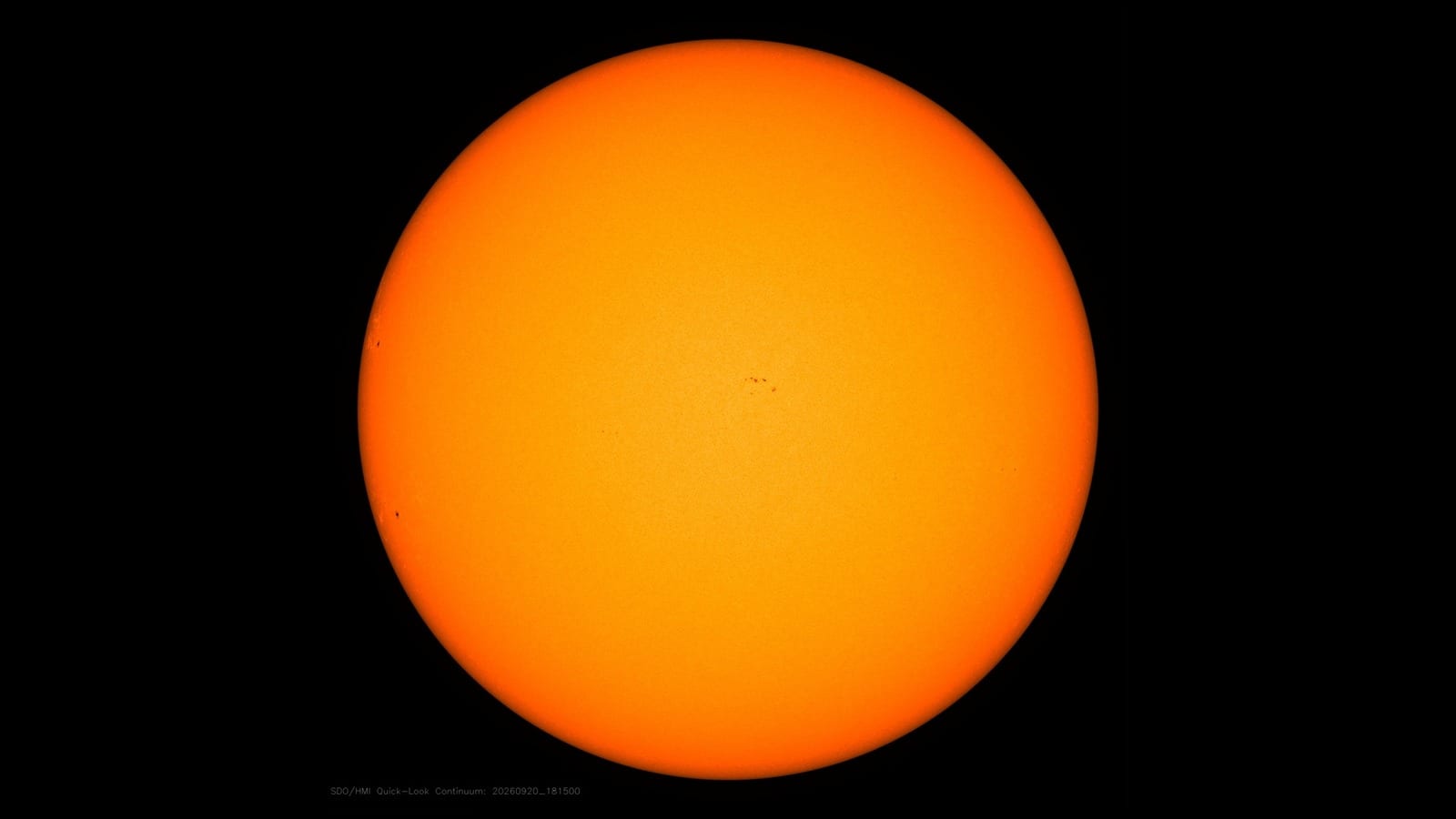
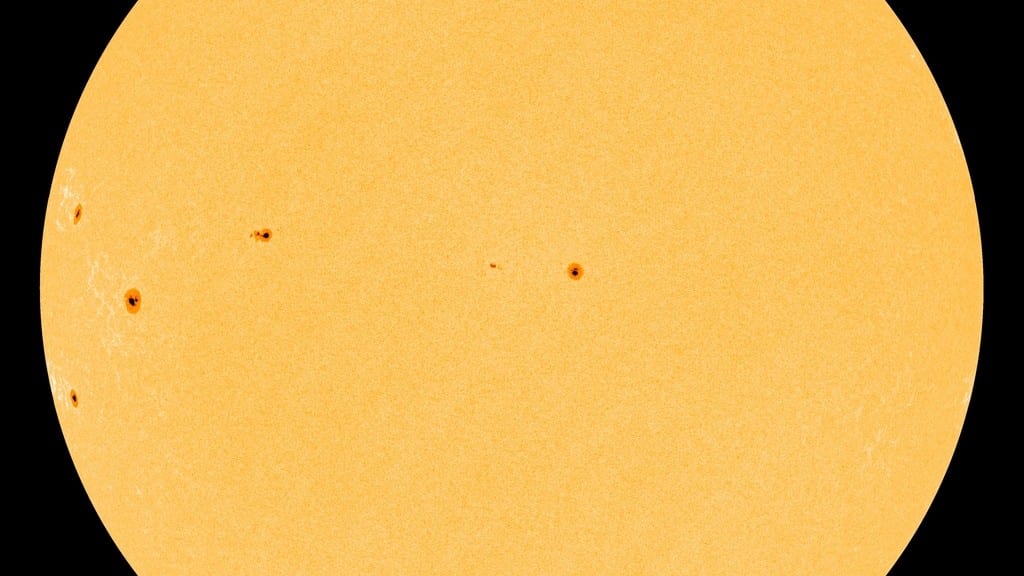
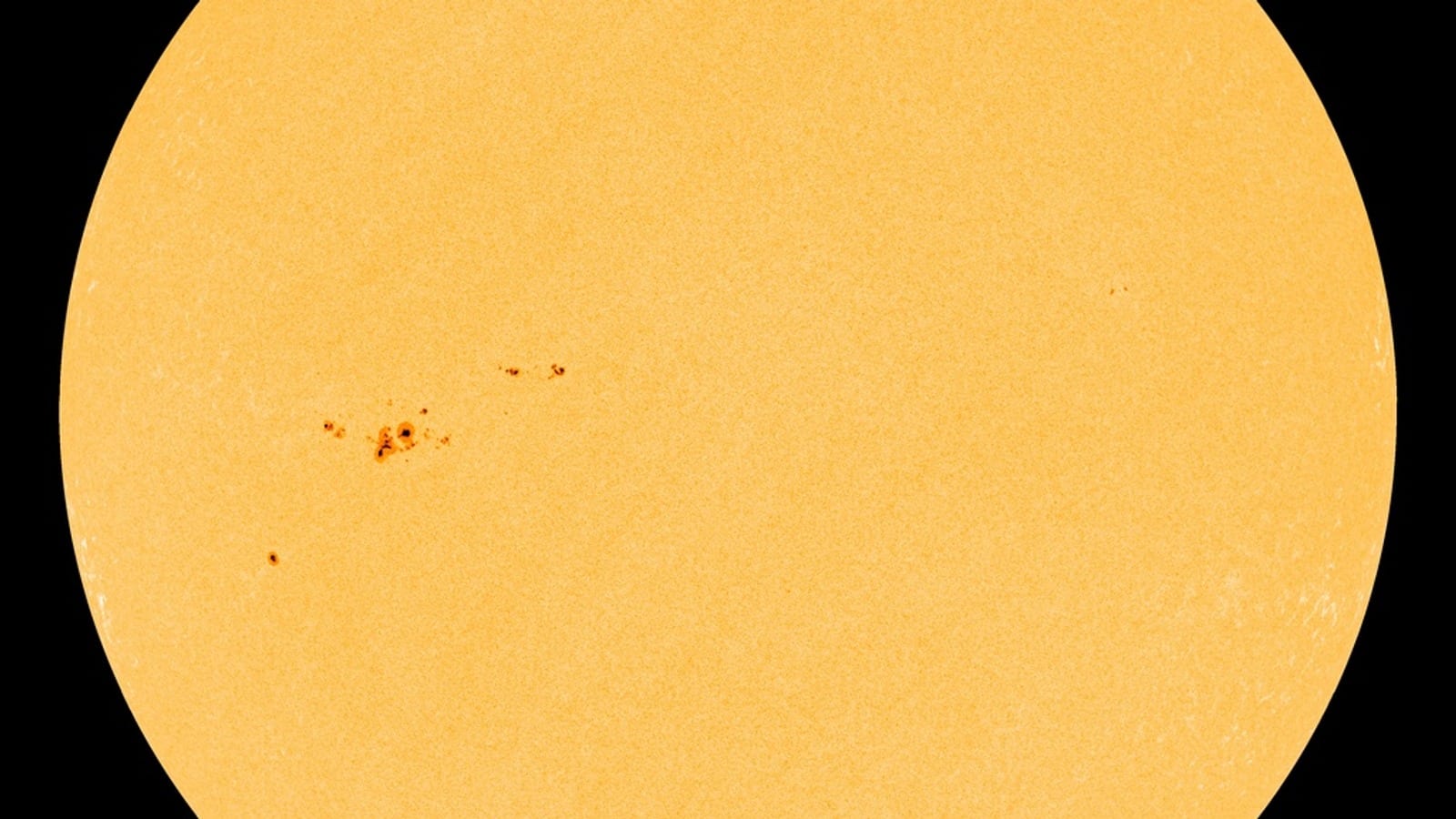
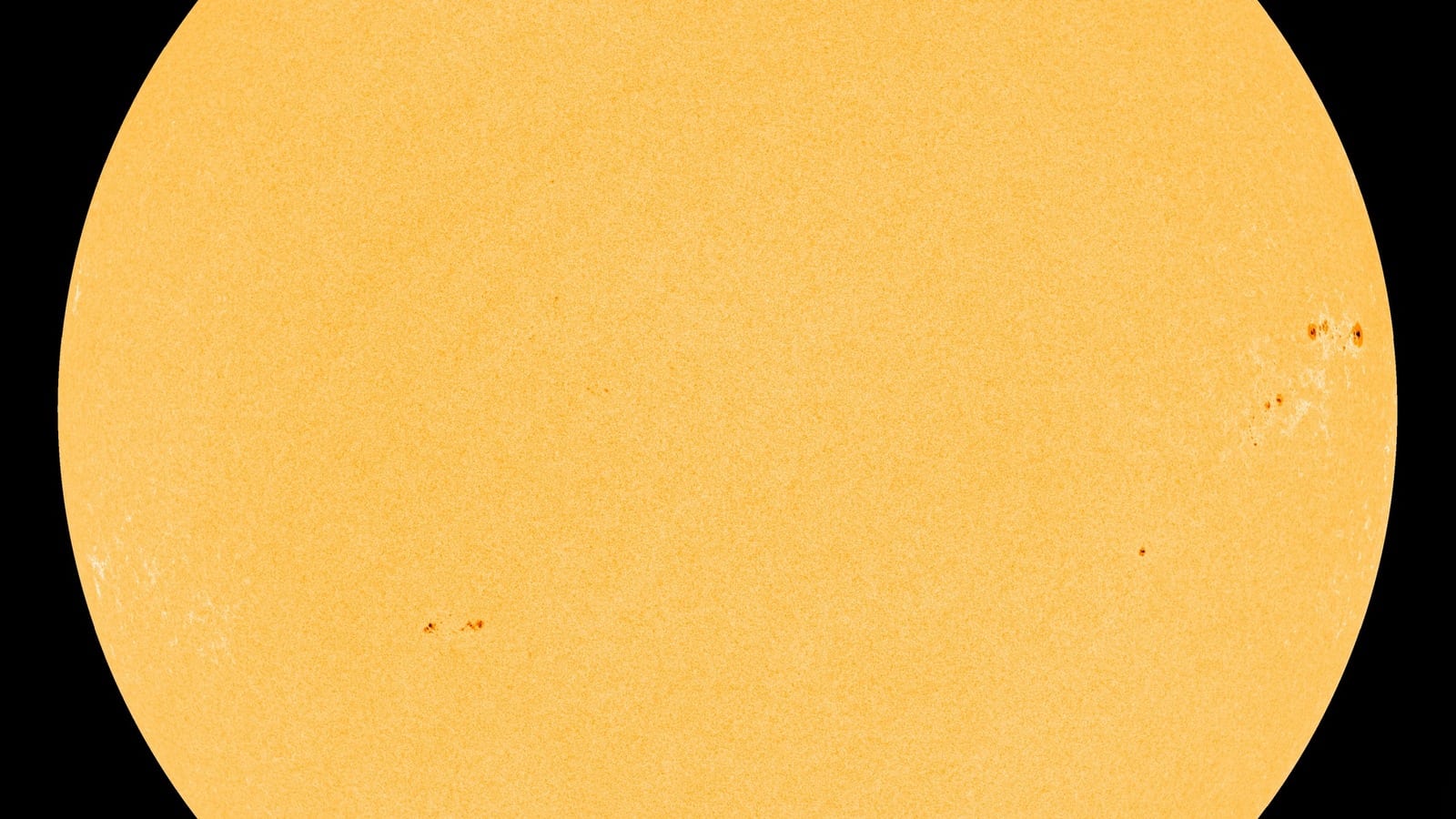
The reason is in the lead image. The two groups that carried the flux for the past two weeks have arrived at the upper right: 4517 was at N09W58 on 28 August and had already reached W64 a day later, 4513 is at N04W43. Both will rotate over the west limb in the coming days and take their radiation with them. 4517 is by far the larger, with an area of 150 millionths and seven spots. What is coming around from the east limb is thin so far: 4518 (N08E19), 4519 (N27E25) and 4520 (S13E34) together contribute twelve spots and 40 millionths. The mechanism we have been describing here for weeks is working in the unpleasant direction this time.
The 27-day outlook reflects that: 120 at the start of the week, 115 on Wednesday, 100 on Thursday, 95 on Friday and Saturday, 90 on Sunday. We consider that realistic and only raise the start of the week slightly, because the flux is already below the NOAA figure at 116 today and the table dates from 24 August. Our corridor for the week: 105 to 120 at the start, 90 to 105 from Thursday on.
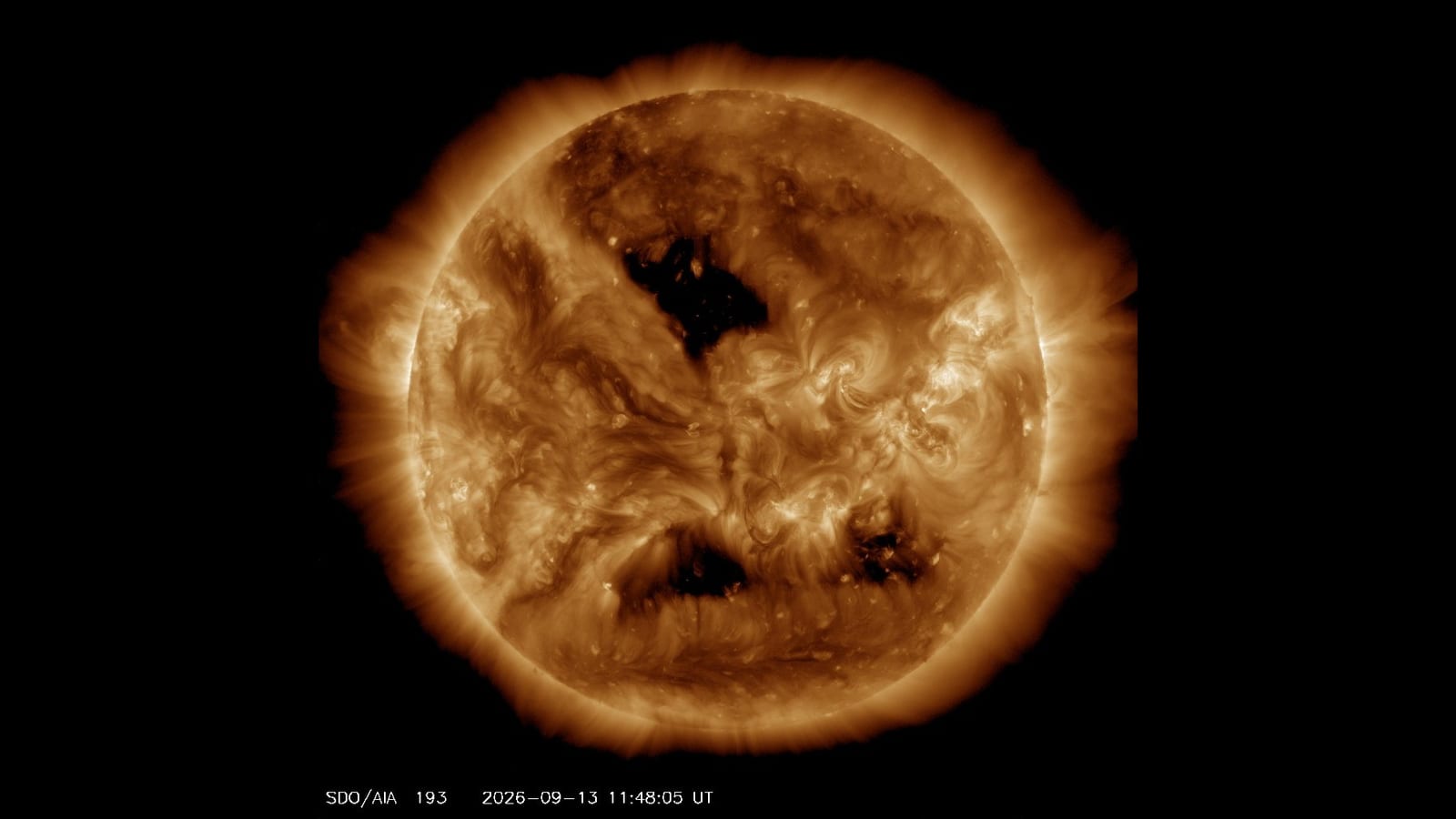
Geomagnetically, by contrast, the week is relaxed — after an unsettled night. On Saturday 29 August the field rose to active levels under the influence of a positive-polarity coronal hole, joined by the CMEs that left the Sun on 25 and 26 August. The total magnetic field reached 15 nT, the Bz component went as far south as −13 nT, and the solar wind rose from 280 to 440 km/s. SWPC expected a Kp of 5.67 for Saturday evening between 21 and 24 UTC, i.e. a G2. Active conditions are still on the cards for Sunday; from Monday SWPC expects a mostly quiet field.
For the new week that means the risk of disruption no longer sits at night but during the day. SWPC gives 25 per cent per day for R1–R2 radio blackouts and 1 per cent for an X flare. No Earth-directed CMEs are currently visible in coronagraph imagery.
And then there is the calendar. The equinox falls on 22 September, and the weeks before it are traditionally the best DX season of the year on the middle bands. Both hemispheres are illuminated evenly, the ionosphere along north-south paths is symmetrical, and D-layer absorption drops as the Sun gets lower. A flux of 100 in September is worth more on 20 and 17 m than a flux of 120 in July. That offsets a good deal of what the Sun is taking away this week.
Band forecast
A falling flux with a quiet field shifts the action downwards. 20 m remains the workhorse, 17 m becomes an afternoon band with shorter windows, and 15 m is only usable in the first half of the week. In exchange the nights are getting noticeably longer and the low bands are coming back.
| Band | Day | Night | Note |
|---|---|---|---|
| 160m | Poor | Fair to good | Season starting, QRN down, clearly better after 3 September |
| 80m | Poor | Good | Clean with a quiet field, DX in the second half of the night |
| 40m | Fair | Good to very good | Band of the week, NA window late evening, gray line worthwhile |
| 30m | Good | Good | Usable round the clock, benefits from the equinox |
| 20m | Good | Fair to good | Main band, holds up even at flux 100, open longer in the evening |
| 17m | Fair to good | Poor | Afternoons, window shortens from Thursday |
| 15m | Fair | Poor | Mon–Wed midday towards the south, sporadic only once flux drops below 100 |
| 12m | Poor to fair | Poor | Short midday windows, realistically FT8 only |
| 10m | Poor | Poor | Quiet at this flux, F2 only returns with a clear recovery |
| 6m | Poor | Fair (meteor scatter) | End of the Es season, meteor background 03–08 local |
Geomagnetic forecast
The 3-day forecast of 29 August, 12:30 UTC, gives a maximum Kp of 5.67 for Saturday night and active conditions for Sunday, mostly quiet from Monday. The 27-day outlook shows A 5 to 8 and Kp 2 to 3 for the whole week. We adopt that but set Friday and Saturday slightly higher, because the coronal hole that disturbed this weekend returns in a good 27 days — and the table already shows A 8 for 4 and 5 September.
| Day | Kp expected | SFI forecast | Assessment |
|---|---|---|---|
| Mon, 31 Aug | 2 | ~112–120 | Field settles, best day for 15 and 17 m |
| Tue, 1 Sep | 2 | ~110–118 | Quiet, 4517 at the west limb, upper end still usable |
| Wed, 2 Sep | 2 | ~105–115 | Quiet, transition, 20 m takes over |
| Thu, 3 Sep | 2 | ~98–108 | Quiet, flux below 110, top bands thinning out |
| Fri, 4 Sep | 2–3 | ~92–102 | Slight unrest possible, low bands good in the evening |
| Sat, 5 Sep | 2–3 | ~90–100 | Recurrent CH possible, 40 and 80 m strong at night |
| Sun, 6 Sep | 2 | ~88–98 | Quiet, flux at its low, 20 m still carries |
Why a flux of 95 in September is no disaster
Because the question of whether "everything is shut" always comes up at this point: no. Flux is only one of several quantities, and in September two of them work in our favour.
- Absorption drops. The D layer is what eats the lower bands during the day. It feeds on a high Sun. The lower the Sun stands, the less attenuation, and that brings 40 and 30 m into play as early as the late afternoon.
- The symmetry is right. Around the equinox the northern and southern hemispheres are illuminated equally. On long north-south paths there is no longer a dark stretch in the middle choking the circuit. That is why the big DXpeditions run in late September and late March, not in midsummer.
- The nights are getting longer. Since the beginning of August the night in central Europe has gained a good two hours. On 160 and 80 m that is operating time, and the QRN drops away with the thunderstorms.
- What is genuinely missing are 12 and 10 m. They need F2 ionisation and therefore flux. Below 100 they stay quiet apart from sporadic openings. Anyone wanting results there waits for the next active region — the 27-day table points upwards again from around 10 September.
- If you want the details for your own station: VOACAP calculates with the actual flux and your own antenna, and what the numbers SFI, A and K actually mean is explained in Understanding propagation conditions.
Recommendations for the coming week
- Work the upper bands in the first half of the week. Monday to Wednesday the flux is still above 105. If you have plans on 15 or 17 m, make them now and not at the weekend.
- Switch to 20 and 30 m from Thursday. Both carry even at a flux around 95, and the equinox helps. 20 m stays open into the evening longer than the flux figure suggests.
- Take the low-band season seriously. 40 m is the most reliable band of the week, 80 m is DX-capable at night. If you are planning a receive antenna, there is still time before the season; the basics are in Low-band DX. The gray line is moving into convenient hours.
- Sudden silence in the afternoon: wait, do not start rewiring. With a 25 per cent daily R1–R2 risk, a brief collapse on the lower bands is more likely than a fault in your own station. Listen again after ten minutes.
- Saturday night was aurora weather. If you did not try anything on 2 m at the weekend: the coronal hole comes back in about 27 days, so towards the end of September. What is possible then is described in Aurora propagation on 2 m.
- Do not guess, look. The RBN shows in thirty seconds which band is actually open. With a falling flux that is worth more than any weekly forecast, including this one.
Review of week 35
We got the flux wrong, and in both directions. We set a quiet corridor of 118 to 128 and wrote that it was "a week without swings that you can plan around". In fact the flux jumped to 143 on Monday — the highest value in weeks and far above our corridor — and then fell to 116 within four days, i.e. below it. The week was anything but swing-free. What we did read correctly was the cause: we pointed to 4513 and 4517, and those are exactly the regions that first delivered the jump and are now rotating off.
On the magnetic field we slept through the weekend. We set Kp 2 for the entire week and for Saturday explicitly "quiet, a weekend with predictable conditions". Monday to Friday that held: A 3, 4, 4, 5 and 1, about as quiet as it gets. On Saturday the field then rose to Kp 4.33 under coronal-hole influence, and SWPC forecast G1 to G2 for the evening. A Kp of 5.67 is the opposite of predictably quiet.
The error is the same one we made back in July: we extrapolated from the 3-day forecast to the rest of the week and did not take the 27-day table seriously enough, which already showed A 10 and A 8 for 28 and 29 August. The numbers were there. We left them in the table and wrote "quiet" in the text. We are taking that lesson into this week and deliberately setting Friday and Saturday higher than the 3-day forecast does.
We were right on the flare question. We wrote that this week's disruptions would come during the day from the sunlit side rather than at night via the magnetic field — until Friday that was exactly the situation.
vy 73 and gud DX — your DX Weather Desk
Transparency Notice
This outlook was produced with the support of AI (Claude, Anthropic) on the basis of public space weather data: NOAA SWPC 27-day outlook (as of 24 August), 3-day forecast and forecast discussion (both 29 August, 12:30 UTC), Solar Region Summary (29 August, 00:30 UTC, observations from 28 August), Daily Solar Indices, and the current values from hamqsl.com (29 August, 17:11 UTC). The lead image shows the Sun in white light on 29 August 2026 at 17:10 UTC, captured by the Solar Dynamics Observatory (NASA/SDO, public domain); the large spot group at the upper right edge is Region 4517, which will rotate over the west limb in the coming days. Forecasts are inherently uncertain — actual conditions may differ. Questions or corrections? Write to us at [email protected].