160 m and 80 m are considered the supreme discipline of shortwave DX. During the day they barely reach beyond your own region, but at night worldwide, intercontinental paths open up. Anyone who pulls weak signals from half a world away out of the noise has reached the most demanding part of the hobby. This article explains why the low bands are so special, how the gray line works, why receiving matters more than power, and what advantages an alpine location in Austria offers.
Why Low-Band DX?
The 160-metre band (1.8 to 2.0 MHz), the so-called Topband, and the 80-metre band (3.5 to 3.8 MHz) behave completely differently from the higher bands. During the day, the ionosphere's D layer absorbs the low frequencies almost entirely, leaving only local and regional contacts. Only when the sun sets and the D layer breaks down does reflection off the higher F layer become possible, and suddenly DX contacts over thousands of kilometres are within reach.
A second point makes the low bands appealing: they are a winter and night affair. In the long, dark nights of the cold season, atmospheric noise is lower and the shared darkness window is longer. In summer, with short nights and plenty of thunderstorm QRN, Topband is tough going by comparison.
Gray-Line Propagation
The most valuable time window is the gray line, the twilight zone between day and night that travels around the Earth as the terminator. In the minutes around your own sunrise or sunset, the attenuating D layer has either already dissipated or has not yet built up, while the reflecting F layer is still carrying. This short window of roughly 15 to 45 minutes delivers surprisingly low-loss paths, often over distances that would be completely closed during the day.
In practice this means: Austria towards North America works best in the evening, when the sun sets here and rises over there. Austria towards Asia and the Pacific works in the morning. On 160 m a stricter rule applies than on 80 or 40 m: both ends of the path must be in darkness at the same time, otherwise the D layer eats the signal. The shared darkness window is the key, and on Topband it is often only brief.
Receiving Is King: Beverage and K9AY
On the low bands, success is decided not by transmit power but by receiving. The transmit antenna is usually a compromise anyway, and the real art is hearing a weak DX signal out of a loud, noisy band. That is exactly what dedicated receiving antennas are for.
The classic is the Beverage antenna, a long, terminated wire just above the ground, typically 200 to 500 m long and aimed at the desired DX. It has almost no gain, but very low self-noise and a pronounced directivity with a 20 to 30 dB front-to-back ratio. The catch: it needs a lot of space, which not everyone has.
For smaller plots, the K9AY loop is the standard recommendation. It was developed by Gary Breed, K9AY, and presented in QST in 1997. It fits inside a circle roughly ten metres in diameter and still produces a directional pattern with a good 20 dB front-to-back ratio, usually switchable in four directions. Because of the low signal level it needs a low-noise preamplifier. How to build such antennas in detail is covered in our own article on receiving antennas for the low bands (Beverage, K9AY and Flag).
The Alpine Advantage
Here Austrian stations play one of their strongest cards. In sparsely populated, alpine locations, man-made QRM is significantly lower than in urban areas: fewer switching power supplies, fewer LED drivers, less industrial interference. This is exactly what low-band reception thrives on. A quiet noise floor makes weak signals audible that would drown in the interference haze elsewhere. Anyone whose shack is far from the nearest village holds a genuine competitive edge on 160 and 80 m that no amplifier in the world can make up for.
Operating Technique
On Topband, CW is the first choice. Telegraphy copes best with poor signal-to-noise ratios, and many DX stations and expeditions operate almost exclusively in CW. SSB is possible, but demands considerably more signal. For power, a simple rule of thumb applies: 100 watts into a good antenna beat 400 watts into a bad one. Time and patience matter more than watts: you listen into the band before your own sunrise or sunset and wait for the window to open. If you want to see where DX is active right now, take a look at the DX cluster (dxsummit.fi).
Frequencies (IARU Region 1)
- 160 m CW: 1830 to 1838 kHz is the DX window, contest operation above it.
- 160 m SSB: from about 1840 kHz upwards.
- 80 m CW: 3500 to 3570 kHz, with the DX window right at the bottom around 3500 to 3510 kHz.
- 80 m SSB: 3600 to 3800 kHz, DX calls mostly around 3790 to 3800 kHz.
Videos: Low-Band DX in Practice
Three videos, from the receiving principle through the K9AY loop to a simple Topband antenna:
Further Reading
- Receiving antennas for the low bands on our site: Beverage, K9AY and Flag in detail
- dxsummit.fi — DX cluster with active spots on 160 and 80 m
- Guide to Low-Band DXing — when and where the bands open up
73 – the oeradio.at team
Transparency Notice
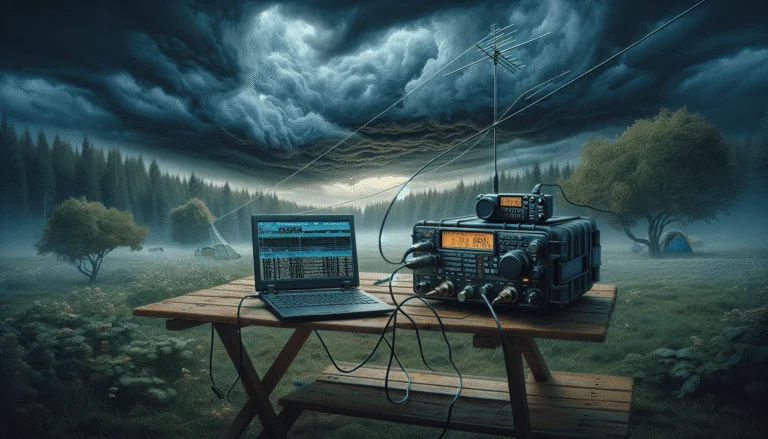
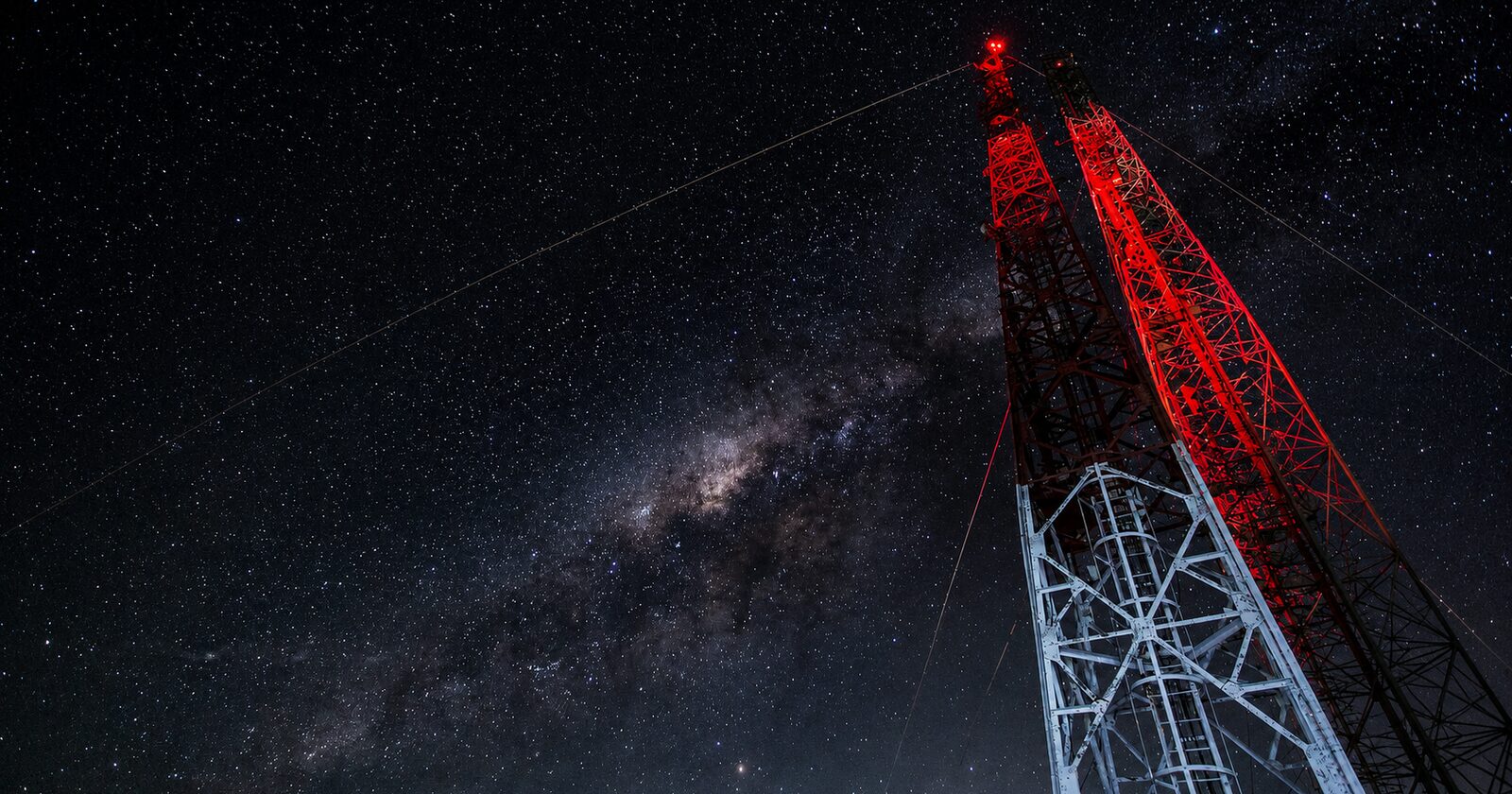
This article was researched and written with the support of AI (Claude, Anthropic). The title image was created with AI (ChatGPT/DALL·E, OpenAI). The content was reviewed by the oeradio.at editorial team and prepared for the Austrian amateur radio community.