Week 35 / 2026 | 24–30 August | SFI now 124, NOAA 27-day 110–115 | SSN 73 | A 4, K 2 | Kp 2–3 expected throughout | X-ray B9.1 | Source: NOAA SWPC / hamqsl.com
Summary
For the first time in weeks there is nothing dramatic to report about the flux, and that is the good news. Since 16 August the solar flux has stayed between 124 and 129 without a break: 129, 124, 125, 126, 125, 126, 124 — and 124 again today. After the slump to 94 at the beginning of August and the recovery last week, this is a week without swings, one you can actually plan around. The X-ray background stands at B9.1 and thus just below the C threshold; hamqsl still reports the noise floor at S1–S2.
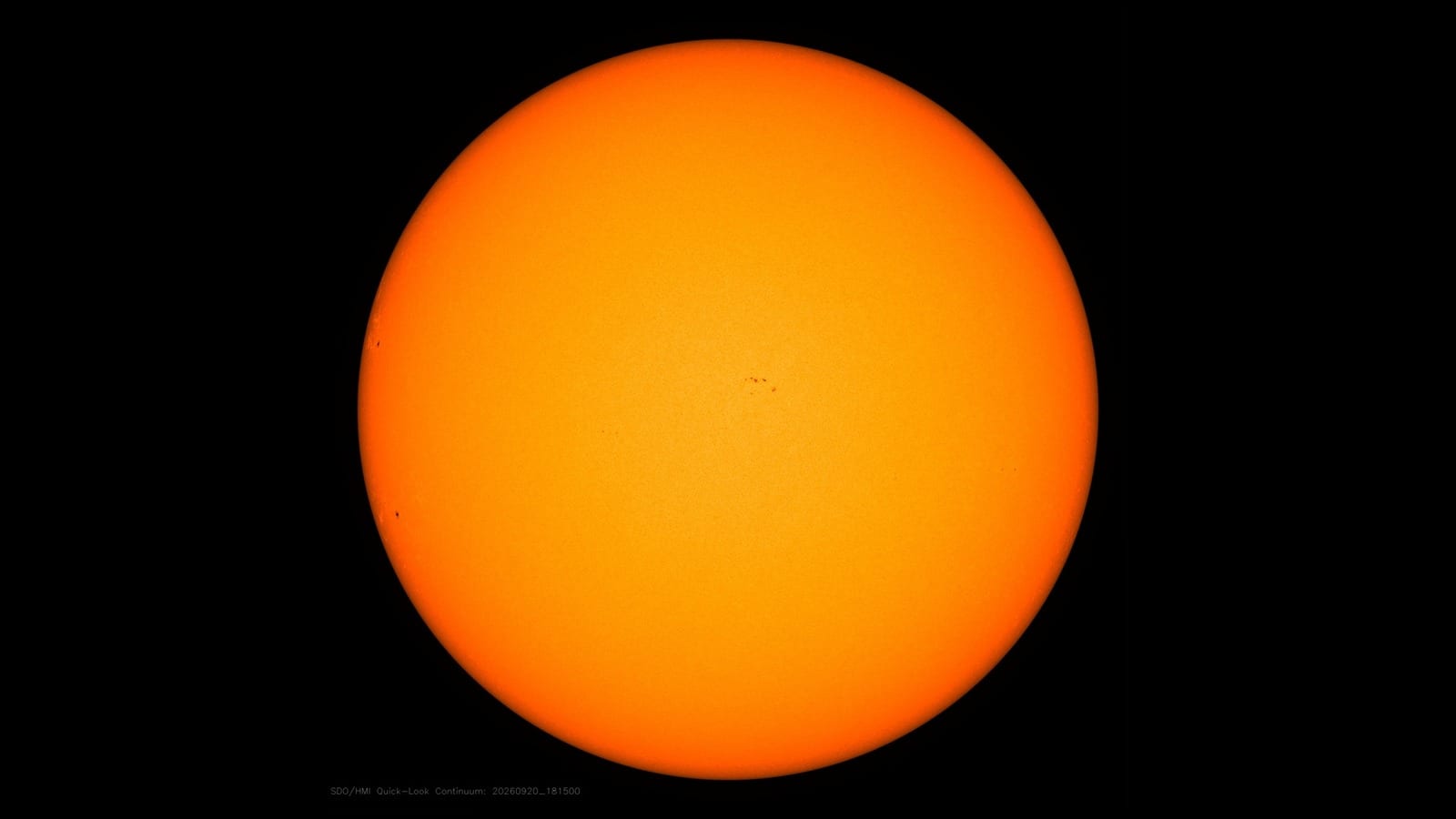
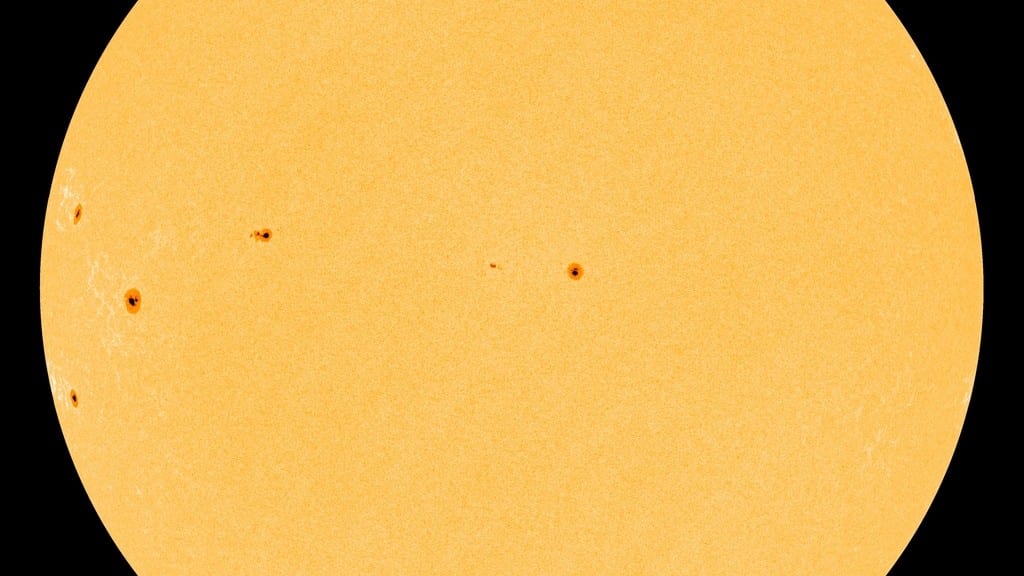
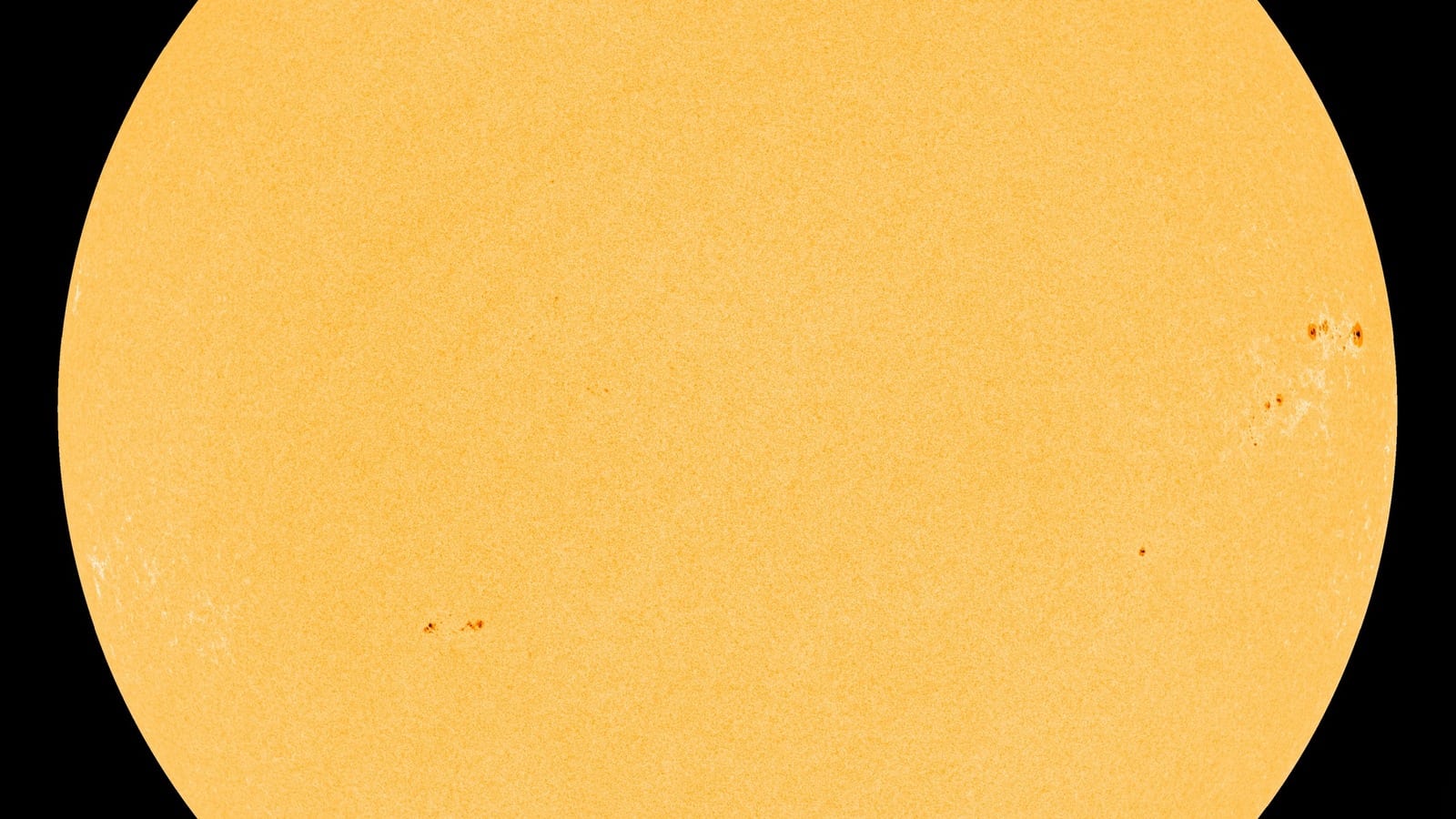
What stands out is the gap between flux and spot count. The sunspot number has fallen from 111 on 15 August to 73 today, the flux has not. That is not a contradiction but a hint about where the radiation comes from: according to SWPC, the old regions 4508 and 4511 have by now decayed into pure plage. There are no spots left to count there, but the bright areas still deliver radio flux.
Geomagnetically the situation is as relaxed as it rarely gets in this cycle. The field has been quiet throughout the past 24 hours, the solar wind is running at background level at around 440 km/s, and the total magnetic field lies between 3 and 6 nT. For 23 to 25 August, SWPC explicitly writes that no transient or recurrent solar wind structures are expected. A filament lifted off at N40E45 on 22 August and produced a narrow CME, but it passes well north of the Sun–Earth line. No Earth-directed CMEs are visible in the coronagraph imagery.
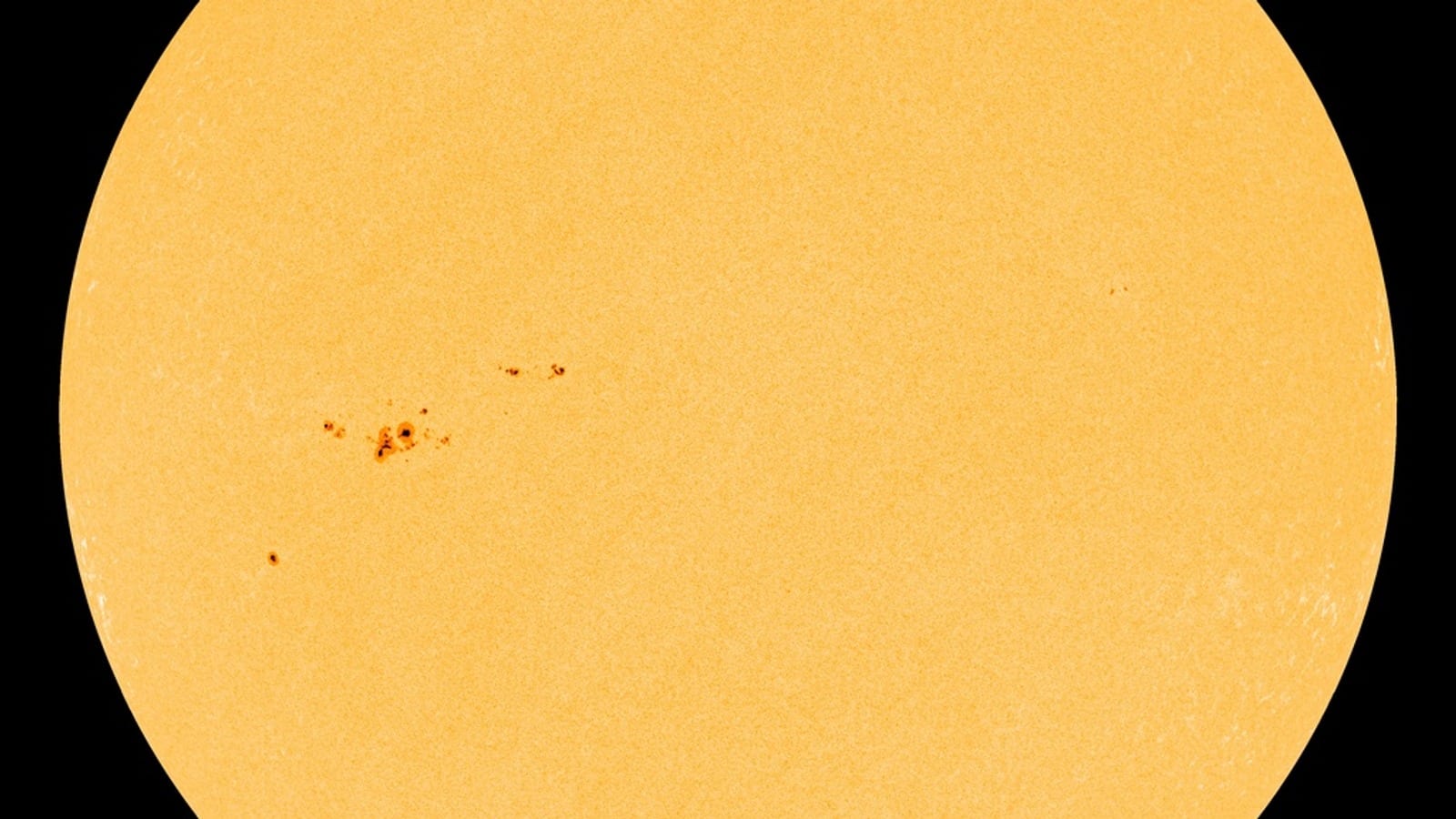
This time the catch is not the magnetic field but the Sun itself. Region 4513 moved from E55 to N04E32 over the weekend, is classified as a beta-gamma group and has produced several C flares in the past 24 hours, the largest a C4.1 on 23 August at 06:53 UTC. On top of that, another group is growing in 4517 (N10E18, beta). For 23 to 25 August, SWPC gives a chance of M-flares (R1–R2) and a slight chance of an X-flare (R3). That is considerably more than has been in there over the past few weeks.
The bottom line: a quiet week with a usable flux, in which the disturbances do not arrive at night via the magnetic field but during the day, as short spells of radio silence on the sunlit side.
Band forecast
A flux around 125 with a quiet field is the combination that makes 17 and 15 m work reliably. On 6 m the Perseids are over and only the sporadic meteor background remains — if you want to use it, the details are in our article on meteor scatter.
| Band | Day | Night | Comment |
|---|---|---|---|
| 160m | Poor | Fair | Nights are getting longer, QRN still at S1–S2 — the season is beginning |
| 80m | Poor | Good | Clean with a quiet field, DX in the second half of the night |
| 40m | Fair | Good | Reliable, NA window late evening, the gray line is worth working |
| 30m | Good | Good | Usable around the clock |
| 20m | Good to very good | Fair to good | Main band, open into the evening |
| 17m | Good | Poor | Reliable in the afternoon, the band of the week |
| 15m | Good | Poor | Midday and afternoon towards the south and south-east, better than last week |
| 12m | Fair | Poor | Windows around midday, more with FT8 than with SSB |
| 10m | Poor to fair | Poor | With a flux above 128 southern openings are possible, otherwise silent |
| 6m | Poor | Fair (meteor scatter) | Perseids over, sporadic background in the mornings 03–08 |
Geomagnetic forecast
The three-day forecast from Sunday midday gives a maximum Kp of 2.00 for 23 to 25 August and explicitly rules out G1 storms. The 27-day outlook shows A 5 and Kp 2 for the rest of the week. We are largely adopting that, but setting Monday and Tuesday a shade higher, because Monday's values still carry the last remnants of the previous week at A 8.
| Day | Kp expected | SFI forecast | Assessment |
|---|---|---|---|
| Mon 24 Aug | 2–3 | ~124 | Quiet, good conditions on all bands, 17 m in the afternoon |
| Tue 25 Aug | 2 | ~124 | Quiet, 4513 approaching centre — flare risk rising |
| Wed 26 Aug | 2 | ~122–128 | Quiet, the best day for the upper bands |
| Thu 27 Aug | 2 | ~122–128 | Quiet, 4513 central, R1 events possible during the day |
| Fri 28 Aug | 2 | ~120–126 | Quiet, stable |
| Sat 29 Aug | 2 | ~118–125 | Quiet, a weekend with predictable conditions |
| Sun 30 Aug | 2 | ~118–124 | Quiet, a slight decline possible towards the end of the week |
What an M-flare means for us
Because the flare risk is the real uncertainty this week, a short explainer is worth the space. A flare works differently from a CME — immediately, and only on the day side.
- The X-rays arrive in eight minutes. Unlike a CME, there is no warning time. By the time you read an alert, you have already lived through the event.
- They ionise the D layer. That then absorbs everything below first. An R1 after an M1 flare mainly attenuates 80 and 40 m for a few minutes on the sunlit half; with an R2 it can last ten to thirty minutes and reach considerably higher.
- Nothing happens at night. If you are sitting on 80 m in Central Europe at midnight, you will not notice a flare at all. Only what is currently in sunlight is ever affected.
- The technical term is the Mögel-Dellinger effect, also known as a sudden ionospheric disturbance. The band does not get worse, it goes abruptly silent, and after a short while it is back. If you have never seen it, you go looking for the fault in your own station.
- The proton flux is elevated. SWPC measures 2 to 5 pfu and sees a chance of S1 for 23 August. If that happens, polar routes are the ones affected; for everyday work in OE it hardly matters.
Recommendations for the coming week
- Take the upper bands seriously. A quiet field plus a flux around 125 is the best combination since late July. 17 m in the afternoon, 15 m at midday towards the south. On days with a flux above 128, a quick look at 12 and 10 m is worth it.
- If a band suddenly goes dead: wait, do not start fiddling. With an elevated flare risk, abrupt silence on the lower bands in the afternoon is more likely than a defect. Listen again after ten minutes.
- Build up for the low bands. The nights have grown a good hour longer since the beginning of August, and the QRN is down. 80 m is fit for DX again at night, and the gray line falls at usable hours. If you are planning a receive antenna, now is the time to start.
- 6 m for meteor scatter only. The Perseids are over, but the sporadic background continues, best in the mornings between 03 and 08. The calling frequency for MSK144 on 2 m is 144.360 MHz, on 6 m 50.360 MHz.
- No CME in sight does not mean: do not look. A single eruption from 4513 can change the picture within hours. The RBN shows in thirty seconds what is really open right now, and VOACAP works it out for your own station.
Looking back at week 34
That was the best week our forecast has had in a long time. We had set a corridor of 115 to 130 for the flux, deliberately placing ourselves above the NOAA figure of 100 to 115, on the argument that the 27-day computation dated from 10 August and was therefore too old. In fact the flux ran between 124 and 129 all week — right in the middle of the corridor we named, and clearly above what NOAA had put down.
The second forecast landed too. We had set the CME arrival for Monday and Tuesday at Kp 3 to 4 with the possibility of a G1. The planetary Kp reached 5.33 on Tuesday and the A index came in at 31 — so it really did become a G1, and the disturbance turned out rather stronger than we expected. Wednesday, which we had explicitly flagged as a wobbler because of the 27-day table, came in at Kp 5.00 with A 37. Both flagged days delivered.
From Thursday the field settled down as announced: 20 August A 11, 21 August A 9, 22 August A 5. On Saturday the highest Kp was 1.33.
One thing we saw too pessimistically. We had written that Region 4506 would turn over the west limb and that the flux would start to crumble towards the weekend. The crumbling never happened, because 4513 and 4517 arrived from the eastern limb in good time to make up for it. The mechanism we have been describing for two weeks apparently works more reliably in both directions than we manage to apply it.
vy 73 and gud DX — your DX Weather Desk
Transparency Notice
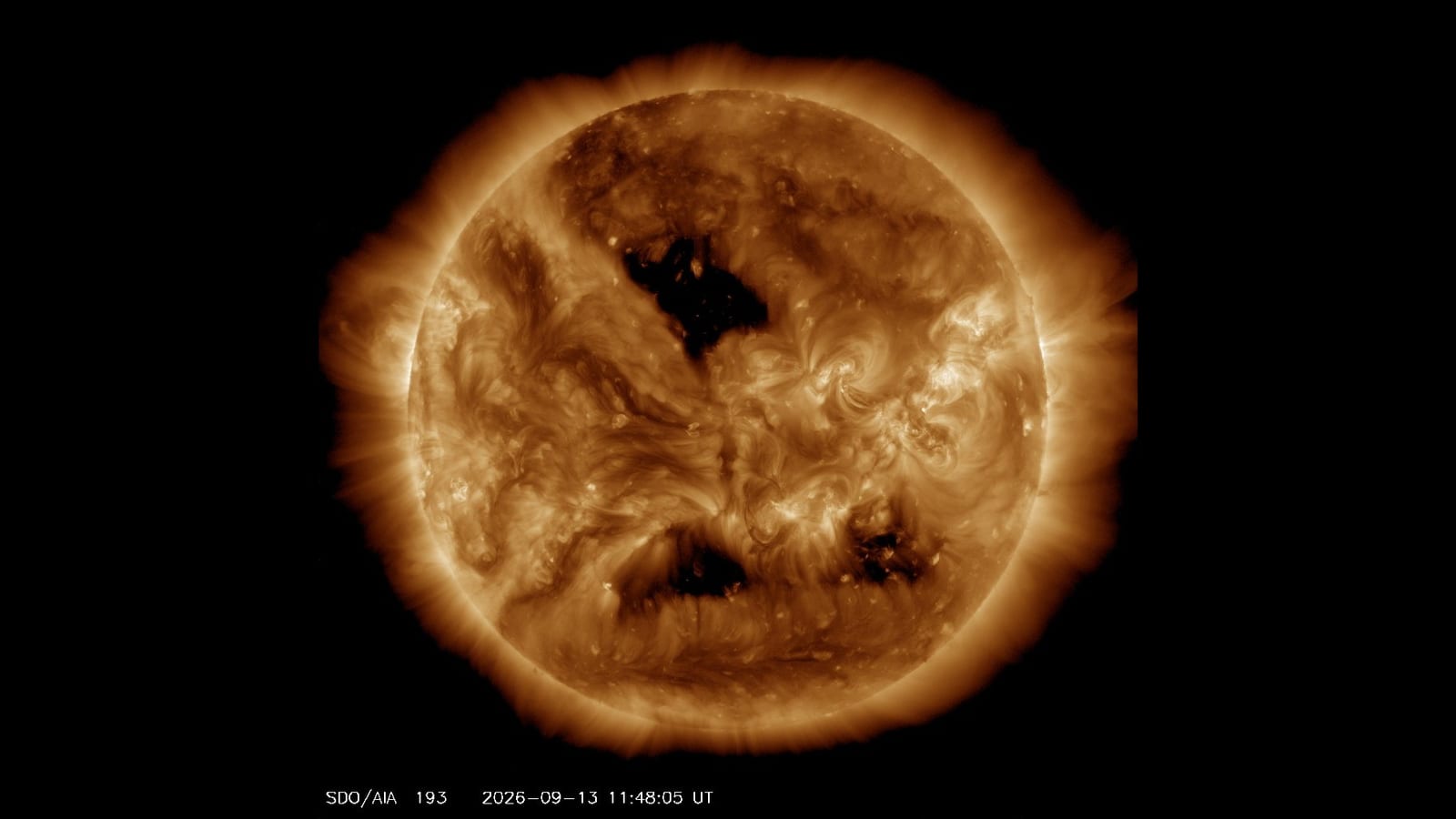
This outlook was produced with the support of AI (Claude, Anthropic) on the basis of public space weather data: the NOAA SWPC 27-day outlook (as of 17 August), the three-day forecast and forecast discussion (both 23 August, 12:30 UTC), the Solar Region Summary (22 August, 00:30 UTC), Daily Solar Indices and Daily Geomagnetic Indices, plus the current readings from hamqsl.com (23 August, 14:29 UTC). The title image shows the Sun in white light on 23 August 2026 at 13:45 UTC, taken by the Solar Dynamics Observatory (NASA/SDO, public domain); the spot group left of centre is Region 4513. Forecasts are uncertain by their nature — actual conditions may differ. Questions or corrections? Write to us at [email protected].