Table of Contents
- A beacon, thought backwards
- How a skimmer works
- Who is listening right now: the numbers
- How you get spotted — and how you don't
- What you can actually measure
- Austria has exactly one skimmer
- Running your own skimmer
- Limits, disputes, pitfalls
- A side effect: RBN as a research dataset
- Try it in three minutes
- Sources
- Transparency Notice
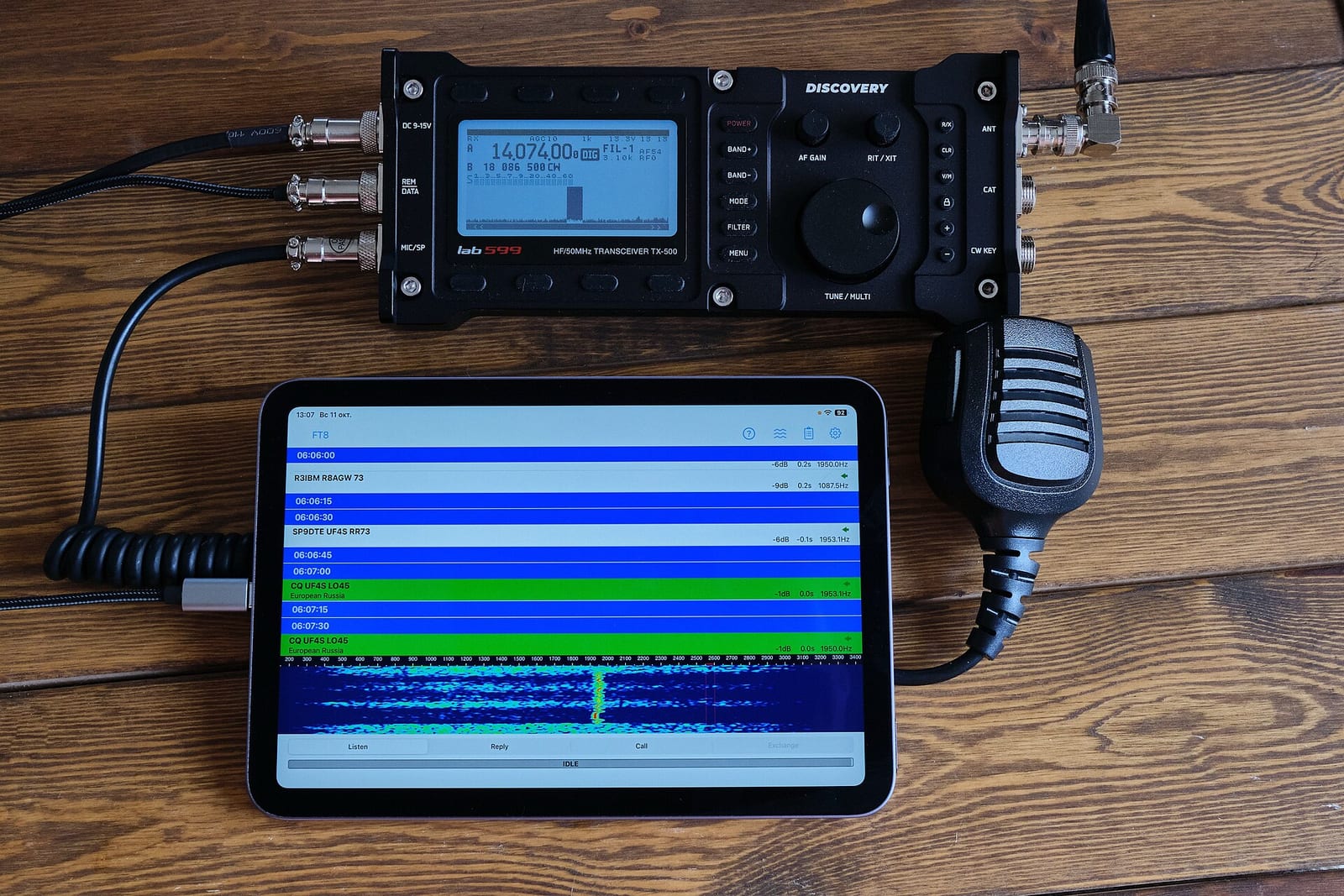
You call CQ on 14025 kHz, nobody answers — and 30 seconds later you know that someone in Finland copied you at 22 dB above the noise. That is what the Reverse Beacon Network does: a worldwide net of automatic receiving stations that listen, decode and report. This article explains how it works technically, how to use it for antenna and propagation tests — and why Austria is a conspicuous gap in that network.
A beacon, thought backwards
A classic beacon transmits and you listen. The Reverse Beacon Network (RBN) inverts that: you transmit, and a network of receiving stations listens. These stations — called skimmers — automatically decode every CW, RTTY, FT4 and FT8 signal they can pull out of the noise and report each recognised call with callsign, frequency, signal-to-noise ratio and timestamp to a central server.
The difference to an ordinary DX cluster: there, a human who happened to be listening posts the spot. On the RBN, software that continuously decodes whole band segments in parallel does it. The result is a remarkably complete, minute-by-minute map of who hears you — not of who answers you.
Website: reversebeacon.net
The idea grew out of an email exchange in March 2008 between Felipe, PY1NB (who ran DXWatch.com), and Pete Smith, N4ZR. The trigger was CW Skimmer, released shortly before by Alex Shovkoplyas, VE3NEA — the first software able to decode hundreds of CW signals simultaneously. Felipe wrote the first aggregator software, contesters and DXers were recruited as "reverse beacons" from late March 2008 onwards, and the RBN was born.
How a skimmer works
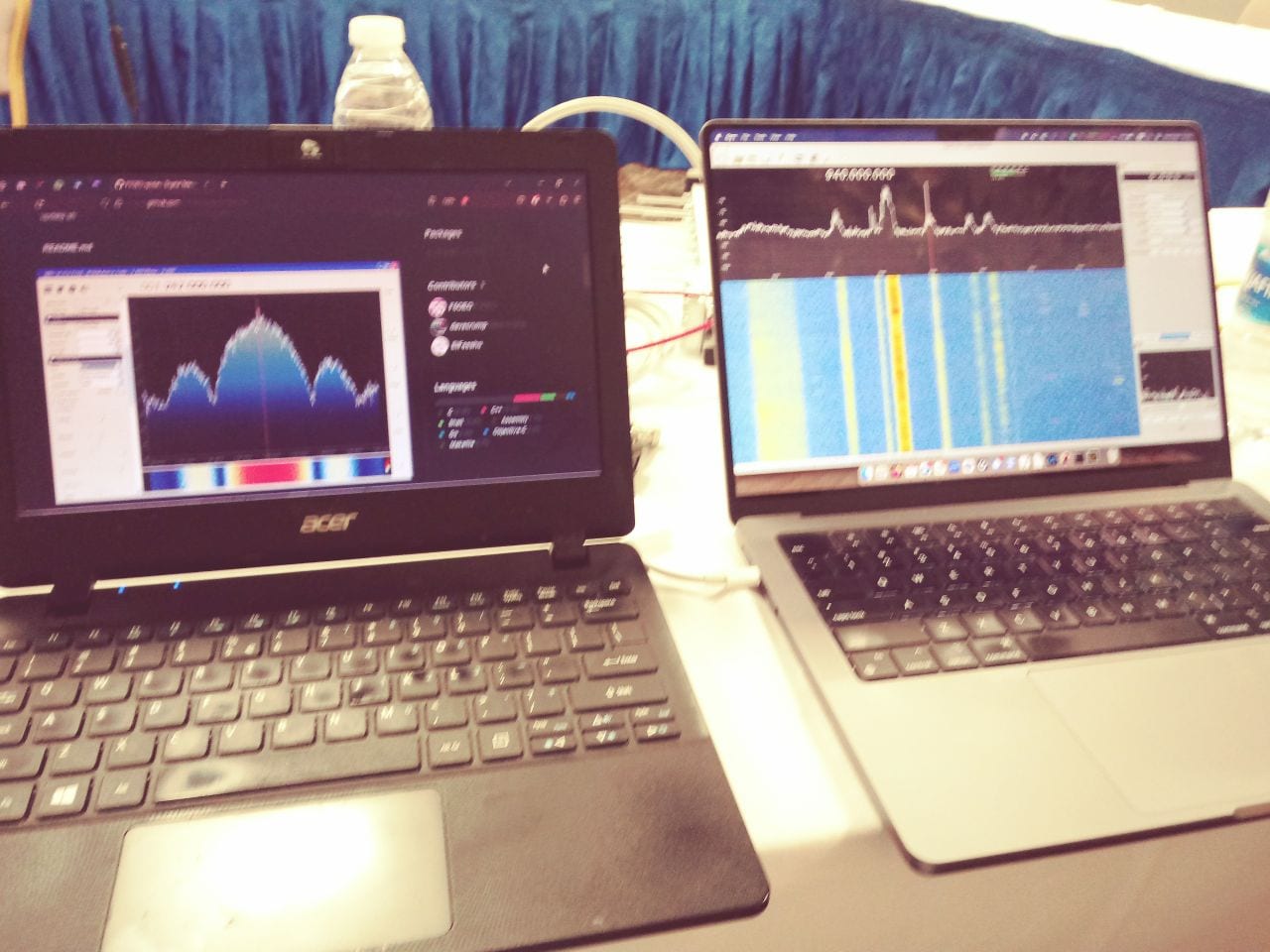
A skimmer is a wideband SDR receiver plus decoding software. Typically 192 kHz of bandwidth are digitised per receive channel — in practice the entire CW segment of a band at once. The software assigns each detected signal its own decoder roughly 50 Hz wide; according to the developer, up to 700 parallel CW decoders are possible.
The processing chain of a skimmer station looks like this:
- SDR hardware (Red Pitaya, Airspy, QS1R, Perseus, RX888 …) delivers the I/Q stream
- Skimmer Server (CW) or RTTY Skimmer Server decodes several bands in parallel
- CWSL_Tee + CWSL_DIGI (Alex Ranaldi, W2AXG, open source) tap the same data stream for FT4/FT8, decoded via WSJT-X
- Aggregator (Dick Williams, W3OA) collects the spots of all local skimmers and forwards them to the RBN server
A single Red Pitaya covers roughly seven CW bands — twice that with a second receiver, on top of the FT4/FT8 channels. Clean time synchronisation via NTP is essential, otherwise the spots are worthless.
Who is listening right now: the numbers
The RBN is neither a museum piece nor a mass phenomenon. A look at the node list on 3 August 2026 (stations that reported within the last hour):
| Continent | Skimmers online |
|---|---|
| Europe | 98 |
| North America | 78 |
| Asia | 32 |
| Oceania | 8 |
| Africa | 6 |
| South America | 5 |
| total | 227 |
By mode, CW clearly dominates: 212 nodes report CW, 42 additionally or exclusively FT4/FT8, 14 RTTY, and eleven more run as "MIXED". So anyone checking whether their signal gets out is effectively measuring with a CW network — even though FT8 generates the largest number of spots.
That distribution also sets the limits of interpretation: coverage is dense in Europe and North America, while Africa, South America and Oceania depend on a handful of stations. No spot from South America therefore does not necessarily mean "band closed" — sometimes it just means "nobody down there is listening automatically right now".
How you get spotted — and how you don't
A skimmer does not spot just any signal. Two conditions have to be met before a callsign enters the database:
1. A keyword: the software looks for CQ or TEST (in the right context also FD, SS, NA and UP). A QSO in progress produces no spot — calls get spotted, contacts do not.
2. Enough repetitions: the skimmer evaluates a rolling 256-character window and matches the callsign against a pattern file. Common, "known" callsigns need two repetitions, less common ones three, unlisted ones four. The repetitions need not be in a single transmission.
Practical consequences for your own operating:
- Clean CW yields clean spots. Sloppy characters produce "busted calls" — your callsign then shows up mangled.
- Avoid half-spaces immediately before or after your callsign — a frequent cause of miscopies.
- Don't QSY constantly, or the 256-character window resets before enough repetitions accumulate.
- "CQ CQ DE OE0XYZ OE0XYZ K" twice usually works better than one long single call.
If you are still building CW skills, our articles Learning CW in 2026 and CW operation in practice cover the basics — and the RBN is an excellent training device: without any other station, it tells you whether your fist is machine-readable.
Video tip: "How to use the Reverse Beacon Network for Amateur Radio" — a walk-through of the web interface and how to read the spots.
What you can actually measure
Antenna comparison. The strongest application: measure two antennas back to back against the same skimmers. Because the same receivers judge both signals within minutes, the dB differences are meaningful — far more so than "the OM in Germany says you're louder". The Signal Comparison Tool on reversebeacon.net does exactly that against other stations too.
Radiation pattern in the real world. Rotate the beam, call CQ at each heading, evaluate the spots by skimmer location: this reveals where the antenna really radiates — including side lobes and the holes your surroundings punch into the pattern.
Power comparison. 100 W versus 10 W is 10 dB in theory. If the skimmers report only 4 dB, suspect feedline losses, common-mode current, or a hopelessly noisy receiver at the far end.
Propagation watching. The RBN analysis tools show which paths are open right now — an excellent complement to forecasts, for instance when hunting grey-line openings or checking model-based predictions against reality. Our own propagation and cluster tools are on this site.
Video tip: N4LQ compares two antennas purely from RBN spots — a method worth copying.
Austria has exactly one skimmer
Now the uncomfortable part. The RBN node list of 3 August 2026 contains a single Austrian station:
- OE6ADD, locator JN77PA (Styria) — CW, 14 receive channels on ten bands from 160 m to 10 m including 60 m, in the network for about six years and online right now.
For comparison, the neighbourhood in the same list: Germany 21 nodes, Slovenia 5, Italy 4, Switzerland 3, Hungary 2, Czech Republic 1, Poland 1. For a country in the middle of Europe, with Alpine locations and correspondingly interesting propagation to the south and south-east, one single skimmer is thin.
That is not a reproach but an invitation: anyone who already has an SDR receiver, a decent receiving antenna and a machine running 24/7 in the shack fills a genuine gap here — and gives every OE station better comparison data for their own antennas.
Running your own skimmer
Hardware. The classic is the Red Pitaya STEMlab 122.88-16 because it covers several bands at once. Airspy, QS1R, Perseus or an RX888 work as well — what matters is bandwidth, dynamic range and a stable reference clock.
Software. Skimmer Server for CW, optionally RTTY Skimmer Server, for FT4/FT8 the combination CWSL_Tee + CWSL_DIGI with WSJT-X, and in every case the Aggregator that feeds the spots to the RBN. The chain runs under Windows; CW Skimmer and Skimmer Server are commercial software (registration via dxatlas.com), CWSL_DIGI and the Aggregator are free.
Antenna. For a skimmer, a quiet receive path beats gain. An unremarkable wire with a good signal-to-noise ratio is more useful than a noisy beam next to the PV array — see our article on receive antennas for the low bands.
Getting the raw spots. To feed your logging program, use the telnet servers: telnet.reversebeacon.net port 7000 for CW and RTTY, port 7001 for FT4/FT8. They are deliberately lean and do not filter — filtering is your program's job.
Video tip: Bob Wilson, N6TV, explains the hardware, software and setup of a CW and RTTY skimmer station in detail.
Limits, disputes, pitfalls
It only sees calls. The RBN sees CQ and TEST calls. A station that only answers calls never appears — absence of spots is no proof of absence of activity.
Contest category. After the debate of 2008/2009, virtually every major contest treats it the same way: using skimmer or RBN spots puts you in an assisted category, exactly as with DX cluster use. Checking your own signal on the RBN is uncritical; deliberate self-spotting is not allowed under many rule sets. More on that in Contests for beginners.
The FT8 flood. When the RBN set up a separate telnet stream for FT8 in June 2018, the reason was sheer volume: on two sample days in May 2018, 86 to 87 percent of all spots were FT8, 13 to 14 percent CW and less than one percent RTTY. The streams have been separate ever since — otherwise FT8 would have made CW use practically impossible.
dB are relative. The reported signal-to-noise ratio depends on the antenna, preamp and local noise floor of that particular skimmer. Comparisons are meaningful within one skimmer over short intervals — not between two different stations.
A side effect: RBN as a research dataset
The RBN database has become a scientifically used ionospheric archive. HamSCI analyses spots and, in part, recorded I/Q raw data from skimmer stations to study propagation effects during solar eclipses, flares and geomagnetic storms. Every skimmer therefore contributes not only to contest fun but to one of the largest permanent measurement networks in ionospheric research — operated by radio amateurs.
Try it in three minutes
- Call CQ in CW on an open band — two or three overs, callsign twice each time.
- Open reversebeacon.net/main.php and filter on your callsign (DX de field).
- Note skimmer, distance and SNR. Then change antenna or power, repeat, compare.
That is all it takes — and the result is more honest than any SWR meter.
Sources
- Reverse Beacon Network — node list, analysis tools, telnet servers (accessed 3 August 2026)
- RBN: A Short History — origins in 2008, milestones
- ARRL: RBN Beta Testing Separate Spot Stream for FT8 (12 June 2018)
- CW Skimmer (VE3NEA) — system requirements, parallel decoders
- HamSCI: CW Reverse Beacon Network How-To Guide
73 – your oeradio.at editorial team
Transparency Notice
This article was researched and written with the support of AI (Claude, Anthropic). The skimmer node figures come from the RBN node list retrieved live on 3 August 2026 and change continuously. The article was revised and expanded on 3 August 2026; an earlier version vaguely mentioned "several OE skimmers" — in fact exactly one Austrian station is currently reporting. The images are from Wikimedia Commons; authors and licences are given with each image (title image: Oliver Gottlob, DL1OLi, CC BY-SA 3.0). Found an error? Write to [email protected].