
Anyone who operates on HF knows that propagation conditions determine whether a QSO succeeds or not. But must we leave it to chance? No — VOACAP Online lets you predict, plan, and optimise HF radio contacts. This free tool is the most powerful resource for HF propagation forecasting.
What Is VOACAP?
VOACAP stands for "Voice of America Coverage Analysis Program". Originally developed in the 1980s by the US government to optimise shortwave coverage for the Voice of America broadcaster, it has become a standard tool for radio amateurs, aid organisations, and military communications.
VOACAP calculates the probability of a radio link between two points on Earth — taking into account frequency, transmit power, antennas, time of day, season, and solar activity. The online version at voacap.com makes these calculations accessible to everyone — no installation needed, directly in the browser.
VOACAP Online Overview
- Point-to-Point: Prediction for a link between two locations. Shows reliability for each hour and band as a colour-coded table (green = good, red = unlikely).
- Coverage Map: World map showing which areas are reachable from a location on a specific band. Ideal for planning DX contacts.
- Prediction Charts: MUF (Maximum Usable Frequency) and LUF (Lowest Usable Frequency) diagrams between two points over the day.
- Area Maps: Similar to RF coverage maps, but specifically for ionospheric HF propagation.
How to Use VOACAP Online
A typical workflow for planning a DX QSO:
- Step 1: Open voacap.com and select "Point-to-Point Prediction"
- Step 2: Enter your location (e.g. Graz, OE6) and the target (e.g. Tokyo, JA)
- Step 3: Select the month — propagation varies greatly with the season
- Step 4: Set transmit power and antenna type (dipole, Yagi, vertical…)
- Step 5: Click "Calculate" and interpret the colour-coded table
The result table shows reliability as a percentage for each hour (UTC) and band (80 m to 10 m). Values above 50% mean good chances; below 30% it gets difficult.
Understanding the Key Factors
- SSN (Smoothed Sunspot Number): Determines ionisation of the upper atmosphere. High SSN (as we currently have near Solar Cycle 25 maximum) = better conditions on higher bands (15 m, 12 m, 10 m).
- MUF (Maximum Usable Frequency): The highest frequency reflected between two points. Above MUF, signals pass through the ionosphere into space.
- LUF (Lowest Usable Frequency): The lowest usable frequency — below it, the D-layer absorbs too much signal energy.
- FOT (Frequency of Optimum Traffic): The optimal working frequency — typically 85% of MUF.
- Path and distance: Short path vs. long path. Sometimes long path works better, especially in the grey-line zone.
Practical Applications
- Contest planning: Determine the best bands and times for each multiplier before a competition
- DXpedition planning: Which bands work at what time from a rare DXCC entity to Europe?
- DX for beginners: Instead of calling CQ blindly, operate on the band that's currently open to Japan, Australia, or South America
- Antenna selection: VOACAP shows how different antenna types affect link quality — dipole vs. vertical vs. beam
- QRP operation: When running low power, choosing the right band at the right time is critical
Limitations of VOACAP
VOACAP calculates statistical probabilities — not guarantees. Short-term disturbances like geomagnetic storms, sudden ionospheric disturbances (SID), or local interference cannot be predicted. Predictions are monthly averages; individual days may vary significantly.
For real-time data, combine VOACAP with live tools: PSKReporter (shows where FT8 signals are being decoded), DX clusters, and the propagation indices (SFI, K-index, A-index).
Other Propagation Tools
- HamCAP: Desktop version of VOACAP with amateur radio-specific settings
- PropView (DXView): Real-time propagation integrated into DXLab
- ITURHFPROP: The official ITU propagation code, more complex than VOACAP
- DR2W Propagation Charts: Clear daily prediction maps
- SPLAT! and Radio Mobile: For VHF/UHF propagation simulation (non-ionospheric)
VOACAP and the Current Solar Cycle
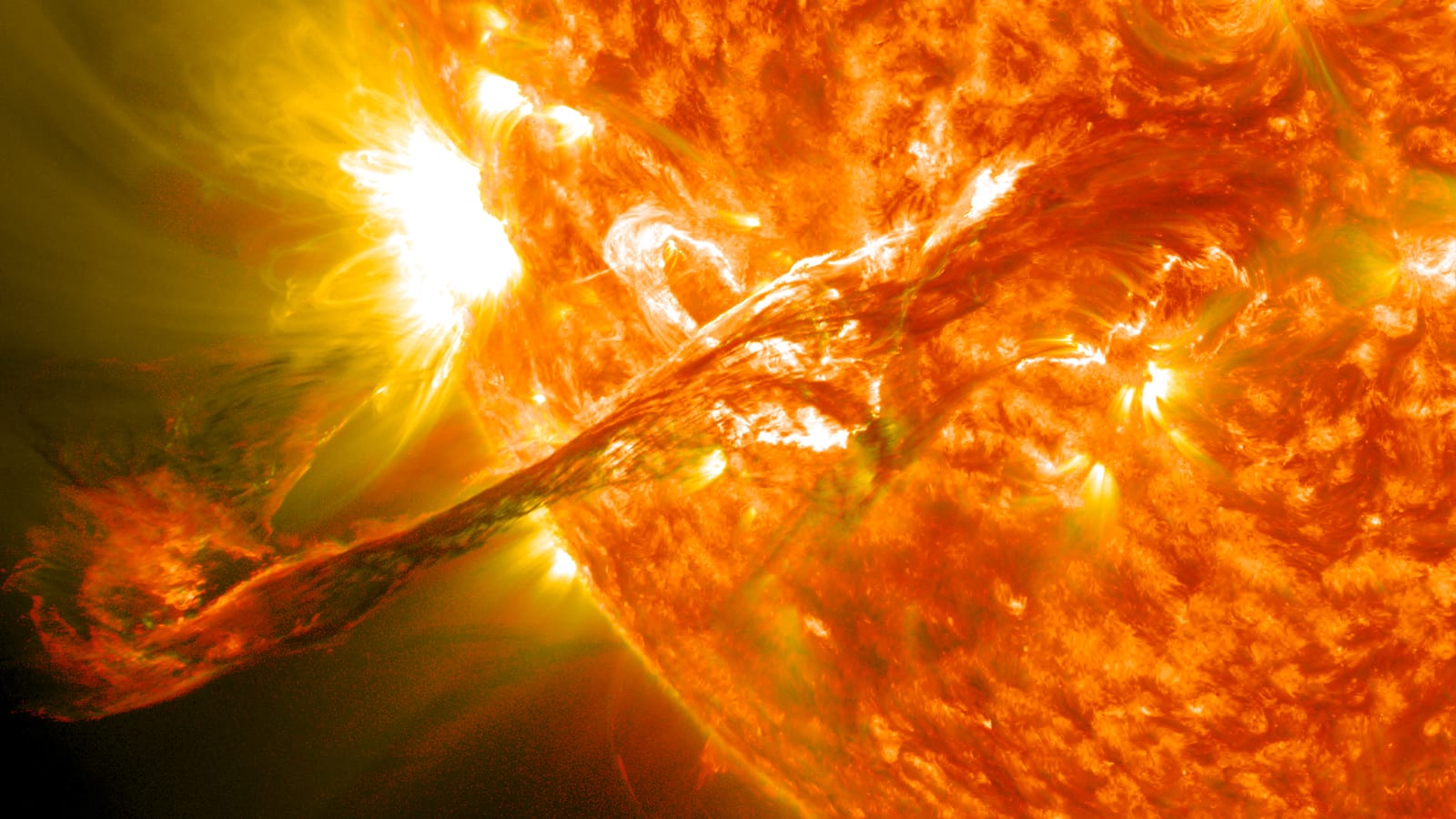
We are currently near the maximum of Solar Cycle 25, which has significantly improved conditions on the higher HF bands. VOACAP reflects this: predictions for 15 m, 12 m, and 10 m currently show excellent values for intercontinental contacts. Make the most of these conditions — in a few years they will decline again.
VOACAP Online is free, browser-based, and the most important planning tool for every HF operator. Anyone wanting to maximise their DX chances cannot do without it.
73 – your oeradio.at editorial team
Transparency Notice
This article was researched and written with the assistance of AI (Claude, Anthropic). The editorial team has reviewed and edited all content. Despite careful review, occasional inaccuracies may occur — we welcome corrections via email to [email protected].