Table of Contents
- What Is DX?
- Understanding Propagation
- The Best Bands for DX
- Using the Grey Line
- Station Setup for DX
- DX Operating Modes
- DX Clusters and Spots
- The Pile-Up: When Everyone Wants the Same Thing
- DX Awards
- DX Contests as a Turbo Boost
- Practical Tips for Your First DX QSOs
- Now Is the Best Time for DX
- Further Videos
- Sources and Further Reading
- Image Credits
- Transparency Notice
Japan, Australia, South America — all reachable with your own antenna from the roof? DX operation, meaning radio contacts over great distances, is the pinnacle of the hobby for many radio amateurs. The good news: in the current Solar Cycle 25, conditions are better than they’ve been in over a decade. Here’s how to make your first DX contacts.
What Is DX?
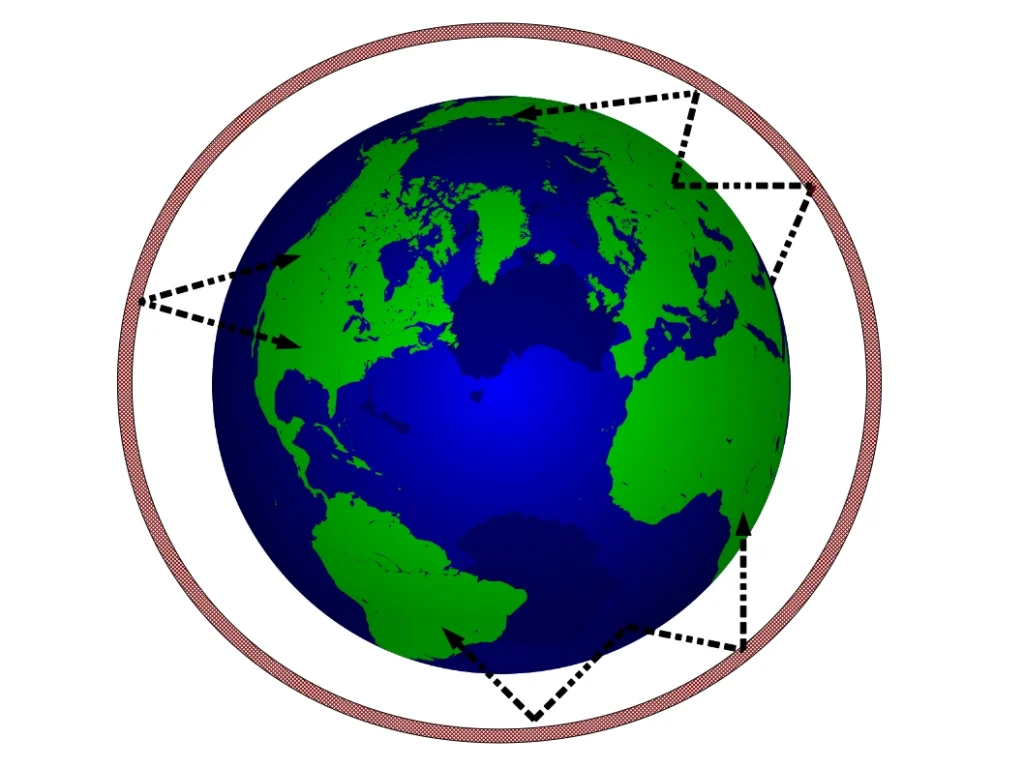
In amateur radio, DX stands for “Distance” — radio contacts over great distances. What counts as DX depends on the band: on HF, DX typically means contacts to other continents; on VHF, a few hundred kilometres already qualifies. The appeal lies in the unpredictable: radio waves are reflected by the ionosphere, and propagation conditions change constantly — sometimes a few watts reach the other side of the Earth, sometimes they don’t even reach the neighbouring country.
Understanding Propagation
The key to successful DX lies in understanding propagation conditions. The most important indices:
- Solar Flux Index (SFI): Higher is better — values above 150 mean excellent conditions on the higher bands
- K-Index: Lower is better — values of 0–2 are ideal, above 5 things get difficult
- A-Index: Long-term geomagnetic indicator, below 10 is good
Currently (2026), we’re near the peak of Solar Cycle 25 — the higher bands (15 m, 12 m, 10 m) are as active as they haven’t been since 2014. Make the most of this phase!
The Best Bands for DX
- 20 m (14 MHz): The DX workhorse — open almost around the clock, best choice for beginners
- 17 m (18 MHz): WARC band, no contest activity, often quieter yet still good DX
- 15 m (21 MHz): Excellent during daytime with high SFI, often good overseas DX
- 10 m (28 MHz): The best DX band when open — around the world with just a few watts, a goldmine in the current solar cycle
- 40 m (7 MHz): Good DX in the evening and at night, more regional during the day
- 80 m / 160 m: “Top Band” DX for advanced operators, nights during the dark season only
Using the Grey Line
One of the best tips for DX beginners: the grey line (twilight zone). Along the boundary between day and night on Earth’s surface, propagation conditions are particularly favourable. At sunrise and sunset, radio paths open that don’t exist at other times. A glance at a grey-line map shows which regions might be reachable — often the most exciting DX contacts of the day.
Video tip: What is greyline propagation and how to use it effectively?
Station Setup for DX
DX is possible even with modest equipment — a good antenna matters more than high power:
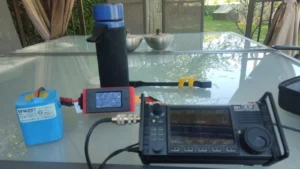
- Transceiver: Any 100-watt HF radio will do — Icom IC-7300, Yaesu FT-710, Kenwood TS-590. But DX works with 5 watts QRP too!
- Antenna: An EFHW or simple dipole as high as possible. For multiple bands: a multiband antenna with tuner or fan dipole
- Digital modes: FT8 has democratised DX — even with a modest station and 50 watts, contacts to all continents are possible
DX Operating Modes
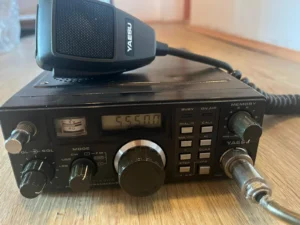
SSB (voice): The classic — grab the microphone, tune to the right frequency, and call “CQ DX”. SSB DX requires more power and an efficient antenna but offers direct human contact.
CW (Morse): Telegraphy has an inherent 10 dB advantage over SSB — the difference between 100 watts and 1,000 watts! CW DX is the most efficient form of analogue DX.
FT8 and digital modes: FT8 has made DX accessible to everyone. The mode decodes signals down to –24 dB below the noise floor, and WSJT-X automatically shows which stations are reachable.
DX Clusters and Spots
You don’t need to search the bands blindly. DX clusters are real-time databases where amateurs worldwide report which stations are active on which frequency:
- DXSummit (dxsummit.fi): Web-based, free, easy to use
- DX-Watch (dx-watch.com): Modern interface with filter options
- Telnet clusters: Integration with logging software like Log4OM or DXLab
- PSK Reporter (pskreporter.info): Specially for digital modes — shows in real time where your FT8 signal is being received
The Pile-Up: When Everyone Wants the Same Thing
When a rare DX station becomes active, hundreds of stations want to make contact simultaneously — that’s a pile-up. Tips for success:
- Listen, listen, listen: Understand the DX station’s pattern before calling
- Master split operation: Many DX stations listen on a different frequency than they transmit — watch for “UP 5” (listen 5 kHz higher)
- Timing: Don’t call immediately when the DX station finishes a QSO — wait a moment for the pile-up to thin
- Send only your callsign: No long calls, just your callsign — short and clear
- Patience: Sometimes it takes dozens of attempts. That’s normal.

Video tip: DXpeditions and working split — how to break through a pile-up:
DX Awards
DX is rewarded through a system of awards that document your progress:
- DXCC (DX Century Club): 100 different DXCC entities confirmed — the world’s most famous amateur radio award
- WAZ (Worked All Zones): All 40 CQ zones confirmed
- WPX (Worked All Prefixes): As many different callsign prefixes as possible
- WAC (Worked All Continents): All 6 continents confirmed — often the first DX award
For DXCC beginners: with FT8 on 20 m and a good antenna, 100 entities are reachable within a few months.
DX Contests as a Turbo Boost
Contests are the best opportunity to collect many DX contacts in a short time. During a major contest like CQWW or ARRL DX, stations from around the world are simultaneously active and seeking contacts. Ideal for DX beginners: no pile-up to break through — contest stations work as quickly as possible and welcome every caller.
Practical Tips for Your First DX QSOs
- Start on 20 m: The band is almost always open and offers the widest DX window
- Use FT8: The lowest barrier to entry for DX — a computer, a cable, WSJT-X
- Monitor the bands: PSK Reporter and DX clusters show what’s currently possible
- Use the grey line: Sunrise and sunset are the magic moments
- Antenna over power: A dipole at 15 m height beats any compromise antenna on a balcony
- Keep a log: Document every contact — you’ll be surprised how quickly DXCC entities accumulate
- Register for LoTW: Digital QSL confirmation is the fastest path to DXCC
Now Is the Best Time for DX
With Solar Cycle 25 near its peak, HF conditions are currently outstanding. The higher bands — 10 m, 12 m, 15 m — offer fantastic DX that wasn’t possible during the solar minimum years. Those who start now will experience the best DX conditions in over a decade. So: antenna up, transceiver on, and CQ DX!
73 – your oeradio.at editorial team
Further Videos
- The ULTIMATE Beginners Guide to FT8 — comprehensive FT8 guide (2024)
- DX Cluster Server 101 — How to Find that DX!
- Ham Radio PILE UP (YL operator) — what a real pile-up sounds like
- Greyline Propagation — Ham Radio HF DX at Twilight
- FT8 & WSJT-X Setup — STEP by STEP
- What is the Solar Flux and how does it affect Shortwave Radio Propagation
Sources and Further Reading
- RSGB: HF DXing — How to do it
- Electronics Notes: Amateur Radio DXing
- AmateurRadio.com: The Art of DX Pileup Busting
- K3WWP: Working DX Tips
- Wikipedia: DXing
- DX-World.net — DXpedition News
Image Credits
All images from Wikimedia Commons under free licenses. Skywave (CC BY-SA 3.0, Kf4yfd), HF Station (CC BY-SA 2.0), SP2FAX Station (CC BY 4.0), QSL Card (Public Domain), DXCC Certificate (Wikimedia Commons), Operator DJ1YFK (CC BY 2.5).
Transparency Notice
This article was researched and written with the assistance of AI (Claude, Anthropic). Any illustrations used were generated with AI (ChatGPT/DALL·E, OpenAI) unless otherwise noted. The editorial team has reviewed and edited all content. Despite careful review, occasional inaccuracies may occur — we welcome corrections via email to [email protected].