Table of Contents
- PMR446 – The All-Rounder That Fits in Your Pocket
- What PMR can do
- What PMR is perfect for
- New in 2026: Albrecht DMR-100
- Where PMR reaches its limits
- CB Radio – The Veteran with Long-Range Qualities
- What CB does better than PMR
- What CB is best for
- Where CB reaches its limits
- Meshtastic – The Newcomer That Does Everything Differently
- How Meshtastic works
- What makes Meshtastic special
- What Meshtastic is ideal for
- The Meshtastic community in Austria
- Where Meshtastic reaches its limits
- The Complete Comparison at a Glance
- Which System for Which Purpose?
- You just want to talk – instantly and without fuss
- You need range – in a convoy, in the countryside, across valleys
- You want to know where your people are – without mobile coverage
- You want to be prepared for anything
- What the Berlin Blackout Taught Us
- Getting Started Made Easy – Three Recommendations
- PMR recommendation for beginners
- CB recommendation for beginners
- Meshtastic recommendation for beginners
- And if you want even more?
- Transparency Notice
3 January 2026, Berlin-Lichterfelde: an arson attack on the power grid knocked out 45,000 households – for days. Mobile phone towers went down, landlines dead, internet gone. Thousands of people were left with no way to communicate. Anyone who had a radio in their drawer that moment had a clear advantage.
This scenario is not an isolated case – and it doesn't have to be a blackout. On a mountain hike with no mobile signal, skiing off-piste, at a campsite without WiFi, on a walk with friends at different speeds: there are many situations where radio is the only connection that works. And the best part: you don't need a licence, no registration, and no monthly fees.
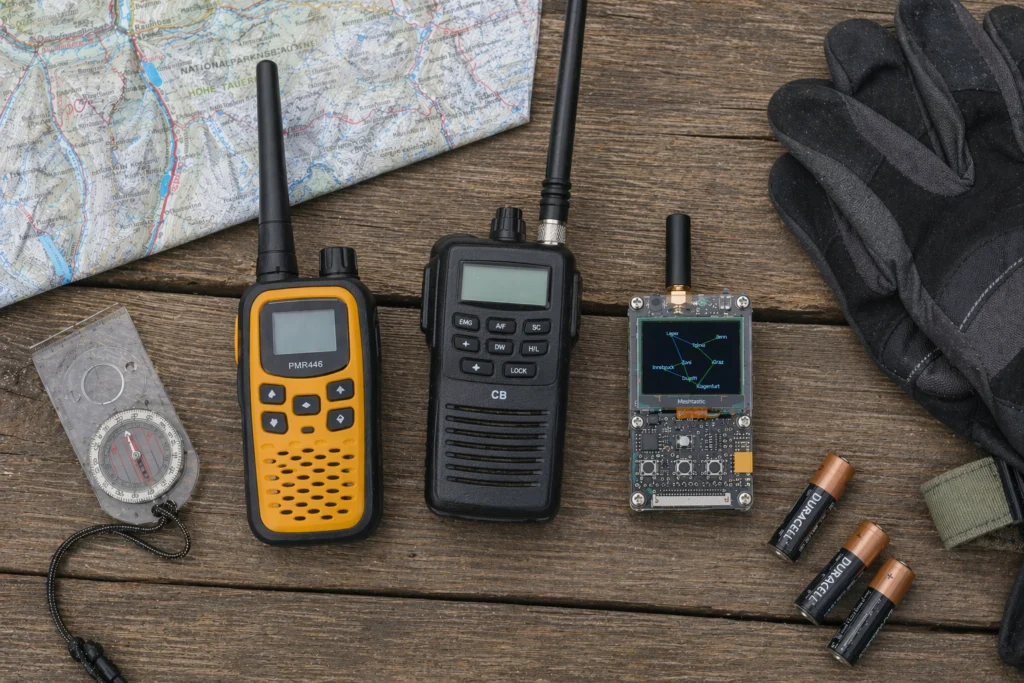
In this article, we compare three licence-free radio systems that couldn't be more different: PMR446 (the classic), CB radio (the veteran), and Meshtastic (the newcomer). All three are legal, usable without any exam, and each has its own unique strengths. We'll show you which system suits which purpose – and why you might even need more than one.
PMR446 – The All-Rounder That Fits in Your Pocket
PMR446 is the most widely used licence-free radio system in Europe. The handy devices operate in the UHF range at 446 MHz, offer 16 analogue and 16 digital channels, and transmit at a maximum of 0.5 watts. That sounds modest – but it's enough for surprisingly much.
What PMR can do
Real-time voice. Press the button, talk, done. PMR is so simple that children from six years old can handle it. Devices start from 20 euros for a twin pack, run on AA batteries or rechargeable cells, and fit in any jacket pocket. Audio quality is clear and intelligible – you can understand each other even in wind and background noise.
Range: In the city, 500 metres to 2 kilometres. In open fields, 3 to 5 kilometres. In the mountains with line of sight, up to 10 kilometres. Inside buildings, 2 to 3 floors without problems.
What PMR is perfect for
- Family skiing: Parents and children stay in contact on the slopes – without expensive mobile tariffs and without network dependency.
- Hiking groups: When the group splits up, you stay connected by radio. Especially in Austria's mountains, there are still many dead zones.
- Events: Village fairs, sports events, scout camps – PMR is the simplest tool for coordinating helpers.
- Construction sites and agriculture: Quick coordination between tractor and farm, between excavator and foreman.
- Emergency preparedness: When the mobile network fails, PMR is instantly available – no network needed, no infrastructure required. PMR Channel 1 is the unofficial emergency channel.
New in 2026: Albrecht DMR-100
Exciting for anyone wanting more: the Albrecht DMR-100 is the first affordable dual-mode device that handles both analogue PMR446 and digital DMR Tier 1 – for 69.90 euros. Digital PMR radio means: noise-free audio quality, optional encryption, and 32 channels. A single button press switches between analogue and digital. If you already use PMR and want to take the next step, this is the perfect entry into the digital world – without a licence.
Where PMR reaches its limits
PMR is limited to short distances. In dense urban areas or wooded valleys, communication can cut out after just a few hundred metres. There's no way to send text messages, share GPS positions, or create mesh networks – each device only communicates directly with others in range.
CB Radio – The Veteran with Long-Range Qualities
CB radio (Citizen Band) is the grandfather of licence-free radio. In the 1970s and 80s, it was a subculture with its own language, its own codes, and millions of users worldwide. Today it's quieter, but far from dead – and for certain applications, it's still the best choice.
CB operates on the 11-metre band around 27 MHz – in the shortwave range. In Europe, 40 channels are available, with up to 4 watts AM or 12 watts PEP on SSB (single sideband). That's eight to twenty-four times the PMR power.
What CB does better than PMR
Range. The longer wavelength of 11 metres penetrates obstacles better than the short UHF signal of PMR. With a good antenna, 10 to 20 kilometres on the ground wave is realistic. Where PMR gives up after 2 kilometres, CB keeps going comfortably.
And then there's a phenomenon that PMR users will never experience: skip propagation. Under favourable atmospheric conditions – such as sporadic E-layer reflections – the CB signal can suddenly travel hundreds or even thousands of kilometres. That's not a bug, it's physics. And it's addictive.
What CB is best for
- Vehicle convoys: Motorhome trips, classic car rallies, motorcycle tours. Magnetic mount antenna on the roof, mobile radio on the dashboard – the whole convoy is connected. That was true in the 80s, and it works just as well today.
- Rural areas: On the farm, in forestry, on the alpine pasture. Where distances get larger, CB plays to its strengths.
- Truckers: Even in 2026, many truck drivers use CB on channel 19 – for traffic reports, warnings, and a chat on the long road.
- Emergency communication: CB Channel 9 (27.065 MHz) is the international emergency channel. In a real crisis, it's a viable option for reaching help over greater distances.
Where CB reaches its limits
CB devices are larger and less portable than PMR. Handheld models exist, but the short antenna limits the range. CB only reaches its full potential with an external antenna – ideally on the car roof or house roof. The 11-metre band is also susceptible to interference: electrical devices, switch-mode power supplies, and atmospheric noise can affect reception. Like PMR, there are no text messages and no GPS.
Meshtastic – The Newcomer That Does Everything Differently
If PMR is the telephone and CB is the megaphone, then Meshtastic is the WhatsApp of radio – just without internet, without servers, and without monthly costs. Meshtastic is an open, decentralised mesh network that runs on affordable LoRa modules and can transmit text messages and GPS positions over astonishing distances.
The technology behind it: Meshtastic uses the licence-free 868 MHz ISM band (in Europe) with a maximum transmit power of 25 milliwatts – one fiftieth of a PMR device! Yet under good conditions, it achieves ranges of 5 to 15 kilometres, and in the mountains, significantly more. The record? 331 kilometres – set in 2024 between Austria and Italy across the Adriatic Sea.
How Meshtastic works
Every Meshtastic node is simultaneously a sender, receiver, and repeater. If your message can't reach the recipient directly, another node relays it – automatically, without configuration. The more nodes active in an area, the better the network. That's the principle of a mesh network: decentralised, self-healing, without central infrastructure.
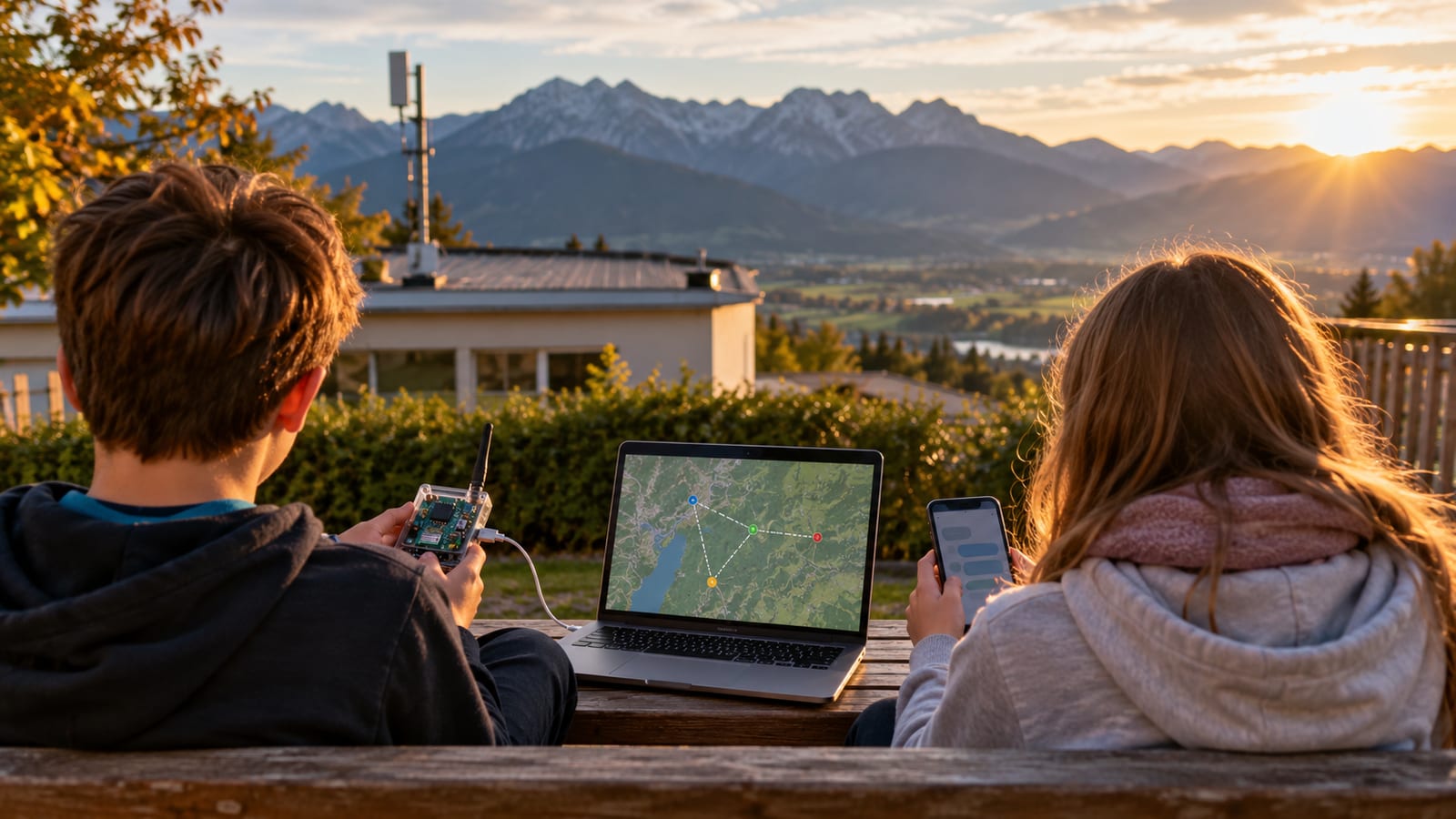
Operation is via a smartphone app (Android and iOS) that connects to the node via Bluetooth. You type a message, press send – and the message hops from node to node until it arrives. Additionally, each node regularly broadcasts its GPS position, so you can see on a map where your group members are.
What makes Meshtastic special
- Text messages without a network: Send and receive short messages even when there's no mobile tower anywhere nearby.
- GPS position tracking: Each node automatically shares its location. On a hike, you can see on the map where your friends are – without mobile coverage.
- Mesh relay: Messages are forwarded via other nodes. The more participants, the better the coverage.
- Extremely energy-efficient: A Meshtastic node runs for days to weeks on a single battery charge depending on settings. Solar-powered nodes run indefinitely.
- Affordable and open: Hardware starts from 25 euros (Heltec V3), software is open source and free. No ongoing costs, no subscriptions, no vendor lock-in.
What Meshtastic is ideal for
- Multi-day mountain tours: GPS tracking and text messages for the whole group, without mobile coverage. "At the summit, waiting for you" – by text message over kilometres.
- Festivals and large events: When the mobile network is overloaded, Meshtastic keeps working independently.
- Search and rescue operations: GPS positions of all team members in real time on the map – without mobile coverage.
- Crisis preparedness: A mesh network that needs no infrastructure. During the Berlin blackout in January 2026, a Meshtastic network would have been the only digital communication that still worked.
- Curiosity and tinkering: Meshtastic is an open-source project with an active community. If you enjoy tinkering, you can build nodes, test antennas, customise firmware, and expand the network in your region.
The Meshtastic community in Austria
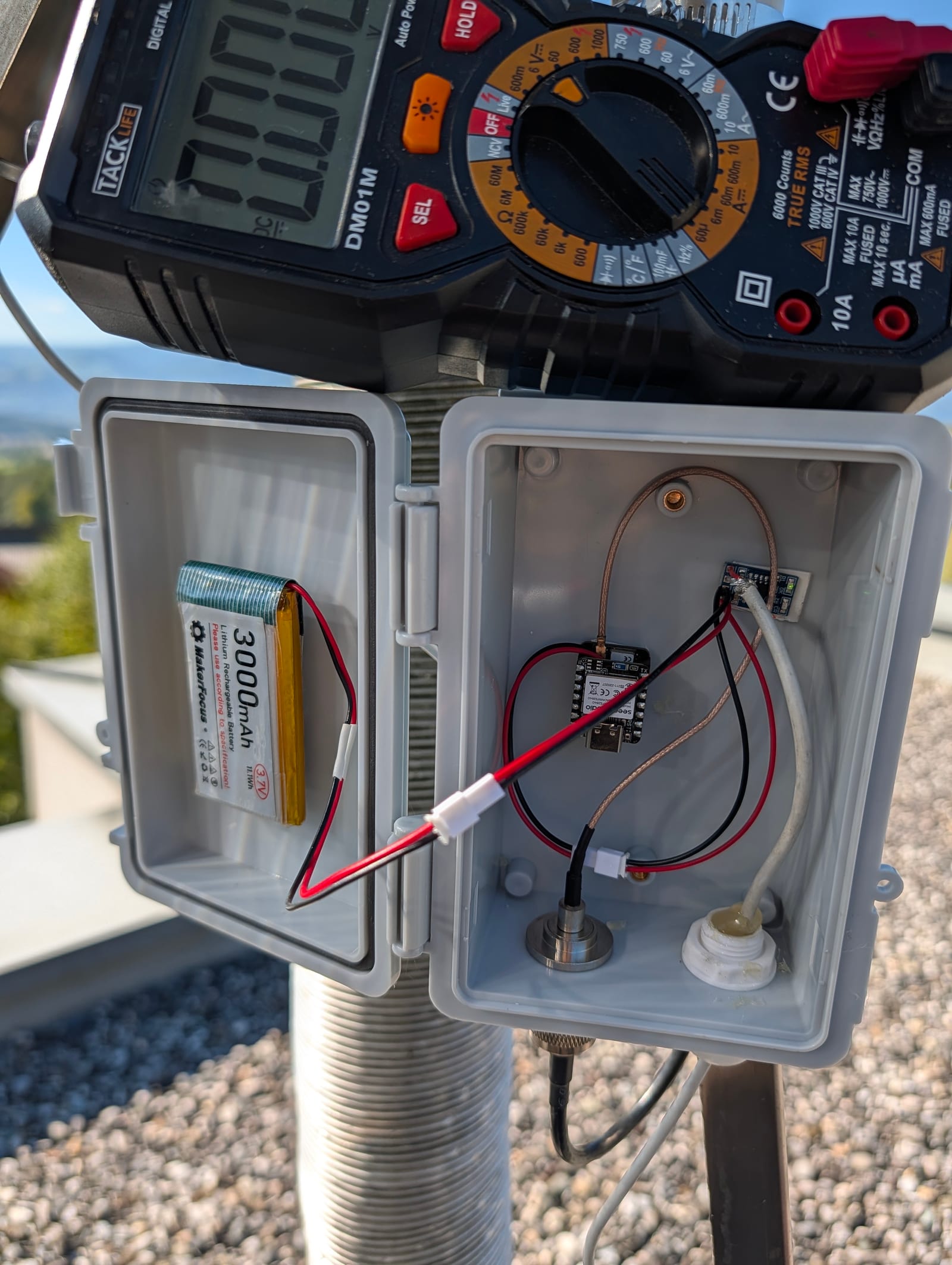
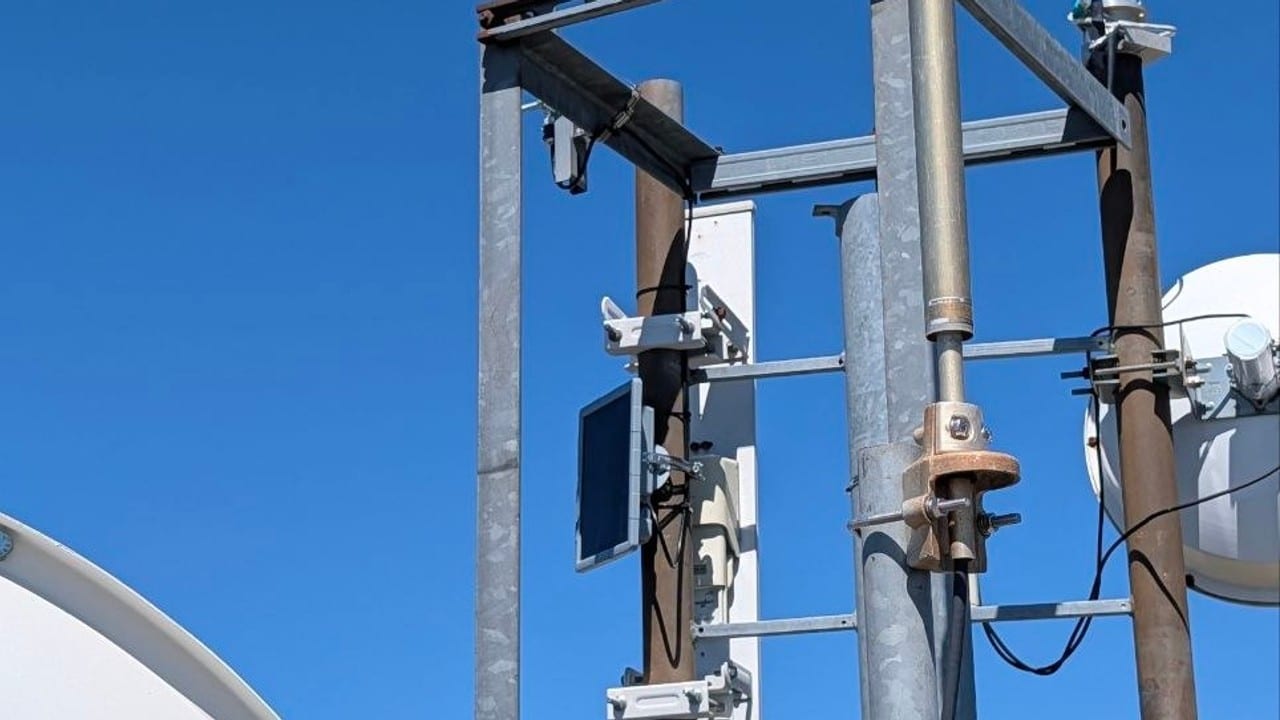
In Austria, the Meshtastic community is growing rapidly. On the OERadio Meshmap, you can see how many nodes are already active – from Vienna to Carinthia, from Vorarlberg to Burgenland. In Carinthia, for example, three nodes with a solar panel achieved surprising ranges. The Austrian community organises itself via meshtastic.at and shares experiences, build instructions, and tips.
Where Meshtastic reaches its limits
No voice. That's the biggest difference from PMR and CB: Meshtastic only transmits text and GPS data, not voice. If you need to shout "Help, I'm here!" in an emergency, you need a proper radio. Also, the setup is slightly more complex than PMR – you need a smartphone, the Meshtastic app, and a bit of patience for the initial configuration. And the data rate is extremely low. Long messages take time – Meshtastic is made for short, concise communication.
The Complete Comparison at a Glance
All three systems are licence-free and registration-free to use in Austria. No exam, no fees, no callsign required.
| PMR446 | CB Radio | Meshtastic | |
|---|---|---|---|
| Frequency | 446 MHz (UHF) | 27 MHz (HF) | 868 MHz (ISM) |
| Transmit power | 0.5 W | 4 W AM / 12 W SSB | 0.025 W (25 mW) |
| Communication | Voice | Voice | Text + GPS |
| Range (typical) | 0.5 – 5 km | 5 – 20 km | 2 – 15 km |
| Mesh capability | No | No | Yes |
| GPS tracking | No | No | Yes |
| Entry cost | from €20 | from €70 | from €25 |
| Portability | Very high | Medium | High |
| Battery life | 8 – 20 hours | 8 – 12 hours | Days to weeks |
| Complexity | Very simple | Simple | Medium |
| Digital option | Yes (dPMR/DMR) | No | Yes (native) |
Which System for Which Purpose?
You just want to talk – instantly and without fuss
→ PMR446. Buy a twin pack, unbox, switch on, go. Perfect for families, hiking groups, events, and everyday use.
You need range – in a convoy, in the countryside, across valleys
→ CB Radio. The higher transmit power and better wave propagation at 27 MHz make the difference. With a good antenna, you're still connected when PMR has long given up.
You want to know where your people are – without mobile coverage
→ Meshtastic. GPS tracking and text messages over a decentralised network that needs no infrastructure. Ideal for multi-day tours, groups, and crisis preparedness.
You want to be prepared for anything
→ All three. A PMR device for quick voice communication. A Meshtastic node for GPS and text. And for when greater distances need bridging, a CB radio with an antenna in the car or at home. That sounds like a lot, but together it costs less than a budget smartphone – and still works when that smartphone is nothing more than an expensive paperweight.
What the Berlin Blackout Taught Us
On 3 January 2026, Berlin showed how quickly modern communication can collapse. The arson attack on the power grid didn't just knock out electricity – within hours, mobile phone towers also went down as their backup batteries were exhausted. Vodafone lost 39 base stations, Telekom 19, O2 18. Landlines and internet were already dead.
What still worked at that moment: radio. Battery-powered PMR devices, CB radio stations with 12-volt car batteries, and Meshtastic nodes that kept running autonomously thanks to solar panels. Amateur radio operators helped with improvised emergency radio networks – but any citizen with a 20-euro PMR device could have communicated within a radius of a few kilometres.
The lesson is simple: radio communication is the most robust form of communication there is. It needs no network, no server, no provider. It just needs a device, a battery, and someone listening.
Getting Started Made Easy – Three Recommendations
PMR recommendation for beginners
A Motorola Talkabout T82 Extreme twin pack (around 70 euros) is robust, waterproof to IPX4, has a decent range, and comes with a charging cradle. There are cheaper options from 20 euros – but the T82 is simply more fun on a mountain hike.
CB recommendation for beginners
An Albrecht AE 6110 mobile unit (around 80 euros) plus a magnetic mount antenna (around 30 euros) – and your mobile CB station is complete. If you want to use it at home, you'll also need a 12-volt power supply (around 20 euros) and an outdoor antenna.
Meshtastic recommendation for beginners
A Heltec V3 board (from around 25 euros) is the cheapest entry point. If you want GPS and longer battery life, go for the LILYGO T-Beam (around 35–45 euros). Both boards come with pre-installed Meshtastic firmware or can be flashed in minutes. Add the free Meshtastic app on your smartphone – and you're off.
And if you want even more?
PMR, CB, and Meshtastic are excellent entry points into the world of radio. But they have limits: restricted transmit power, fixed frequencies, no freedom to choose your own antennas and operating modes.
If you want to break through those limits, amateur radio is the next logical step. With an amateur radio licence – in Austria after an exam with the telecommunications authority – entirely new worlds open up: transmit powers up to 1,500 watts, frequency bands from long wave to microwave, worldwide connections via shortwave, digital modes like D-STAR, DMR and C4FM, satellite communications, contests, and an international community that has existed for over 100 years.
Many of today's amateur radio operators started exactly this way – with a PMR device on a hike or a CB radio in the car. The spark (in the truest sense) was lit, and suddenly they wanted more. Getting started is easier than most people think – and the community is growing.
But even without a licence: anyone who has a radio is independent. From networks, from providers, from power supply. In a world that is increasingly connected and simultaneously increasingly vulnerable, that is an invaluable advantage.
73 – your oeradio.at editorial team
Transparency Notice
This article was researched and written with the assistance of AI (Claude, Anthropic). Any illustrations used were generated with AI (ChatGPT/DALL·E, OpenAI) unless otherwise noted. The editorial team has reviewed and edited all content. Despite careful review, occasional inaccuracies may occur — we welcome feedback by email at [email protected].