D-STAR was the first digital voice system in amateur radio and remains widely used today — including in Austria. Originally driven forward by Icom, it combines voice communication with worldwide networking over the internet. This article explains how D-STAR works, what the reflectors are all about, how the Austrian network is structured, and how to get on air yourself.
How D-STAR Works
D-STAR transmits voice digitally (DV mode) along with slow data on the side. The core feature is callsign routing: because every transmission carries the operator's own callsign, the network can address individual stations or entire groups directly. Four fields in the radio control this — briefly UR, RPT1, RPT2 and MYCALL — but in practice, a stored memory channel is usually all you need for reflector operation.
Reflectors: REF, XRF, DCS and XLX
As with other digital modes, D-STAR stations meet in reflectors — servers that link connected repeaters and hotspots into a shared net. Historically there are several systems that differ in their connection protocol:
- REF (DPlus) — the classic, originally Icom-aligned system.
- XRF (DExtra) — an open reflector system.
- DCS — Digital Call Server, also open.
- XLX — a modern multi-protocol reflector that unites REF/XRF/DCS under one roof and can additionally bridge to C4FM and DMR.
The D-STAR Network in Austria
Austria operates its own reflectors, to which the domestic repeaters and hotspots are connected. The standout is the multi-protocol reflector XLX905 (from OE9), which is also registered as a C4FM YSF reflector — so anyone joining with a Fusion radio lands in the same net as the D-STAR stations. In addition, modules on DCS009 (used among others for Austria and Tyrol) as well as classic REF connections are in use. Because many of these reflectors are cross-mode linked, the boundary between D-STAR, C4FM and DMR is increasingly blurring — convenient for everyone using multiple modes.
The current picture — which reflector is linked to which, and which repeaters are presently connected — is shown on the live dashboards of the reflectors; that is why we point you there rather than printing a snapshot here.
Prerequisite: D-STAR Registration
Unlike DMR, D-STAR requires a one-time registration so that callsign routing through the gateways works. It happens in two steps: first the callsign is activated at a D-STAR gateway, then a personal "terminal" entry is added. The activation is done by a gateway operator; where this is currently handled in Austria is described in the ÖVSV Wiki. For pure reflector operation via a hotspot registration is not strictly required, but it is worthwhile for full callsign routing.
Registration Step by Step
- Find a gateway: Activation is done through a D-STAR gateway. Which ones are currently operating in Austria is listed in the ÖVSV Wiki.
- Register your callsign: Enter your own callsign on the gateway's registration page. A gateway operator confirms the activation — this may take a little time.
- Add a terminal entry: After activation, add a personal entry ("Terminal") with a space and a letter — it is needed for gateway routing.
- Enter it into your radio: Set MYCALL and save an Austrian reflector as your destination — done.
Tip: For pure reflector operation via a hotspot, registration is not strictly required — but it is worthwhile as soon as you want to use full callsign routing.
Radios and Hotspots
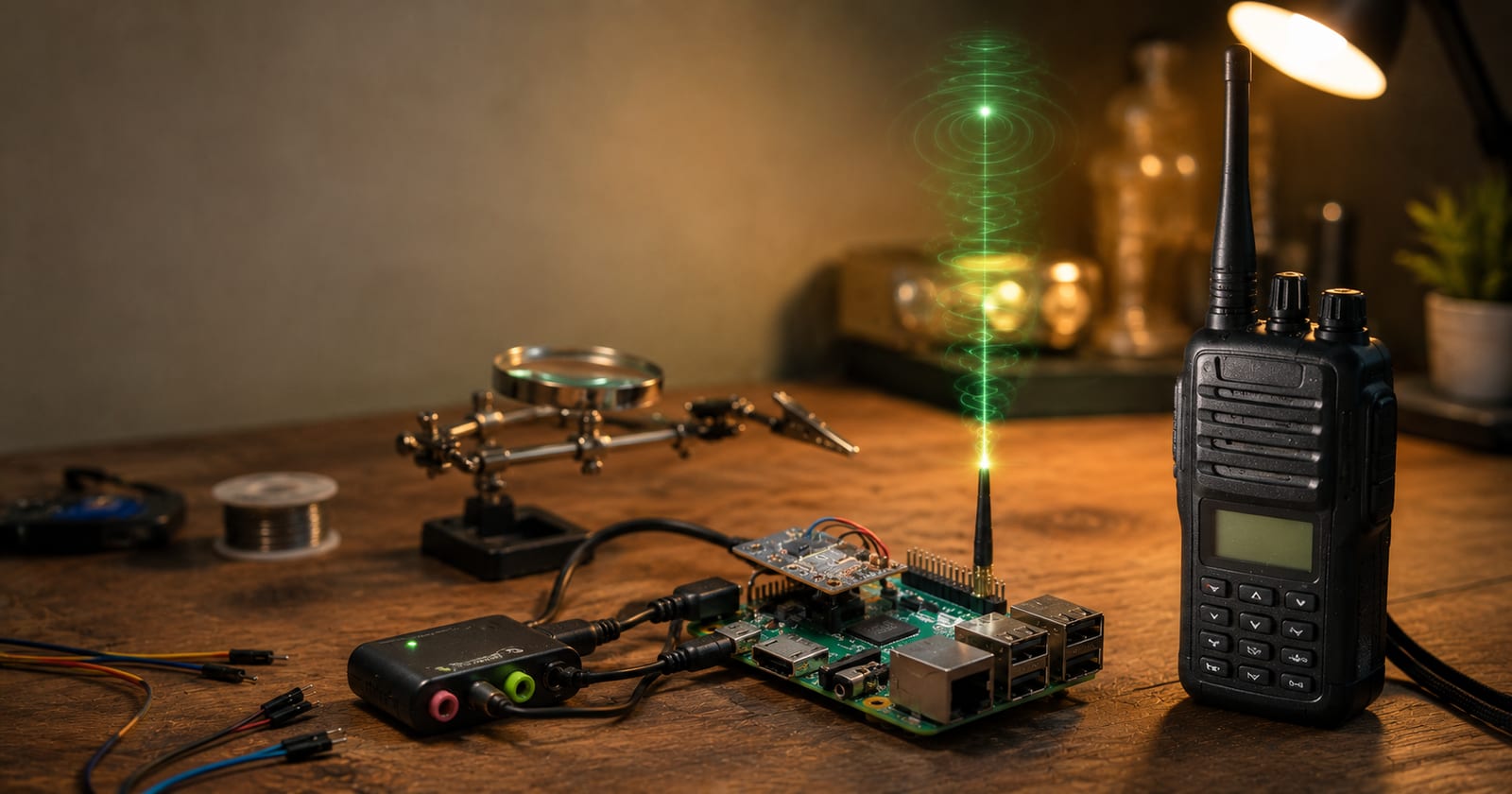
D-STAR radios come traditionally from Icom (such as the ID-52, ID-5100 or the IC-9700). Anyone without a repeater in range uses a hotspot — hardware such as DVMEGA, openSPOT or Jumbospot, running software like Pi-Star or WPSD. The hotspot connects via the internet to a reflector and generates a low-power radio signal at home; this makes you reachable worldwide with a handheld. The same rules apply here: licence required, appropriate frequency per band plan, minimum power.
Four Steps to Getting on Air
- Register your callsign at a D-STAR gateway (once only, for routing).
- Set up your radio or hotspot — set MYCALL, save an Austrian reflector as your destination.
- Link to the reflector and listen briefly to find out which net is running.
- Call with your full callsign.
Further Resources
- ÖVSV Wiki – D-Star
- Reflector dashboard XLX905: xlx905.oe9.at
- dstar.at (OE7BSH) – Austrian D-STAR information since 2018
Related articles here on our site: D-STAR explained and D-STAR vs. DMR vs. C4FM vs. M17.
This page is part of our digital voice overview — compare all modes there.
Transparency Notice
This article was researched and written with the support of AI (Claude, Anthropic) based on publicly available sources — in particular the ÖVSV Wiki and public reflector dashboards. All content has been editorially reviewed. Questions or corrections? Write to us at [email protected].