Table of Contents
- Classical vs. AI-Based Noise Reduction
- How Does AI Noise Reduction Work?
- Software Solutions for the Shack
- NVIDIA Broadcast / RTX Voice
- RNNoise
- SDR Software with AI Denoising
- Hardware with Integrated AI
- RM Noise — AI Noise Reduction Built for Amateur Radio
- AI Noise Reduction for Different Modes
- AI Noise Reduction for Transmitting
- Limitations of AI Noise Reduction
- The Future: AI Integration in Amateur Radio Software
- Sources and Further Reading
- Image Credits
- Transparency Notice
Noise is the eternal enemy of the radio operator. Whether QRM (man-made interference) or QRN (natural noise) — the fight for clean signals is as old as amateur radio itself. But in recent years, artificial intelligence has been revolutionising signal processing: neural networks recognise and remove interference in real time, where classical filters reach their limits.
Classical vs. AI-Based Noise Reduction
Traditional noise reduction methods in amateur radio have been proven for decades:
- Noise Blanker (NB): Detects and suppresses impulse noise (ignition, switching power supplies). Fast but only effective against impulse interference.
- Noise Reduction (NR/DNR): Digital noise reduction in modern transceivers. Analyses the signal in the frequency domain and reduces broadband noise.
- Notch filter: Removes narrowband interferers (carriers, tones). Automatic notch filters scan the band and eliminate interfering tones.
- DSP filters: Bandpass filters that restrict the received signal to the needed bandwidth (e.g., 300 Hz for CW, 2.4 kHz for SSB).
These methods are rule-based: they know fixed patterns and react accordingly. AI-based systems learn from data instead — they recognise interference that no rulebook can anticipate.
How Does AI Noise Reduction Work?
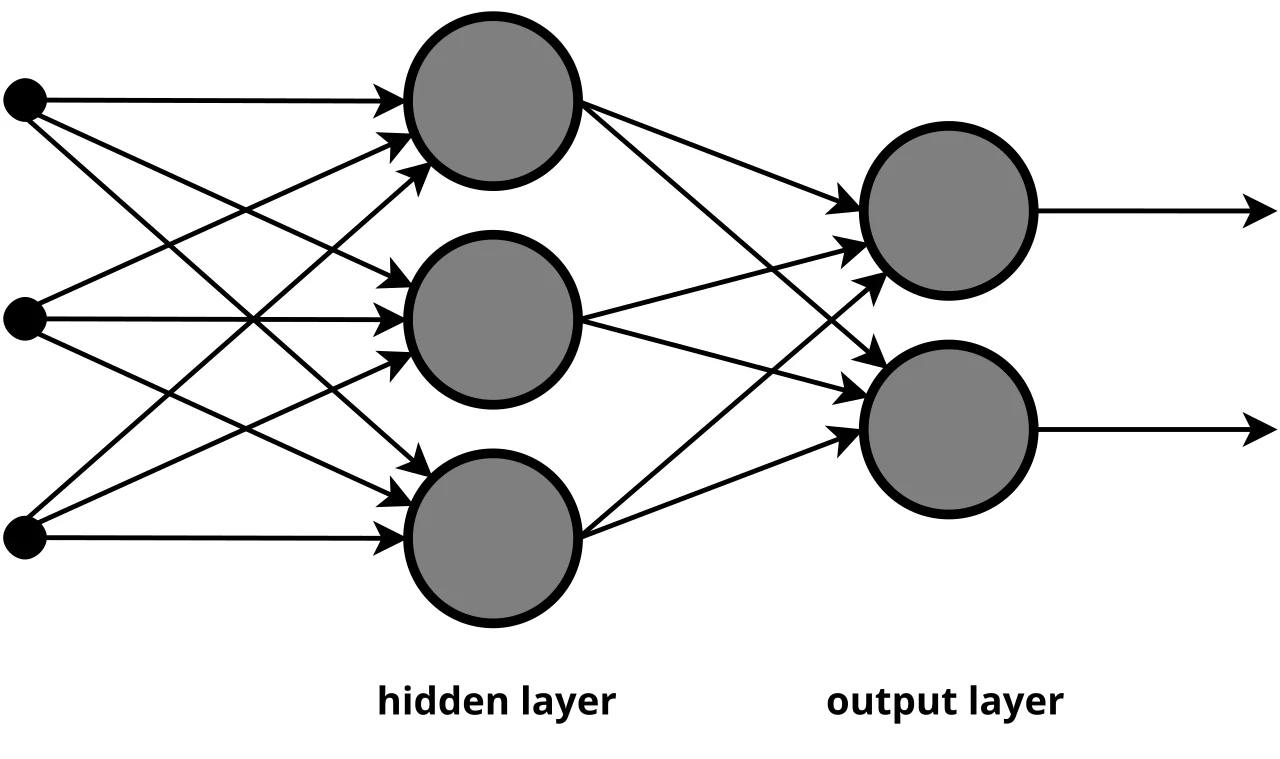
AI-based noise reduction uses neural networks — mathematical models inspired by the human brain. The process:
- Training: The network is trained with thousands of examples — clean signals (speech, CW, data) are overlaid with various noise types. The network learns to separate the wanted signal from noise.
- Inference: In operation, the trained network analyses the received signal in real time and outputs a denoised signal — all within milliseconds.
- Result: The AI-denoised signal often sounds significantly clearer than with classical filters — especially with complex interference like powerline noise, LED noise, or overlapping signals.
Software Solutions for the Shack
NVIDIA Broadcast / RTX Voice
NVIDIA's AI-based audio suite was originally developed for video conferencing but has found a following in amateur radio. RTX Voice / NVIDIA Broadcast can be inserted as a virtual audio device between transceiver and speakers:
- Removes background noise, hum, and impulse interference in real time
- Works with any audio software — simply select as input device
- Requires an NVIDIA GPU (GTX 1650 or higher)
- Particularly effective for SSB reception — speech stays clear, noise vanishes
- Free, simple installation
Caution: RTX Voice is trained on speech signals. It's not suitable for CW or data signals — the AI doesn't recognise Morse code as a "wanted signal" and may suppress it.
RNNoise
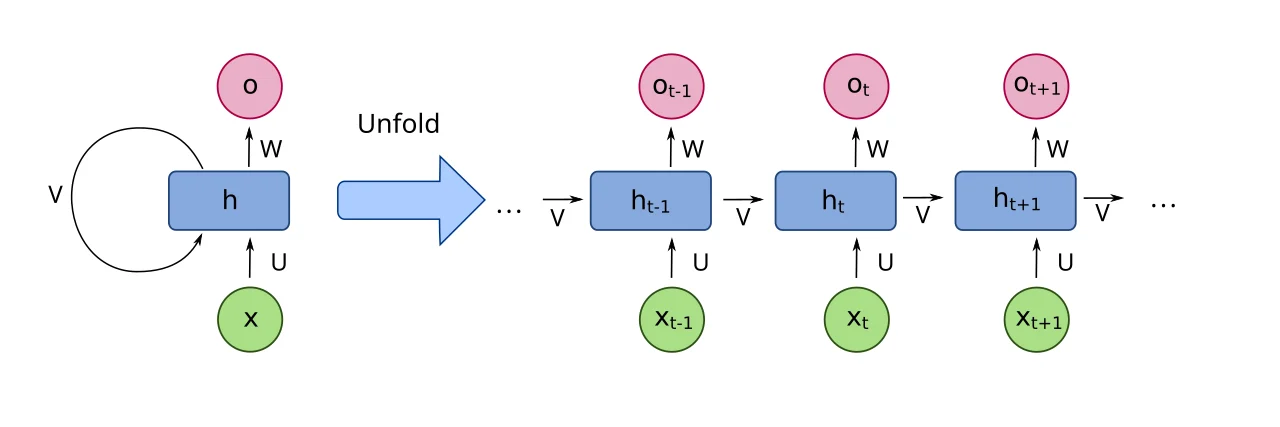
RNNoise is an open-source project by Mozilla using recurrent neural networks (RNN) for speech enhancement. It runs on the CPU — no GPU needed — making it suitable for older hardware. Cross-platform, very low CPU load, and elegantly usable as a PulseAudio/PipeWire plugin on Linux.
SDR Software with AI Denoising
Modern SDR programs increasingly integrate AI-based noise reduction. Those using an RTL-SDR or HackRF benefit from ML-based noise reduction plugins in SDR++, extended digital signal processing in SDRangel, and AI-based noise reduction specifically for amateur radio signals in Spark SDR.
Hardware with Integrated AI
Some transceiver manufacturers integrate AI technology directly into their devices:
- Elecraft K4/K4D: Advanced DSP algorithms inspired by machine learning. Adaptive noise reduction analyses the signal environment and adjusts filter parameters in real time.
- Icom IC-7610 / IC-7851: DIGI-SEL preselectors and multi-stage DNR using adaptive algorithms that learn from the signal environment.
- FlexRadio FLEX-6700: SmartSDR offers "SmartNR" — AI-assisted noise reduction delivering impressive results especially with voice signals.
RM Noise — AI Noise Reduction Built for Amateur Radio
RM Noise is a free project developed specifically for amateur radio. Unlike NVIDIA Broadcast or RNNoise, its AI was trained specifically on radio signals — both SSB and CW. The software sits between your transceiver and speakers, removing noise in real time:
- AI filters specifically trained on amateur radio signals for SSB and CW
- Free software for Windows (Mac/Linux in development)
- Processing via cloud servers — minimal local computing power required
- Continuously adjustable filter intensity
- Low latency (~300 ms) — no issue for normal QSO operation
- Web-based client available since 2025
RM Noise has spread quickly through the community and is called a "game changer" by many hams with high noise floors. Particularly impressive: CW signals buried in noise suddenly become clearly readable.
AI Noise Reduction for Different Modes
SSB (voice): This is where AI-NR shines brightest. Neural networks excel at separating human speech from noise. NVIDIA Broadcast and RNNoise make SSB signals at S3-S4 clearly intelligible where classical NR stages only produce artefacts.
CW (Morse): Specialised AI decoders extract Morse code from noise. Projects like "CW Skimmer" and "LPCW" use neural networks for CW recognition at extremely weak signal levels.
Digital modes: For FT8 and other data modes, the situation is different — these protocols have their own integrated error correction and are already optimised for weak signals. AI pre-filtering can help when strong interferers occupy the same window.
AI Noise Reduction for Transmitting
AI-NR doesn't only work for reception. It can also be used when transmitting to remove background noise from the microphone signal — particularly useful for portable operation (wind, ambient noise) or at contests in noisy environments. The microphone signal is routed through NVIDIA Broadcast or RNNoise before reaching the transceiver, producing clean TX audio without wind noise, keyboard clatter, or fan hum.
Limitations of AI Noise Reduction
- Artefacts: With very aggressive settings, AI filters can produce "bubbling" or metallic-sounding artefacts.
- Latency: AI processing takes time (typically 5-20 ms). Usually uncritical for real-time communication, but may be noticeable for contesting.
- Training data: AI-NR is only as good as its training data. A speech-trained network fails with CW.
- Computing power: GPU-based solutions like NVIDIA Broadcast need graphics card power.
- No substitute for good technique: AI-NR cannot compensate for a poor antenna. Good QRP antenna work and consistent EMC hygiene remain the foundation for clean reception.
The Future: AI Integration in Amateur Radio Software
Development is just beginning. In the coming years we can expect: integrated AI in SDR software for automatic detection and suppression of all interference types, personalised models trained on specific local interference environments, edge AI in transceivers running directly on the DSP chip, and AI-powered propagation prediction models.
More on using AI tools in amateur radio — from learning aids to shack assistants — can be found in our overview article.
AI-powered noise reduction is not hype — it's a tool that tangibly improves radio operations. Whether NVIDIA Broadcast for quick SSB reception or specialised SDR plugins for complex scenarios: the combination of classical radio technology and modern machine learning brings the best of both worlds together.
73 – your oeradio.at editorial team
Sources and Further Reading
- RM Noise — AI noise reduction specifically for amateur radio (free)
- NVIDIA Broadcast — AI-powered audio and video enhancement (free, NVIDIA GPU required)
- RNNoise — Open-source noise suppression with recurrent neural networks (Mozilla/Xiph.org)
- TheModernHam: Noise Suppression AI and Ham Radio
- The SWLing Post: The RMnoise Project
- VK4ZXI: Radio Applications of Deep Learning Noise Suppression
Image Credits
- Multi-Layer Neural Network: Wikimedia Commons, Public Domain
- Recurrent Neural Network (RNN): Wikimedia Commons, fdeloche, CC BY-SA 4.0
Transparency Notice
This article was researched and written with the assistance of AI (Claude, Anthropic). Any illustrations used were generated with AI (ChatGPT/DALL·E, OpenAI) unless otherwise noted. The editorial team has reviewed and edited all content. Despite careful review, occasional inaccuracies may occur — we welcome corrections via email to [email protected].