
Since February 2019, QO-100 on Es'hail-2 has proven that geostationary amateur radio satellites work — and work brilliantly. Thousands of radio amateurs across Europe, Africa, and Asia use the narrowband and wideband transponders daily for SSB QSOs, data transmission, and even DATV broadcasts. But QO-100 does not cover North America. This is where the futureGEO project comes in: an ambitious initiative to define the next generation of geostationary amateur radio payloads.
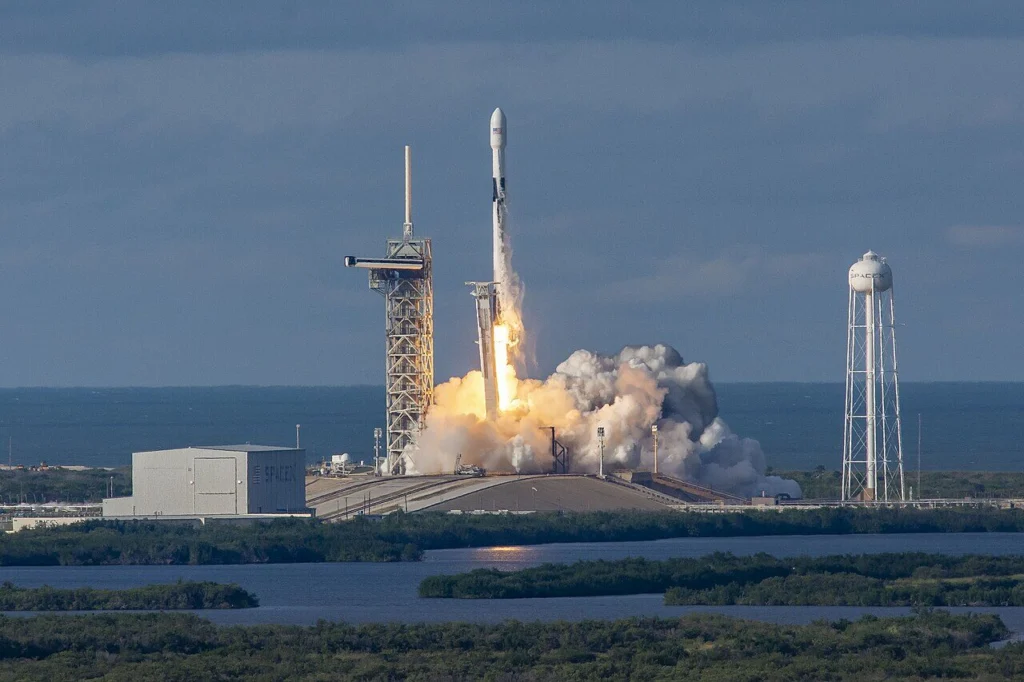
What Is futureGEO?
futureGEO is a joint project between AMSAT-DL and the European Space Agency (ESA), catalogued as ESA ARTES Future Preparation 1A.126. Its goal is to develop a new amateur radio payload for a future geostationary satellite. The concept was first presented in February 2024 by Frank Zeppenfeldt, PD0AP (ESA), at the FOSDEM conference in Brussels. AMSAT-DL published the formal proposal in March 2024.
The Vision: Global Coverage
The biggest difference from QO-100: futureGEO aims to cover North America. A discussed orbital position at approximately 43 degrees West would serve Europe, eastern North America, parts of South America, and West Africa. This would give one of the world's largest amateur radio communities — the US and Canada — their first access to a geostationary amateur radio satellite.
Proposed Transponders and Frequencies
The proposal envisions two transponders, similar to QO-100:
- Narrowband transponder: 250 kHz bandwidth, 20 watts output. Uplink at 5.6 GHz (C-band), downlink at 10 GHz (X-band). For SSB, CW, and narrowband digital modes.
- Wideband transponder: 1 MHz bandwidth, also 20 watts. For wideband digital transmissions and DVB-S/S2.
The key technical change from QO-100: the uplink shifts from 2.4 GHz (S-band) to 5.6 GHz (C-band), which means new requirements for ground stations.
Experimental Payloads
Beyond the classic transponders, exciting experimental components are being discussed:
- Software Defined Radio (SDR): A fully integrated SDR stack that could support all common amateur radio modes
- 24 GHz receivers: Millimetre-wave beacons and experiments
- Cameras: Imaging for educational and outreach purposes
- Store-and-forward: Similar to CubeSats, but with GEO satellite reliability
- Laser communication: Experimental optical transmission
Timeline and Current Status
futureGEO is in the definition phase. Key milestones:
- February 2024: First presentation at FOSDEM in Brussels
- March 2024: AMSAT-DL publishes the formal payload proposal
- May 2025: RFEI (Request for Expression of Interest) sent to national AMSAT organisations worldwide
- September 2025: First futureGEO workshop at the Bochum Observatory, during the AMSAT-DL Symposium
- 2026: Prototype demonstrations planned
- March 2026: Bochum Space Day with ESA presentation on futureGEO
- June 2026: Community workshop at HAM RADIO Friedrichshafen
- ~2029–2030: Estimated operational start
ESA has provided around 250,000 euros through its ARTES programme for the current definition and feasibility phase (ESA ARTES Future Preparation, reference ARTES-FPE-1A126). This is a cooperative partnership rather than a traditional ESA contract.
futureGEO vs. QO-100
What changes compared to the proven QO-100?
- Coverage: QO-100 at 25.9° East (Europe, Africa, Middle East, India) → futureGEO at ~43° West (Europe + North America + parts of South America)
- Uplink: QO-100 at 2.4 GHz (S-band) → futureGEO at 5.6 GHz (C-band)
- Downlink: Both at ~10 GHz (X-band) — the receive side remains similar
- Extras: futureGEO plans an SDR stack, 24 GHz receiver, cameras, and laser experiments
- Host: QO-100 on Es'hail-2 (Qatar) → futureGEO still seeking a host satellite (ESA framework)
Ground Station Requirements
The receive side (10 GHz downlink) will be very similar to QO-100 stations: a dish antenna (60–100 cm), modified LNB, and an SDR receiver. Anyone already receiving QO-100 can largely reuse their downlink hardware.
The transmit side changes fundamentally: instead of familiar 2.4 GHz WiFi amplifiers, 5.6 GHz equipment will be needed — power amplifiers and feed antennas for C-band. This is more demanding but technically feasible. Exact power requirements and link budgets are still pending, as satellite power, antenna gain, and orbital position have not been finalised.
For getting started with satellite tracking and reception, simple hardware is sufficient — monitoring QO-100 is already possible today with an RTL-SDR and an old sat-TV LNB.
How to Get Involved
- Use QO-100: The best preparation for futureGEO is getting started with QO-100 — gain GEO satellite operating experience
- Join AMSAT: AMSAT-DL and national AMSAT organisations actively support the project
- Attend workshops: HAM RADIO 2026 in Friedrichshafen and the Bochum Space Day offer opportunities for direct participation
- Contribute technically: Project documentation is publicly available on GitLab — technical contributions are welcome
- Learn microwave techniques: Understanding 5.6 GHz and 10 GHz — SDR hardware and microwave measurement are valuable skills
futureGEO is the most ambitious amateur radio satellite project of this decade. Even though launch is still years away, now is the crucial time to set the course for the next era of geostationary amateur radio.
73 – your oeradio.at editorial team
Sources
Transparency Notice
This article was researched and written with the assistance of AI (Claude, Anthropic). Any illustrations used were generated with AI (ChatGPT/DALL·E, OpenAI) unless otherwise noted. The editorial team has reviewed and edited all content. Despite careful review, occasional inaccuracies may occur — we welcome corrections via email to [email protected].