Table of Contents
- What Is CB Radio?
- History: From Boom to Niche
- CB Radio Today: Who Still Uses It?
- Modern CB Equipment 2026
- DX on 27 MHz: Long-Distance CB Contacts
- CB Radio and Emergency Communication
- From CB User to Radio Amateur
- Tips for CB Radio Beginners in 2026
- Sources and Further Reading
- Image Credits
- Transparency Notice
CB radio — Citizens Band Radio — was a mass phenomenon in the 1970s and 80s. Millions of people worldwide were on the 27 MHz band long before mobile phones and the internet became ubiquitous. Today, CB radio is often considered a relic — but those who listen more closely find a lively community, modern equipment, and surprising use cases.
What Is CB Radio?
CB radio is a licence-free radio service on the 27 MHz band (11-metre band). Unlike amateur radio, no examination or licence is required — anyone can transmit. In Austria and the EU, 80 channels are available with a maximum of 4 watts ERP (effective radiated power — accounting for antenna gain) in FM and 4 watts PEP (peak envelope power — the maximum power during voice peaks) in SSB (AM at 1 watt). The frequency band extends from 26.965 to 27.405 MHz.
Key differences compared to PMR446 and Freenet:
- Range: CB radio on 27 MHz has significantly more range than PMR446 (446 MHz). Locally, 10–50 km is realistic, with skip conditions reaching several hundred kilometres. Since the 11-meter band (27 MHz) sits directly below the 10-meter amateur band (28 MHz), the same propagation physics apply: during Sporadic-E events or high solar activity, intercontinental contacts over thousands of kilometres are possible — no license required.
- External antenna: Unlike PMR446, CB radio allows external antennas — multiplying the range.
- SSB operation: CB radio allows single sideband (SSB) operation, roughly doubling range at the same power.
- Cost: CB radios are cheaper than amateur equipment but more expensive than PMR446 handhelds.
History: From Boom to Niche
The history of CB radio begins in 1945 in the USA, when the FCC established the Citizens Radio Service. The big boom came in the 1970s — fuelled by trucker films like “Convoy” and TV series. In the USA, there were at times over 30 million licensed CB stations.
In Austria, CB radio became legal in 1977 — initially with 22 channels and strict registration requirements. Later, 40 then 80 channels were added, and registration was dropped. In the heyday of the 1980s, a CB radio was standard equipment for many drivers. With the rise of mobile phones in the 1990s, user numbers dropped dramatically.
CB Radio Today: Who Still Uses It?
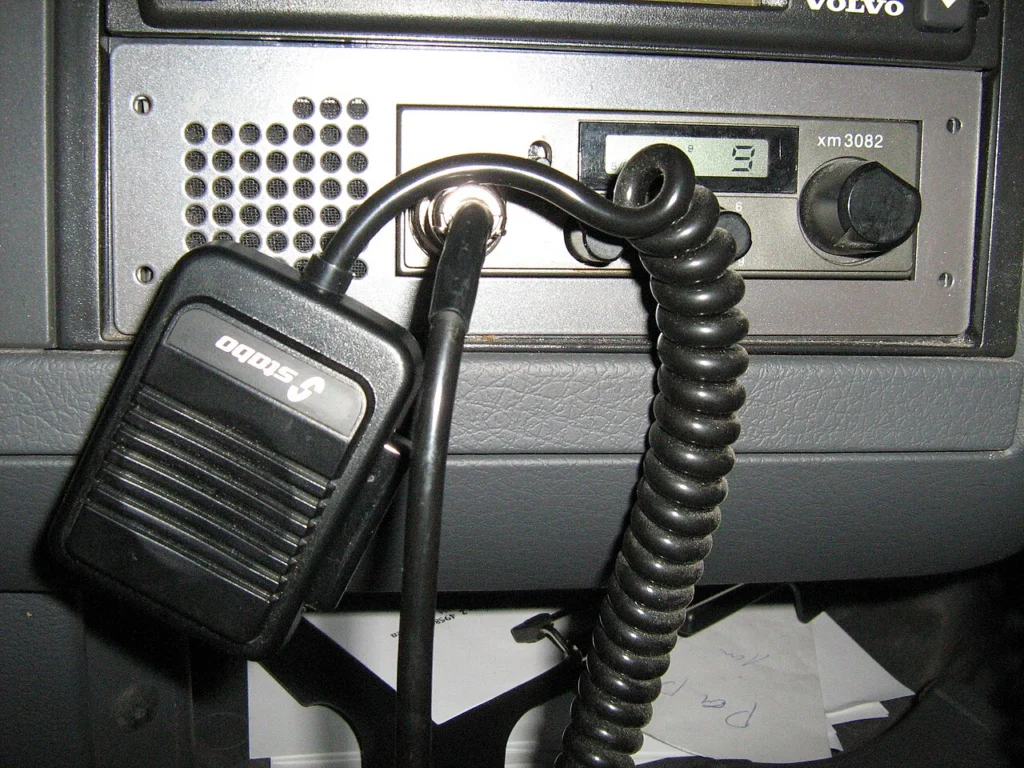
- Truck drivers: Especially in long-haul, truckers continue to use CB radio. Channel 9/19 remains the classic for traffic information and jam reports.
- Off-road and 4×4 community: For off-road trips, rallies, and expeditions, CB radio remains standard — reliable, independent of mobile networks, and robust.
- Agriculture: On farms and during harvest, CB radio is used for coordination — free, no contract, no coverage problems.
- Hobbyists: A loyal community maintains CB radio as a hobby, with nets, DX chasing through skip conditions, and tinkering projects.
- Emergency preparedness: In a blackout scenario, CB radio works without any infrastructure — no mobile network, no internet needed.
Modern CB Equipment 2026
Manufacturers haven’t abandoned CB radio. Current devices are compact, capable, and equipped with modern features:
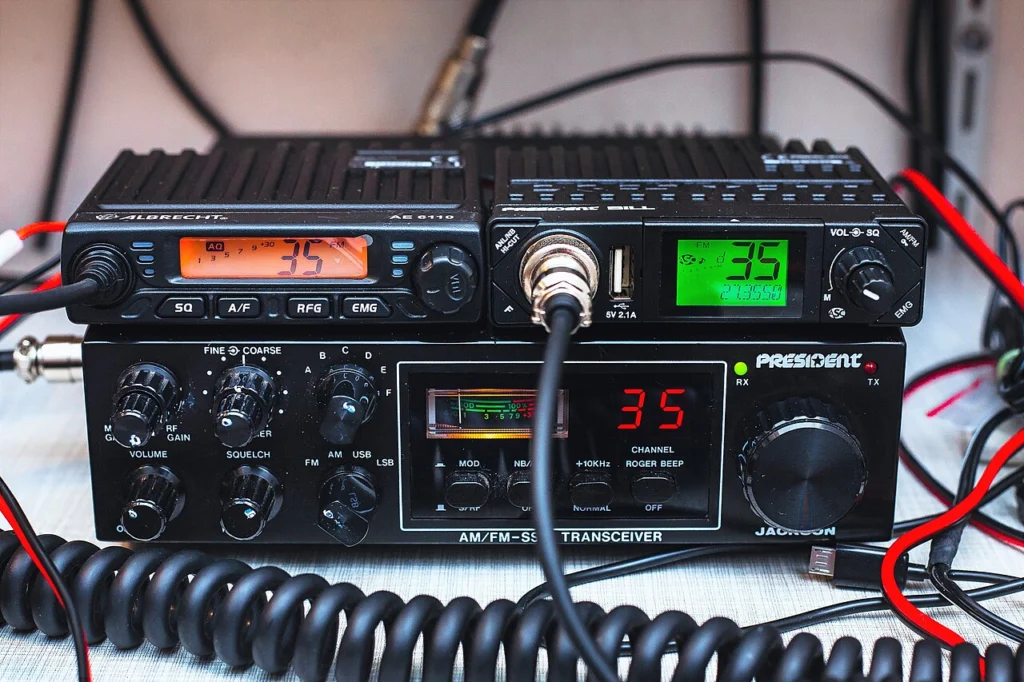
- President Bill II: 40/80 channels, AM/FM, compact — ideal starter radio (~EUR 70)
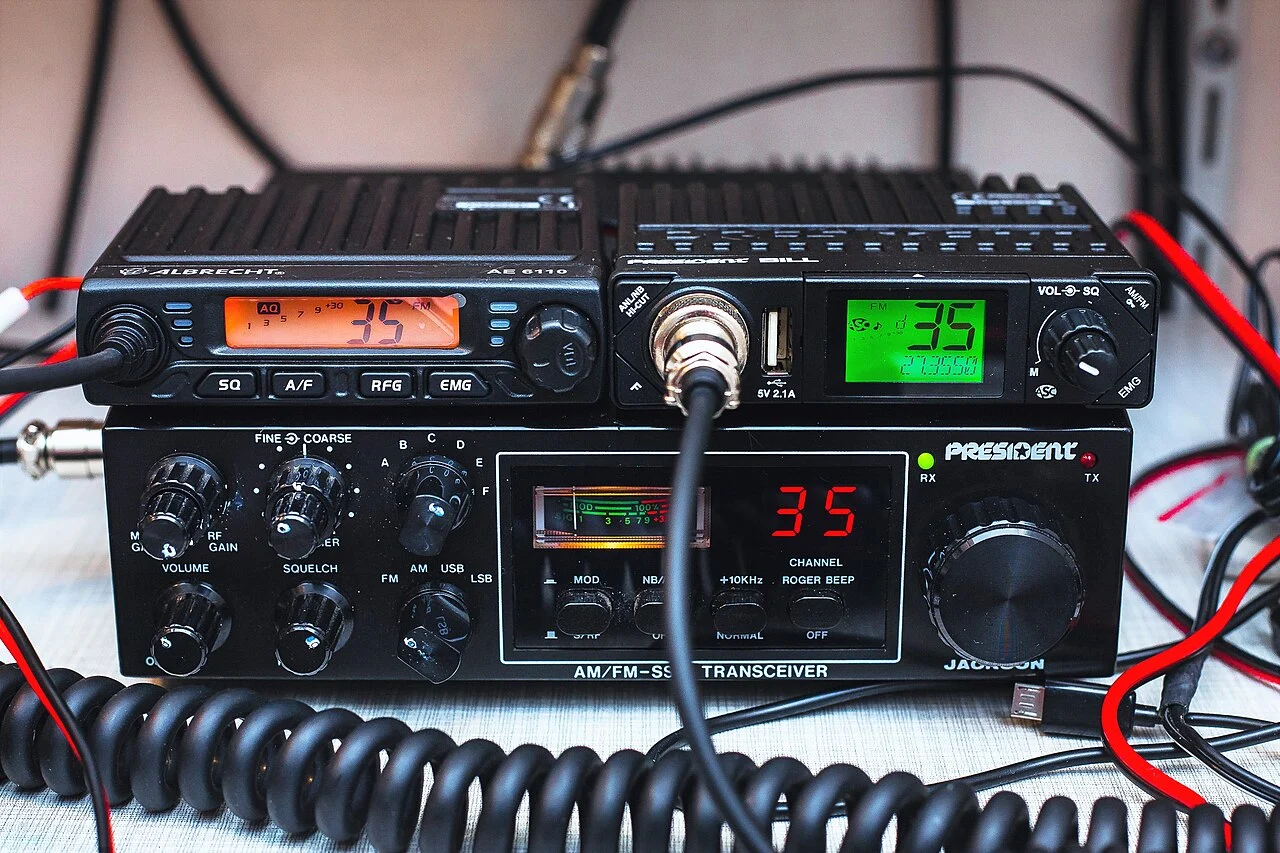
- Albrecht AE 6110: Ultra-compact DIN-slot format, FM, 40 channels (~EUR 60)
- President McKinley III: AM/FM/SSB, 80 channels, ASQ, SWR meter, noise blanker — the flagship (~EUR 170)
- President Randy III: Portable CB, AM/FM, 80 channels, NiMH battery (~EUR 100)
DX on 27 MHz: Long-Distance CB Contacts
The 27 MHz band sits at the boundary between HF and VHF — and shows remarkable propagation phenomena during elevated solar activity. In the current Solar Cycle 25, near its maximum in 2025/2026, long-distance contacts on CB are not uncommon:
- Sporadic E: In summer (May-August), Sporadic E events enable ranges of 500-2,000 km on 27 MHz
- F2 propagation: With high solar activity, the 11-metre band opens for worldwide contacts — transatlantic CB DX becomes possible
- SSB operation: For DX on CB, SSB radios are essential. DX enthusiasts gather on the upper channels in LSB
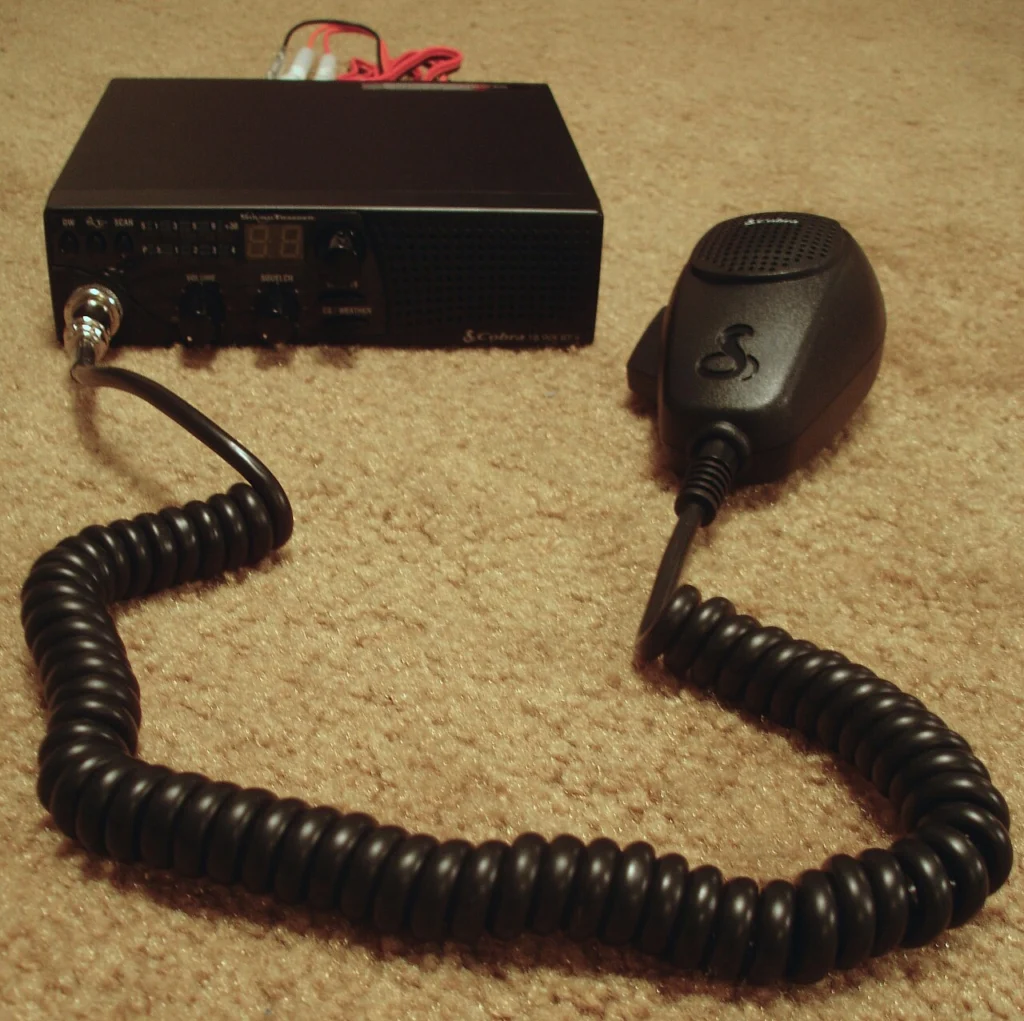
CB DX has its own appeal: making long-distance contacts with 4 watts and a mobile antenna — very close to the QRP spirit in amateur radio.
CB Radio and Emergency Communication
In crisis situations, CB radio has a decisive advantage: it works without any infrastructure. No mobile network, no internet, no repeater needed. Channel 9 is internationally defined as the emergency channel.
For blackout preparedness, CB radio is a useful supplement to amateur radio: equipment is inexpensive, no licence required, the whole family can participate. A battery-powered CB handheld in an emergency pack can provide the connection to neighbours and helpers.
From CB User to Radio Amateur
CB radio has always been a stepping stone to amateur radio. Those who discovered the fascination of radio on CB often want more: higher power, more bands, their own callsign. The amateur radio exam then opens doors to a much broader world:
- Transmit power up to 1,500 watts instead of 4 watts
- Access to dozens of frequency bands instead of just 27 MHz
- Digital modes like FT8, SSTV, ATV
- Satellite communication, EME, and repeater operation
- Homebrew and experiments with custom hardware
Those interested in amateur radio can find all information about getting started and choosing the right licence class on our website.
Tips for CB Radio Beginners in 2026
- Start with a mobile unit: A President Bill II or Albrecht AE 6110 for EUR 60-70 offers a solid start.
- Use a good antenna: The antenna accounts for 80% of performance. A longer mobile antenna (>100 cm) delivers significantly more range than a short stub.
- Check SWR: Always measure the standing wave ratio before first transmission. An SWR above 2:1 costs range and can damage the radio.
- Monitor channel 9: The international emergency and calling channel — you’ll often find contacts here.
- Choose an SSB radio for DX: If you want long-distance contacts, invest in an SSB-capable unit — the premium is worth it.
CB radio may no longer be the mass phenomenon of the 1980s — but it lives on. As a licence-free entry into the world of radio, reliable communication beyond mobile networks, and a stepping stone to amateur radio, Citizens Band Radio has kept its place.
73 – your oeradio.at editorial team
Sources and Further Reading
- YouTube: Dilettant45 — CB radio channel with equipment tests, mountain radio and field reports
- 50 Jahre CB-Funk in Deutschland
- CB-Funk vs. Amateurfunk 2025
- Wikipedia: CB-Funk
- Wikimedia Commons: CB Radios
Image Credits
- Albrecht AE 6110 + President Jackson: Wikimedia Commons, CC BY-SA 4.0
- Stabo CB radio in truck: Wikimedia Commons, Public Domain
- Cobra 18 WX ST II: Wikimedia Commons, CC BY-SA 3.0
Tip: Radio awards for CB operators too! If you want to combine your CB contacts with a tangible goal, check out the six radio awards from Kärnten Funkt (Carinthia). What makes them special: they are explicitly open to CB and PMR operators — from the Wörthersee Award to the Carinthian Lakes Diploma. Great motivation to get on the air regularly!
Transparency Notice
This article was researched and written with the assistance of AI (Claude, Anthropic). The editorial team has reviewed and edited all content. Despite careful review, occasional inaccuracies may occur — we welcome corrections via email to [email protected].