Table of Contents
- Requirements for a Portable Antenna
- EFHW — The Classic for Portable Operation
- Linked Dipole — Efficiency Without Compromise
- Vertical Antennas — Omnidirectional Radiators for DX
- Random Wire with ATU — Maximum Flexibility
- Mast Options — What Supports the Antenna?
- Band Selection — Where to Operate Portable?
- Accessories — The Small Things That Make the Difference
- Recommendations by Activation Type
- Tips for Austria
- Videos
- Conclusion — There Is No Single Best Antenna
- Transparency Notice
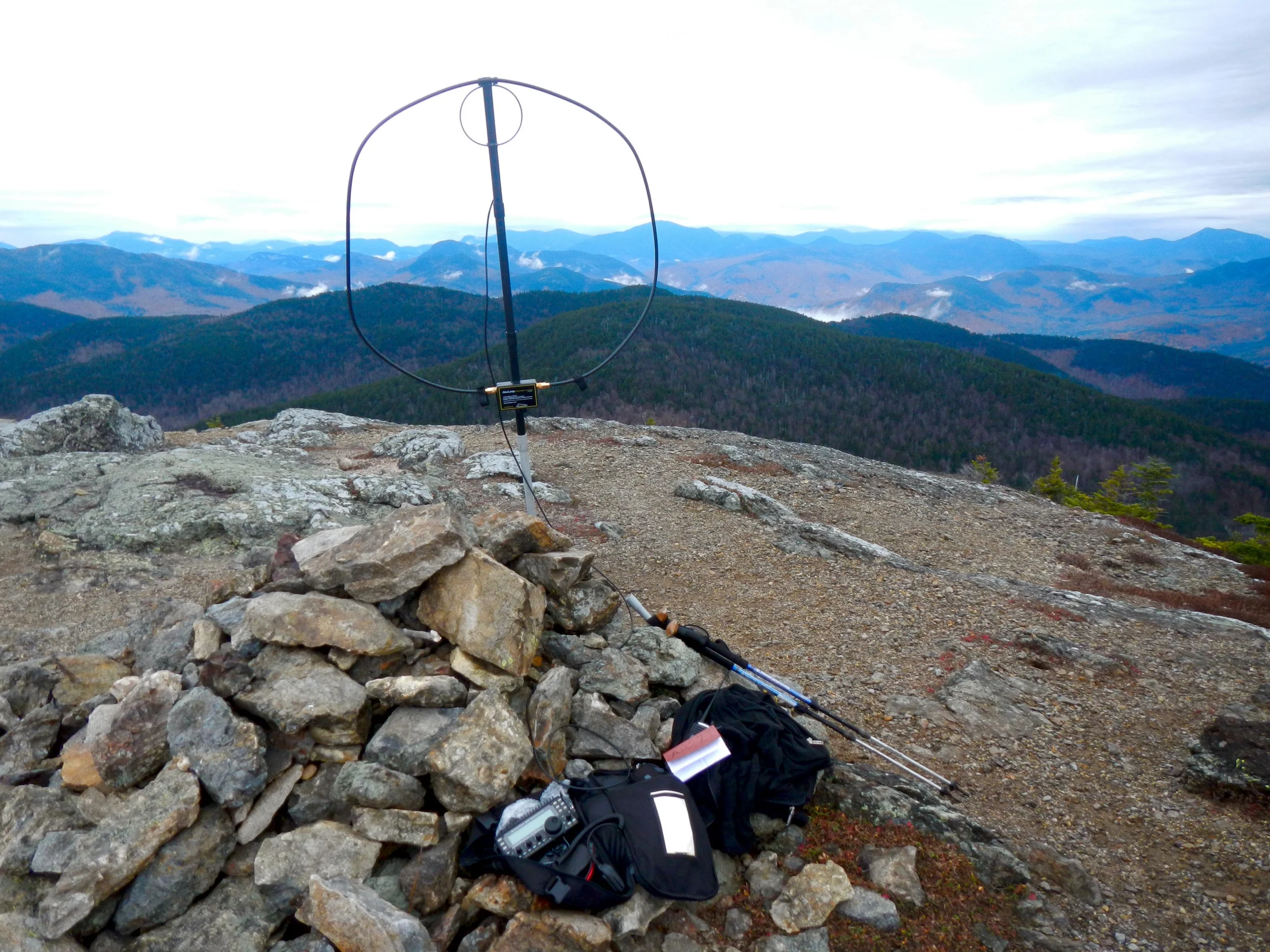
When you pack your rucksack to activate a SOTA summit or visit a POTA park, one question matters above all others: which antenna are you bringing? The requirements are clear — lightweight, compact, quick to set up, and ideally usable on multiple bands. But the choice is vast: EFHW, linked dipole, vertical, random wire. Each design has its strengths and weaknesses. In this article we compare the most popular portable antennas and help you make the right choice for your next activation.
Requirements for a Portable Antenna
Before we look at individual antenna types, let us consider the basic requirements. A good portable antenna for SOTA and POTA should meet the following criteria:
- Weight under 500 grams: Every gram counts on the mountain. The antenna including accessories should ideally weigh under 500 g — for alpine tours, under 300 g is even better.
- Packed length under 70 cm: The antenna must fit inside a rucksack or be attachable to the outside. Telescopic masts should collapse to under 50 cm.
- Quick setup (5 to 15 minutes): Every minute counts on the summit — especially in changeable weather. The antenna must be deployable with cold fingers and wind.
- At least two bands: 40 m and 20 m are the most important SOTA bands. Adding 30 m, 15 m, or 10 m coverage gives more flexibility.
- No radial system: On rocky summits or in parks without open ground, radials are impractical. Antennas that do not require a ground system have a clear advantage.
No single antenna type meets all these requirements perfectly. The choice depends on which compromises you are willing to make — and that is exactly what makes it interesting.
EFHW — The Classic for Portable Operation
The End-Fed Half-Wave antenna (EFHW) has become the most popular portable antenna in recent years — and for good reason. An EFHW for the 40-metre band consists of a 49:1 impedance transformer and approximately 20 metres of wire. Because the wire functions as a half-wave radiator, it also works on the harmonic bands of 20 m, 15 m, and 10 m — four bands with a single antenna, no tuner required.
The transformer is typically based on an FT140-43 toroid core with a winding ratio of 2:14 or 3:21. A small 100 pF capacitor across the primary winding improves matching on the higher bands. The total weight of the transformer is 60 to 100 grams, and the wire adds another 50 to 80 grams. A complete EFHW system comes in at under 200 grams.
Ready-made EFHW kits are available from QRPguys (from about EUR 30), K6ARK, and SOTAbeams. If you want to build your own, an FT140-43 toroid, some enamelled copper wire, and a BNC connector will cost around EUR 15 in materials. The construction is straightforward — an ideal first homebrew project. You can find more details in our EFHW article.
The EFHW’s biggest advantage: it only needs one support point. Throw one end over a branch or attach it to a telescopic mast, run the other end to the transceiver on the ground — done. The downsides are some tuning effort during initial setup and the fact that the wire can couple RF onto the coax shield, leading to hot spots on the transceiver case. A common-mode choke at the feed point solves this problem.
Linked Dipole — Efficiency Without Compromise
The linked dipole is the second pillar of the portable antenna world. The concept: a full-size half-wave dipole whose legs can be lengthened or shortened using plug-in connectors (links). This allows the dipole to be switched between bands — without a tuner and with full half-wave efficiency on every band.
The best-known example is the SOTAbeams Band Hopper III, covering 20 m, 30 m, and 40 m. It weighs just 390 grams including wire winders, coax cable, and back guy. The price is around EUR 70. Matching is excellent on all three bands — an SWR below 1.5:1 is achievable without a tuner, and transceivers like the IC-705 can work directly without an external tuner.
The downside: you need three support points — one in the centre for the feed point and one at each end of the legs. This requires more space and setup time. Changing bands means walking to the dipole, switching links, and walking back — that costs 2 to 3 minutes per band change. On an exposed summit with limited time, this can be an argument against the linked dipole.
Nevertheless, if you have the space and want maximum efficiency, the linked dipole is hard to beat. The field strength of a resonant half-wave dipole is simply unmatched.
Vertical Antennas — Omnidirectional Radiators for DX
A portable vertical antenna typically consists of a 5 to 10 metre telescopic fishing rod with a wire attached as the radiator. The advantage: an omnidirectional radiation pattern with a low take-off angle — ideal for DX contacts. While a dipole radiates in its preferred direction, a vertical sends equally in all directions.
For a quarter-wave vertical on 40 m you need about 10 metres of mast height — just about manageable with a fishing rod. On 20 m, 5 metres is sufficient, which is far more practical. The problem: a vertical needs a counterpoise. This can be two to four wires laid on the ground, each a quarter wavelength long.
Vertical antennas are susceptible to wind — a 7-metre fishing rod in 40 km/h winds on a summit is a challenge. Without guying, the mast topples over, and laying out counterpoises on rocky ground is tedious. For sheltered locations and POTA activations in parks, however, the vertical is an excellent choice, especially when DX contacts are the goal.
Random Wire with ATU — Maximum Flexibility
The most flexible solution is a non-resonant wire of arbitrary length combined with an automatic antenna tuner (ATU). Simply throw 10 to 20 metres of wire into a tree or over a mast and let the ATU handle the matching. Change frequency? Press the button, the ATU retunes, and you are back on the air.
The most popular portable ATUs are the Elecraft T1 and the ATU-10. The Elecraft T1 weighs just 140 grams (including 9V battery), measures 11 x 6 x 2 cm, and tunes from 160 m to 6 m. It works with 0.5 to 20 watts and costs around EUR 180. The ATU-10 is a more affordable alternative (about EUR 130) with similar specifications. Both use latching relays that only draw current when switching — battery life is accordingly excellent.
The downside: a random wire is not a resonant antenna. While the ATU ensures the transceiver sees a clean 50-ohm load, radiation efficiency can be suboptimal depending on wire length and height. You also need a short counterpoise. Nevertheless, if you want to carry just one antenna and need maximum band flexibility, a random wire plus ATU serves you well.
Mast Options — What Supports the Antenna?
Every antenna needs height, and there are several mast options available. The choice of mast is often just as important as the choice of antenna itself:
- SOTAbeams Carbon-6: The lightweight champion. Just 315 grams, 6 metres extended, 43 cm collapsed. Made from carbon fibre, extremely rigid for its weight. Ideal for EFHWs and lightweight dipoles. Price around EUR 75.
- Spiderbeam 7m Mini: A fibreglass telescopic mast, 7 metres tall at about 1 kg. More robust than carbon, handles gusts better. Collapsed length about 60 cm. Price around EUR 45.
- Telescopic fishing rods: The budget option. 5 to 7 metre fibreglass fishing rods weigh 300 to 600 grams and cost just EUR 15 to 30. They are not as rigid as dedicated antenna masts, but perfectly adequate for occasional activations. Note: carbon fishing rods are lighter but conductive — the antenna wire must not rest directly against the carbon.
- Trees: Nature’s mast. A throw bag (50 g) with thin nylon cord lets you lob a line over a branch. Free, but not always available — on alpine summits above the treeline, there are no trees.
For guying, 2 mm nylon cord (mason’s line) works well — lightweight, strong, and cheap. Three guy lines of 3 metres each with small pegs will stabilise any telescopic mast reliably. Total weight for the guying system is under 100 grams.
Band Selection — Where to Operate Portable?
Not all bands are equally suited for portable operation. Band selection determines who you can reach and how many QSOs are possible in the available time:
- 40 m (7 MHz): The primary SOTA band in Europe. During daytime, NVIS propagation (Near Vertical Incidence Skywave) provides coverage out to 800 km — perfect for contacts within Austria and neighbouring countries. SOTA frequencies: 7.032 MHz (CW) and 7.090 MHz (SSB). Antenna: approximately 20 m of wire for a half wave.
- 20 m (14 MHz): The best DX band. Open during daytime for intercontinental contacts. SOTA frequencies: 14.062 MHz (CW) and 14.285 MHz (SSB). Antenna: approximately 10 m for a half wave — more manageable than 40 m.
- 30 m (10.1 MHz): An underrated band. Excellent propagation conditions, no contest QRM (only CW and digital modes permitted), often quieter than 40 m and 20 m. Ideal for CW activators.
- 2 m FM (145.500 MHz): As a backup and for local contacts. With a small rubber duck antenna on a handheld radio, you can reach surprising distances from a summit. No substitute for HF, but a useful addition.
For a valid SOTA activation you need at least four QSOs — achievable on 40 m or 20 m CW in 10 to 15 minutes if you spot yourself on SOTAwatch beforehand. For POTA, ten QSOs are required, which takes a bit more time. Operating on multiple bands significantly increases your chances.
Accessories — The Small Things That Make the Difference
Besides the antenna and mast, several accessories make portable operation considerably more pleasant:
- RG-316 coaxial cable: Thin, flexible coax weighing just 30 to 60 grams per 5 metres. Perfectly adequate for QRP operation (5 to 10 watts) over short runs. BNC connectors are preferable to PL-259 for portable work as they are quicker to connect and need no tools.
- Wire winders: Small winding boards made from plastic or 3D-printed keep antenna wire tidy and prevent tangles. SOTAbeams offers ready-made wire winders, but you can easily make your own.
- Throw bag: A small sandbag (50 to 100 g) on thin cord for throwing a line over a branch. Indispensable when using trees as masts.
- NanoVNA: A pocket-sized vector network analyser (about EUR 30) for tuning antennas in the field. Especially valuable for homebuilt EFHW antennas — it lets you adjust wire length precisely until the SWR is right on all desired bands. More details in our NanoVNA article.
- Logbook and pencil: Yes, analogue. On a summit, a waterproof notebook is often more reliable than an app on a smartphone with a dead battery in freezing temperatures. Many experienced SOTA activators log on paper and transfer their QSOs to the database at home.
Recommendations by Activation Type
There is no single best portable antenna — there is the best antenna for your type of activation. Here are our recommendations:
Alpine high tour (demanding SOTA summits): EFHW wire antenna with carbon telescopic mast (SOTAbeams Carbon-6 or lightweight fishing rod). Total antenna system weight: approximately 500 grams. Cost: EUR 50 to 100. Setup takes 5 to 10 minutes. Ideal in combination with a QRP transceiver such as the Elecraft KX2 or Xiegu G90. This combination is the gold standard for weight-conscious mountaineers.
Leisurely hike (moderate SOTA summits): Linked dipole (e.g. SOTAbeams Band Hopper III) with 7-metre fibreglass mast. Total weight: approximately 1.5 kg. Slightly heavier, but full half-wave efficiency on three bands without a tuner. Perfect when the path to the summit is not too steep and you have more time for setup.
Drive-up activation (POTA in a park or easily accessible SOTA summit): Random wire with ATU or vertical antenna on a fishing rod. Weight matters less here. You can take a taller mast, use more coax, and experiment at your leisure. The flexibility of the ATU pays off when you are on site for a longer period and want to work multiple bands.
Tips for Austria
Austria is a paradise for portable amateur radio. With 2,145 registered SOTA summits across nine federal states and nearly 400 registered POTA parks for POTA activations, the country offers an enormous variety of locations. From the gentle hills of the Weinviertel to the high alpine peaks of the Hohe Tauern — there is a suitable site for every fitness level and every antenna type.
Some Austria-specific pointers:
- Alpine terrain: Above the treeline (approximately 1,800 to 2,200 m) there are no trees for hanging wire antennas. A telescopic mast is essential here. Rocky summits often offer no way to drive in pegs — using stones as weights for guy lines is the alternative.
- Weather: In the Alps, weather can change completely within 30 minutes. An antenna that can be set up and taken down quickly is vital when thunderstorms threaten. At the first sign of lightning, dismantle everything and leave the summit immediately! Metal antennas and telescopic masts are potential lightning conductors.
- Wind: On exposed summits (e.g. Dachstein area, around the Grossglockner, Karawanken ridge) strong winds are common. Lightweight fishing rods without guying will not survive. Either guy the mast properly or choose lower, more sheltered summits.
- POTA parks: Austria has not just six national parks, but a total of nearly 400 registered POTA parks — including nature reserves, Natura 2000 sites, nature parks, landscape protection areas, recreation areas, historic sites, hiking trails and even botanical gardens and city parks such as the Vienna Prater or Schönbrunn Palace Park. A valid POTA activation requires at least ten QSOs. The variety of park types means there are plenty of activation opportunities even close to urban areas. Parks with trees provide ideal conditions for wire antennas — just throw a line over a branch and get going. More on this topic: How POTA fever caught us, WWFF Austria and the POTA team page.
- Minimum QSOs: A valid SOTA activation requires at least four QSOs, while POTA requires at least ten. Spot yourself on SOTAwatch or in the POTA system beforehand so that chasers know you are QRV. This increases your contact rate dramatically.
For more information about SOTA in Austria, see our detailed SOTA article.
Videos
Want to see these antenna types in action? Here is a selection of recommended videos:
- K6ARK EFHW — Tiny Portable QRP Antenna Kit (House of Ham): A look at the K6ARK EFHW kit — one of the most compact portable HF antennas available. Watch video
- SOTABeams Band Hopper IV Linked Dipole (N1JUR Amateur Radio): Detailed review of the most popular linked dipole for SOTA. Watch video
- Simple Portable HF Antennas with Tim G5TM (Ham Radio DX): Practical build guides for simple portable antennas. Watch video
- OE5JFE — SOTA First Activation of Rossgruberkogel OE/SB-415: Austrian SOTA activation with a 20 km hike and 1,200 m elevation gain — real-world practice from the Alps. Watch video
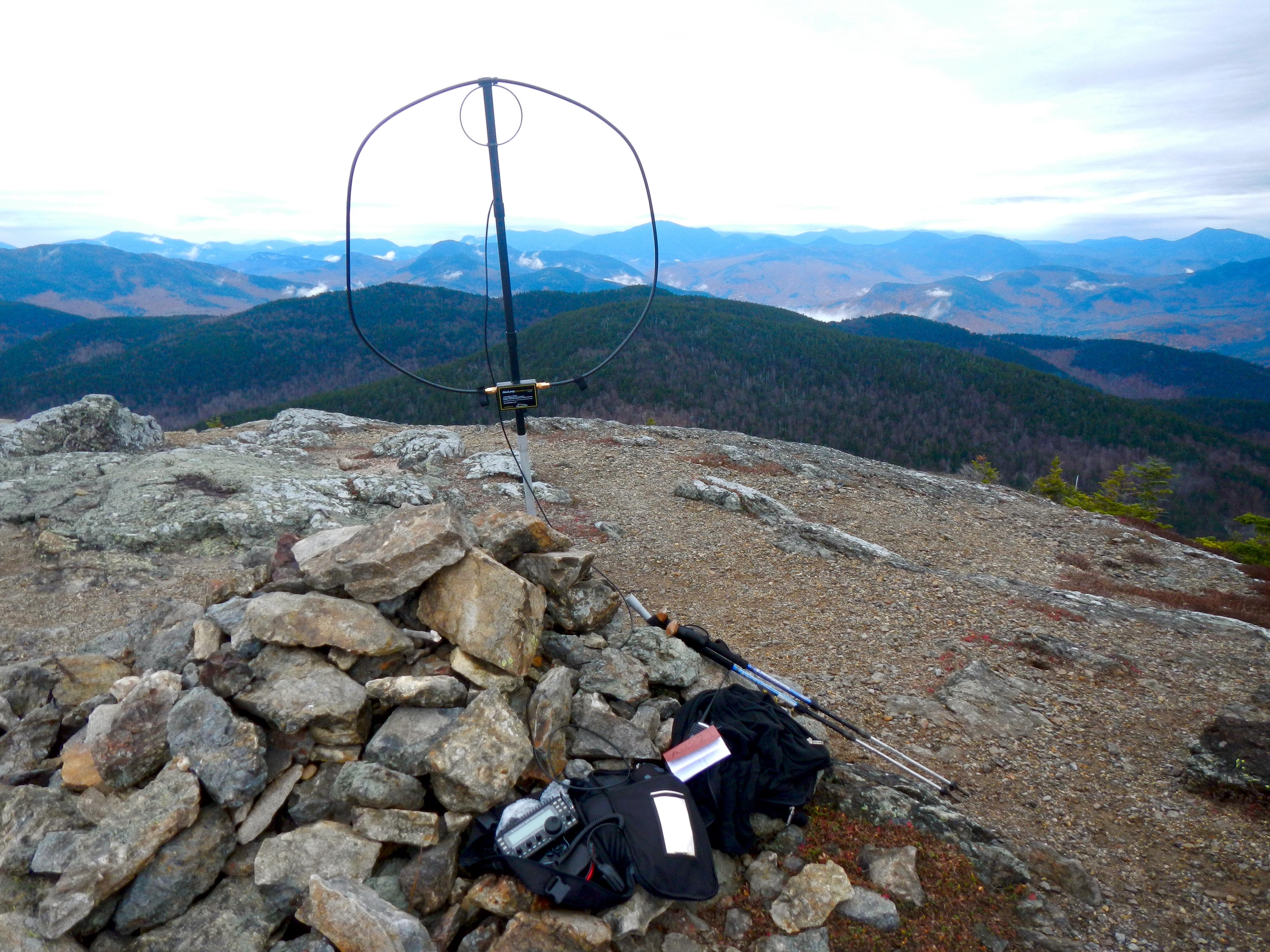
Conclusion — There Is No Single Best Antenna
The question of the best portable antenna cannot be answered with a single word. It depends on the use case. For alpine SOTA activations where every gram counts, the EFHW with a lightweight mast is hard to beat. If you want maximum efficiency and clean matching without a tuner, choose the linked dipole. For DX-oriented activations, the vertical is a strong choice. And if you need maximum flexibility, take a random wire with ATU.
Our tip: start with a simple EFHW — homebuilt for under EUR 20. Gain experience in the field, find out which bands and operating modes you enjoy most, and develop your setup from there. The best antenna is the one you actually take along and put up. And at the end of the day, it is not about decibels and SWR readings — it is about the experience of operating from a summit or a park and bringing the world a little closer.
73 – your oeradio.at editorial team
Transparency Notice
This article was researched and written with the assistance of AI (Claude, Anthropic). Any illustrations used were generated with AI (ChatGPT/DALL·E, OpenAI) unless otherwise noted. The editorial team has reviewed and edited all content. Despite careful review, occasional inaccuracies may occur — we welcome corrections via email to [email protected].