Summits on the Air — SOTA for short — combines two passions: hiking and amateur radio. In Austria, a country full of mountains, SOTA is especially popular. From the gentle Koralpe to the high-alpine Großglockner massif, the SOTA programme offers a suitable summit for every fitness level.
What is SOTA?
SOTA is an international award and activation programme in which radio amateurs operate from mountain summits. Each registered summit carries a point value based on its prominence — the more exposed the summit, the more points it is worth. To validly activate a summit, you must make at least four QSOs from the activation zone.
The activation zone covers the top 25 vertical metres of a summit. You do not need to stand at the exact summit cross, but you must be close enough.
SOTA regions in Austria
Austria is registered in the SOTA database as OE and is divided into nine regions corresponding to the federal states:
- OE/OO: Upper Austria — Dachstein Group, Totes Gebirge, Höllengebirge
- OE/SB: Salzburg — Hohe Tauern, Steinernes Meer, Tennengebirge
- OE/TI: Tyrol — Stubai Alps, Ötztal Alps, Karwendel
- OE/VB: Vorarlberg — Rätikon, Silvretta, Verwall
- OE/KT: Carinthia — Karawanken, Carnic Alps, Nockberge
- OE/ST: Styria — Dachstein, Hochschwab, Koralpe
- OE/NO: Lower Austria — Schneeberg, Rax, Ötscher
- OE/WI: Vienna — yes, even Vienna has SOTA summits (e.g. Hermannskogel)
- OE/BL: Burgenland — Geschriebenstein and other elevations
In total, over 2,000 summits are registered in Austria — from the 542-metre Hermannskogel in Vienna to three-thousanders in Tyrol and Salzburg.
Equipment for SOTA
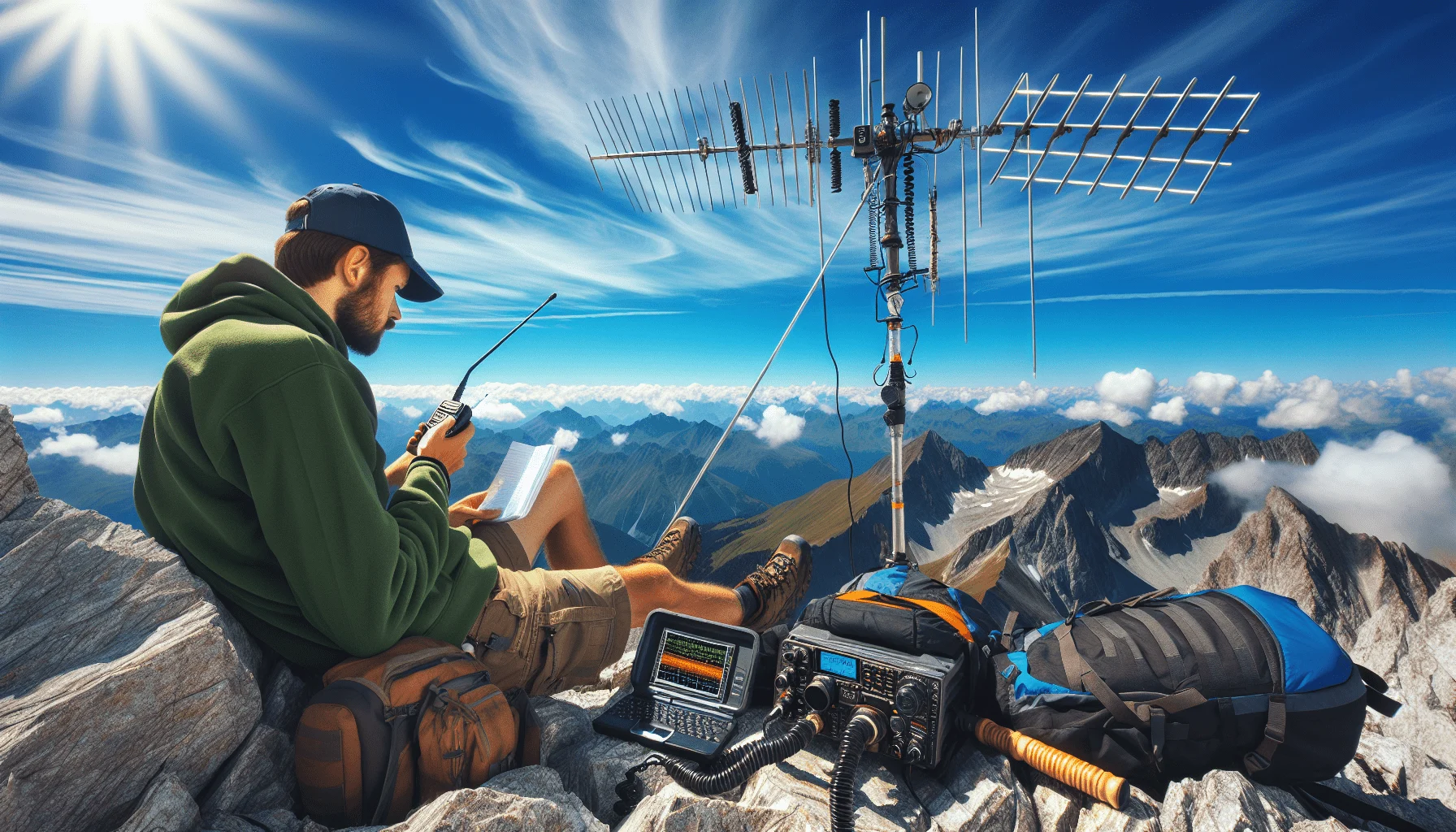
With SOTA, every gram counts. The equipment must be light, robust and as simple as possible. A typical SOTA station weighs between 1 and 3 kilograms — including antenna and battery.
Transceivers
Popular SOTA transceivers include:
- Yaesu FT-818: The classic. 6 watts on HF/VHF/UHF, solid and proven, but at nearly 1 kg not the lightest.
- Elecraft KX2/KX3: Premium QRP transceivers with an excellent receiver. The KX2 weighs only 370 grams.
- Xiegu G90/G106: Budget alternative with decent performance.
- Handheld radios: For 2 m/70 cm a simple handheld is enough — even a Quansheng UV-K5 does the job.
- tr-uSDX: Ultra-light QRP transceiver (under 200 grams) for CW and SSB on multiple bands.
Antennas
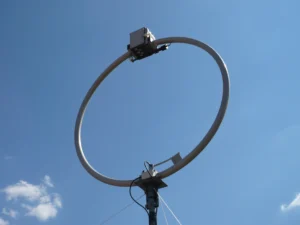
The antenna is at least as important as the transceiver in SOTA:
- Wire dipole: Light, cheap, effective. A half-wave dipole for 40 m fits in any jacket pocket.
- EFHW (End-Fed Half-Wave): Especially popular because only one suspension point is needed. A 20/40 m EFHW is the most widely used SOTA antenna.
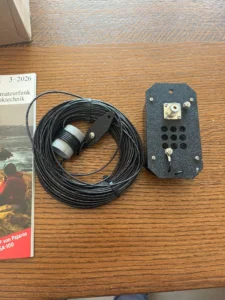
- Linked dipole: A dipole with removable extensions for different bands.
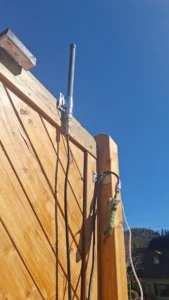
- Telescopic vertical: For 2 m/70 cm often the simplest solution.
A lightweight fibreglass fishing pole blank (Sotabeams mast or similar) or a trekking pole often serves as the mast.
Power supply
LiFePO4 batteries have become the standard. A 3 Ah battery is enough for a multi-hour activation at QRP power. Important: in winter, carry the battery close to your body so it stays warm and retains its full capacity.
A typical SOTA activation
A typical SOTA activation follows this pattern:
- Planning: Choose a summit, plan the route, check the weather. Post an alert on SOTAwatch.
- Ascent: Hike to the summit with the radio gear in your rucksack.
- Set up station: String up the antenna, connect the transceiver, post a spot on SOTAwatch (via SMS or phone app).
- Operate: Call CQ SOTA and make at least 4 QSOs. On the SOTA frequencies (e.g. 7.090 MHz, 14.285 MHz) you usually find chasers quickly.
- Pack up and descend: Stow the station and descend safely.
- Log: Enter the QSOs in the SOTA database.
Summit-to-Summit: the special QSO
One of the finest SOTA experiences is an S2S QSO (Summit-to-Summit): two activators on different summits working each other. It earns bonus points for both sides and is a special experience — you know the other person is also standing on a mountain, sharing the same enthusiasm.
Points and awards
SOTA uses a points system. Summits award 1 to 10 points depending on height and prominence. A winter bonus (3 extra points during the winter months) rewards the hardy souls who activate in snow and cold.
Key milestones for activators:
- Shack Sloth: 1,000 points as a chaser
- Mountain Goat: 1,000 points as an activator — the declared goal of many SOTA enthusiasts
- Super Sloth / Trail Goat: Higher tiers for the truly ambitious
Mountain safety
SOTA takes radio amateurs into alpine terrain — safety always comes first. Some important points:
- Check the weather forecast before every tour
- Bring proper mountain gear (even if the tour looks easy)
- Tell someone where you are going
- Take thunderstorm situations seriously — a deployed antenna on a summit is a lightning rod
- Know your own limits — there are plenty of easy SOTA summits
- Have the mountain rescue number saved in your phone (140 in Austria)
Getting started made easy
Getting into SOTA is straightforward:
- Register at sota.org.uk
- Choose an easy summit nearby (check SOTAwatch or SOTLAS)
- Start with existing gear — a handheld on 2 m is enough for a first activation
- Announce your activation on SOTAwatch so chasers are ready
- Climb the summit, operate, enjoy
SOTA is one of the most rewarding activities in amateur radio. You are outdoors in nature, getting exercise and operating amateur radio at the same time. The combination of mountain hiking and radio creates experiences you would never have sitting at a desk. And the view from the summit comes free of charge.
73 – your oeradio.at editorial team
Transparency Notice
This article was researched and written with the assistance of AI (Claude, Anthropic). Any illustrations used were generated with AI (ChatGPT/DALL·E, OpenAI) unless otherwise noted. The editorial team has reviewed and edited all content. Despite careful review, occasional inaccuracies may occur — we welcome corrections via email to [email protected].