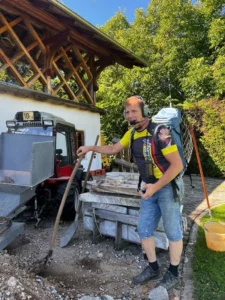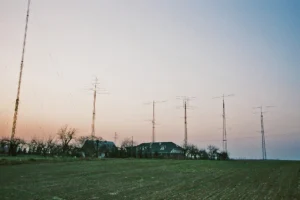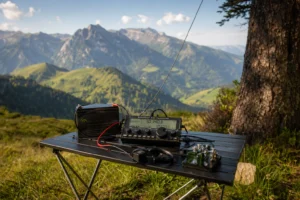
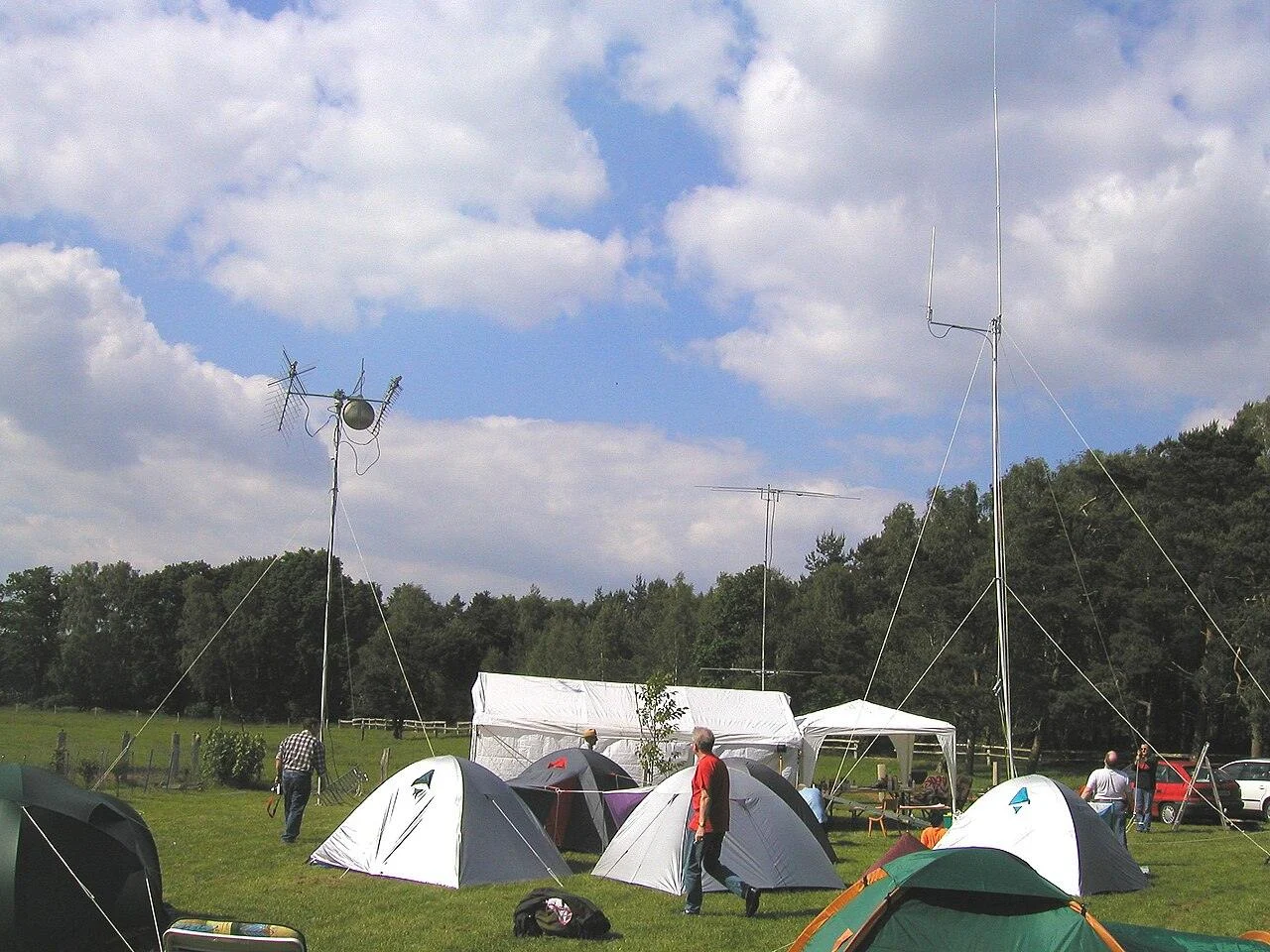
When the days grow longer and the weather beckons us outdoors, many radio amateurs feel the excitement building: Field Day is approaching! Whether on an alpine meadow in the Austrian Alps, atop a hill overlooking vineyards, or along the shore of a Carinthian lake – Field Day means amateur radio under the open sky, far from the routine of the home shack. This article covers everything you need to know for a successful participation: from history and equipment to proven tips for beginners and seasoned operators alike.
What is Field Day?
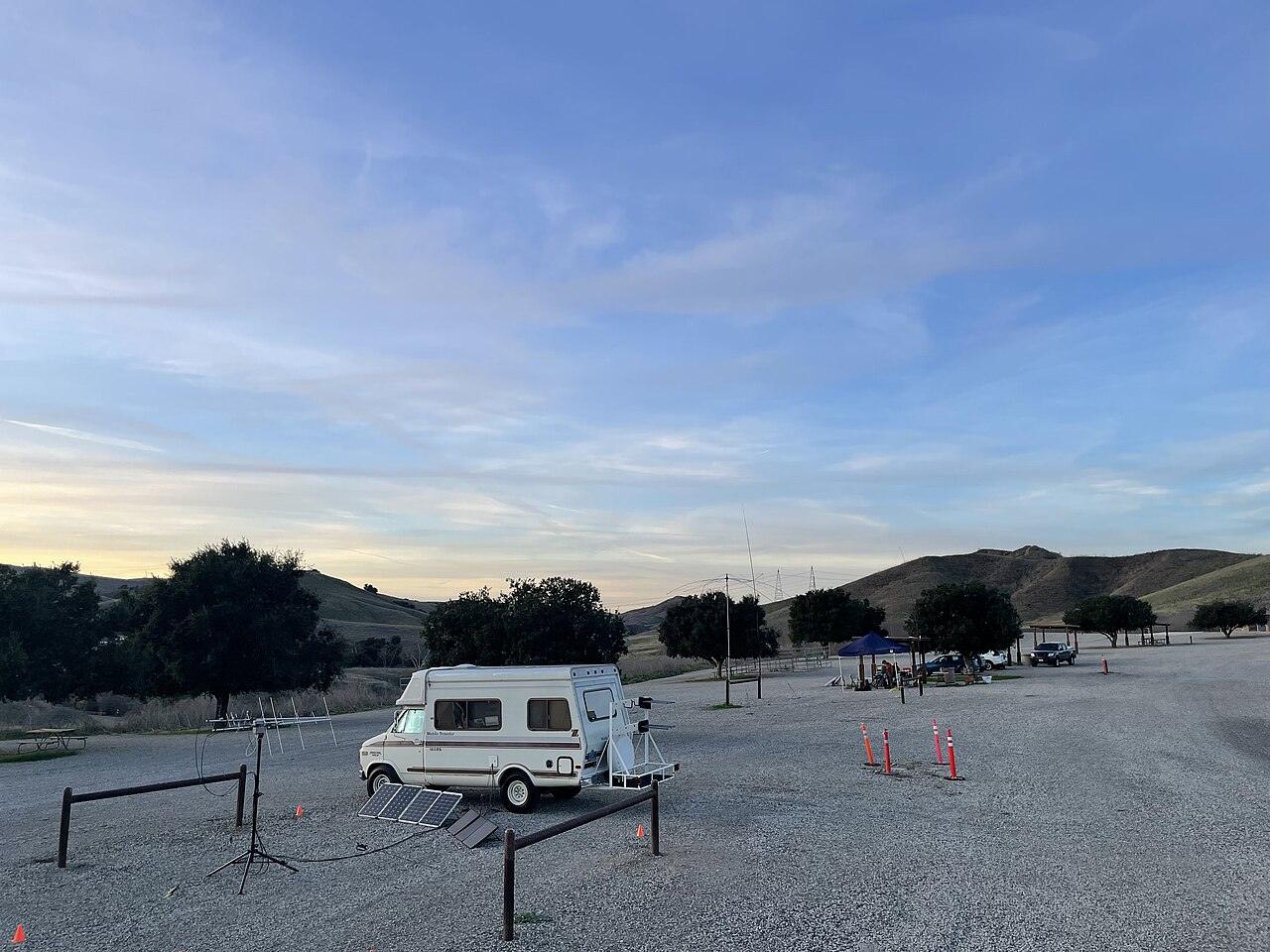
Field Day is an amateur radio competition where participants set up and operate their stations outdoors – literally “in the field.” The idea is to practise building a radio station quickly and efficiently at any location under realistic conditions. This is not only an exciting sporting challenge but also serves a serious purpose: in a disaster, radio amateurs must be able to communicate independently of fixed infrastructure. Field Day is both training and competition.
ARRL Field Day – The Original Since 1933
The most well-known Field Day worldwide is the ARRL Field Day, organised by the American Radio Relay League. Held annually since 1933 on the fourth full weekend in June, it is considered North America’s largest amateur radio event, with over 30,000 participants each year. The event runs for 24 hours beginning Saturday at 18:00 UTC. Participants can enter various categories from Class A (portable operation with emergency power) to Class F (emergency operations centres). Bonus points are awarded for using renewable energy, involving youth, and public outreach.
IARU Region 1 Field Day – Europe’s Premier Portable Contest
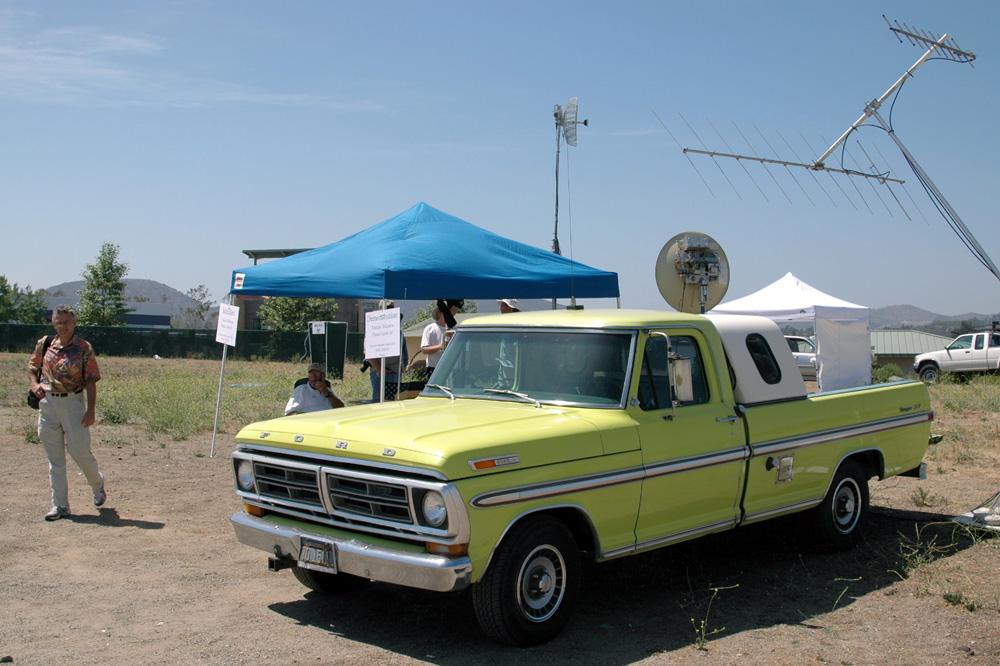
For European amateurs, the IARU Region 1 Field Day is particularly relevant. Traditionally held on the first full weekend in September, it focuses on HF operation and offers an excellent opportunity to exploit late-summer propagation conditions. Separate scoring exists for CW and SSB. Many European amateur radio associations, including Austria’s OVSV, use the event as their national Field Day championship.
Other Field-Day-Style Contests
- CQ WW VHF Contest: A worldwide VHF competition that rewards portable stations operating from elevated locations with superior reach on 2 m and 70 cm.
- OVSV VHF Contest Series: The Austrian amateur radio association organises several VHF contests throughout the year where portable participation is encouraged.
- Summits on the Air (SOTA): Not a classic Field Day, but SOTA perfectly embodies the spirit of portable operating from mountain summits.
- Parks on the Air (POTA): Similar to SOTA but from nature reserves and parks – portable operation in scenic surroundings.
Equipment Checklist
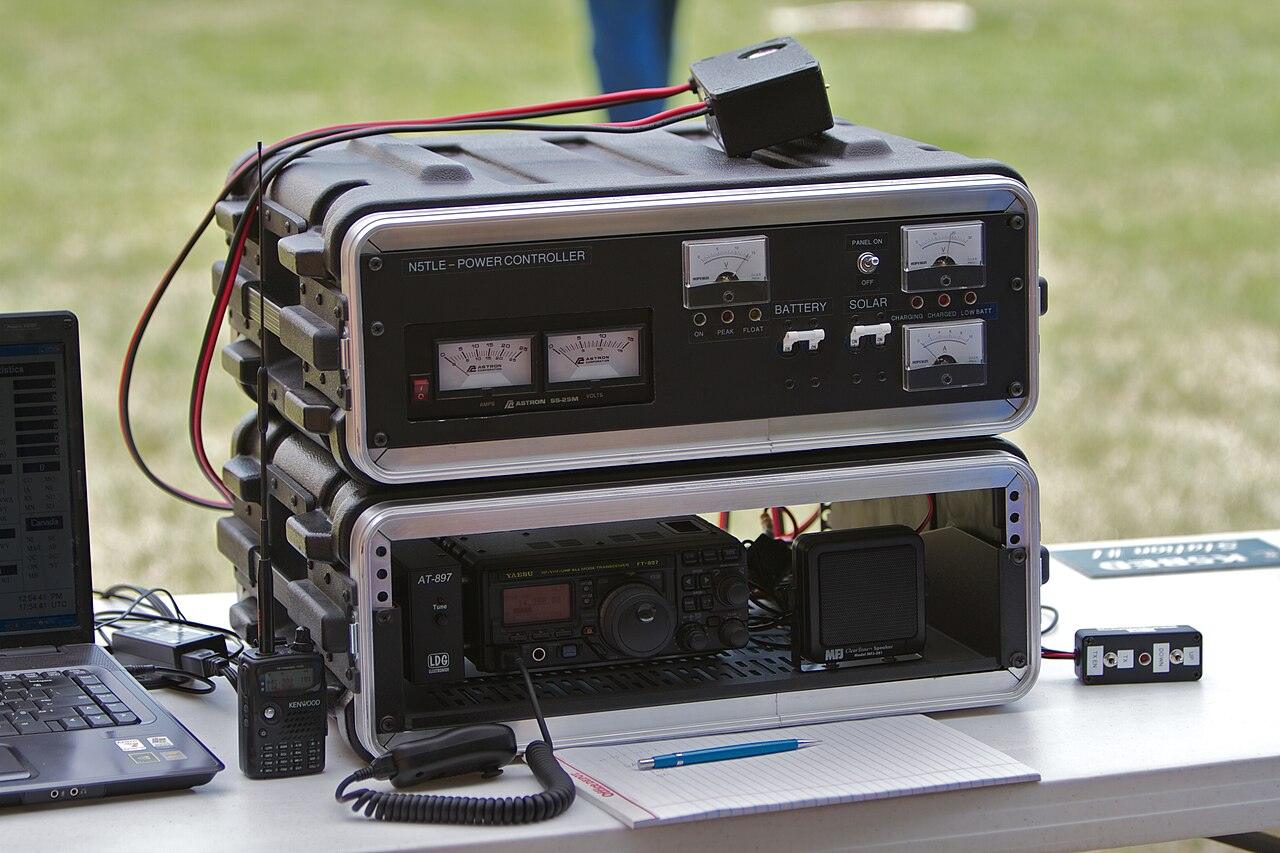
Thorough preparation is the key to success. Essential items include a portable HF or VHF transceiver, headset, antenna tuner, SWR meter, and spare cables and adapters. For antennas, bring a telescopic or fibreglass mast (6–12 m), wire antennas such as dipoles or end-feds, and appropriate VHF antennas like Yagis. Power supply should consist of a LiFePO4 battery (100–200 Ah), a solar panel (50–200 W), and a charge controller. Don’t forget a logging laptop with software like N1MM+ or WSJT-X, a paper logbook as backup, and camping essentials including shelter, table, chair, food, water, sunscreen, and a first-aid kit.
Understanding Categories
Most Field Day contests offer several categories: Single Operator (SO) for individuals who handle everything alone, testing efficiency and endurance; Multi Operator (MO) for teams that divide tasks among operating, logging, and technical support; and QRP (maximum 5 or 10 watts), the supreme discipline that proves remarkable contacts are possible with minimal power. Beginners are encouraged to join a multi-operator group to learn from experienced operators.
Planning and Site Selection
The right location can make or break your Field Day. Consider elevation for better propagation (especially on VHF), clear line of sight in your target directions, accessibility for transporting equipment, necessary permits for alpine or protected areas, weather forecasts and contingency plans, and allow at least 2–3 hours for setup before the contest begins.
Emergency Preparedness
Field Day is far more than a competition – it is a drill for real emergencies. Natural disasters, power outages, or infrastructure damage can disrupt regular communications at any time. Radio amateurs are often the first to establish independent communication links. During Field Day, you train exactly the skills needed in emergencies: rapid station deployment, self-sufficient power, operation under challenging conditions, and efficient communication. In Austria, amateurs work closely with disaster relief organisations through regular emergency communications exercises.
Community and Youth Outreach
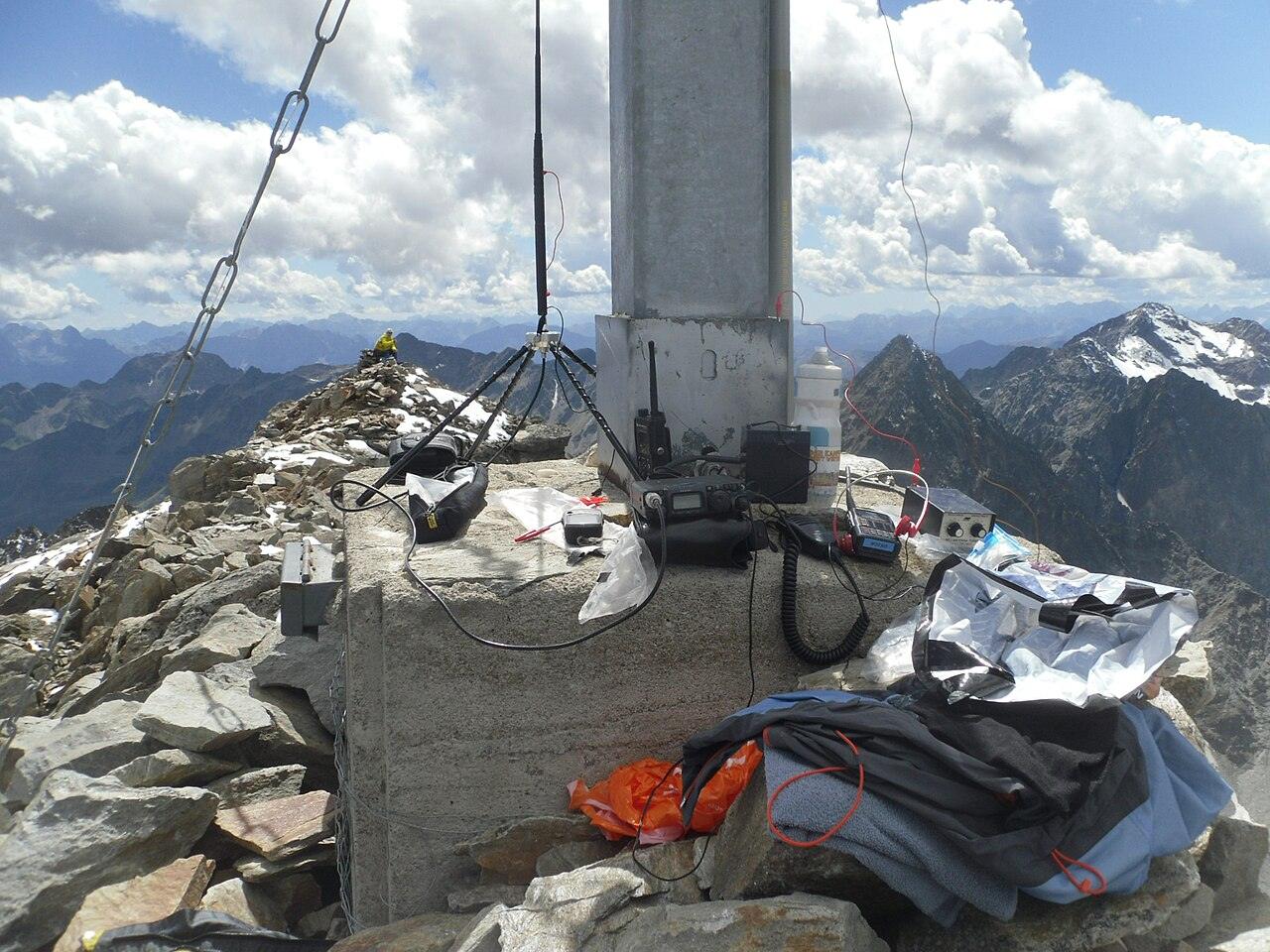
One of the finest aspects of Field Day is the sense of community. When a club or group builds a station together, a special team spirit emerges. Experienced operators share their knowledge with newcomers, and curious visitors often discover amateur radio for the first time. Field Day is an excellent opportunity for youth outreach – many amateurs report that their passion for radio was sparked at a Field Day event.
Field Day in Austria
In Austria, Field Day events and VHF contests are organised regularly by local clubs. Popular locations in the Alps offer superb propagation from elevated positions. The Austrian VHF contest series spans multiple dates throughout the year and caters to both beginners and experienced contesters. Check with your local club for current dates and rules.
Ten Tips for Your First Field Day
- Join a group – don’t attempt your first Field Day alone.
- Start small – a basic transceiver, dipole, and battery are enough.
- Practise your setup at home first to identify problems early.
- Bring spares: adapters, fuses, coax cable, and tools.
- Plan your catering – hunger and thirst reduce concentration.
- Protect yourself from the sun with sunscreen, a hat, and shade.
- Log carefully – every QSO must be recorded correctly.
- Listen first, then transmit – learn from experienced operators.
- Have fun – enjoy nature, community, and the magic of radio.
- Document the day with photos and videos for public outreach.
Field Day Dates 2026
| Event | Date | Info |
|---|---|---|
| IARU Region 1 Field Day CW | 6–7 June 2026 | IARU R1 |
| ARRL Field Day | 27–28 June 2026 | ARRL |
| IARU Region 1 Field Day SSB | 5–6 September 2026 | IARU R1 |
Related Articles on oeradio.at
- Emergency Communications in Austria – how radio amateurs help in disasters
- Blackout Preparedness – self-sufficient radio operation with solar and battery
- The Best Portable Antenna for SOTA and POTA – also ideal for Field Day
- SOTA in Austria – operating from summit to summit
- POTA in Austria – amateur radio from parks
- Contests for Beginners – perfect preparation for your first Field Day
- FT8 for Beginners – digital contacts on Field Day
- Wavelog – the online logbook – log QSOs directly from Field Day
Sources and Further Links
- ARRL Field Day – rules and information
- IARU Region 1 Contest Calendar
Conclusion: Get Out in the Field!
Field Day combines everything that makes amateur radio special: technical challenge, outdoor adventure, community, and emergency preparedness. Whether you are a seasoned contester or building a portable station for the first time, Field Day has something for everyone. Find out about upcoming events, join a group, and experience amateur radio at its finest: under the open sky, antenna on the mast, and the sound of the bands in your headphones.
73 – your oeradio.at editorial team
Featured image: Amateur radio Field Day of the "young radio amateurs Lüneburg" (2002). Photo: Gerd R. Sapper (DJ4KW), Wikimedia Commons
Transparency Notice
This article was researched and written with the support of AI (Claude, Anthropic). All content has been reviewed by the editorial team. We value transparency and label AI-assisted content accordingly.