Austria is a landlocked country with eight neighbours – and for radio amateurs that is a gift. If you live in the west, south or north, the border is often within sight. With a valid OE licence and a little preparation you can legally operate from Germany, Italy or Slovenia, activate summits at tripoints and work cross-border contacts on VHF/UHF. This article explains the CEPT basics, correct call-sign usage and offers practical tips for portable border operation.
CEPT: operating abroad without extra paperwork
The basis for cross-border operation is CEPT Recommendation T/R 61-01. It allows holders of a corresponding national amateur licence to operate temporarily in all participating CEPT countries without applying for a separate licence or permit. The Austrian authorisation (Class 1 equals the CEPT class) is enough – you simply take it with you. For a permanent foreign licence there is additionally the HAREC certificate (T/R 61-02), which recognises the exam internationally.
Austria’s eight neighbours cover practically every relevant CEPT prefix: Germany (DL), Czech Republic (OK), Slovakia (OM), Hungary (HA), Slovenia (S5), Italy (I), Switzerland (HB9) and Liechtenstein (HB0). Carry your licence document (ideally with a CEPT note) and photo ID and you are on the safe side. A detailed overview of operating abroad and the CEPT regulation will follow soon in a dedicated article.
Using your call sign correctly
In the CEPT area the prefix notation applies: you put the host country’s prefix in front of your own call sign, separated by a slash. The Austrian example call OE8ABC therefore becomes:
- in Germany: DL/OE8ABC
- in Italy: I/OE8ABC
- in Slovenia: S5/OE8ABC
- in Switzerland: HB9/OE8ABC
For portable operation you may add a /P (e.g. S5/OE8ABC/P). On the air you give the full call at least when establishing contact and at the prescribed intervals. Important: it is the host country’s prefix that goes in front – not your own as a suffix. Mastering this one rule saves a lot of repeated questions on the band.
Summit QSOs at the tripoints
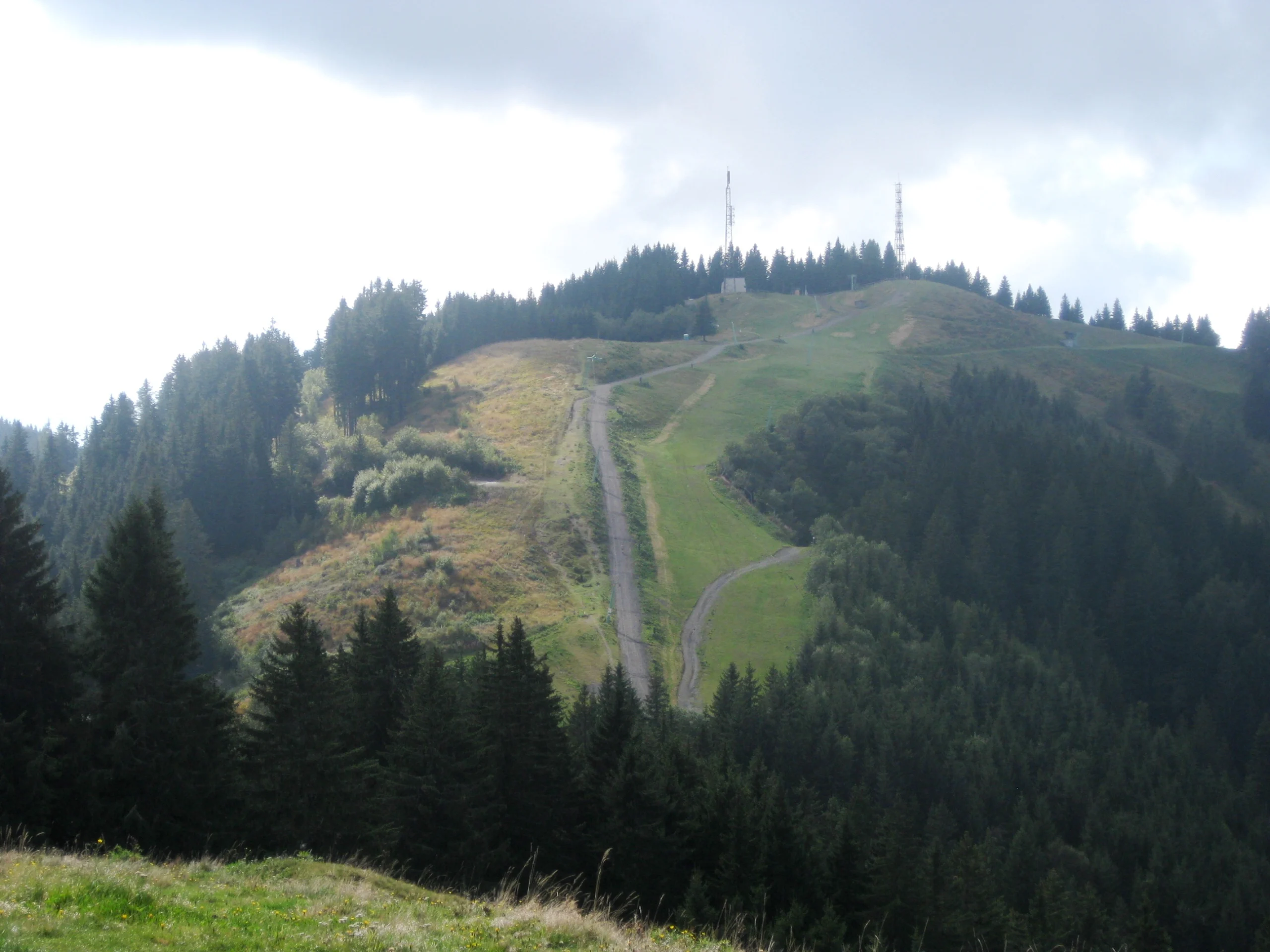
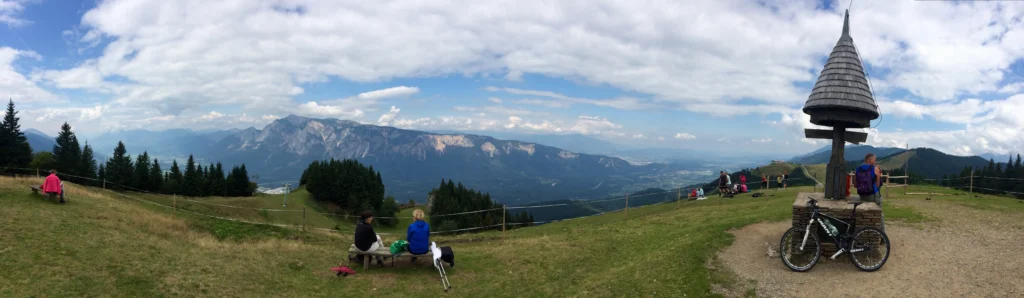
The most exciting playground for border operation is the mountains. At the Peč tripoint (1,508 m) in the Karawanks, Austria, Italy and Slovenia meet – you can literally stand in three countries at once. Equally appealing: the OE/DL/I tripoint in the west, the Dobratsch above Villach with a clear view south, or the Grossglockner as an alpine highlight. Such locations are ideal for SOTA (Summits on the Air) – activating from a border summit earns not only points but often contacts into several countries at once.
This beginner video shows clearly how a SOTA activation works, from planning to the first QSO:
We cover the basics for Austrian summits – scoring, references and gear – in detail in SOTA in Austria: Radio from Summit to Summit. For the right antenna, see The Best Portable Antenna for SOTA and POTA.
VHF/UHF: line of sight beats the border
On 2 m and 70 cm what counts most is line of sight. From a clear summit the signal reaches far into the neighbouring country – radio waves do not care about national borders. That is exactly why exposed alpine locations are so valuable for VHF/UHF DX: where a valley signal dies after a few kilometres, contacts into Friuli, Slovenia or Bavaria are easy from the ridge. How mountains affect propagation in detail – from shadowing to diffraction over ridges – is explored in Alpine Propagation: How Mountains Affect VHF/UHF Propagation.
Tip: check the host country’s repeater landscape beforehand. Via local repeaters in Italy or Slovenia you quickly make contact with stations who can give you valuable hints on frequencies and customs.
Practice: making border operation work
- Carry your licence. Original (or certified copy) with CEPT note plus photo ID – some countries do spot checks.
- Mind the band plans. The IARU Region 1 band plan applies, but the host country may regulate individual segments differently (e.g. 4 m / 70 MHz: secondary use in Slovenia, not available in Italy).
- Respect power limits. The host country’s limit applies, not the Austrian one. Germany allows considerably higher power depending on class, elsewhere less – when in doubt, run conservatively.
- No prior notification needed. Temporary CEPT operation in DL, I and S5 requires no advance registration.
- Respect the location. Nature reserves, alpine pastures and summit crosses are not antenna-mast terrain – work portable and leave no trace.
This video gives a compact overview of the gear and preparation you really need for portable operation:
Conclusion
Cross-border operation is easier than many think: CEPT removes the paperwork jungle, the call-sign rule is learned in five minutes, and the alpine summits along OE/DL/I/S5 offer locations that amateurs in flatter countries can only dream of. Next time you hike towards the border with a backpack, pack the handheld – the finest DX is sometimes just one ridge away.
73 – your oeradio.at editorial team
Transparency Notice
This article was researched and written with the assistance of AI (Claude, Anthropic). The photos used are from Wikimedia Commons (see captions for licence and author). Editorial responsibility and review lie with the oeradio.at editorial team. Please send comments and corrections to [email protected].