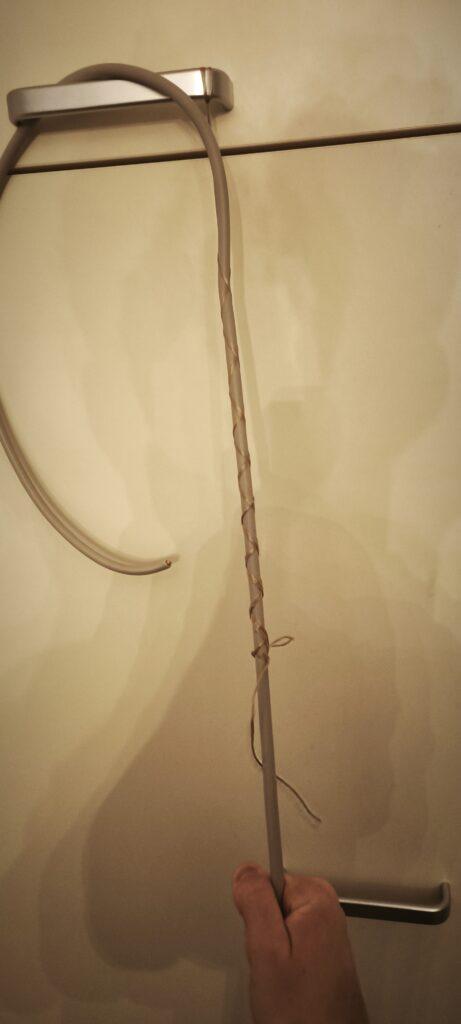
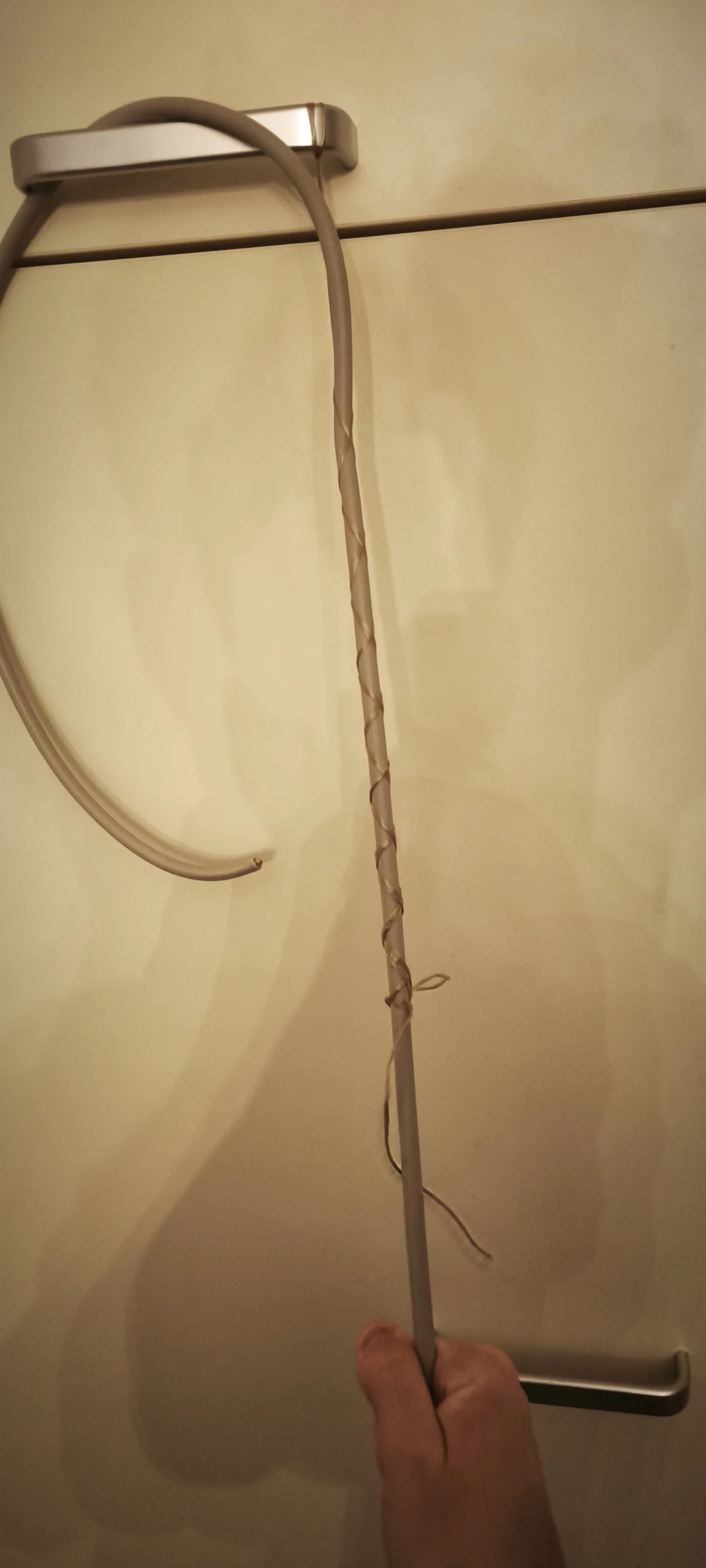
In this guide I want to report on the ultimate strain relief, which is excellently suited for coaxial cables and all other types of cables.
The strain relief is excellently suited for relieving coaxial cables that are either connected to a free-hanging balun or routed through the air and then connected to a feedpoint. But of course also for all other applications!
First, choose a suitable cord – it should not be too thick (not thicker than the cable).
I used ordinary twine. A length of about 1 metre or slightly longer is recommended.
First, double the cord and make sure both ends are equal length.
Now push the loop behind the attachment point.
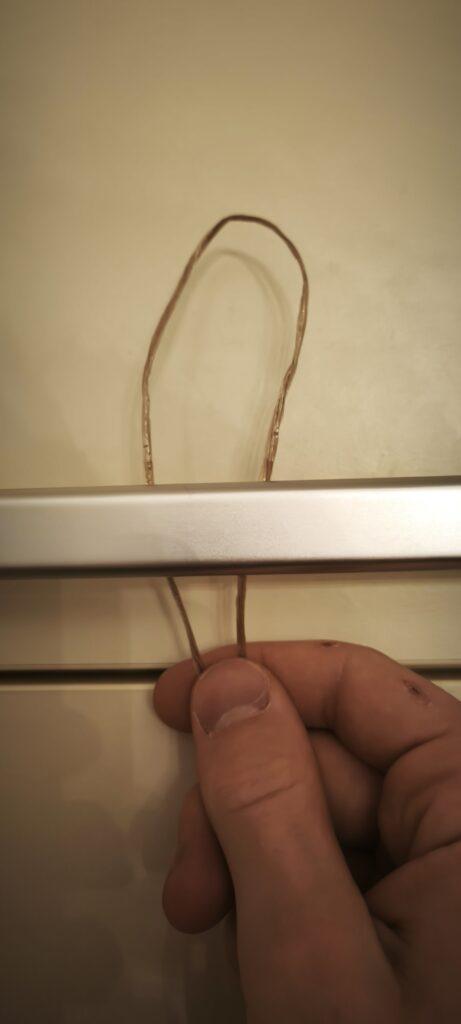
Then thread both ends through the loop.
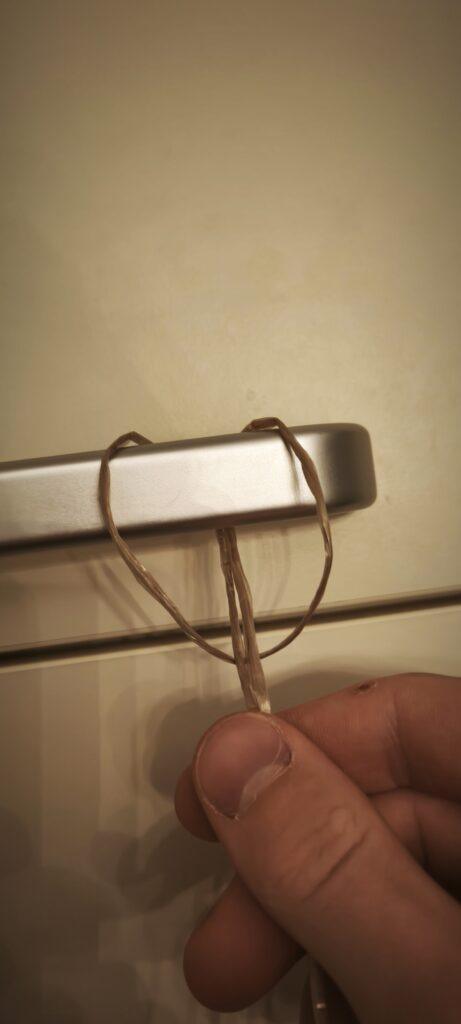
Now make a loop at the desired height where the cable should hang.
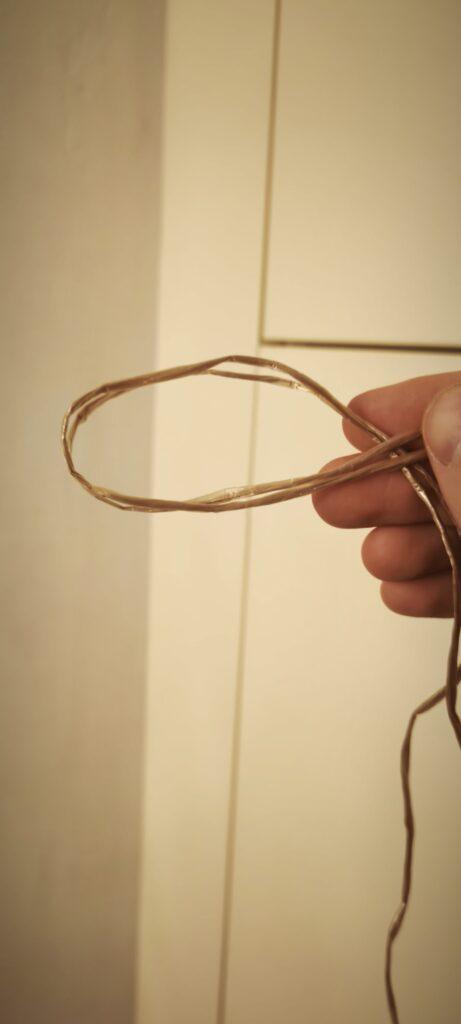
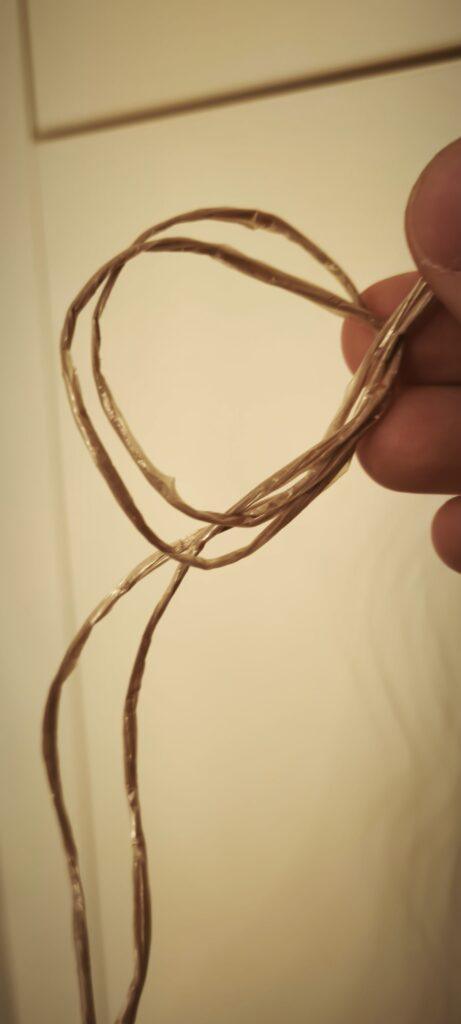
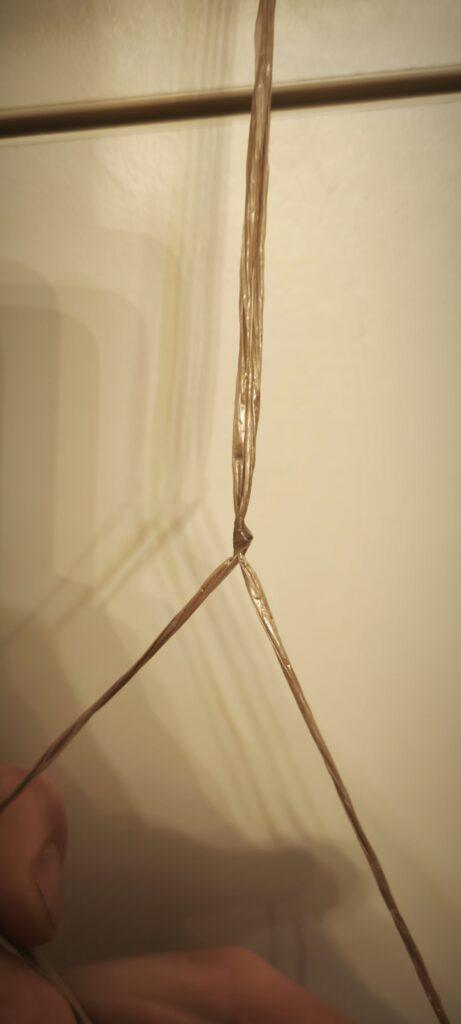
It should now look like this.
Then thread the cable through the middle (best from rear-bottom to front-top).
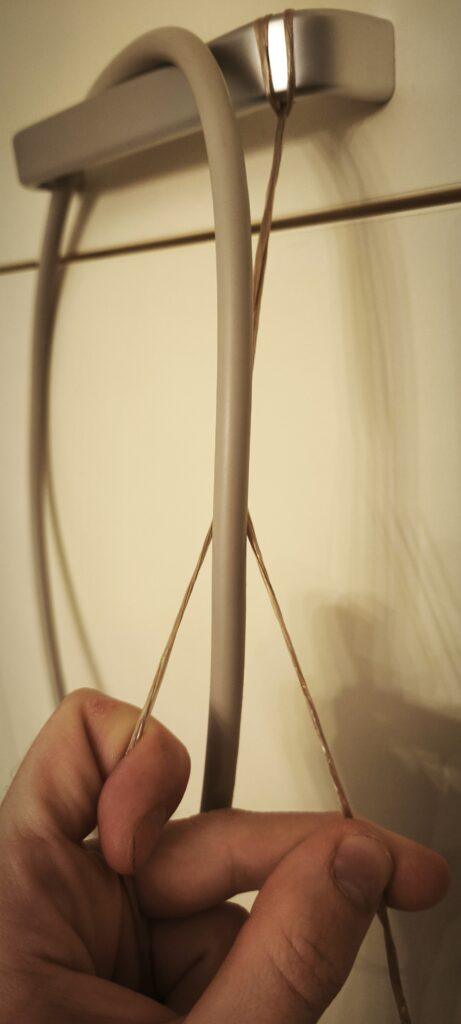
Now cross the cord alternately on the front and then the back side.
The spacing between the “X” patterns should not be too large.
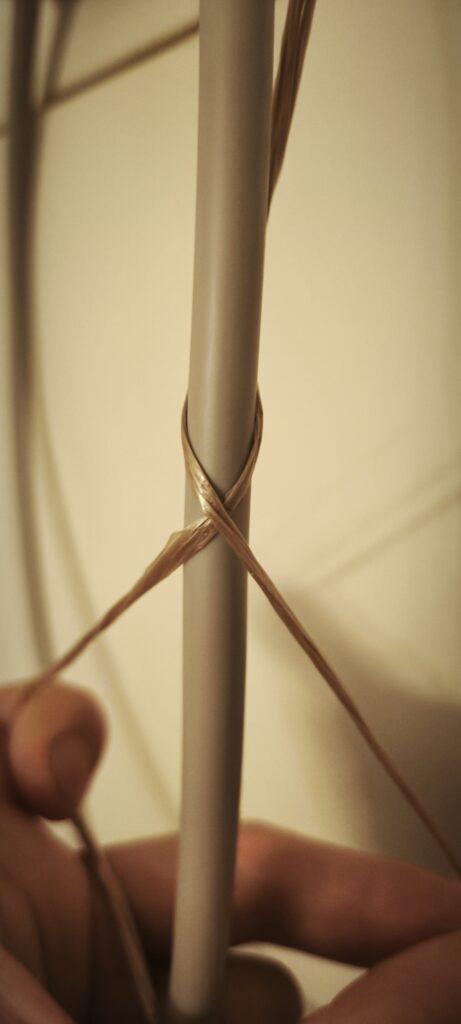
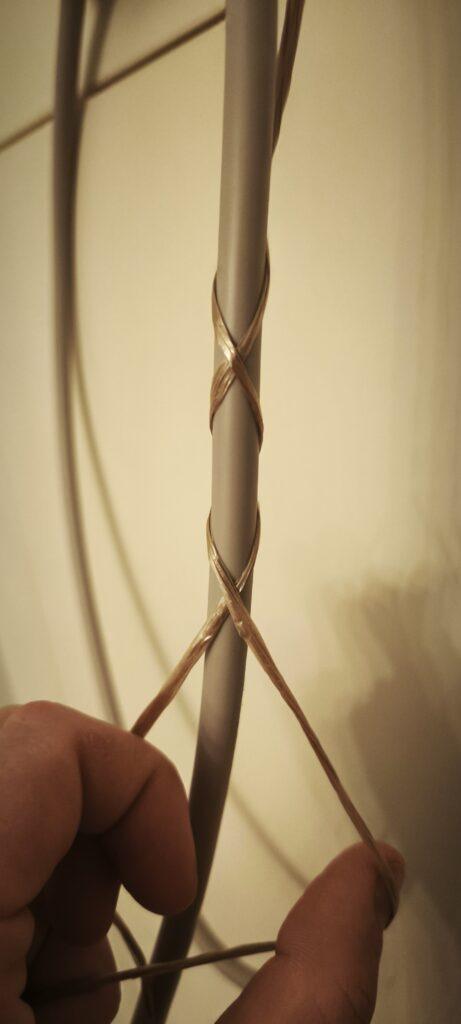
There should be at least 7 “X” patterns visible on one side.
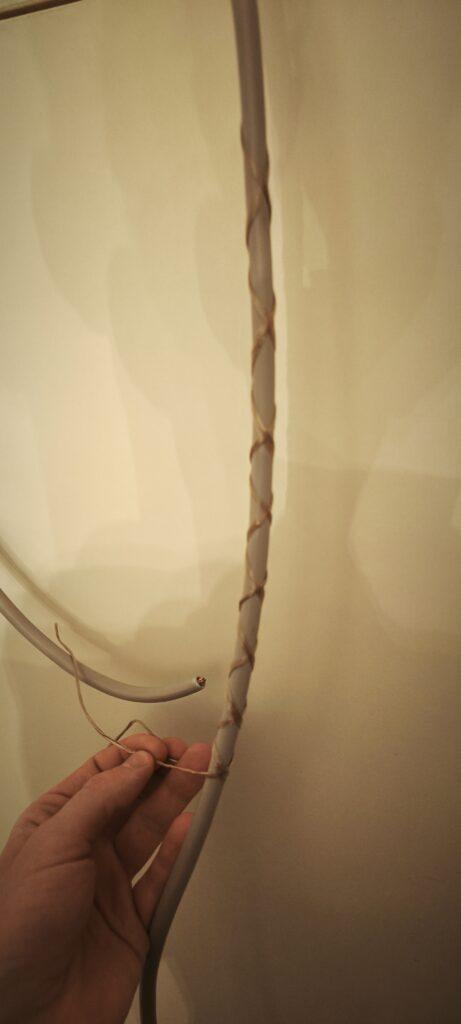
When finished, tie a simple knot on the back side and then another one on the front side.
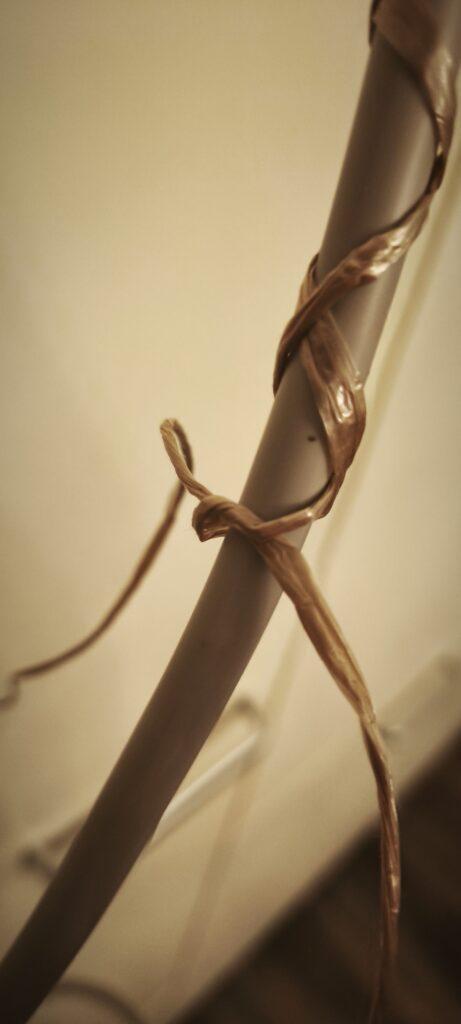
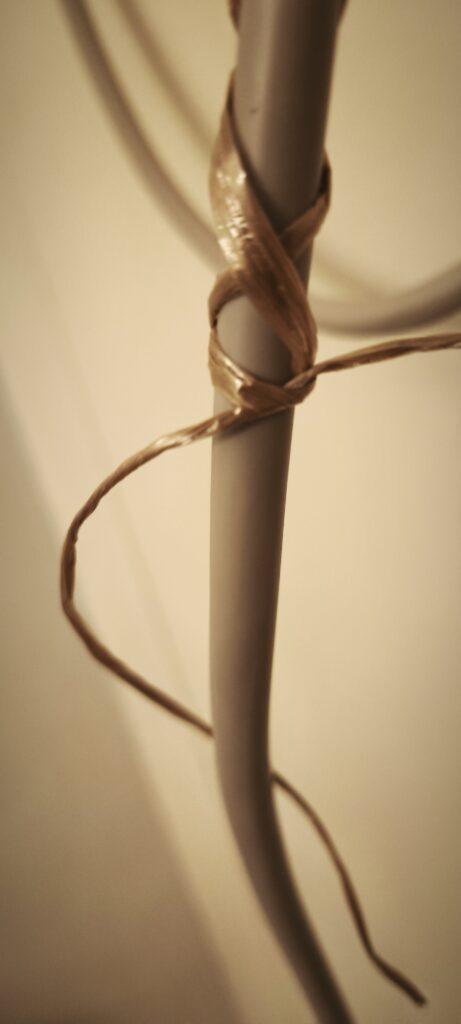
Done!
And there you have it – a reliable and material-friendly strain relief!