Hello everyone! Hermann here, OE8HSF, from Knappenberg near Hüttenberg – at a good 1,000 metres above sea level. You probably know the feeling: you stumble across a topic on the internet, think “I’ll just have a quick look” – and three weeks later you’ve got three nodes on your terrace, a BME280 sensor on a Heltec, and a solar panel on the garden table. Welcome to my Meshtastic world.
But let me start from the beginning.
How it all started
I originally just wanted to check out what this Meshtastic thing is that everyone’s talking about. LoRa-based mesh communication, no internet, no infrastructure, no monthly costs – that naturally sounds immediately interesting to a radio amateur. So I ordered a Heltec V3, flashed the firmware, and off I went.
The first decision: which frequency? In Austria, you can run Meshtastic on two ISM bands – 433 MHz or 868 MHz. Both licence-free, both legal. I chose 868 MHz, and for good reason: it’s the European standard for Meshtastic. Most nodes in Carinthia and across Austria operate on 868, the antennas are nice and compact, and if you want to build a mesh, you need to be on the same frequency as everyone else. On 433 MHz I’d theoretically get better penetration through vegetation and buildings, but hardly anyone is using it.
First just one node. Then I thought: one is good, but what’s a mesh with just one point? Exactly – no mesh. So things quickly multiplied.
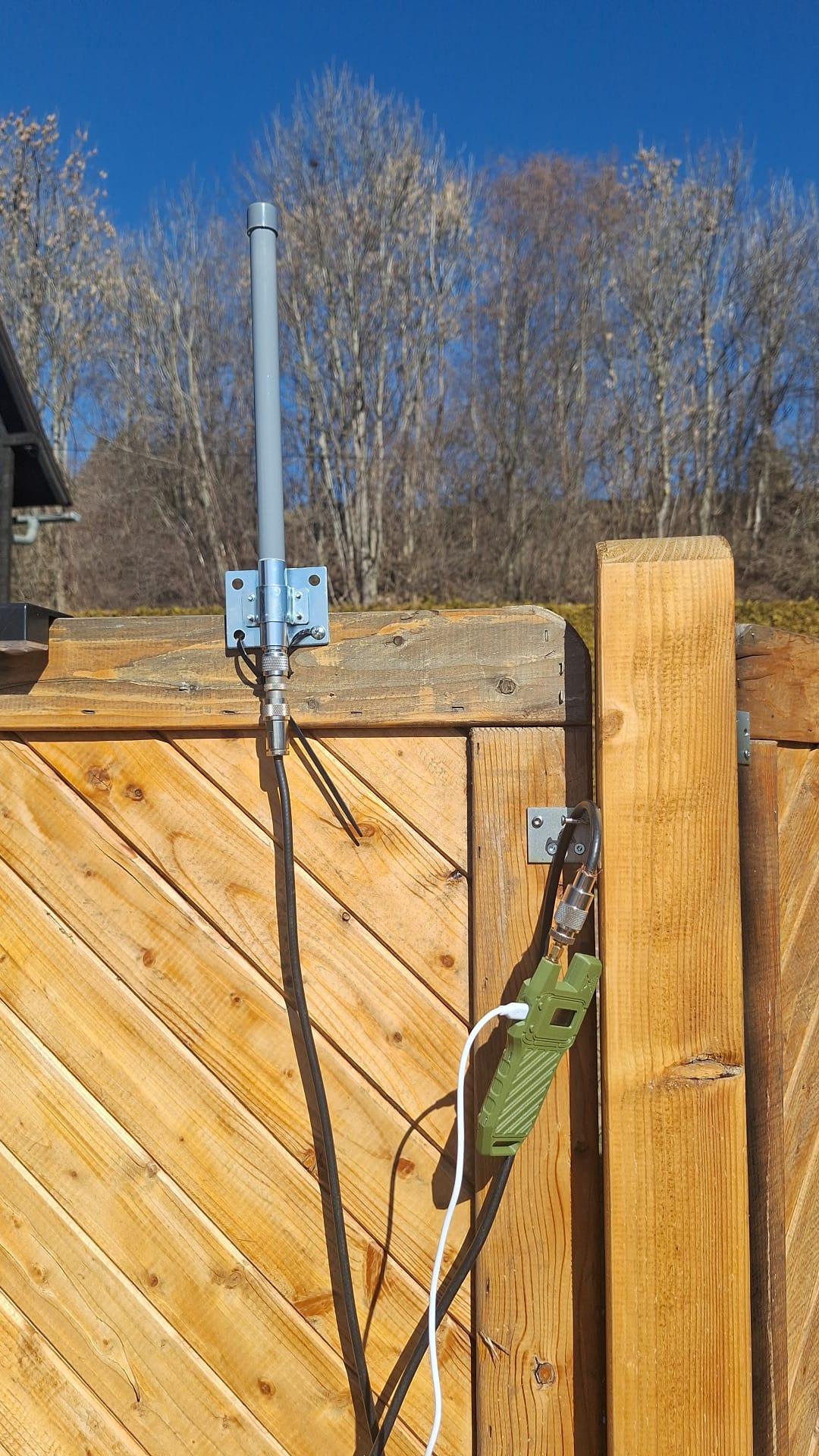
My three nodes – all still provisional!
I currently have three Meshtastic nodes running – and yes, it’s all still provisional. But a good provisional setup, if I may say so.
OE8HSF Base Node
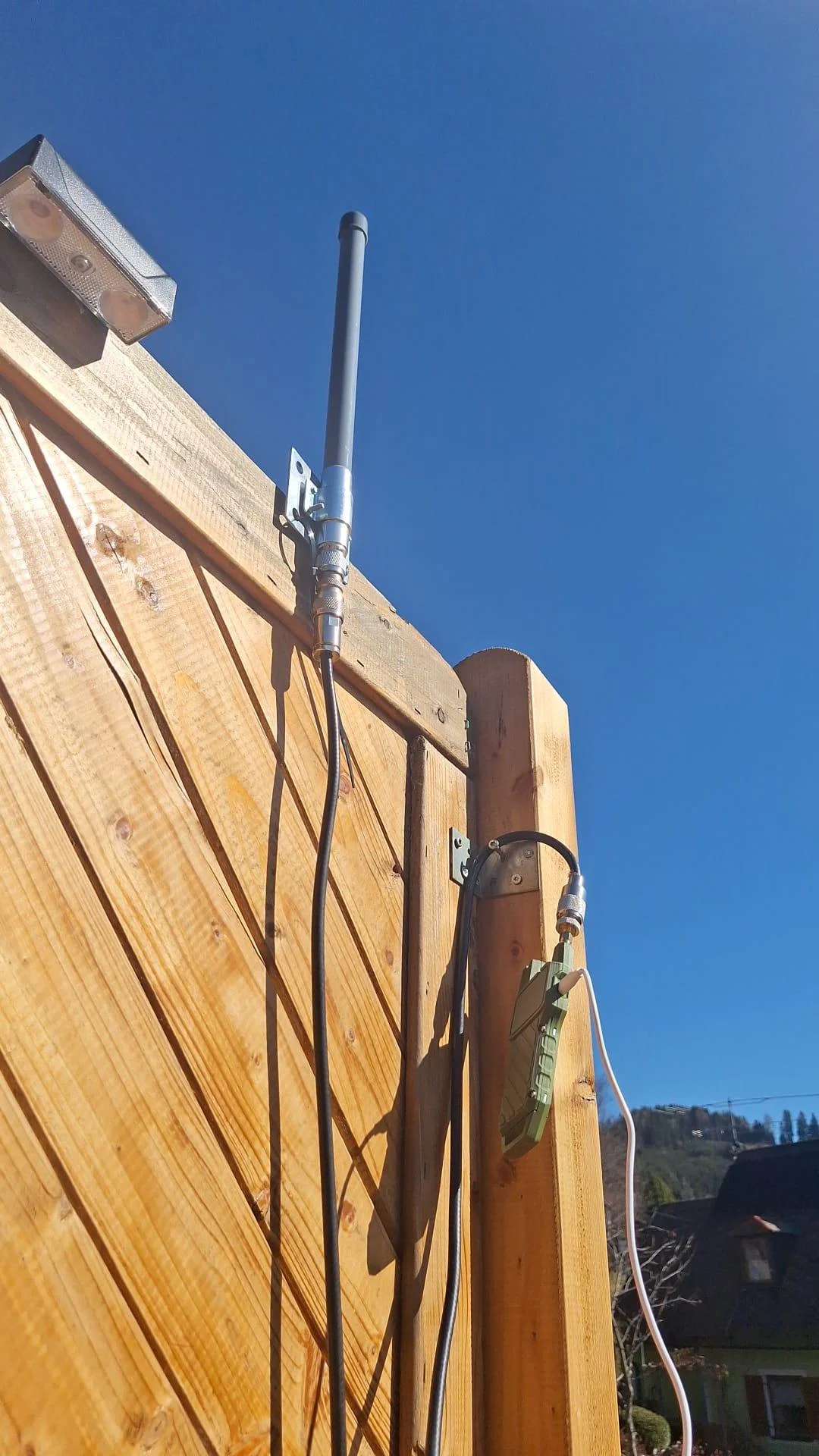
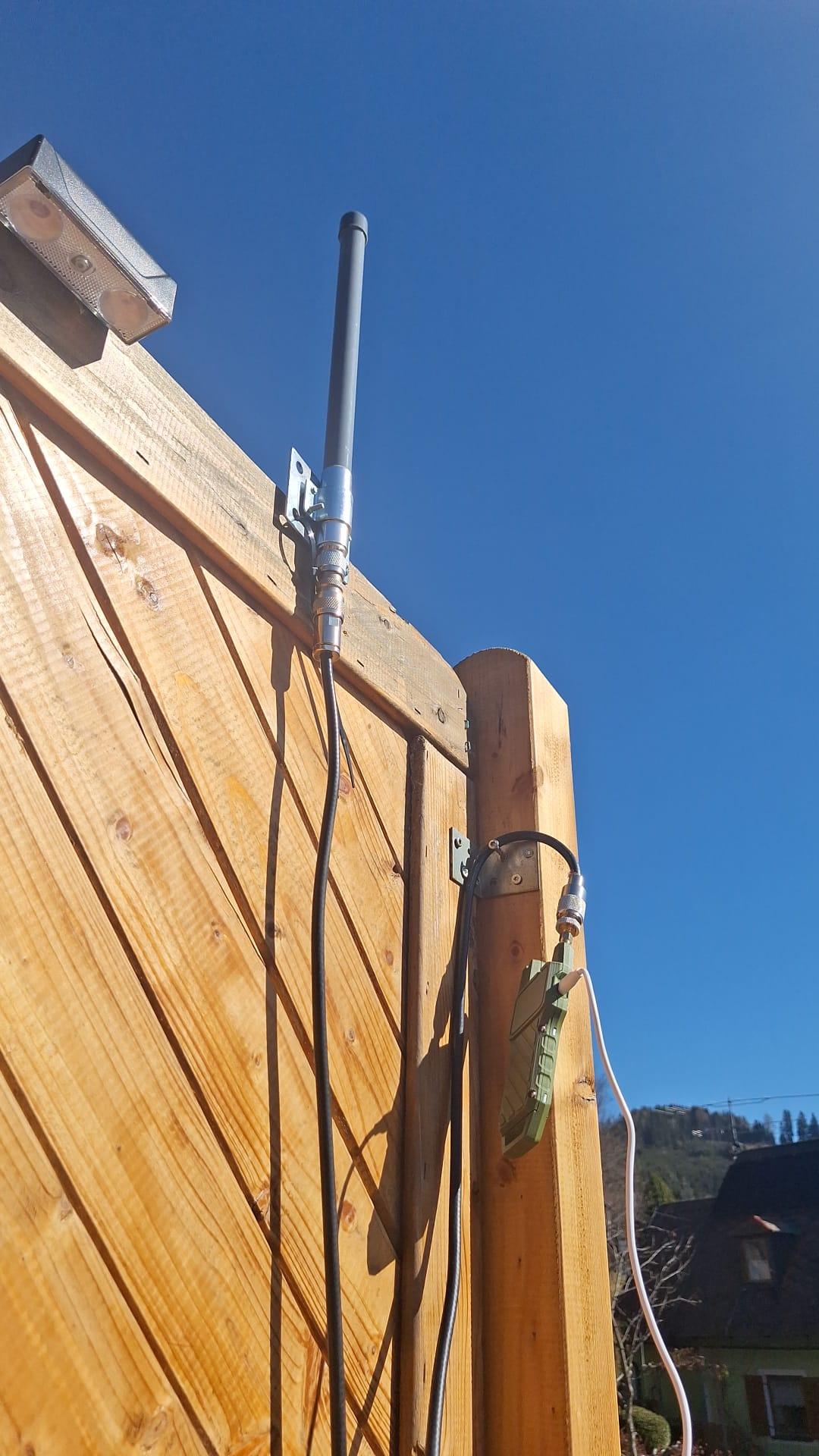
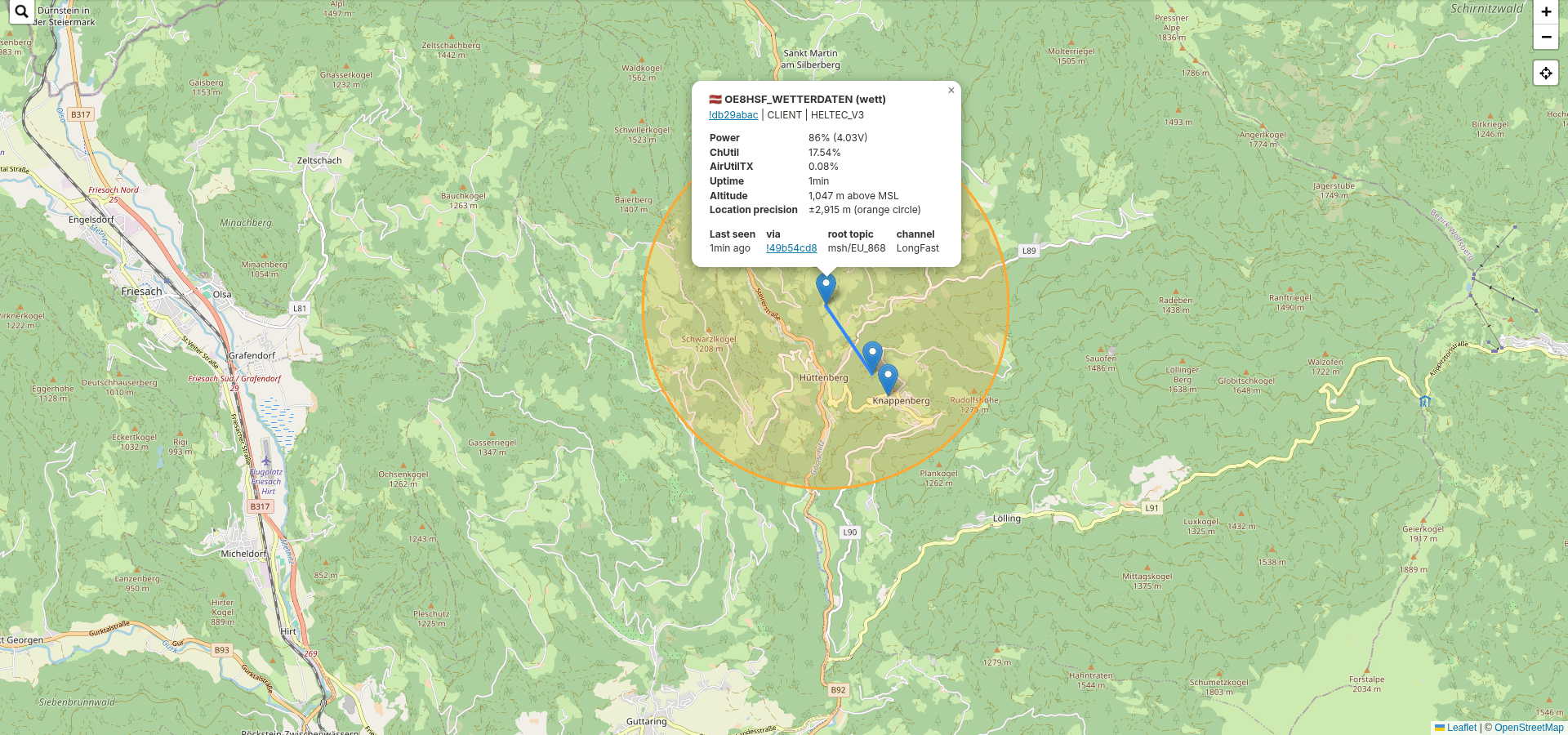
The stationary node, the heart of the setup. It runs at my home at a good 1,000 metres above sea level and provides the Carinthian Meshtastic network with a fixed anchor point. The location is a dream for radio: clear line of sight towards the Krappfeld, across the Görtschitz valley, and in good conditions even to the Karawanken mountains. MQTT is enabled so messages are also forwarded to the internet. I mounted the antenna on the wooden wall of the terrace – not the most elegant setup, but at 1,000 metres you don’t need much height, you’ve already got it.
OE8HSF Weather Data – the Weather Node
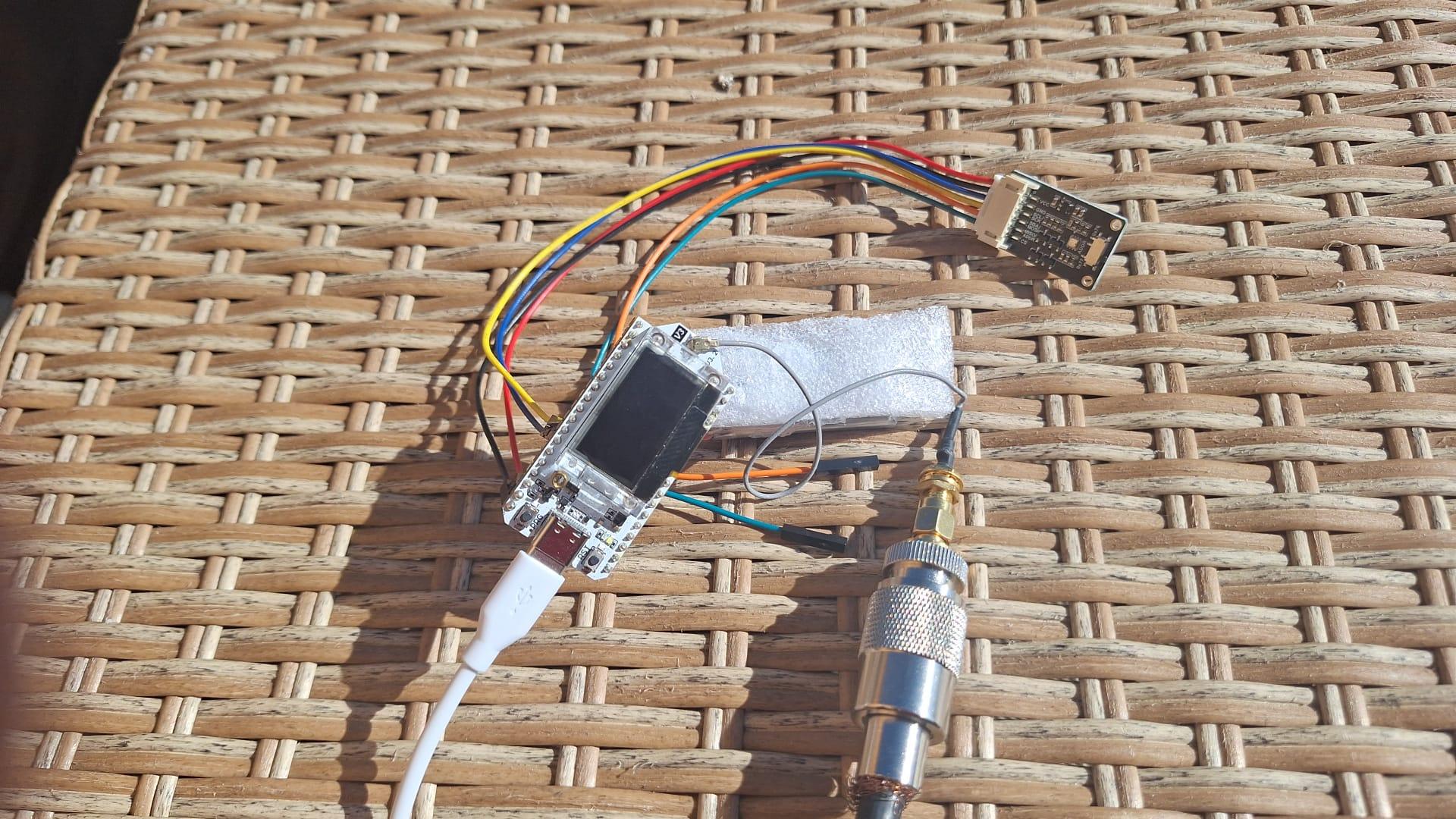
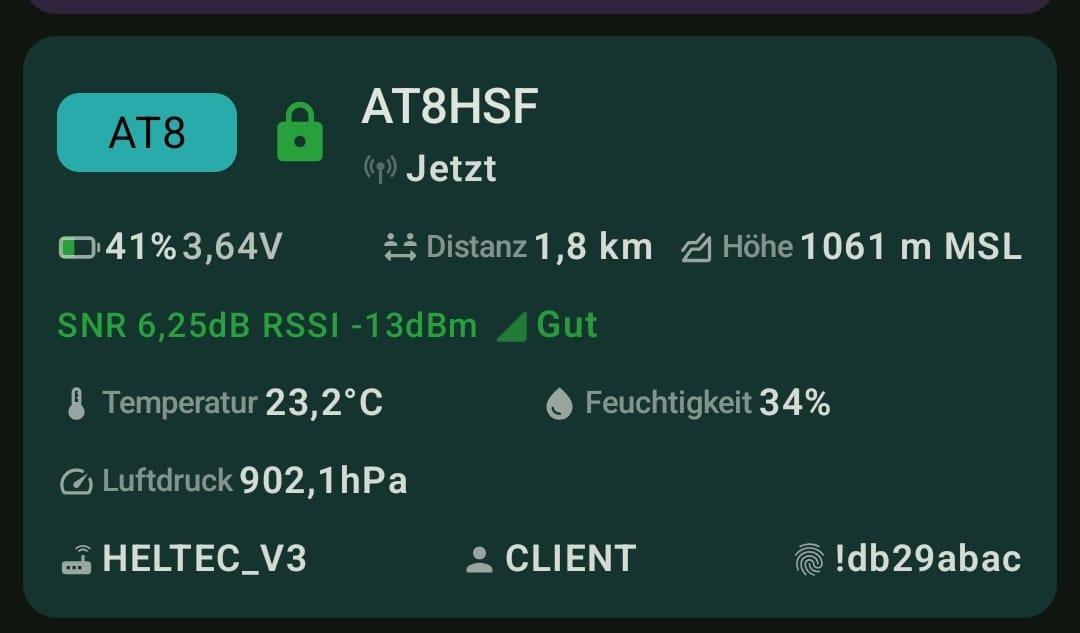
That was the next logical step: if there’s already a node on the terrace, why not send weather data too? So I ordered a BME280 sensor from Amazon and connected it to the Heltec V3. Temperature, humidity, air pressure – everything is dutifully distributed via the mesh network.
Solar power – the sun is helping out
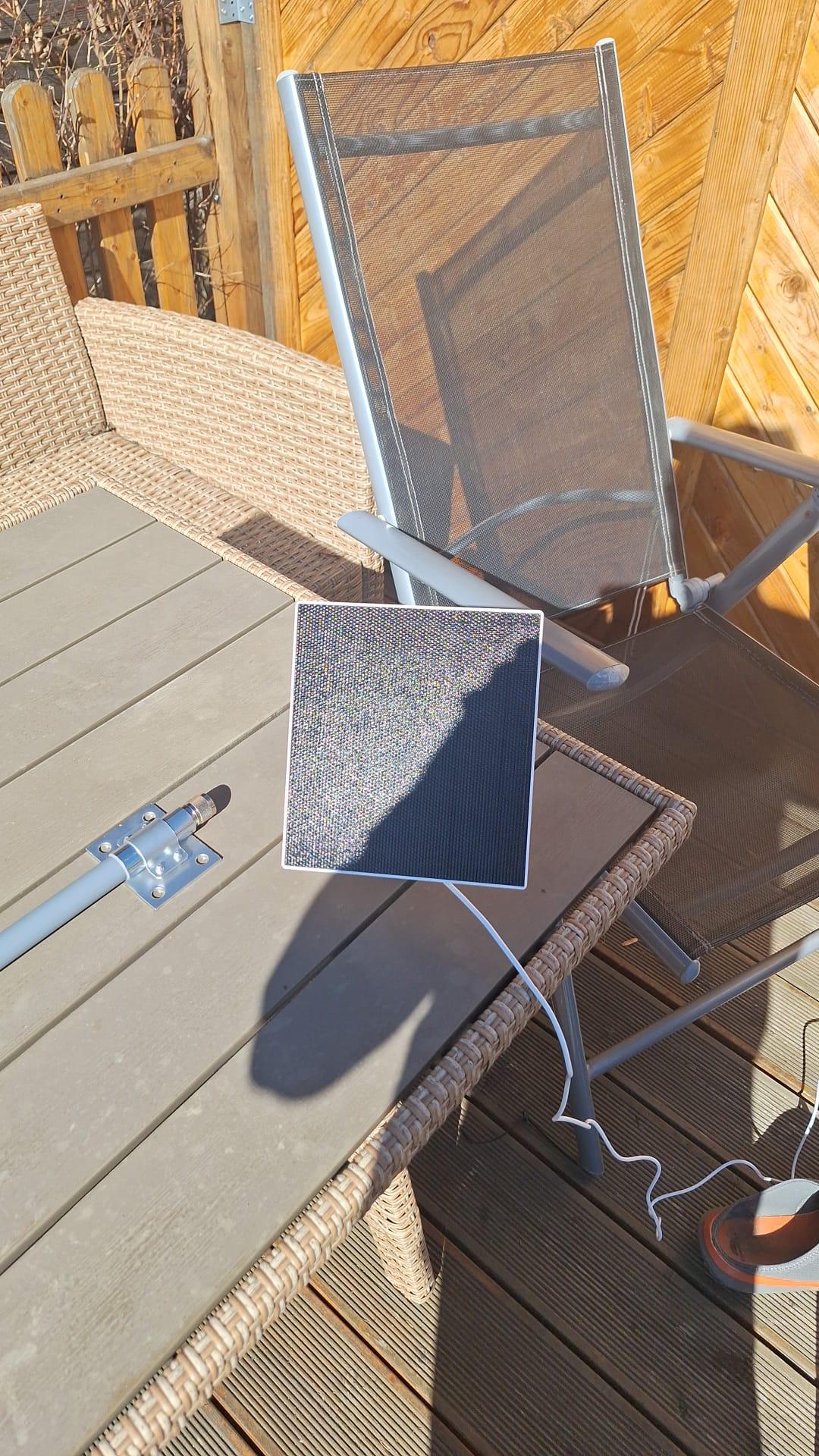
A Meshtastic node plugged into the mains is nice enough. But a node that powers itself? That’s the goal. There’s already a solar panel on the terrace – still a bit improvised on the garden table, but it does its job. The plan is clear: the node should run autonomously without me having to worry about batteries. Up here in Knappenberg, we’ve got plenty of sunshine.
OE8HSF Mobile Node – for on the go
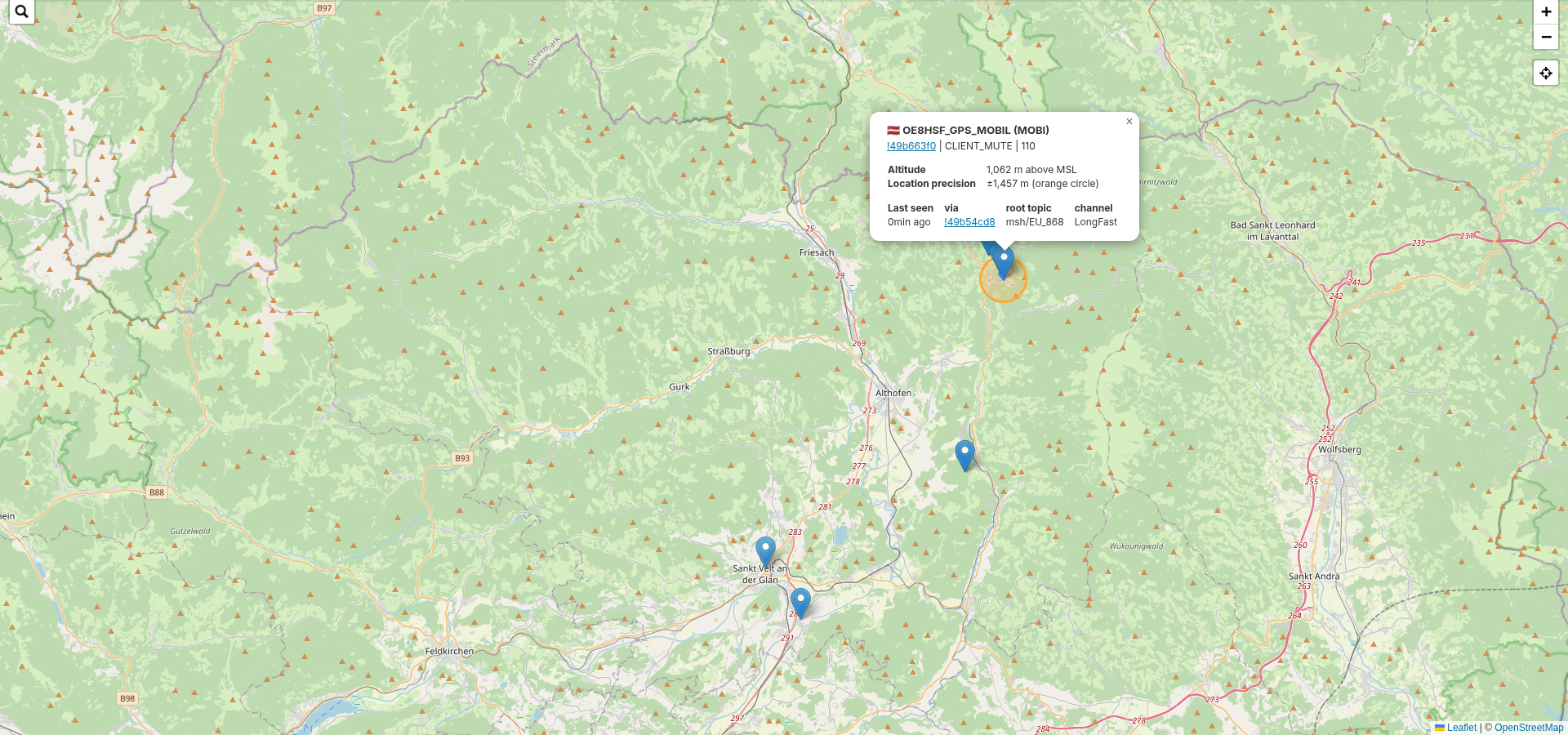
Node number three is the mobile companion. I take it with me when I’m out and about – and it’s already delivered some surprising ranges. More on that shortly.
Range: I didn’t expect this
What surprised me most is the range. I’ll be honest: I had modest expectations. LoRa on 868 MHz, only 10 milliwatts of permitted transmit power in the EU, antenna on the wooden wall – what could possibly work? Well, the location at over 1,000 metres obviously helps. Line of sight is the most important factor for LoRa, and from Knappenberg you’ve got plenty of it.
Quite a lot, as it turned out:
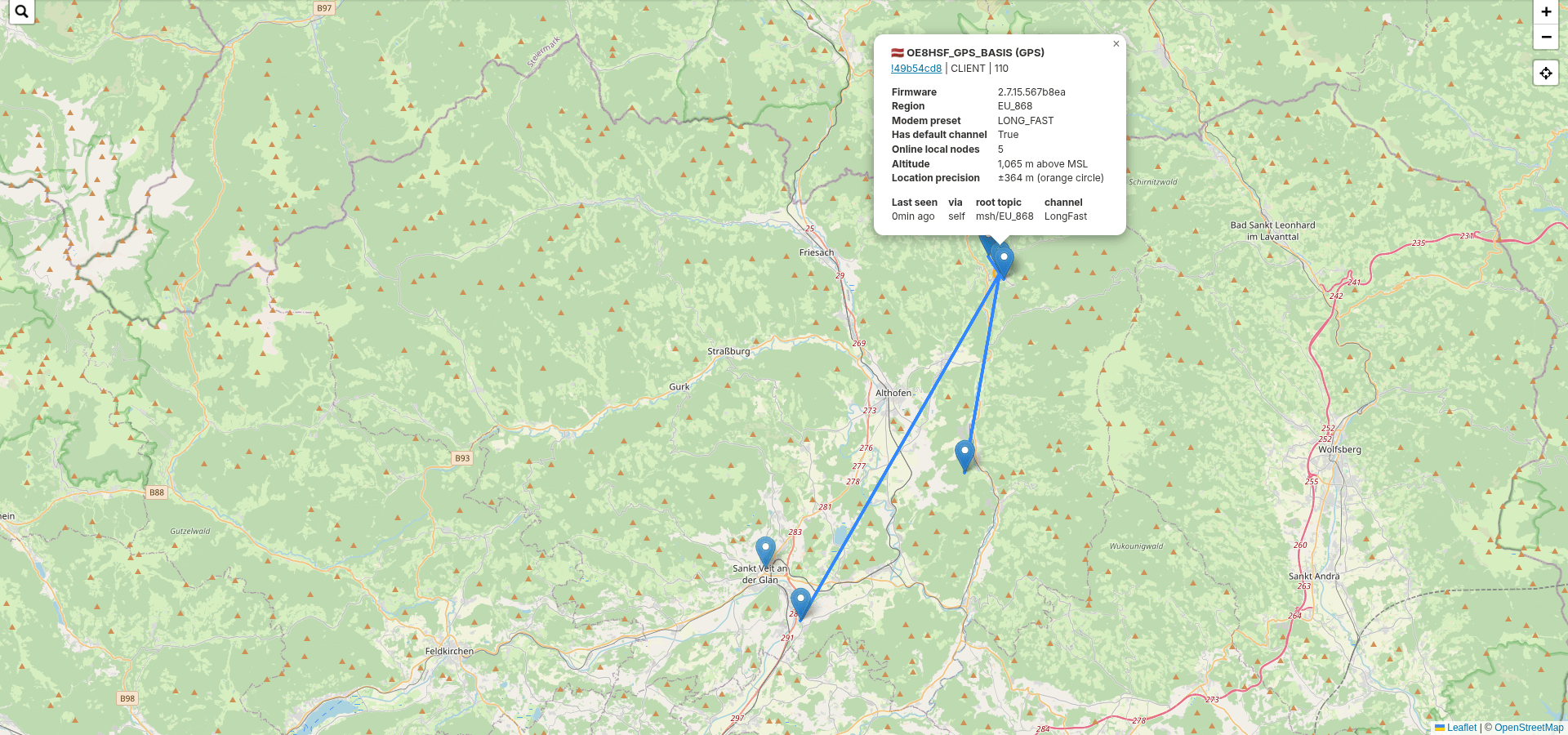
- Sittenberg – direct radio link, stable
- St. Veit an der Glan – runs cleanly via radio
- Tierpark Rosegg – surprising, but it works
That’s 20 to 40 kilometres of pure radio range – with an antenna on the wooden wall and a few milliwatts of transmit power. And you mustn’t forget: in the EU there are not only power limits but also duty cycle restrictions. My node may only actually transmit 1 to 10 percent of the time, depending on the frequency segment – the rest of the time it must stay silent. Meshtastic handles this cleverly with short, compressed LoRa bursts. But it shows how efficient this technology is: even with all these restrictions, you get 20 to 40 kilometres. Not bad for a provisional setup!
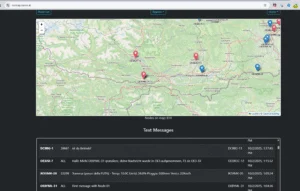
And thanks to MQTT it goes even further: via the internet bridge, my nodes are connected to the entire European Meshtastic network. Connections to Slovenia and Croatia show up on the map – not direct radio of course, but that’s exactly how Meshtastic works: locally via radio, and via MQTT the whole thing is interconnected into a worldwide network.
In the Krappfeld itself – from Friesach and Althofen in the north to St. Veit in the south – the mesh connectivity is really solid by now. You can tell that more and more people are joining and the network is getting denser. And that’s exactly the beauty of Meshtastic: the more nodes, the better the whole thing works.
Join in: The network lives from your participation!
And that brings me to the most important point: Join in! Meshtastic thrives on people setting up nodes. It doesn’t have to be a perfect setup – mine is all still provisional too, and it works wonderfully regardless. A Heltec V3, a halfway decent antenna, and you’re in.
Whether as a stationary node at home, a mobile companion on the road, or straight away with a weather sensor – every new node makes the network better. And the beautiful thing: you don’t need a licence, no internet, no cloud. Just a bit of tinkering spirit and the willingness to try something new.
If you have questions or want to get started: check out my QRZ profile (OE8HSF) or find me directly in the mesh. I’m looking forward to every new node in the Carinthian network!
73 de OE8HSF from Knappenberg!
Hermann