Table of Contents
- What is Packet Radio?
- History: From Vancouver to the World
- The AX.25 Protocol Explained
- Hardware: What Do You Need?
- Software TNCs: Dire Wolf and More
- Packet Radio Today: Applications
- APRS — the most prominent successor
- Winlink — email over radio
- Experimental applications
- VARA: The Modern Successor
- Getting Started: Packet Radio with Dire Wolf
- Packet Radio and Emergency Communications
- Conclusion: A Piece of Ham Radio History That Lives On
- Transparency Notice
Long before the internet became mainstream, radio amateurs were already sending digital data packets over the airwaves. Packet Radio — the packet-switched data network based on the AX.25 protocol — was the backbone of digital amateur radio communication in the 1980s and 1990s. And although the internet has taken over many functions, Packet Radio is experiencing a renaissance — thanks to modern software and new applications.
What is Packet Radio?
Packet Radio is a digital communication method in which data is split into small packets, tagged with address and error correction information, and transmitted over radio frequencies. At its core, it works similarly to the internet: data packets are routed from node to node until they reach their destination. The difference: the transmission medium is not copper cable or fibre optics, but amateur radio frequencies.
The protocol used is called AX.25 — an adaptation of the X.25 network protocol, modified for the specifics of amateur radio (the "A" stands for "Amateur"). AX.25 operates on the data link layer (Layer 2) of the OSI model and provides reliable point-to-point connections with error correction and flow control.
History: From Vancouver to the World
The history of Packet Radio begins in 1978 in Vancouver, Canada. Amateurs Doug Lockhart VE7APU and a team from the Vancouver Amateur Digital Communication Group were the first to experiment with packet-based data transmission over radio. In parallel, members of the AMRAD group (Amateur Radio Research and Development Corporation) in the US were working on similar concepts.
The breakthrough came in 1983, when the TAPR (Tucson Amateur Packet Radio Corporation) developed the first affordable Terminal Node Controller (TNC) — the TNC-1, later the legendary TNC-2. With this device, any radio amateur could connect their computer to the TNC via a serial interface, connect the TNC to their radio, and participate in the Packet Radio network.
In the late 1980s, Packet Radio exploded. In Austria and Germany, dense networks of digipeaters and mailboxes emerged. Typical VHF speed was 1,200 baud (AFSK), UHF ran at 9,600 baud (FSK). Complete BBS systems (Bulletin Board Systems) with message forwarding, file transfer and bulletins emerged — an "internet of radio amateurs" long before the World Wide Web.
The AX.25 Protocol Explained
AX.25 is the heart of Packet Radio. Its key features:
- Callsign addressing: Instead of IP addresses, AX.25 uses amateur radio callsigns as network addresses — elegant and unique
- Connection-oriented and connectionless: AX.25 supports both reliable point-to-point connections (Connected Mode) and unacknowledged broadcasts (UI frames) — the latter form the basis of APRS
- Error correction: Every packet contains a CRC checksum. Corrupted packets are automatically re-requested
- Digipeating: Packets can be relayed through intermediate stations (digipeaters), with the route specified in the packet header
- Frame structure: Flag (01111110) → Address field (source/destination callsign + digipeater path) → Control field → PID → Data field → FCS → Flag
In practice, you don't need to worry about these details — modern software handles everything automatically. But understanding them helps with troubleshooting and network planning.
Hardware: What Do You Need?
The classic Packet Radio station consists of three components:
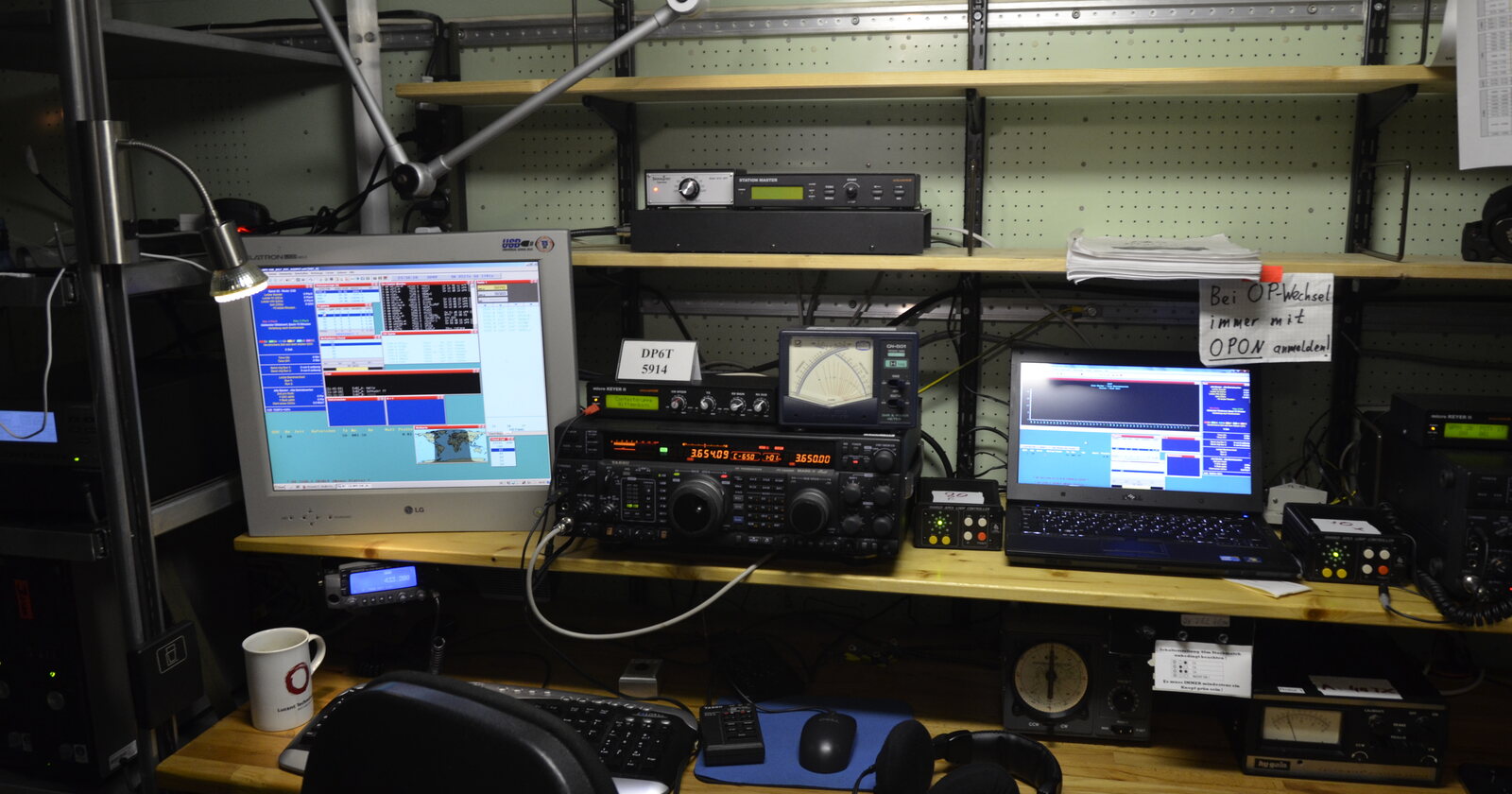
- Radio: Any 2 m or 70 cm FM radio. For 1,200 baud, any handheld with a data port suffices; for 9,600 baud, you need discriminator access (direct audio tap before the de-emphasis filter)
- TNC or sound card: Classically a hardware TNC (e.g. TNC-2 clone, Kantronics KPC-3), today usually a USB sound card with software TNC
- Computer: Any PC or Raspberry Pi with terminal software
Modern setups replace the hardware TNC entirely with software. This saves costs and provides more flexibility.
Software TNCs: Dire Wolf and More
The most important development in recent years is the software TNC Dire Wolf. This open-source program turns any computer with a sound card into a powerful TNC — outperforming most hardware TNCs in decoding capability.
Dire Wolf offers:
- AX.25 modem for 300, 1,200 and 9,600 baud
- Integrated APRS digipeater and IGate
- KISS and AGWPE interface for other programs
- Runs on Windows, Linux, macOS and Raspberry Pi
- Improved decoding through multiple parallel demodulators
Other software options include UZ7HO SoundModem (Windows, popular for Winlink access), QtSoundModem (cross-platform alternative), and AGWPE (established Windows software TNC).
Packet Radio Today: Applications
Packet Radio is far from "dead" — it has evolved. The most important current applications:
APRS — the most prominent successor
The Automatic Packet Reporting System (APRS) is the world's most successful Packet Radio application. APRS uses AX.25 UI frames on 144.800 MHz (Europe) to transmit position reports, weather data, telemetry and short messages. Thousands of digipeaters and IGates worldwide form a dense network — also excellently developed in Austria.
Winlink — email over radio
Winlink uses AX.25 (via VARA FM or Packet) as access technology for its radio email system. Through Winlink gateways, radio amateurs can send and receive emails — completely independent of the internet. This is particularly indispensable in emergency communications.
Experimental applications
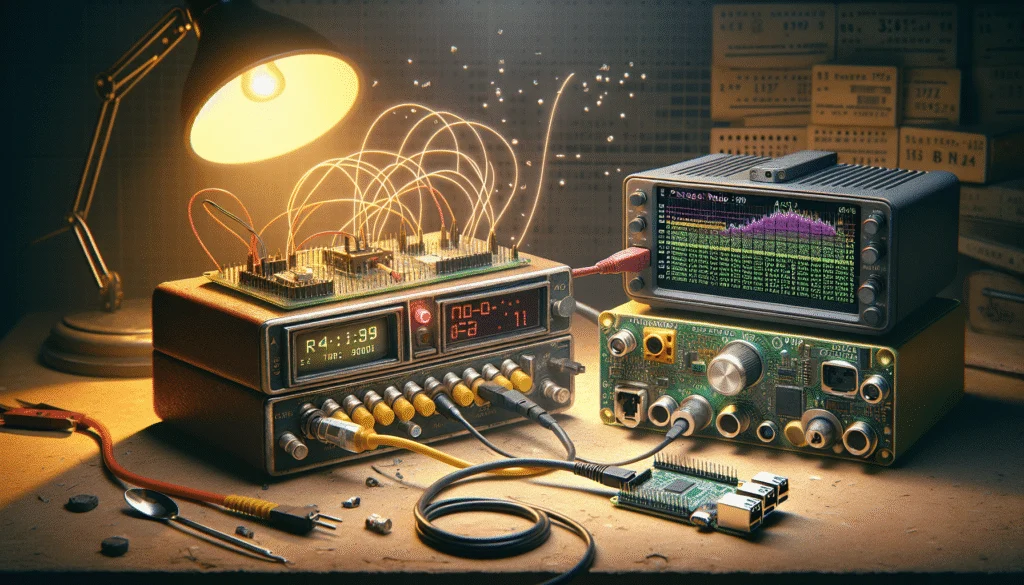
On ESP32 and Arduino platforms, new Packet Radio projects are emerging: automatic weather stations with AX.25 telemetry, remote controls for repeaters, and sensor networks. The combination of a proven protocol with modern microcontrollers opens up exciting possibilities.
VARA: The Modern Successor
While AX.25 reaches its limits at 1,200 baud, the VARA protocol (by EA5HVK) has revolutionised the Packet Radio world. VARA FM achieves up to 25,000 bps on a standard 2 m FM channel — twenty times classic Packet. VARA HF offers up to 8,490 bps on shortwave.
VARA is mainly used as transport for Winlink but can also be used for other applications. The combination of VARA FM + Winlink has breathed new life into the Packet Radio concept of "data over radio".
Getting Started: Packet Radio with Dire Wolf
The easiest way to get started with Packet Radio today:
- Hardware: A 2 m handheld radio with data port (e.g. Baofeng with APRS cable or a better radio like Yaesu FT-65) + a USB sound card interface (e.g. Digirig Mobile)
- Software: Install Dire Wolf (free, open source)
- Configuration: Enter callsign, configure audio device, enable KISS interface
- Launch application: For APRS → YAAC or Xastir. For Winlink → Winlink Express. For classic Packet → EasyTerm or Outpost PMR
- Set frequency: 144.800 MHz for APRS, local packet frequencies for BBS access
On a Raspberry Pi, a complete APRS digipeater or Winlink gateway can be set up in less than an hour.
Packet Radio and Emergency Communications
In emergency communications, Packet Radio plays an important role. While voice communication quickly reaches its limits (limited channel capacity, no error correction, no automatic forwarding), Packet Radio offers error-free message transmission, store-and-forward capability, form-based communication (ICS-213, welfare messages) via Winlink, and automatic operation without an operator at the digipeater.
In Austria, emergency communication groups use Winlink over VARA FM and Packet as the primary digital communication channel for exercises and real emergencies.
Conclusion: A Piece of Ham Radio History That Lives On
Packet Radio was pioneering work: radio amateurs realised networked digital communication before the internet became everyday. Today, the legacy lives on in APRS, Winlink, and modern data-over-radio applications. Learning Packet Radio means understanding the fundamentals of digital communication — and having a robust tool for emergency communications at hand.
73 – your oeradio.at editorial team
Transparency Notice
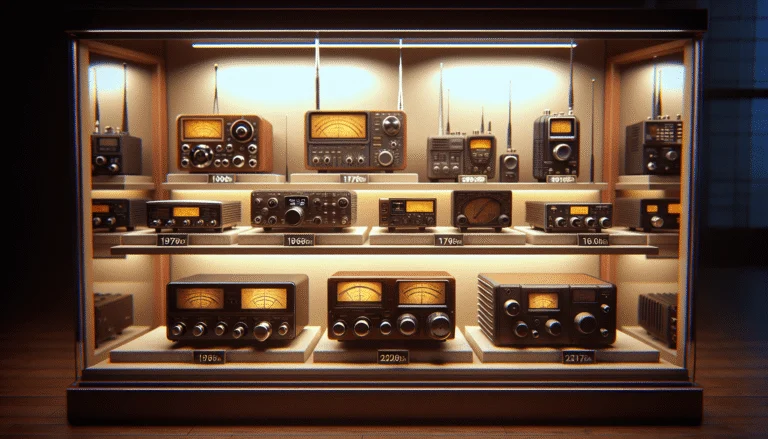
This article was researched and written with the assistance of AI (Claude, Anthropic). Any illustrations used were generated with AI (ChatGPT/DALL·E, OpenAI) unless otherwise noted. The editorial team has reviewed and edited all content. Despite careful review, occasional inaccuracies may occur — we welcome corrections via email to [email protected].