Table of Contents
- What is WWFF?
- The Magic Number 44: What Makes a Valid Activation
- OEFF: Austria's Flora & Fauna References
- The Six National Parks as WWFF Highlights
- Hohe Tauern National Park
- Kalkalpen National Park
- Gesaeuse National Park
- Donau-Auen National Park
- Neusiedler See – Seewinkel National Park
- Thayatal National Park
- WWFF + POTA + SOTA: The Triple Activation
- Equipment for WWFF Activations
- Transceivers
- Antennas
- Power Supply
- Accessories
- Practical Tips for a Successful WWFF Activation
- Before the Activation
- During the Activation
- After the Activation
- Registration and Getting Started
- OEFF Diplomas and WWFF Awards
- For Activators
- For Hunters
- The Nature Conservation Aspect: More Than Just Operating
- WWFF Community in Austria
- Important Links and Resources
- Conclusion: Out Into Nature, Up on the Frequency!
- Transparency Notice
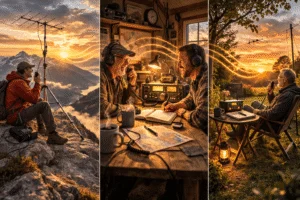
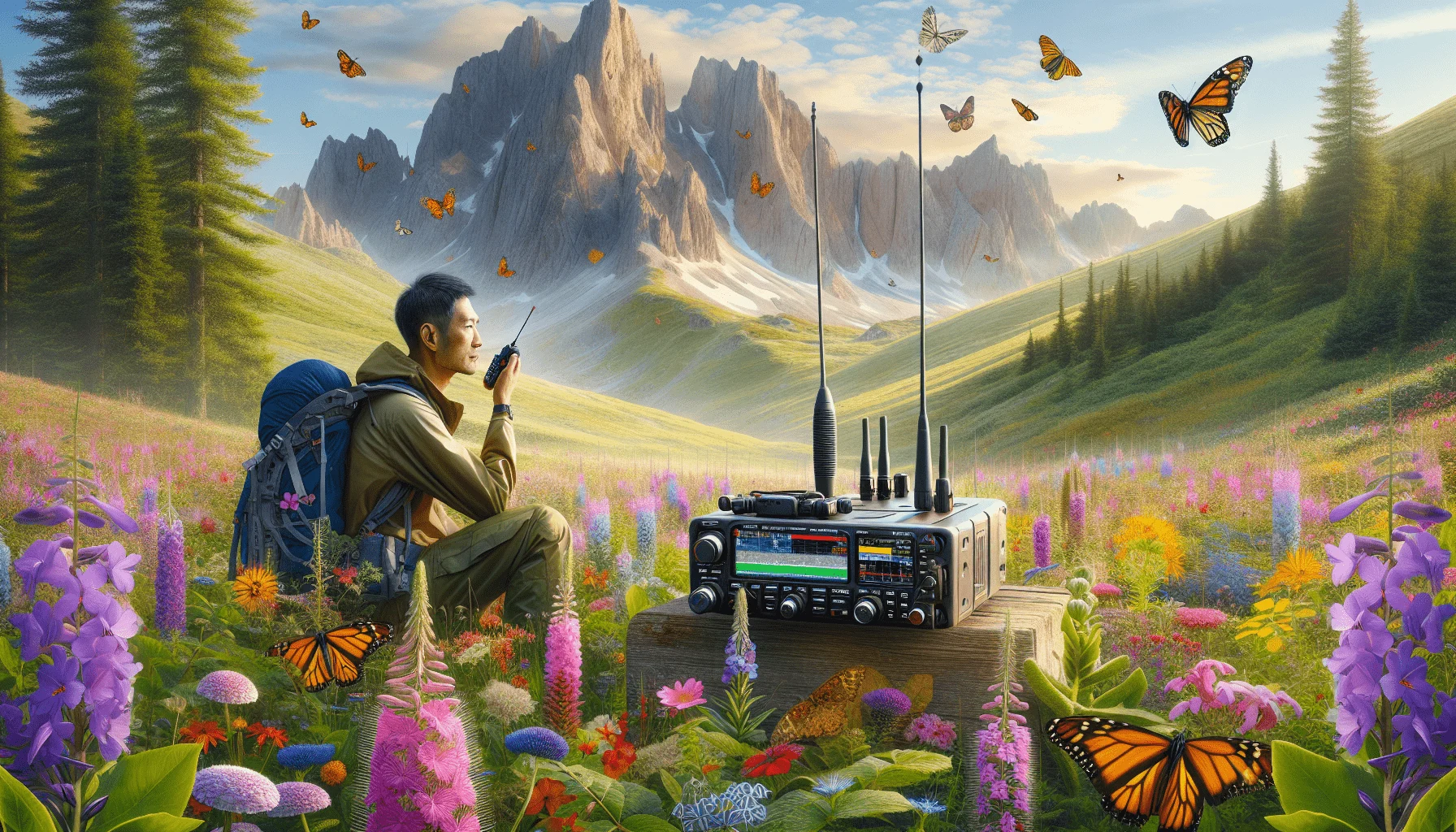
Amateur radio and nature experiences – the World Wide Flora & Fauna (WWFF) program combines both in a unique way. If you enjoy portable operation and want to explore Austria’s beautiful protected areas at the same time, WWFF offers the perfect activity. From the Hohe Tauern to the Gesaeuse to the Danube Floodplains: OEFF references across all of Austria are waiting to be activated. This article explains everything you need to get started.
What is WWFF?
The World Wide Flora & Fauna program (WWFF) was created to motivate amateur radio operators worldwide to operate from protected natural areas – national parks, nature reserves, landscape protection areas and similar sites. The idea: By activating these areas, awareness for nature conservation is strengthened, while simultaneously creating an exciting award program for both activators and hunters.
WWFF is a non-profit, worldwide program coordinated by an international team. Over 36,000 protected areas (so-called Protected Flora & Fauna Areas, PFF for short) are registered in the WWFF database worldwide. Each participating country has its own prefix: For Austria, it is OEFF (OE Flora & Fauna).
The Magic Number 44: What Makes a Valid Activation
The central element of WWFF is the 44-QSO rule: For an activation to be recognized as valid for WWFF activator awards, at least 44 contacts (QSOs) must be logged from the protected area. This number was not chosen randomly – it symbolizes the four letters of WWFF and has established itself as a challenging yet achievable threshold.
Important to know: The 44 QSOs do not have to be achieved in a single visit. Multiple visits to the same reference area can be combined. A QSO with the same callsign on a different band or in a different mode counts as a separate QSO. And for hunters: Every QSO with an activation station counts – regardless of whether the activator ultimately reaches the 44 threshold.
The recommended CQ call is: “CQ WWFF”, “CQ Flora Fauna” or simply “CQ 44”. This way, other stations immediately know that you are participating in a WWFF activation.
OEFF: Austria’s Flora & Fauna References
The Austrian WWFF program is coordinated by the Amateurfunkclub Heidenreichstein (AFCH). Austrian references use the format OEFF-xxxx (e.g., OEFF-0001 for the Hohe Tauern National Park).
Austria has an impressive variety of protected areas registered as WWFF references. These include:
- 6 National Parks: Hohe Tauern (OEFF-0001), Neusiedler See – Seewinkel, Donau-Auen, Kalkalpen, Gesaeuse and Thayatal
- Over 40 Nature Parks: From the Steirische Eisenwurzen through the Dobratsch Nature Park in Carinthia to the Tyrolean Lechtal
- Hundreds of Nature Reserves: Natura 2000 areas, landscape protection areas and European protection areas across all nine federal states
The complete list of all OEFF references is available on the AFCH website at afch.at/wwff and in the WWFF database at wwff.co/directory.
The Six National Parks as WWFF Highlights
Austria’s six national parks are the crown jewels of the OEFF program and offer excellent conditions for portable operation:
Hohe Tauern National Park
At 1,856 km², it is not only Austria’s largest but also its oldest national park. The activation can be excellently combined with SOTA – numerous summits within the park area are registered as SOTA references. Elevated locations offer clear line of sight and therefore excellent propagation conditions on HF and VHF.
Kalkalpen National Park
Austria’s largest forested national park in Upper Austria is home to UNESCO World Heritage beech forests. The remoteness means little QRM (interference), but also limited mobile phone reception – ideal for amateur radio operators seeking genuine outdoor experiences.
Gesaeuse National Park
Austria’s youngest national park in Styria (since 2002) around the wild River Enns offers spectacular mountain scenery. SOTA summits and the WWFF reference can be perfectly combined here.
Donau-Auen National Park
Located between Vienna and Bratislava, this floodplain forest national park is particularly accessible and thus an ideal starting point for WWFF newcomers. Over 100 bird species can be observed here – a pure nature experience.
Neusiedler See – Seewinkel National Park
The UNESCO World Heritage site on the Hungarian border with its salt ponds and reed beds offers flat terrain – perfect for wire antennas. The open landscape provides excellent radiation conditions.
Thayatal National Park
Austria’s smallest national park (approx. 14 km²) on the Czech border. Small but beautiful – the meanders of the Thaya river offer idyllic locations for a relaxed WWFF activation.
WWFF + POTA + SOTA: The Triple Activation
A major advantage of WWFF is its combinability with other outdoor radio programs. Many Austrian protected areas are simultaneously registered as POTA references (Parks on the Air), and numerous summits within WWFF areas are SOTA references (Summits on the Air).
This means: With a single portable operation, you can potentially serve three programs simultaneously. You log your QSOs once and then submit the ADIF log to WWFF, POTA and SOTA. The website cqparks.net offers a practical cross-reference search to find out which areas have both WWFF and POTA references.
A concrete example: You activate a summit in the Gesaeuse National Park. The summit has a SOTA reference (e.g., OE/ST-xxx), the national park has the OEFF reference and possibly also a POTA reference. You make 44 QSOs and collect points in three programs – efficiency meets nature!
Equipment for WWFF Activations
Since WWFF activations always take place as portable operations in nature, the right equipment is crucial. Here are the key recommendations:
Transceivers
- HF QRP Transceivers: Devices like the Icom IC-705 (10 W), Yaesu FTX-1, Elecraft KX2/KX3 or the (tr)uSDX as a budget option
- HF Mid-range: Yaesu FT-891 (100 W) or Icom IC-7300 for car-based activations
- VHF/UHF Handheld: For quick QSOs via local repeaters and direct contacts on 2 m/70 cm
Antennas
- End-Fed Half-Wave (EFHW): Lightweight, quick to set up, multi-band capable – the classic for portable operation
- Linked Dipole: A bit more involved to set up, but with better radiation pattern
- Telescopic Vertical: Ideal for flat terrain like Neusiedler See
- Telescopic Mast (6–10 m): Fiberglass masts from SOTAbeams or DX-Wire for optimal antenna height
Power Supply
- LiFePO4 Battery: 4.5 Ah to 12 Ah – lightweight, long-lasting, ideal for day activations
- Solar Panel: A foldable 20–50 W panel significantly extends operating time for full-day activations
- Car Battery: For activations where the car is parked nearby
Accessories
- Logbook: Paper logbook as backup, smartphone or tablet with logging app (e.g., VK port-a-log, Ham2K POLO or HAMRS)
- Headphones: Essential against wind and nature sounds
- Weather Protection: Rain tarp or small tarp – Austrian mountain weather is unpredictable
- Seating: Folding stool or sleeping pad – 44 QSOs take their time!
Practical Tips for a Successful WWFF Activation
Before the Activation
- Check the Reference: Make sure your chosen area actually has a valid OEFF reference. The WWFF database at wwff.co/directory is the official source.
- Alert: Announce your activation in advance on the WWFF website or via wwff.co/agenda. This way, potential hunters know when and where you will be QRV.
- Spotting: Use the WWFF Spotline (spots.wwff.co) or the DX Cluster to self-spot. This brings many callers in no time.
- Choose the Right Time: Weekends – especially the WWFF Activity Day (first Saturday of each month) – yield the most QSOs. On weekdays it is quieter, but the regular WWFF hunters are always looking.
During the Activation
- Use Multiple Bands: Start on 20 m (14 MHz) for Europe-wide and DX contacts, then switch to 40 m (7 MHz) for shorter distances. 15 m and 10 m are currently excellent thanks to the Solar Cycle 25 sunspot maximum.
- Vary Operating Modes: SSB (voice) yields the most QSOs per hour. CW (telegraphy) is more efficient with QRP. FT8 can help reach the 44 when conditions are difficult.
- Announce Your WWFF Reference: Mention your OEFF number in each QSO, e.g.: “My location is OEFF-0001, Hohe Tauern National Park.”
- Be Patient: 44 QSOs sound like a lot, but are achievable in 2–4 hours on a good day.
After the Activation
- Export Log in ADIF Format: Any common logging software (HAMRS, N1MM+, Log4OM, WSJT-X) can create ADIF files.
- Submit Log: Send your ADIF log to the Austrian WWFF coordinator or upload it via the WWFF LogSearch system. The file should be named according to the pattern callsign@OEFF-xxxx_YYYYMMDD.adi.
- Submit to POTA/SOTA in Parallel: The same ADIF log can also be submitted to pota.app and SOTA (sotadata.org.uk).
Registration and Getting Started
Getting started with WWFF is straightforward and free:
- Step 1 – Registration: Create an account on wwff.co (click on “Register”). Use your callsign as your username – other usernames will be rejected.
- Step 2 – Complete Profile: Enter your callsign, your DXCC (OE = 206) and your continent (EU).
- Step 3 – Choose Reference: Search the WWFF database for an OEFF reference near you.
- Step 4 – Plan Activation: Create an alert on the WWFF agenda page and select date, time and frequencies.
- Step 5 – Operate and Log: Activate the area and log at least 44 QSOs.
- Step 6 – Submit Log: Export your log as ADIF and submit it to WWFF LogSearch.
For portable logging, the freeware Fast Log Entry (FLE) by DF3CB is recommended, which is specifically optimized for WWFF activations and exports ADIF files with the correct WWFF fields (MY_SIG and MY_SIG_INFO).
OEFF Diplomas and WWFF Awards
Attractive diplomas are available for both activators and hunters:
For Activators
- WWFF Activator Award: For activating WWFF references worldwide (levels based on number of activated references)
- OEFF Activator Diploma: Issued by AFCH for activations of Austrian references
For Hunters
- WWFF Hunter Award: Starting at 44 confirmed different WWFF references worldwide, with upgrades in steps of 44 up to 396, then in steps of 100 from 444
- OEFF Hunter Diploma: For confirmed contacts with stations in Austrian protected areas (various levels)
All OEFF diplomas are issued by AFCH. They are available for both licensed amateur radio operators and SWLs (shortwave listeners). Contacts are recognized from 1 January 2009 onwards.
The Nature Conservation Aspect: More Than Just Operating
WWFF explicitly considers itself a program that promotes nature conservation. The basic idea: By amateur radio operators becoming active in protected areas, they experience nature firsthand and carry awareness of the value of these areas into the amateur radio community.
Naturally, strict rules apply to protect nature:
- Leave No Trace: Leave no rubbish, do not damage plants and do not disturb animals. Take back everything you brought with you.
- Stay on Paths: In core and quiet zones of many national parks, leaving the marked paths is prohibited. Inform yourself in advance about the rules of the respective protected area.
- Set Up Antennas Carefully: Only use trees as antenna supports with suitable throw lines – no nails, no screws, no damage.
- Respect Breeding Seasons: In sensitive areas (e.g., Neusiedler See – Seewinkel), seasonal access restrictions may apply.
- Obtain Permits: Some protected areas require advance registration or permits for off-trail stays. Contact the national park administration if in doubt.
Many WWFF activators also use their activations to draw attention to the value of protected areas – whether through QSL cards with nature motifs, social media posts, or simply through conversations with curious hikers who are often fascinated when they discover a radio station in the middle of nature.
WWFF Community in Austria
The Austrian WWFF community is active and growing. The Amateurfunkclub Heidenreichstein (AFCH) regularly organizes the International WWFF & COTA-OE Meeting in Heidenreichstein (Lower Austria), where activators and hunters from all over Europe meet, exchange experiences and carry out joint activations.
Additionally, there are active forums on the WWFF website, a spotline for real-time activations, and regular activity months (e.g., the WWFF Activity Month in August) when especially many stations are active.
Important Links and Resources
- WWFF International: wwff.co – Global website with database, rules and awards
- WWFF-OE (AFCH): afch.at/wwff – Austrian WWFF program, OEFF reference directory and diplomas
- WWFF LogSearch: wwff.co/logsearch – Online log search and log upload
- WWFF Spotline: spots.wwff.co – Real-time spots of active WWFF stations
- CQParks.net: cqparks.net – Cross-reference WWFF/POTA
- Fast Log Entry (FLE): df3cb.com/fle – Recommended logging software for WWFF
- WWFF Global Rules: wwff.co (Downloads) – Official rulebook (currently version 5.10)
Conclusion: Out Into Nature, Up on the Frequency!
WWFF offers a wonderful opportunity to combine the amateur radio hobby with nature experiences. Austria’s diversity of national parks, nature parks and protected areas makes our country one of the most exciting WWFF countries in Europe. Whether you are hiking through the Gesaeuse as an activator with your backpack or collecting OEFF references as a hunter from your home shack – WWFF enriches amateur radio with a dimension that goes beyond pure radio technology.
So: Pack your transceiver, choose an OEFF reference, and head out into nature. The 44 are waiting for you!
73 – your oeradio.at editorial team
Transparency Notice
This article was researched and written with the assistance of AI (Claude, Anthropic). Any illustrations used were generated with AI (ChatGPT/DALL·E, OpenAI) unless otherwise noted. All content has been reviewed by the oeradio.at editorial team. If you notice any errors.