
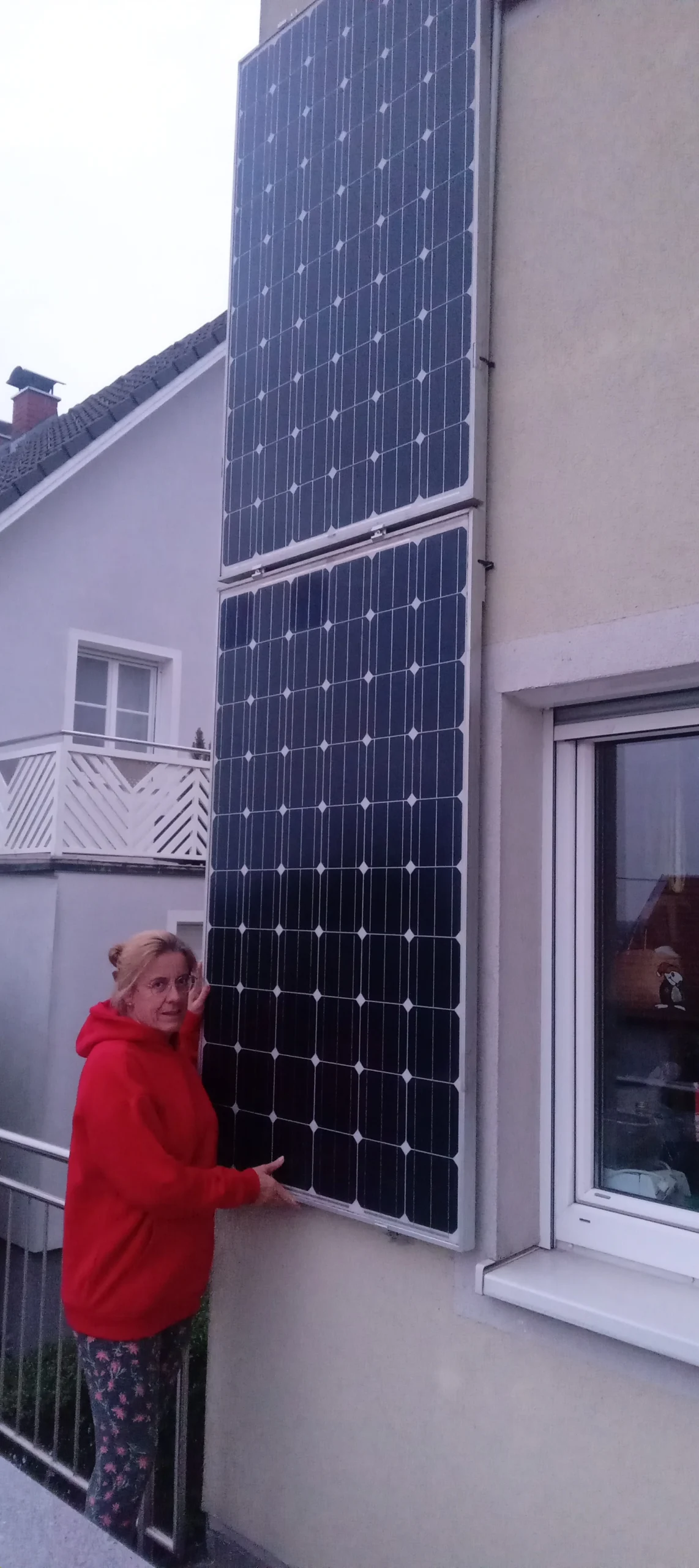
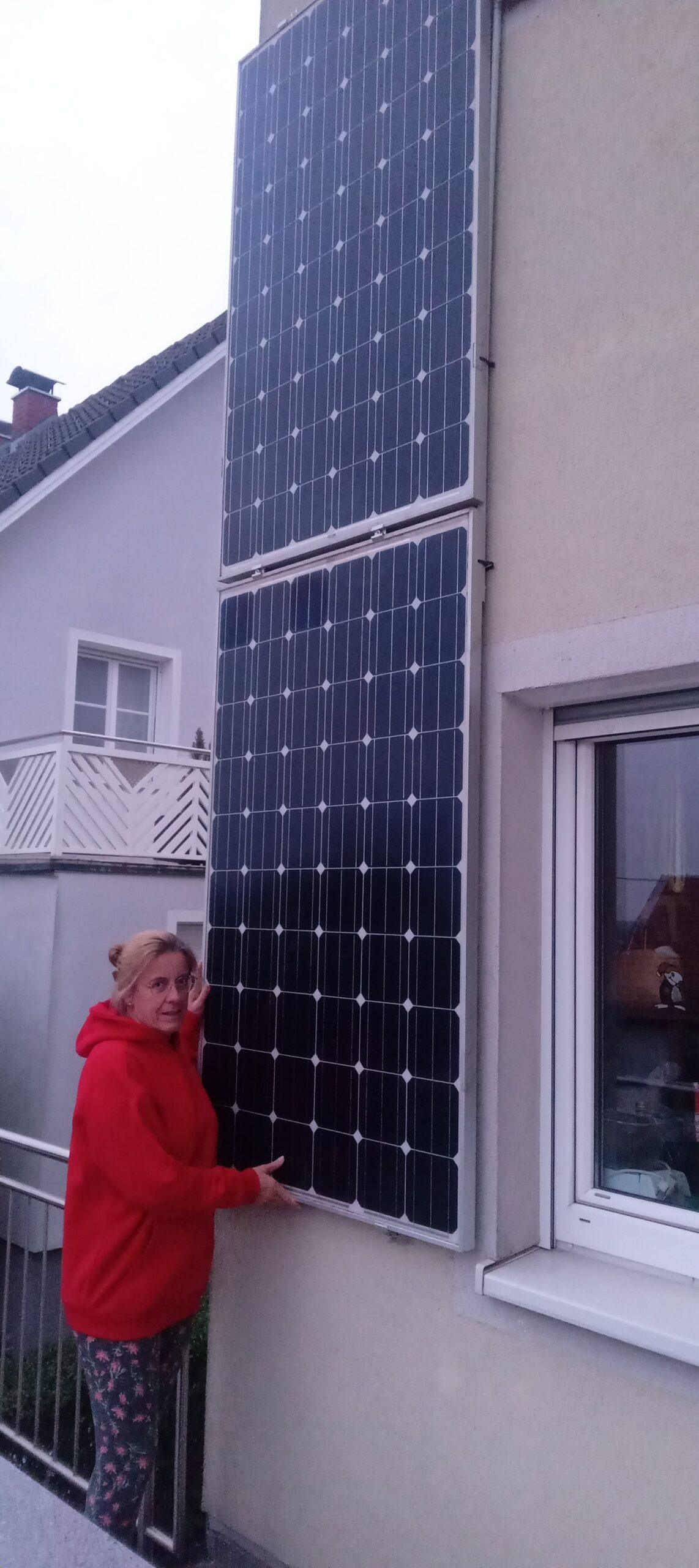
After repowering our roof PV system after 10 years of operation, a few older PV modules remained that are ideal for experiments and craft projects, such as the emergency power supply for our radio systems. The bottleneck for us is now simply the space on the roof or other suitable areas where you can mount PV modules without other roommates and neighbors getting the crisis. Next to the kitchen window we found a vertical wall surface that is halfway south-facing. Sabine OE5SLE agreed that modules could be installed there and also helped with the installation. We have now slapped two modules onto the vertical wall and are now experimenting with how we can set up and operate a toy PV system using electricity.
The premise and requirement of all of our PV systems is that the inverters do not cause any radio interference. That’s why we continued our very good experiences with Fronius snap-in inverters when repowering the large PV system and didn’t switch to Chinese hybrid inverters, but that’s a different story.
We have already experimented with a Bluetti power station to provide self-sufficient power supply for the radio systems. We actually had very good experiences with Bluetti in terms of quality. Very clever to handle, good display and integrated everything you need for mobile power. Internally the thing should work with a LiFePO4 battery with 24V or 48V, so a down step converter is always necessary for the DV 12V and 10A output and an up step converter for the AC 230V output. The 12V converter causes terrible noise on shortwave and CB, but it can be used without any problems for 2m devices. In addition, the 10A is not enough to operate a 100W shortwave machine normally. The 230V output works without noticeable noise in the shortwave range, but has a high resting consumption of around 40W, which noticeably reduces the battery level over time. You can operate a tube power amplifier on the 230V output if there is no socket available and you want to make the wires glow. You can also connect a 40V PV module directly and use it to recharge the Bluetti.
But in my opinion the Bluetti isn’t particularly suitable for supplying our club radio station OE5XBC (or OE8XBC). Here we need something that works permanently with much less quiescent current and provides peace of mind in terms of radio technology.
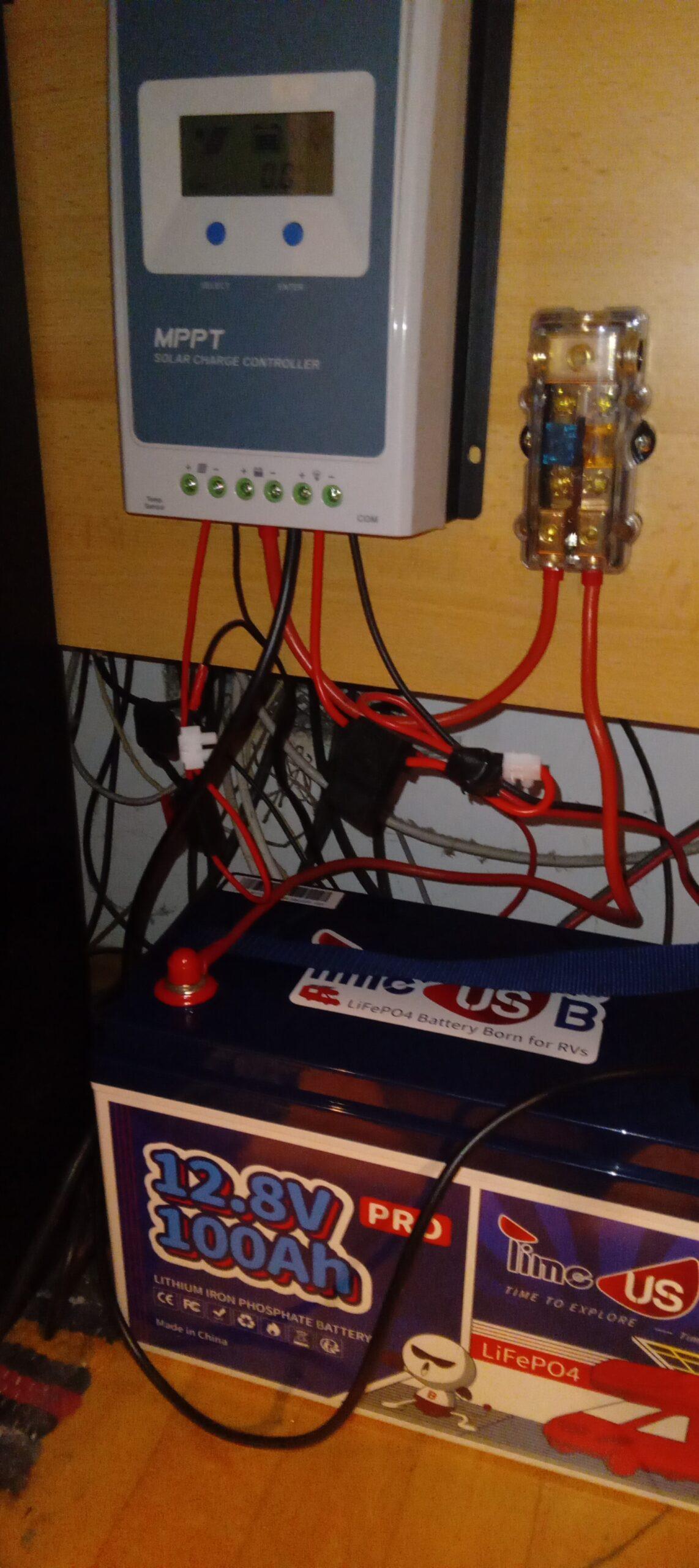
By chance I came across an Amazon offer for a 12V 100Ah LiFePO4 battery, which is now available for well under 200 euros. I actually wanted to buy it as a replacement for the lead battery in our caravan, but since the camping season has already ended this year, we tried a new use for the battery to power our radio system. So simply put the battery under the desk and connect it to the radios with a few fuses and cables. 4S LiFePo4 batteries have the great feature that the voltage level is comparable to lead batteries and they can be connected directly to the radio devices. This is not so easy with other 3 – 4S LIPO batteries, because they either have too little voltage at 12V or too much voltage at 16V. (For SOTA operation with 3S LiPO batteries, we have extra old 2m radios that can still handle 10V battery voltage, but that’s another story)
So connected the 100Ah LiFePO4 battery under the desk. With a quiescent current consumption of 0.5 to 2 A for the radios in reception and around 10A for FM and 5-25A in SSB, you can spend a whole day in the shack without the battery dying. Now all that’s missing is the connection to the old PV modules on the kitchen wall. 10 years ago the modules had around 275Wp and a voltage of 30-40V. I assume that they have now retained around 90% of the power and produce around 250Wp.
Now we need a charge controller that transforms the 60-80V down to 12V and thus charges the battery. For this it should be a real MPPT charge controller. Some controllers described as such in windy product descriptions are not MPPT but rather simple PWM controllers and burn up a large part of the charging energy. The real MPPT controller controls the PV voltage and current according to a charging algorithm and regulates to the maximum power point. The Mercedes among these charge controllers are those from Victron, which work very well, but always require a Bluetooth cell phone to keep an eye on the charge controller.
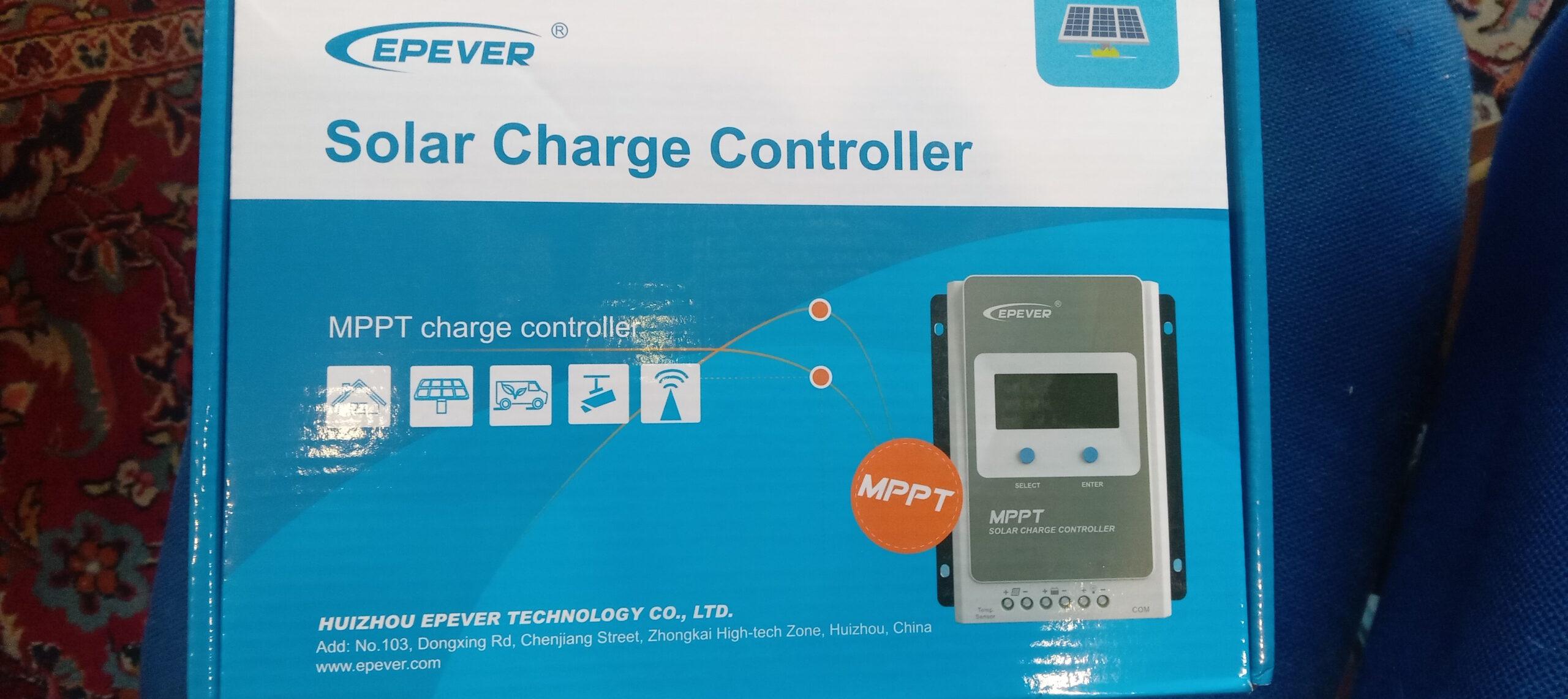
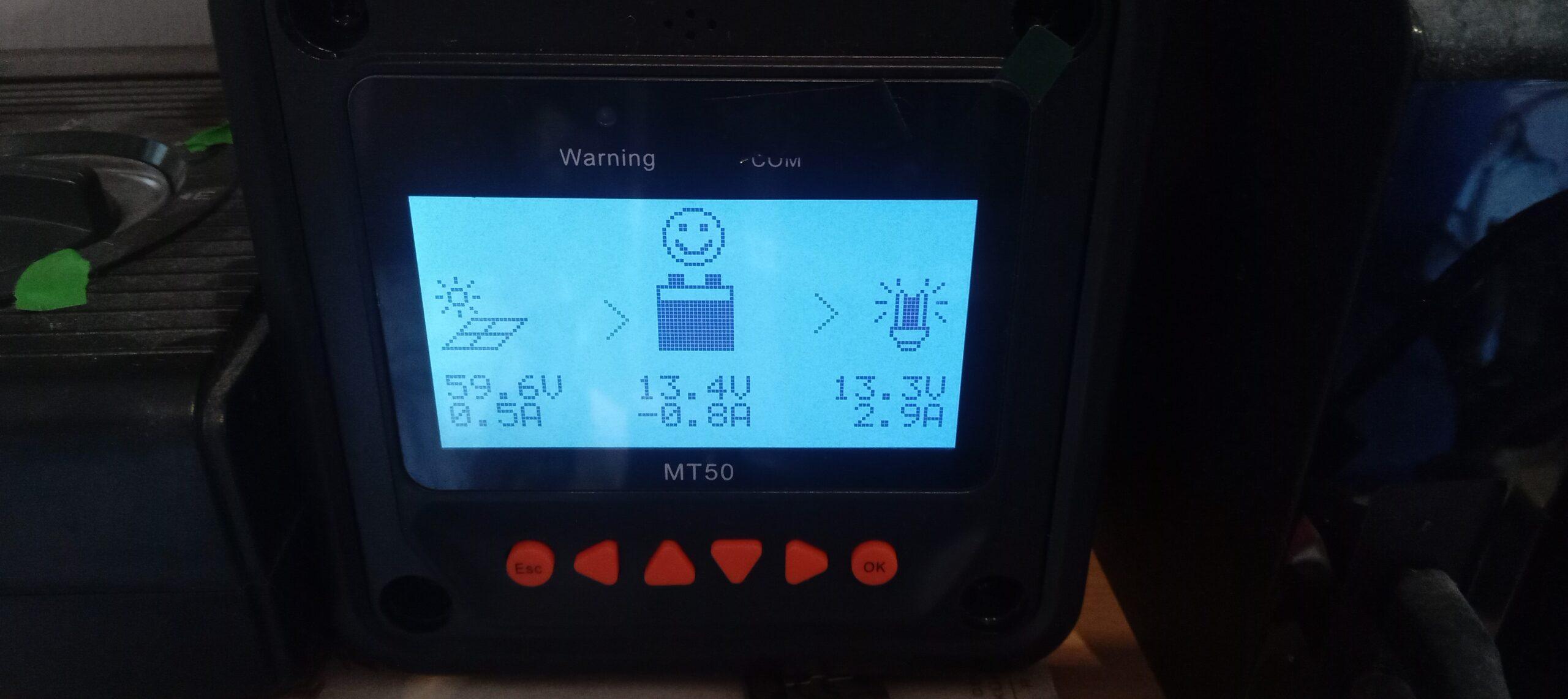
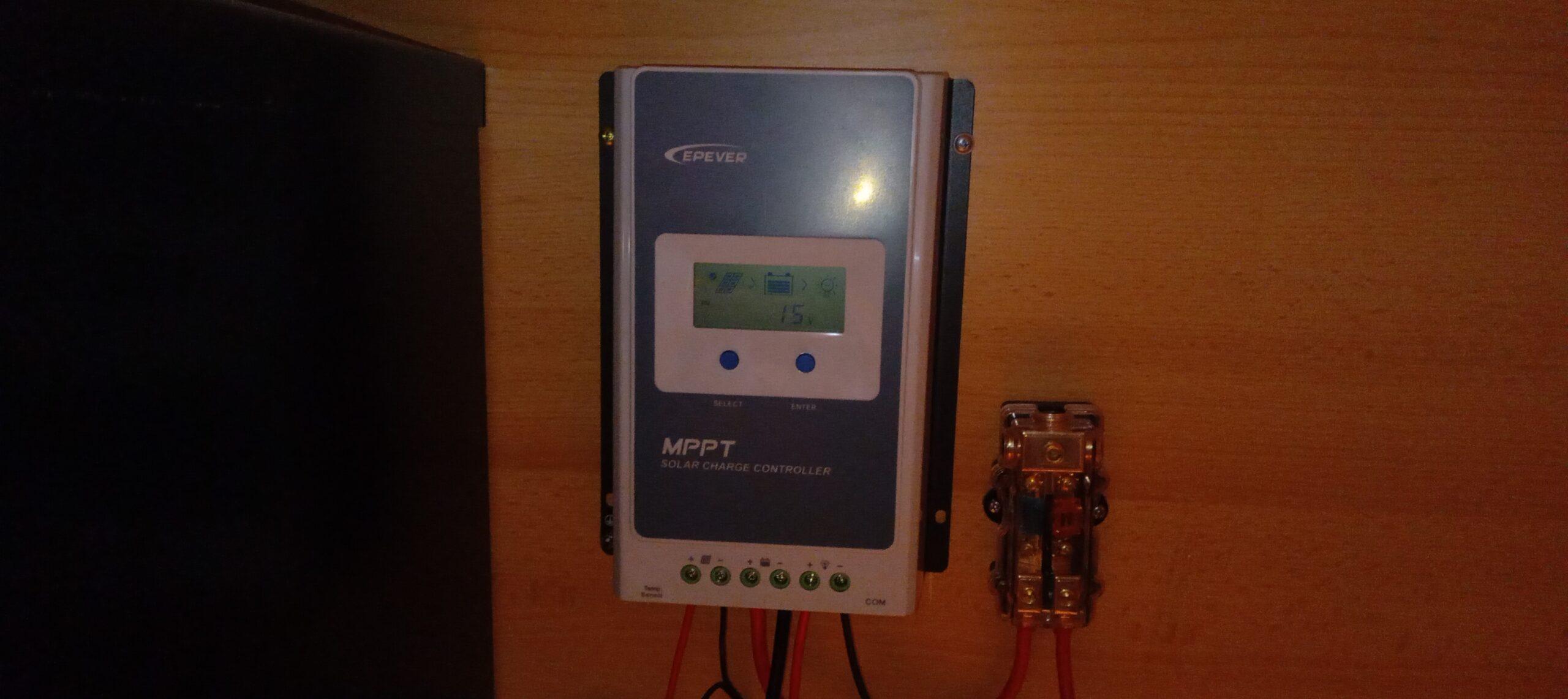
We have now tried a 30A charge controller from Epever and an extra display. These are also available together for a little more 100 euros on Amazon. The charge controller is freely configurable in terms of battery type and final charging voltage etc. and supports LiFePO4 batteries out of the box. Final charging voltage at 14.4-14.6V. At a resting voltage of 13.5V the battery is quite full, at 12.8V it is already quite empty and at 10.8V it is time to disconnect the load.
After installation and setting to LiFePO4, the charge controller worked straight away and actually converts the high PV voltage to the 12V level without wasting too much power. Even with strong sunlight (joking – it’s November, the Cos (Phi) losses are lower with vertical installation in winter) we haven’t noticed any interference on either 2m or shortwave. We have refrained from throttling the DC inputs and outputs. We have set the display lighting to always on. This, together with the remaining power consumption of the charge controller, is not noticed by the battery at all overnight.
A module with 30V and 250Wp would probably have done the trick and the charge controller is busy reducing the charging power quite quickly with 2 modules when there is some sunshine. But the 2 modules were already there and there was still space on the wall.
The system has been running pretty smoothly for a few days now and it hasn’t smoked out yet. We hope that it stays that way.
We would also like to hear other reports of self-sufficient and black-start emergency power supply systems for supplying radio systems and look forward to any feedback in this regard.
73 de
Manfred OE5MBP and Sabine OE5SLE
at OE5XBC in Leonding near Linz
