
Zeitraum: 07.03.2026 – 13.03.2026 · Kalenderwoche: 10/2026 · SFI: 143 · SSN: 75 · A: 7 · K: 2 · X-Ray: B7.4
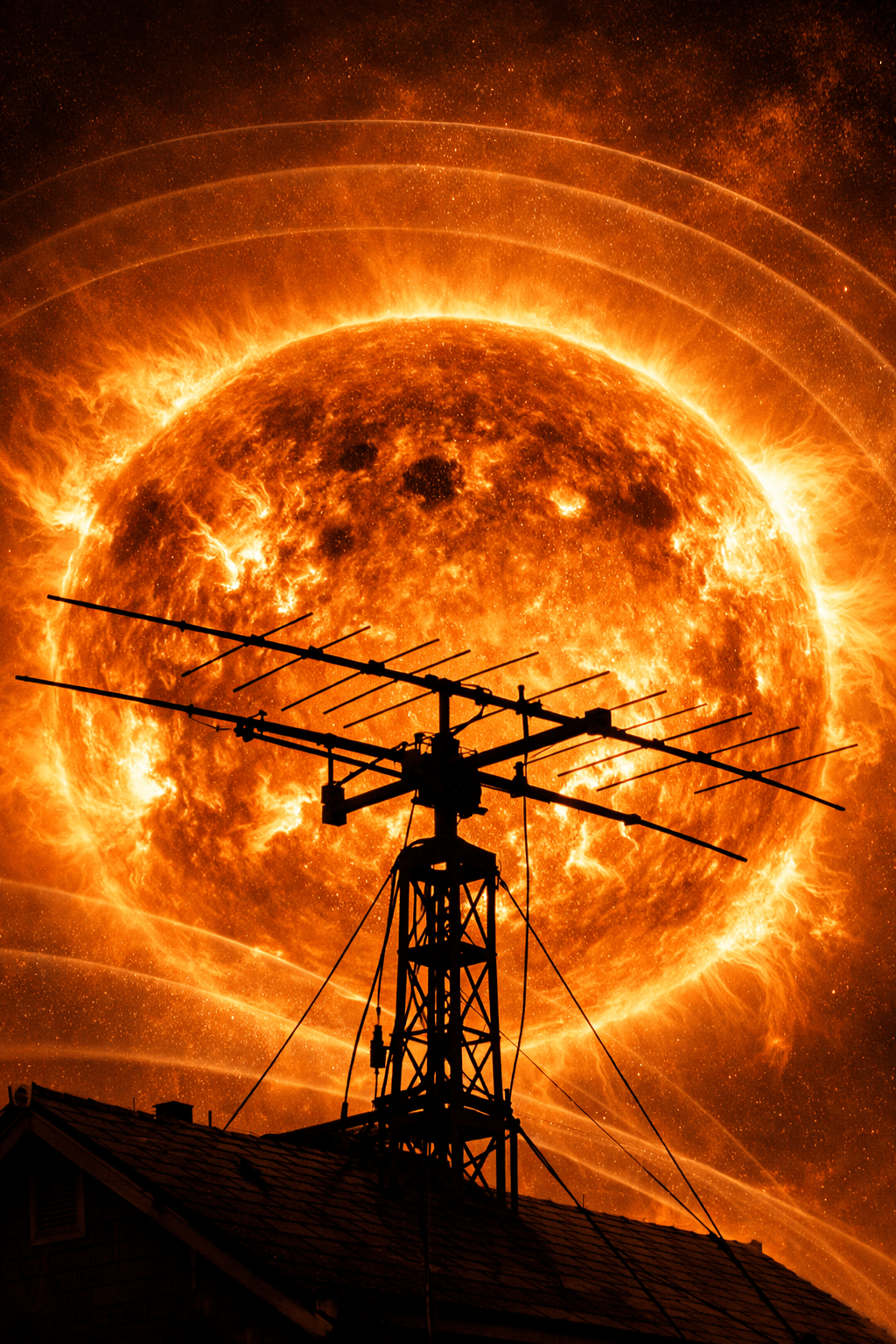
Dear radio friends, while March outside oscillates between winter remnants and spring promises, the ionosphere shows its gracious side – almost as if someone turned the dial to "pleasantly stable." With a Solar Flux of 143 and 75 sunspots, we find ourselves in a phase that people in the Alps would call "perfect ski touring weather": not too wild, not too tame, just right for relaxed DX hunting without nasty surprises. Solar Cycle 25 continues to show us its friendly side, even though we've already passed the steep climb to the peak.
The sun presents itself this week as a reliable host who's done their homework. An SFI of 143 is precisely that value where experienced DXers nod knowingly and newcomers wonder why suddenly half of Asia is showing up in the logbook on 20 meters. 75 sunspots might sound mediocre, but in the context of the cycle they're quite respectable – let's just remember those lean years when we celebrated every single spot like a rarity! The X-ray flux hovers at B7.4 in the absolute comfort zone, no dramatic flares, no nervous glances at NOAA warnings. The sun is giving us a breather, and we should take advantage of it.
Geomagnetically, conditions are downright paradisiacal. An A-Index of 7 and K-values around 2 mean in practice: the magnetosphere is taking a siesta. The solar wind is blowing at a moderate 462 kilometers per second – not a storm gust, but a pleasant breeze. The geomagnetic field is QUIET, and if anyone's still complaining about poor propagation conditions, they should probably check their antenna rather than the sun! The Kp forecast for the coming days shows a brief rise to 3.7 Sunday morning, but that's about as threatening as a cloud on the horizon on a sunny day – hardly worth mentioning. This stability is worth its weight in gold, especially for demanding contacts on the higher bands.
The low bands present themselves classically for this time of year. 160 meters remains, as expected, the domain of QRN collectors during the day and only opens its gates at night for the patient DXers among us. Fair here means: North America is workable, but you need to listen carefully and shouldn't expect miracles. 80 and 40 meters get more interesting – already fair during the day, really good at night. For European QSOs on 80m, the evening hours are now a pleasure, and 40 meters delivers solid overseas chances at night. Those who tune to 7 MHz between 02:00 and 05:00 UTC will be rewarded with surprising openings to the Far East – the gray line makes it possible!
The middle bands are this week's absolute sweet spot. 30, 20, 17, and 15 meters show their best side both day AND night – you don't see that every day! 20 meters is the workhorse that never disappoints: open from sunrise until well after sunset, reliable, with signals from all continents. 17 and 15 meters surprise with stable conditions even in the evening hours – a luxury that the active solar cycle grants us. Particularly 17m is an insider tip for anyone wanting to escape the chaos on 20m: less traffic, often better signals, and the chance for rare DX stations that prefer exactly this band.
The upper HF bands show the typical picture of a mid-range sunspot number. 12 and 10 meters open fairly during the day – that means specifically: sporadic openings, sudden signal arrivals from South America or Africa, brief windows to Asia via the South Pole. You need to stay on the ball, scan the frequencies, and be quick. FT8 is the faithful companion here, making even weak openings visible. At night, the high bands collapse as expected, but those who call CQ on 10m in the evening just before closing sometimes experience the nicest surprises.
As for solar events, there hasn't been much to report in recent days – a small C1.2 flare on March 6th is about as spectacular as April drizzle. It had no impact on propagation and won't play any role going forward. That's the good news: no abrupt disturbances, no sudden blackouts, no nervous hours in front of the monitor. Sometimes the best headline is that there is none. The calm on the sun means reliability for our radio contacts, and that's what matters this week.
The 27-day outlook promises initially a small increase in Solar Flux up to 158 on March 6th, followed by a gentle slide to 140 toward the middle of next week. The Ap-Index shows a short-term rise to 18 on March 10th – that could dampen the low bands somewhat and possibly briefly activate aurora warnings in Northern Europe, but for Central Europe this remains a manageable event. After that, everything stabilizes again. Overall, we continue to move in very pleasant territory, even though the cycle's peak is gradually behind us.
What does this mean concretely for your radio week? First: 20 meters is your best friend – any time of day is good, but the hours around 08:00 to 10:00 UTC for Asia and 15:00 to 18:00 UTC for North America are pure magic. Second: Give 17 and 15 meters a chance, especially in the late afternoon and early evening. Here you'll often find better conditions than on crowded 20m. Third: Low band fans should mark their calendars for the nights – 80m between 20:00 and 23:00 UTC for European ragchews, 40m from midnight onward for DX. Fourth: Keeping an eye on 10m pays off between 10:00 and 14:00 UTC – fire up FT8 and see what happens! And fifth: With this stable situation, it's the perfect week to try new operating modes – how about PSK31 on 20m or an SSTV experiment on 14.230? Conditions are forgiving and reward curiosity!
With that said: plug in, mic on, and let the bands glow. The sun means well with us – let's use it!
Bandprognose
| Band | Tag | Nacht |
|---|---|---|
| 160m | Schlecht | Mäßig |
| 80–40m | Mäßig | Gut |
| 30–20m | Gut | Gut |
| 17–15m | Gut | Gut |
| 12–10m | Mäßig | Schlecht |
Kp-Vorhersage
| Zeitpunkt (UTC) | Kp | Bewertung |
|---|---|---|
| 07.03. 18:00 | 2.7 | unruhig |
| 07.03. 21:00 | 2.0 | ruhig |
| 08.03. 00:00 | 2.7 | unruhig |
| 08.03. 03:00 | 3.7 | unruhig |
| 08.03. 06:00 | 2.7 | unruhig |
| 08.03. 09:00 | 2.7 | unruhig |
| 08.03. 12:00 | 1.7 | ruhig |
| 08.03. 15:00 | 1.7 | ruhig |
| 08.03. 18:00 | 2.7 | unruhig |
| 08.03. 21:00 | 3.0 | unruhig |
| 09.03. 00:00 | 2.7 | unruhig |
| 09.03. 03:00 | 2.7 | unruhig |
Live-Daten
| Band | Tag ☀ | Nacht ☾ |
|---|---|---|
| 160m | Schlecht | Schlecht |
| 80–40m | Schlecht | Mäßig |
| 30–20m | Gut | Gut |
| 17–15m | Gut | Gut |
| 12–10m | Mäßig | Schlecht |
Links
- prop.kc2g.com – Echtzeit-MUF-Karten
- NOAA Space Weather – Offizielle Weltraumwetter-Daten
- HamQSL Solar – Amateurfunk-Propagationsdaten
- DXHeat DX-Cluster – Aktuelle DX-Spots
- SolarHam – Sonnenaktivität und Weltraumwetter
73 de OERadio DX-Wetterredaktion
Dieser Bericht wurde KI-gestützt erstellt auf Basis aktueller Daten von NOAA SWPC und HamQSL.com. Die Live-Daten oben aktualisieren sich alle 3 Stunden automatisch.