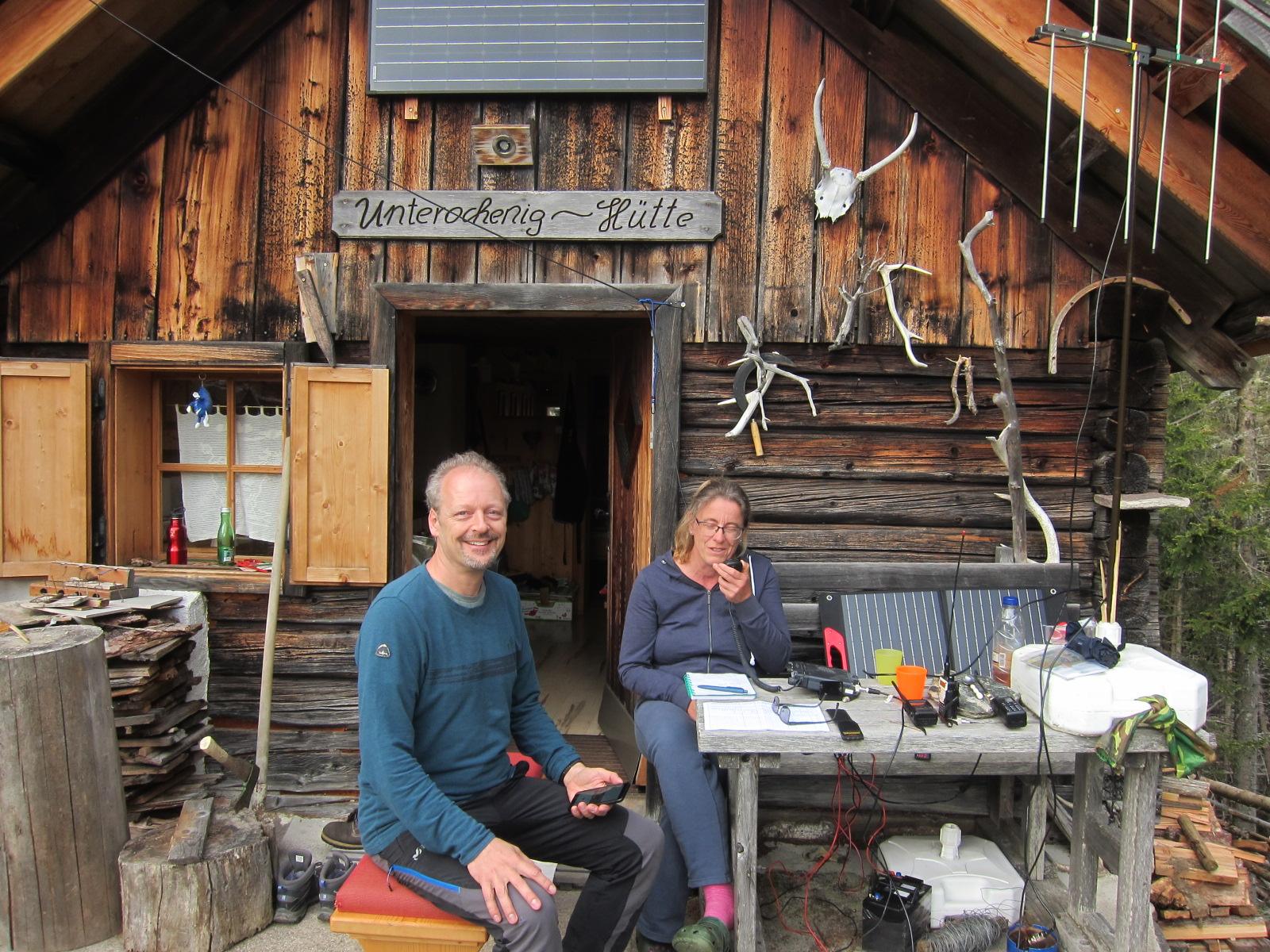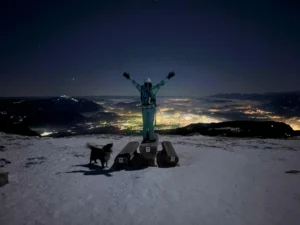
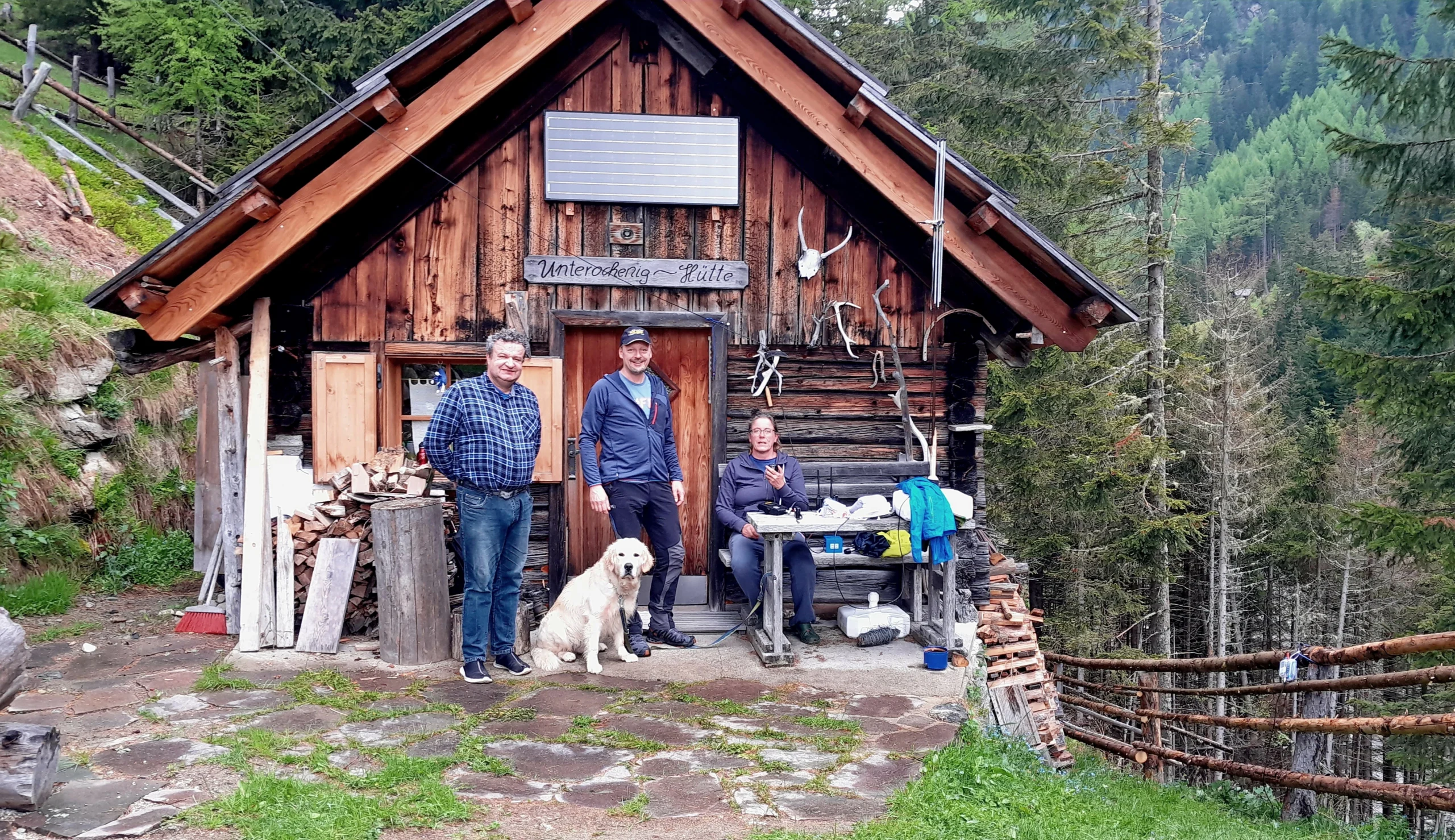
We are invited to spend the Pentecost weekend in a hunting lodge in the Carinthian Hohe Tauern. We are Sabine OE5SLE and I Manfred OE5MBP. Sabine discovered Bergfunken 4 years ago after getting her license, and we have already activated a few SOTA summits. Now we would like to try out a self-sufficient radio weekend. Mountain sparks with a difference. Our newly licensed radio friend Kathrin OE8AKY or rather her father, who is an enthusiastic hunter, invited us to spend a self-sufficient radio weekend in the Hohe Tauern at his rustic hunting lodge. Sabine’s Panda 4×4 is packed with SOTA radio equipment, battery and solar panel, and just the things you need for a self-catering weekend away from civilization.
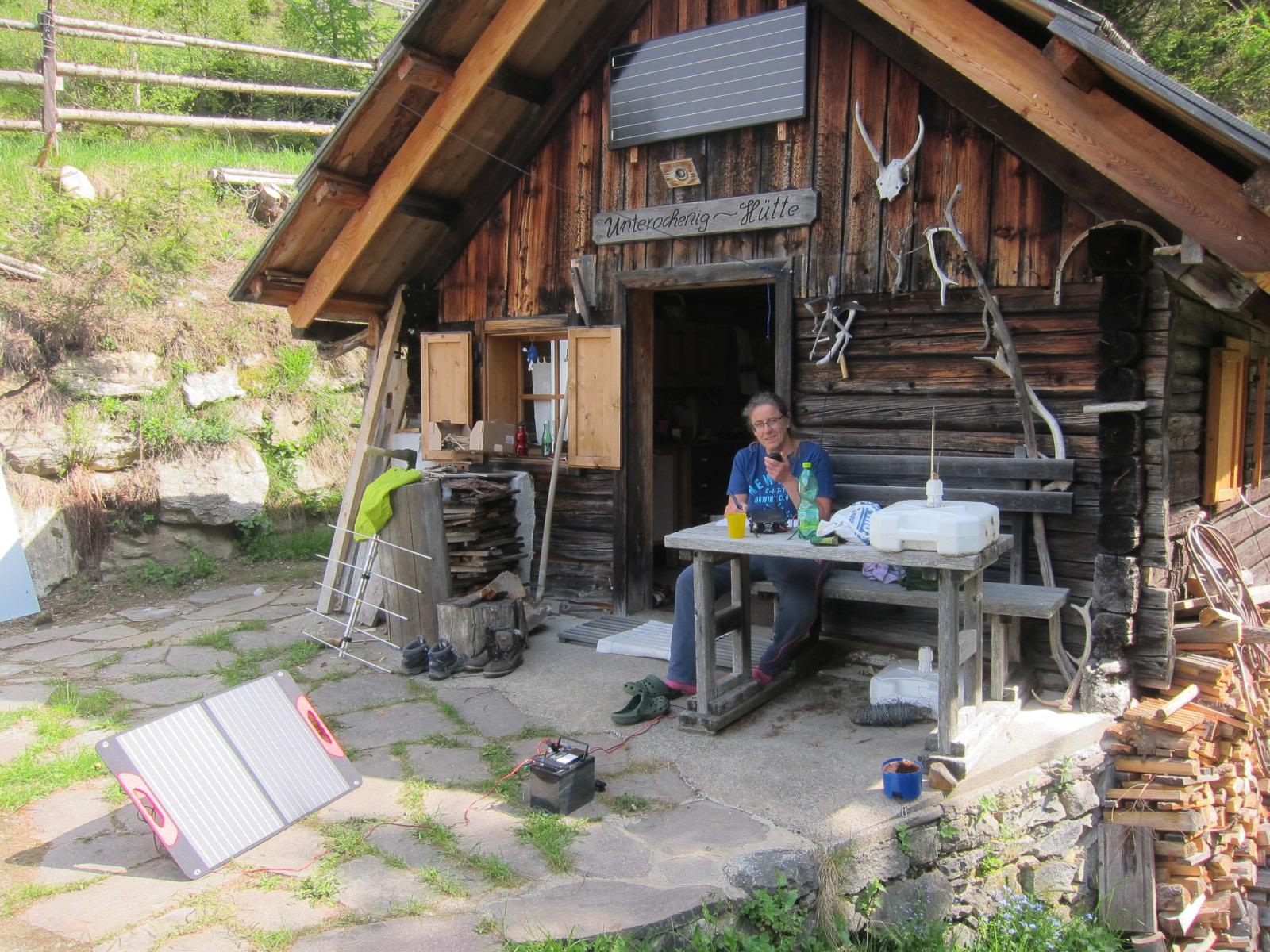
The adventure begins in Böckstein at the southern end of the state of Salzburg. There we drive to the ÖBB car lock and then after a short journey on the car train in Carinthia in Mallnitz-Obervellach we get off the train again. The hunting lodge is located in Obervellach, in the so-called Kaponiggraben in the southeastern part of the Hohe Tauern National Park at around 1500m above sea level. It’s good that we have an all-terrain vehicle for the journey. The path is quite steep and there are streams running across it. But after the jogging game we arrive safely. The cabin was built around 1890, but has been beautifully renovated. There is running cold water and a wood-burning stove, which I remember from my grandmother. We’re heating up and setting up our radio equipment.
First the self-made flowerpot antenna (after the Australian flowerpot antenna) on a 5 meter fishing pole, which we attach to the wooden railing in front of the hut. The radio, the old Yaesu FT 7800 and the battery go on the bench in front of the hut. However, the radio location for 2m is not great because the hut is located in a steep ditch and is surrounded by a high mountain range on the south and east sides. The valley opens up on the west side and we first reach the Goldeck relay on Lake Millstättersee with S9+. We also get the converter in Lienz East Tyrol in just as well. We can only hear the Gerlitze relay on Lake Ossiachersee at the very bottom of the noise limit, but it cannot work. Sabine is already chattering and has already completed the first relay QSOs all the way to Rosental on the border with Slovenia. Some radio colleagues get in touch and we try direct connections to Spittal/Drau and Millstättersee, which is actually exactly behind the 2700 meter high mountain massif on the east side. The reflections in the high mountains are amazing. Tina, who runs a hut on Lake Weissensee to the south and also does radio operations there, also gets in touch.
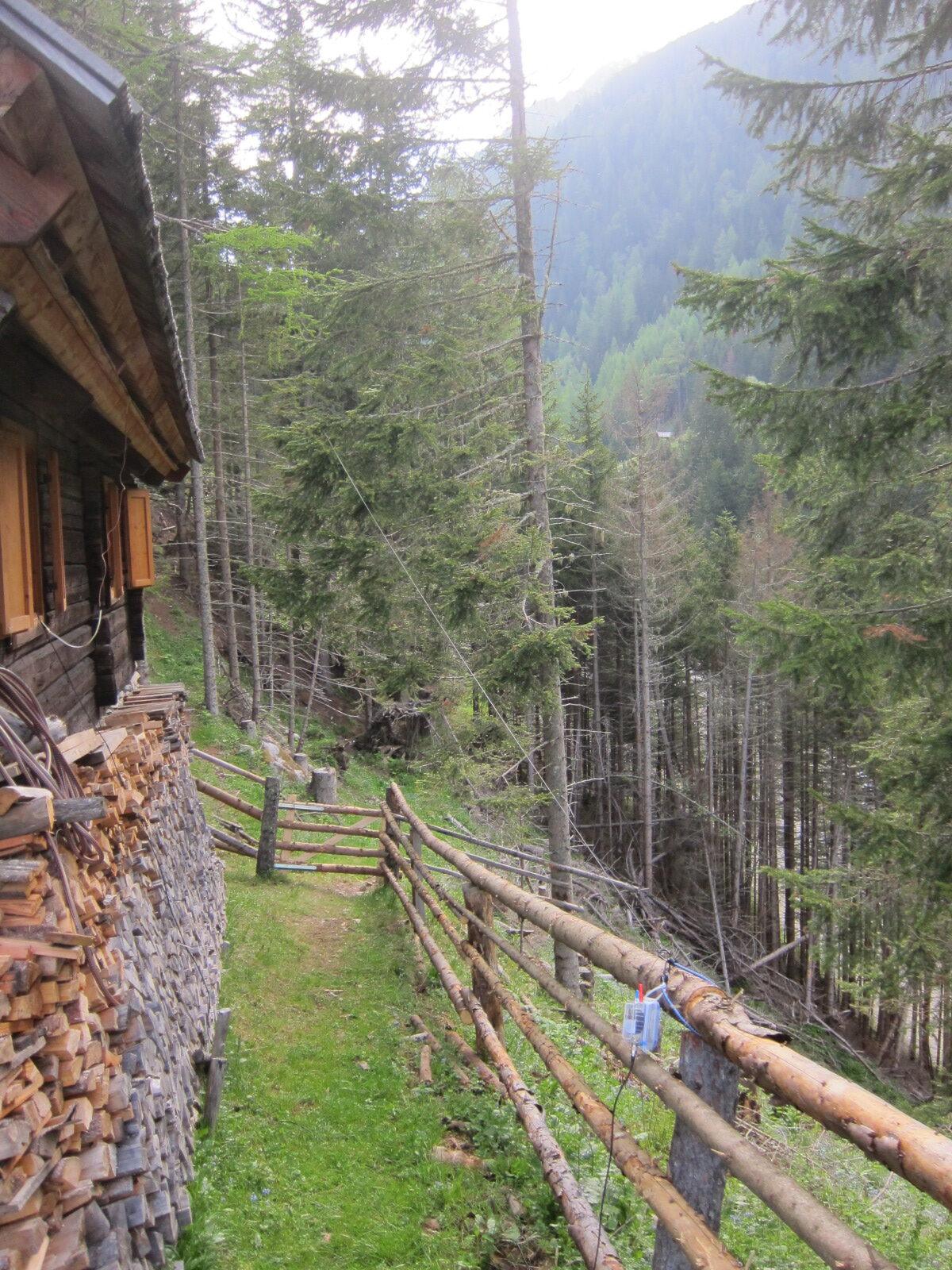
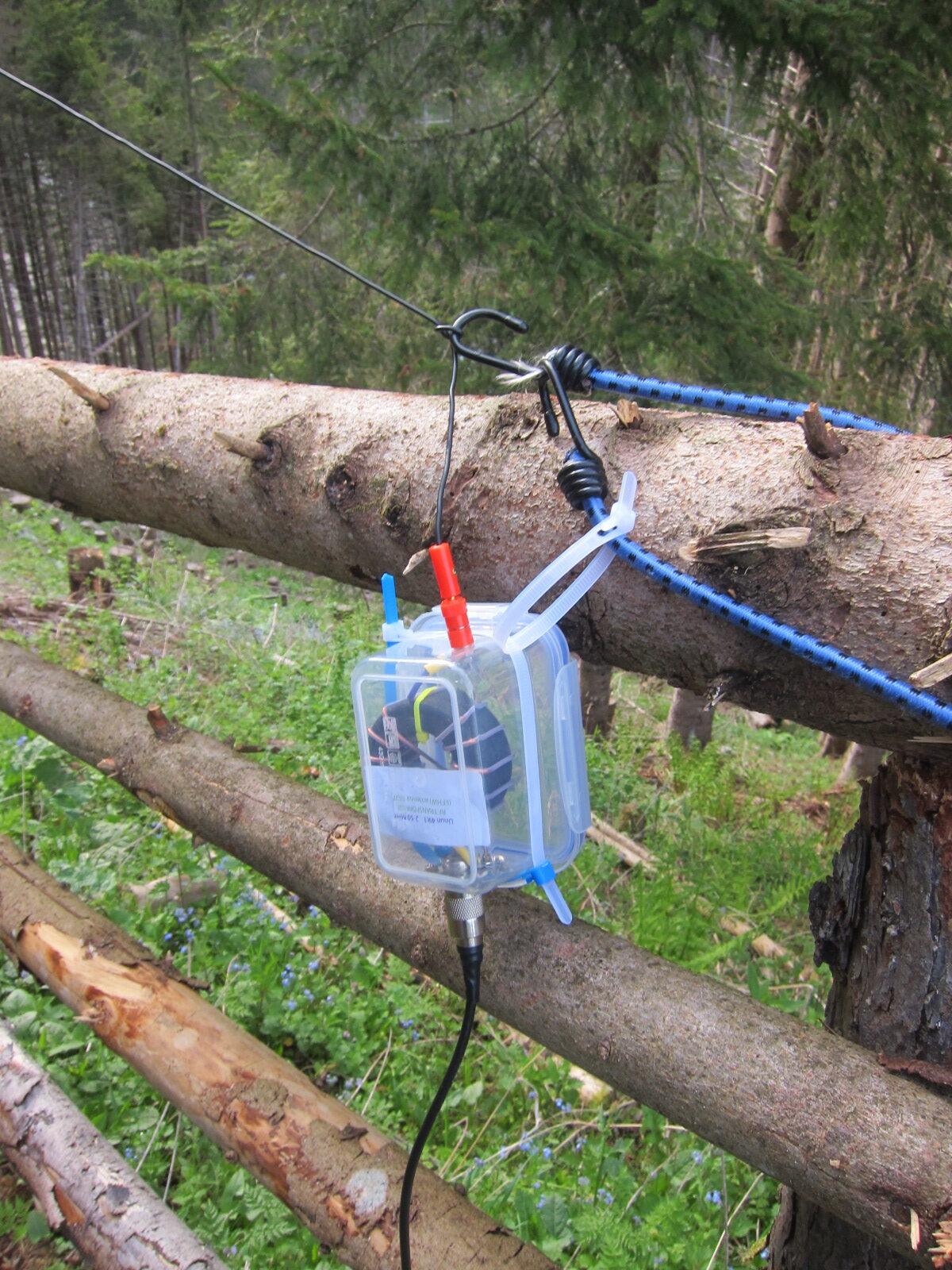
It’s slowly getting evening and we’re now setting up the shortwave antenna. There is enough space and trees, so we stretch our 41m long wire from the fence railing to the nearby spruce tree and then across an open, steeply sloping area to another spruce tree. At the end comes the self-made transformer 1:49 and a coax cable with a sheath wave barrier goes through the hut window. The antenna is immediately resonant on the bands 80m upwards. We save the tuner and connect the old ICOM IC 706MKII directly. Shortwave works remarkably well. The noise floor on 80m is S 2 instead of the usual S9 in the city and we run various QSOs all over Europe. This is how you imagine a self-sufficient radio weekend in the Hohe Tauern.
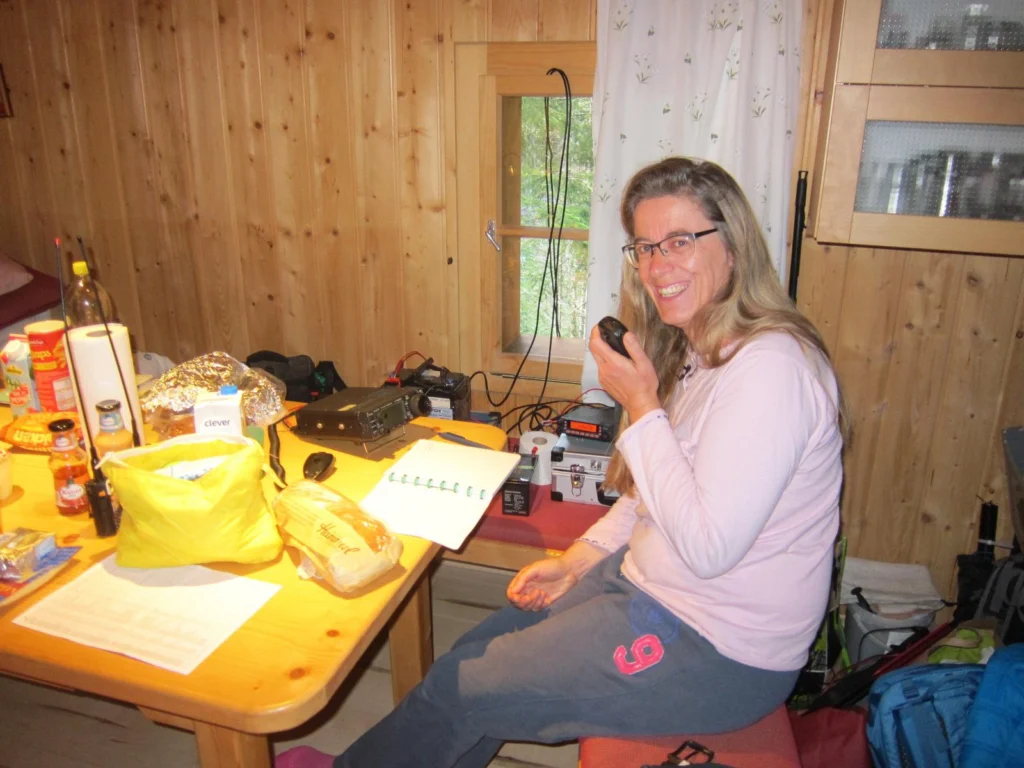
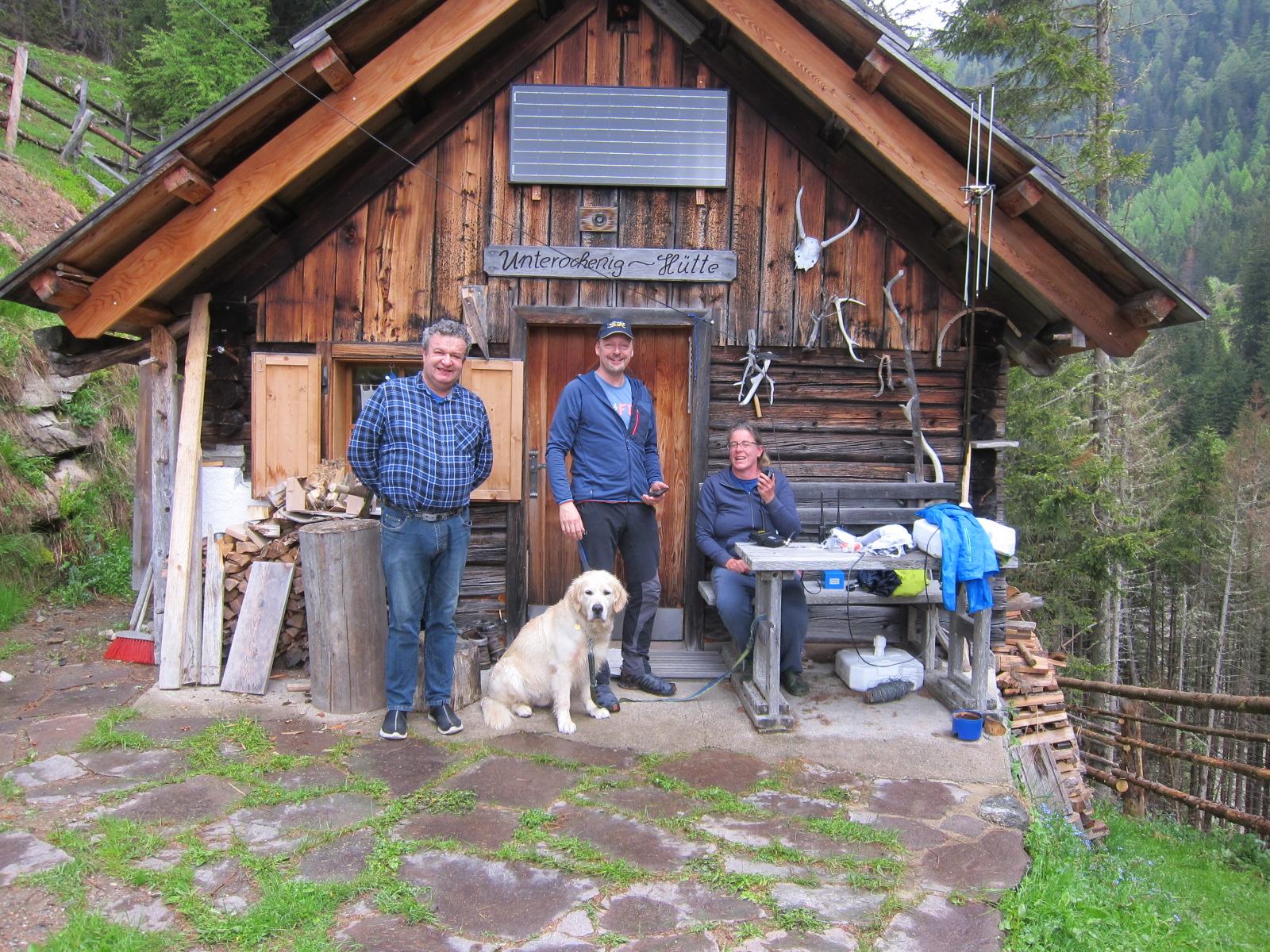
The next day we have visitors. Rene OE8CRK is a Carinthian mountain hiking guide, knows the mountains really well and comes up the mountain on foot with his companion (dog Barry, YL Irene with food rations and dismantled logper antenna). We set everything up in front of the hut again, do radio experiments all day and this time we also connect a solar panel to the Lifepo4 battery to recharge it. When the sun is shining, the small 60W panel charges the battery with an astonishing 6 A. We didn’t use a charge controller and then the accident happened. The BMS of the large 50Ah Lifepo4 battery is apparently not resistant to RF radiation and switches the battery off briefly when transmitting 50W FM. This brings the charging idle voltage to over 20V and that is too much for the FT-7800. A fuse blows and the Yaesu is dead. Murphy’s law – everything that can go wrong will go wrong at some point. Even with a new fuse from the Fiat Panda, the Yaesu can no longer be revived. He has suffered a short circuit. The mood is at its lowest point and can only be brightened up again by the excellent vegetable stew that Irene has conjured up on the wood stove.
Rene is also with the BOS-ARSA association in Carinthia, which carries out a crisis communication exercise on Sundays. This time part of the exercise is carried out via the Goldeck relay from our hut by Rene and Sabine and we get a whole bunch of exercise participants in the log. It’s good that after the FT-7800 failed, the old IC-706MKII also covers the 2m relay range. The next day, Sabine takes part in an 80m morning lap with participants OE, HA and DL and then we start dismantling the equipment again. This rounds off the self-sufficient radio weekend in the Hohe Tauern. It’s amazing what fits into such a small Fiat Panda 4×4 and we master the motorized descent over the mountain road. After a warm farewell, we tiredly reached the Tauern lock in Mallnitz, where we loaded our car to Salzburg.
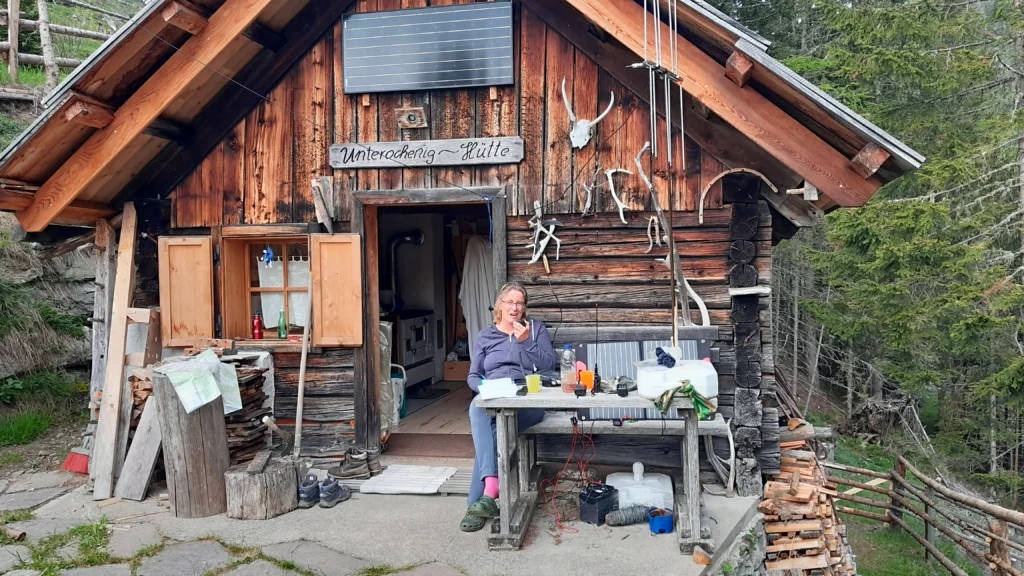
In conclusion, the realization remains that mountain sparks lead to wonderful experiences, but are also quite wearing out materials. Thanks to our Carinthian friends who made this great weekend possible.
Dr. Manfred Mayrbäurl, OE5MBP
PS: Here are a few more impressions from the self-sufficient radio weekend in the Hohe Tauern